
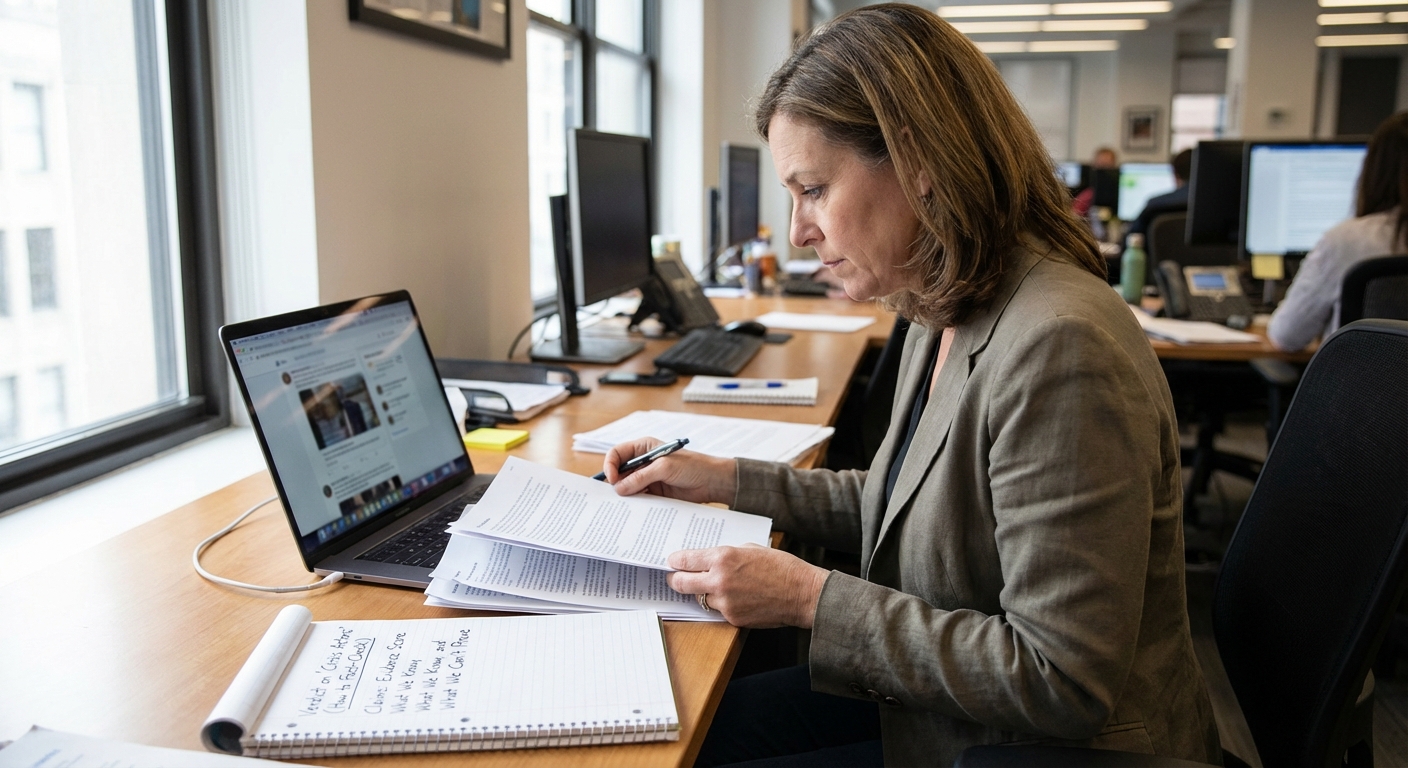
This article provides a neutral, evidence-focused verdict on the claim commonly called “crisis actors” — allegations that victims, survivors, or witnesses of mass tragedies are paid performers staging events for political or other aims. We treat the topic as a claim (not an established fact) and separate documented records from inference or speculation.
This piece summarizes official records, reputable fact-checks, major media reporting, and legal outcomes where relevant, and explains how to test similar assertions in the future.
This article is for informational and analytical purposes and does not constitute legal, medical, investment, or purchasing advice.
Verdict: what we know, what we can’t prove
What is strongly documented
1) The term “crisis actor” existed in legitimate emergency-preparedness contexts (actors hired to simulate victims for drills) but has been widely co-opted by conspiracy theorists to mean that real-world mass shootings and other tragedies were staged. Multiple reputable summaries and media investigations describe this semantic shift and its political use.
2) Conspiracy claims that specific events were staged — notably some assertions about the 2012 Sandy Hook Elementary School shooting and the 2018 Parkland shooting — have been repeatedly investigated and debunked by professional fact-checkers and journalists. These sources document eyewitness testimony, official police reports, court records, and victim-family interviews that contradict the “staged event” narrative.
3) Public-platform responses and policy changes are documented: social platforms (including Facebook and YouTube) and multiple news outlets reported and took action on certain posts that falsely labelled survivors as actors, and some major conspiracy promoters have faced legal consequences for spreading demonstrably false claims.
What is plausible but unproven
1) It is plausible that some coordinated disinformation campaigns or bad-faith actors have amplified or reused images and video to suggest the same people appear at multiple, unrelated events — sometimes using image re-use, misattribution, or doctored screenshots. Social-media studies document how recycled images and video can create the impression of continuity across events, but demonstrating deliberate coordination (versus decentralized reposting) requires platform-level data or legal discovery.
2) Some individuals or small operators have profit or ideological motives to manufacture or magnify “crisis actor” claims. That motive is plausible and in some cases documented, but motive alone does not prove staging of a specific event.
What is contradicted or unsupported
1) Broad assertions that entire mass shootings were “hoaxes” with no casualties are contradicted by official police reports, death certificates, media reporting, and court records in high-profile cases (for example, Sandy Hook). Fact-checks and legal findings show such blanket denials of documented deaths are unsupported.
2) Claims that specific named survivors or bereaved family members are professional actors employed to play roles in multiple tragedies are usually unsupported when the claim rests only on visual similarity or social-media memes; in many such cases, precise identity checks, records checks, and contemporaneous reporting show those claims to be false or misleading.
Evidence score (and what it means)
Evidence score: 20 / 100
- Score rationale: Strong documentary records (police reports, court findings, death records, contemporaneous journalism) directly contradict broad ‘‘no one died / all staged’’ versions of the claim in major, well-documented events.
- However, the ‘‘crisis actors’’ label is loosely applied and often conflates legitimate uses (training actors) with conspiratorial claims, producing confusion that’s difficult to resolve with social-media evidence alone.
- Many online assertions rely on image re-use, miscaptioning, or user-supplied edits that are not authenticated; social-media posts are low-quality evidence unless supported by independent records.
- Legal rulings against prominent promoters (e.g., large defamation judgments) strengthen documentation that certain high-profile “hoax” claims were false and caused real harm.
- Some platform enforcement actions (removals, policy updates) are documented, but enforcement consistency and platform transparency remain limited.
Evidence score is not probability:
The score reflects how strong the documentation is, not how likely the claim is to be true.
Practical takeaway: how to read future claims
When you encounter a “crisis actors” claim, follow a structured verification path:
- Check primary records: police incident reports, official death records (where public), and contemporaneous local reporting rather than social posts. If a claim says no one died, look for official death certificates and coroner statements or reliable local journalism.
- Verify identities before concluding re-use: many memes compare photos without confirming dates, locations, or metadata. Reverse-image search and cross-checking timestamps are necessary first steps.
- Prefer authoritative fact-checks: organizations like Snopes, FactCheck.org, AP, Reuters, and major outlets often document specific false claims and the records that contradict them.
- Be cautious with motive or similarity arguments: plausible motives to deceive do not by themselves prove an event was staged; they are weak evidence without documentary corroboration.
- Consider legal outcomes: defamation suits and judgments against repeat promoters can provide strong documentary evidence that particular narratives were false and harmful.
FAQ
Q: What are “crisis actors” claims and how should I treat them?
Treat them as a claim requiring documentary verification. The phrase is used both for legitimate emergency-training actors and (more often online) as an allegation that a real event was staged; separate those meanings and seek official records, contemporaneous eyewitness reporting, and reliable fact-checks before accepting the assertion.
Q: How common is it that a mass shooting was actually staged?
There is no credible documented example in major modern U.S. incidents where an entire mass-shooting event was staged and victims fabricated; reputable fact-checks and legal records contradict broad “staged” claims for high-profile events like Sandy Hook and Parkland. However, misinformation and doctored images circulate frequently, so isolated misleading items do appear online.
Q: Could people be paid to act at drills and then be misidentified as being at a real event?
Yes. Professional actors are sometimes hired for emergency drills and table-top exercises; those legitimate uses can be conflated with conspiracy narratives. Demonstrating a specific misidentification requires verification of the training event’s dates, participant lists, or organizational records — which are not commonly available via casual social posts.
Q: How did the “crisis actors” claim spread so widely online?
Social platforms amplify visual similarity, memes, and emotionally resonant narratives; coordinated or opportunistic sharing by influential accounts accelerates spread. High-profile debunked cases and commentary from prominent conspiracy-media figures also reinforced the narrative, and platforms’ earlier enforcement practices were inconsistent, enabling viral spread.
Q: Are there legal consequences for promoting unfounded “crisis actor” claims?
Yes. Defamation lawsuits and large civil judgments against repeat promoters of false narratives (notably related to Sandy Hook) document that promoting false claims about victims can cause real-world harm and legal liability. These rulings are part of the public record and were cited in subsequent platform and legal discussions.
FAQ: sample verification checklist
Q: Quick checklist I can run before sharing a “crisis actors” post?
1) Reverse-image search the photo/video. 2) Look for contemporaneous local reporting and official incident records. 3) See if trusted fact-checkers have already addressed the claim. 4) Check for primary-source documents (death certificates, police reports) before accepting “no one died” claims. 5) When in doubt, do not amplify the claim; request sources.
Final notes
Overall, documentation strongly contradicts broad versions of the “crisis actors” claim for major, well-investigated incidents. At the same time, the loose use of the phrase, image re-use, and selective presentation of social-media posts make the topic fertile ground for suspicion and rumor. Where primary records exist, they should guide the assessment; where records are missing or ambiguous, treat claims as unresolved rather than proven.
If sources conflict or appear incomplete, stop and note the exact documents or data you were unable to find — that transparency is preferable to repeating an unverified allegation.
Selected authoritative sources used in this article include investigative fact-checks and reporting by Snopes and FactCheck.org, major news outlets documenting platform responses and legal rulings, and background summaries by established media; readers can consult those organizations’ write-ups for case-by-case details.

Beginner-guide writer who builds the site’s toolkit: how to fact-check, spot scams, and read sources.