
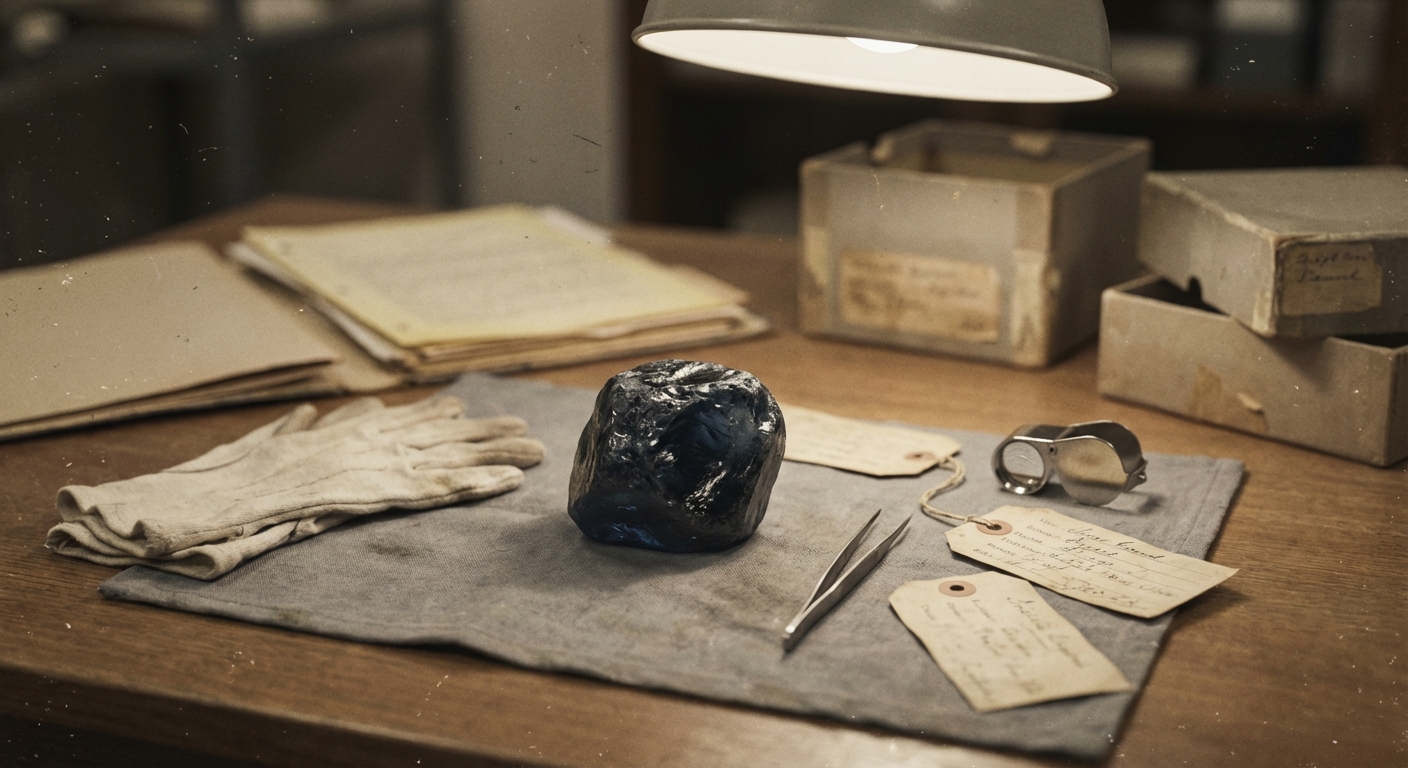
This timeline examines the claim-set commonly grouped under “’Cursed’ Movies and Objects” — the assortment of stories that attribute bad luck, injuries, or early deaths to particular films, props, or artifacts. It traces key dates, original documents or first-published accounts, notable investigations, and turning points where evidence strengthened, weakened, or split into competing versions. The goal is analytical and neutral: to document what is recorded in primary or reputable secondary sources and where disagreements or gaps remain. The phrase cursed movies and objects claims is used throughout to indicate that these are allegations and folklore, not established fact.
“This article is for informational and analytical purposes and does not constitute legal, medical, investment, or purchasing advice.”
Timeline: key dates and turning points for cursed movies and objects claims
- c. late 17th century — Early references to a large blue diamond enter European accounts, later associated with the Hope Diamond. (source type: historical gem provenance and museum archive).
- Early 20th century — Periodic press stories and travelogues amplify tales of misfortune associated with owners of the Hope Diamond; modern “curse” narratives are traceable to marketing and newspaper folklore rather than contemporaneous primary documents. (source type: museum research and historical review).
- 1970s (circa 1970–1973) — Ed and Lorraine Warren report their involvement with a Raggedy Ann doll they called “Annabelle”; the Warrens say the doll exhibited paranormal behavior and was placed in their Occult Museum. This narrative is the origin for the later media franchise but relies primarily on the Warrens’ accounts. (source type: paranormal investigators’ accounts / museum records).
- 1973 — Production problems and a series of accidents connected to the filming of The Exorcist (set fire, injuries on set, and several unrelated deaths among people tangentially connected to the production) are widely reported and later compiled into “cursed film” narratives. Filmmakers arranged for blessings and responded publicly to on-set incidents; accounts vary on the number and causes of the deaths. (source type: production histories, contemporary reporting, later magazine features).
- June 1982 — Poltergeist (1979–1982 series context) gains renewed attention as two tragedies linked to cast members enter the lore: Dominique Dunne (actress in Poltergeist) was attacked and later died in 1982, and Heather O’Rourke (child star) died unexpectedly in 1988. These deaths fed claims of a “Poltergeist curse,” though investigators and fact-checkers note differences in timing, cause, and direct connection to production. (source type: contemporary reporting and fact-checking).
- 2003 — An eBay listing by Kevin Mannis introduces the “Dybbuk box” story to a wide audience; the item’s backstory and alleged effects spread online and into books, creating a modern folkloric example of a “cursed object.” Investigations and later reporting have documented that the original listing’s narrative appears manufactured and that Mannis later acknowledged inventing elements of the story. (source type: original listing, investigative reporting, origin statements).
- 1990s–present — Robert the Doll (Key West) and other museum-displayed “haunted” dolls attract tourism and anecdotal letters claiming curses. Local museums document visitor accounts and copy of letters, but scholarly or forensic evidence for supernatural causation is absent. (source type: museum records and local reporting).
- 2000s–2020s — Horror franchises and popular media (movies, podcasts, viral listicles) amplify and repackage earlier stories (Annabelle, Dybbuk box, The Exorcist, Poltergeist), often presenting dramatized or fictionalized versions. Commercial retellings sometimes obscure where folklore ends and documented record begins — a pattern noted in skeptical and folkloric studies. (source type: media analysis, skeptical commentary).
Where the timeline gets disputed
Different claim lines diverge at several points, and reputable sources do not agree on a single narrative for many items:
- Origins vs. amplification: For the Hope Diamond, museum research shows that many curse stories emerged well after the gem’s documented ownership changes; scholars label the curse as a later folkloric addition rather than a contemporaneous fact. The Smithsonian’s historical review treats the curse as cultural legend rather than documented causation.
- First-person narratives vs. independent verification: The Annabelle story rests primarily on the accounts of Ed and Lorraine Warren and their museum records; independent primary documents that corroborate supernatural claims (medical reports, law-enforcement findings showing paranormal causation) are not available in published, verifiable archives. Where the Warrens provide contemporaneous notes or oral testimony, that material is not the same as independently verified evidence.
- Origin fabrication: The Dybbuk box’s rise to notoriety is traceable to a single internet listing whose author later admitted to fictionalizing parts of the story to increase interest; researchers and journalists identify the Dybbuk box legend as an example of a modern manufactured “cursed object” tale. This is a clear point where the claim’s provenance is disputed and, in part, demonstrably created.
- Coincidence and selective reporting: For several “cursed films” (The Exorcist, Poltergeist, The Omen), lists of accidents or deaths are often compiled without full context — e.g., unrelated family deaths or accidents that happened off-set or years later. Skeptical reviewers emphasize selection bias: when many people are associated with a large production, unrelated tragedies will statistically occur, and retelling focuses on striking coincidences.
Evidence score (and what it means)
- Evidence score: 32 / 100
- Why this score: the overall documentation mostly consists of secondary reporting, personal testimony, or later folkloric retellings rather than primary, independently verified records linking cause and effect.
- Why this score: several high-profile items (Dybbuk box, parts of the Annabelle narrative) have identifiable origins traceable to single authors or investigators, which weakens claims of independent corroboration.
- Why this score: for some cases (certain on-set accidents, documented production fires, and recorded deaths), primary sources and contemporaneous reporting do exist — these support historical facticity of incidents but not supernatural causation.
- Why this score: the media amplification of these narratives increased perceived linkage between items and misfortune; this amplifies anecdote over documentation.
Evidence score is not probability:
The score reflects how strong the documentation is, not how likely the claim is to be true.
FAQ
Are cursed movies and objects claims true?
Claims about curses are a mixture: some components are factual (documented accidents, deaths, museum holdings), while other components are unverified or demonstrably fabricated (origin stories invented to sell objects, exaggerated retellings). Independent evidence tying a supernatural causal mechanism to a particular object or film is absent from the public record; where it exists, it is anecdotal or testimonial rather than independently corroborated.
Which cases have the strongest documentary record?
The strongest documentation relates to verifiable, non-supernatural facts: ownership chains and archival records for the Hope Diamond; press reports and court records for deaths associated with particular productions (for example, Dominique Dunne’s 1982 death); museum acquisition records for Robert the Doll. Those records confirm events occurred but do not establish supernatural causation.
Has any investigator proven a curse scientifically?
No investigator has produced reproducible, scientific evidence that links an object or film to supernatural causation. Investigations that identify fraud, fabrication, or later invention (as with the Dybbuk box) reduce the evidentiary weight of those claims. When claims are examined by folklorists and skeptical investigators, the explanations offered are typically psychological, social, or commercial rather than paranormal.
Why do these stories keep spreading despite weak evidence?
Multiple factors: compelling narratives and dramatic coincidences make for shareable stories; media and entertainment industries profit from dramatization; confirmation bias and selective reporting emphasize notable coincidences while ignoring the many uneventful cases; and tourism and merchandising can create incentives to maintain or embellish legends. Scholars of folklore and media have documented these dynamics in multiple cases.
What should historians or journalists look for to evaluate future claims?
Look for contemporaneous primary documents (hospital or police records, original acquisition paperwork, dated eyewitness reports), independent corroboration (multiple independent sources reporting the same facts), and provenance tracing (who first told the story and how it was modified over time). If an originator later admits fabrication or if the tale first appears in clearly promotional contexts, treat the claim skeptically.

Culture writer: pop-culture conspiracies, internet lore, and how communities form around claims.