
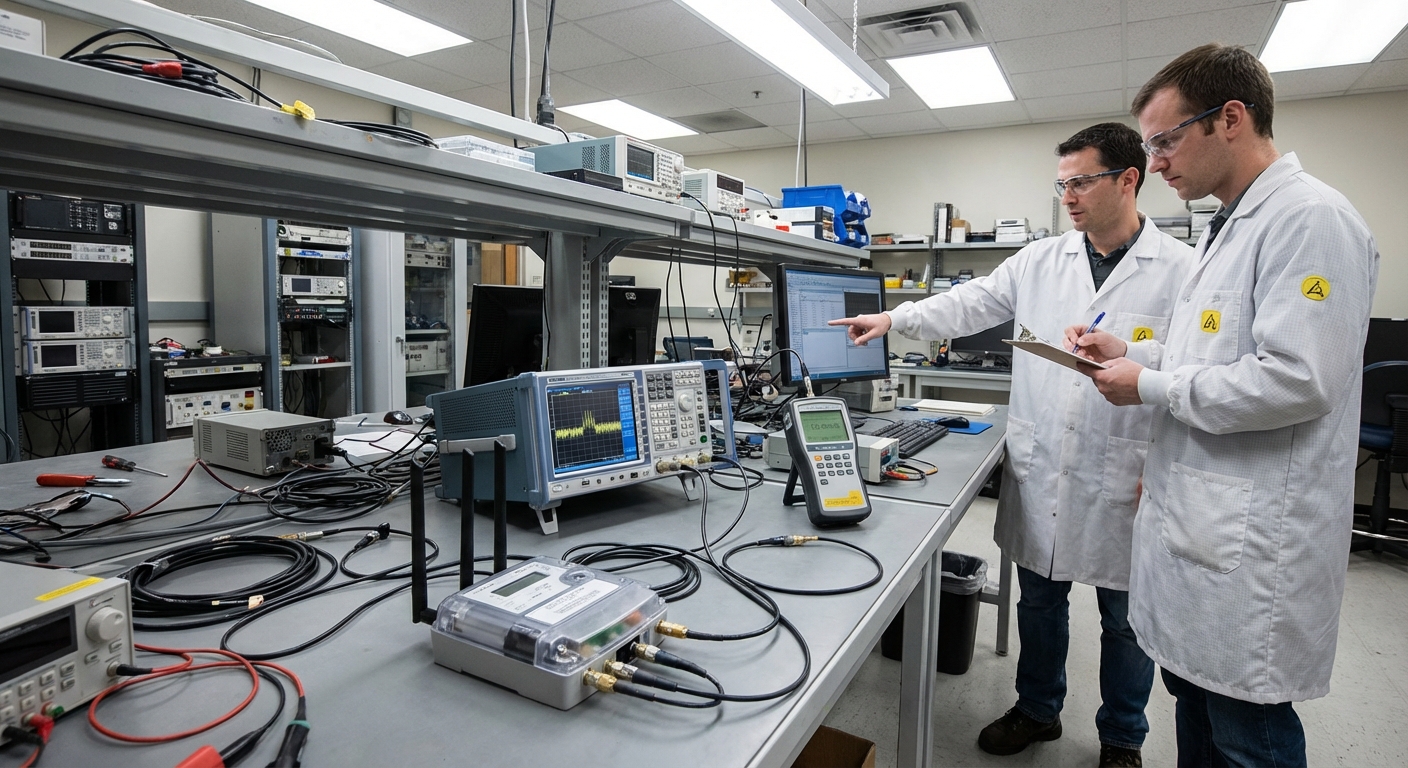
This article examines the claim that smart meters secretly emit harmful radiation — often framed online as “smart meter ‘secret radiation’” — and separates what is documented, what is disputed, and what cannot be proven from available public records and scientific sources. We treat the subject strictly as a claim and do not assume it is true. The review draws on regulatory technical statements, peer-reviewed reviews, government and utility investigation summaries, and advocacy materials to score the strength of documentation behind the claim.
This article is for informational and analytical purposes and does not constitute legal, medical, investment, or purchasing advice.
Verdict: what we know, what we can’t prove
What is strongly documented
1) Smart meters emit radiofrequency energy because many models use wireless communications to transmit usage data. This is an acknowledged engineering fact and is noted by public health and technical organizations that track RF exposure levels.
2) Measured RF emissions from smart meters, in regulatory testing and independent technical statements, are typically far below international exposure limits and are substantially lower than peak exposures from commonly used sources such as cell phones held next to the head. Standards bodies and technical committees describe smart meters as low-power transmitters.
3) Where fire investigators and public utility reviews have examined suspected smart-meter-related fire incidents, jurisdictional reports and reputable local media outlets have generally not found clear, repeatable evidence that meters were the primary cause of fires; investigations frequently identify wiring or installation issues or do not conclusively attribute cause to the meter itself. Utility oversight reports also document monitoring and independent safety reviews.
What is plausible but unproven
1) It is plausible that installation errors, poor electrical connections, or rare manufacturing defects associated with any electrical device could contribute to overheating or electrical faults in isolated cases. Some advocacy organizations and anecdotal reports assert links between smart meter installations and electrical incidents; these accounts sometimes point to post‑installation time correlation but do not always include forensic evidence proving causation.
2) Some laboratory and observational studies cited by critics report biological effects from low‑level RF exposure. These studies are heterogeneous in methods and quality; they often do not test typical smart‑meter exposure scenarios and frequently differ from regulatory exposure assessments. Therefore a general biological effect observed in a lab does not by itself prove that real‑world smart‑meter emissions cause harm.
What is contradicted or unsupported
1) Broad assertions that smart meters “secretly” produce continuous, high‑dose radiation comparable to known harmful ionizing radiation (e.g., X‑rays) are unsupported. Smart meters use non‑ionizing RF; international technical statements and cancer‑risk summaries indicate non‑ionizing RF differs fundamentally from ionizing radiation and that smart‑meter RF levels are not comparable to ionizing exposures.
2) Claims that official regulatory agencies universally acknowledge a causal link between typical smart‑meter emissions and chronic diseases are not supported by mainstream regulatory or health agencies. While some reviews and advocacy groups argue for stricter limits or further research, major technical committees and public health summaries describe exposure levels from smart meters as low relative to established limits. Conflicting assessments exist, and those disagreements are generally about interpretation of some laboratory results and the need for more epidemiology, not documented causal links.
How the smart meter ‘secret radiation’ claims are framed
Online messaging about “smart meter ‘secret radiation’” typically combines three elements: (a) a technical claim that the meter emits unknown or concealed RF emissions, (b) a health assertion that those emissions cause illness, and (c) anecdotal or local reports of fires or malfunction following installation. Narratives vary between ordinary technical misunderstandings (what non‑ionizing RF is and how it behaves) and activist frames that emphasize risk and possible cover‑ups. The technical fact that many smart meters use wireless links is often conflated with hidden continuous high‑dose radiation, which is not consistent with measurement-based descriptions from utilities and standards bodies.
Evidence score (and what it means)
Evidence score is not probability:
The score reflects how strong the documentation is, not how likely the claim is to be true.
- Evidence score (0–100): 35
- Drivers: multiple independent technical statements document that smart meters emit low‑power RF and that measured exposure is typically far below international limits.
- Drivers: authoritative public investigations and oversight reports have not produced reproducible, high‑quality forensic evidence that meters are a common cause of fires; many investigations cite wiring/installation or do not identify the meter as the source.
- Drivers lowering the score: sets of laboratory studies and some review articles argue for biological effects at low exposures; these sources are heterogeneous and sometimes methodologically weak or not directly applicable to typical smart‑meter exposure scenarios.
- Drivers lowering the score: advocacy organizations compile many anecdotal reports and smaller studies, but these materials do not by themselves constitute high‑quality causal documentation.
Practical takeaway: how to read future claims
1) Ask what type of evidence is presented: measurement data from calibrated instruments, forensic fire reports, independent peer‑reviewed epidemiology, or anecdotes. Measurement and regulatory testing carry more weight than anecdotes.
2) Check exposure context. Smart meters that communicate intermittently (short bursts, low duty cycle) create different exposure profiles than devices that are continuously transmitting. Comparing a meter to a phone held next to the head or to ionizing sources is a category error unless supported by measured dose equivalence.
3) Look for quality: an independent forensic fire investigation or a well‑designed epidemiological study targeting smart‑meter exposure would materially change the assessment. Conversely, repeated anecdote aggregation without independent verification does not resolve causality.
FAQ
Do smart meters emit radiation?
Yes — many smart meters use radiofrequency communications and therefore emit non‑ionizing RF energy in short bursts. Regulatory and technical descriptions note this is expected behavior for wireless utility meters. Measured emission levels are typically low and intermittent compared with many consumer RF sources.
Are smart meter ‘secret radiation’ claims proven to cause illness?
No — the claim that smart meters secretly cause illness is not proven by high‑quality, reproducible evidence. There are heterogeneous laboratory studies and advocacy reports that argue for biological effects at low exposures, but mainstream technical bodies and public health summaries do not accept those studies as conclusive proof linking typical smart‑meter exposures to chronic illness. Conflicting interpretations exist and more targeted epidemiology would be needed to change this assessment.
Have investigations shown smart meters caused fires?
Investigations into individual fire incidents have sometimes examined smart meters, but published local reports and oversight summaries generally have not found a consistent, reproducible pattern proving meters were the cause. Many reports point to wiring issues, installation practices, or undetermined causes rather than an identifiable meter defect. Where you see claims of meter‑caused fires, check for independent forensic reports and regulator findings.
How should I evaluate new studies or news about smart meter radiation?
Check whether the study measures real‑world smart‑meter exposure (not generic RF), whether it was peer‑reviewed, the sample size and methodology, and whether independent groups have replicated the results. For news items, prefer coverage that links to original investigation reports or regulatory findings rather than only to advocacy summaries.
Where can I find authoritative technical guidance on smart meter RF levels?
Technical committees (for example IEEE statements), government radiation protection agencies, and major public health organizations publish summaries and exposure guidelines that include context about non‑ionizing RF and measurement practices. These sources are generally the best starting point for reliable measurement and compliance information.

Tech & privacy writer: surveillance facts, data brokers, and what’s documented vs assumed.