
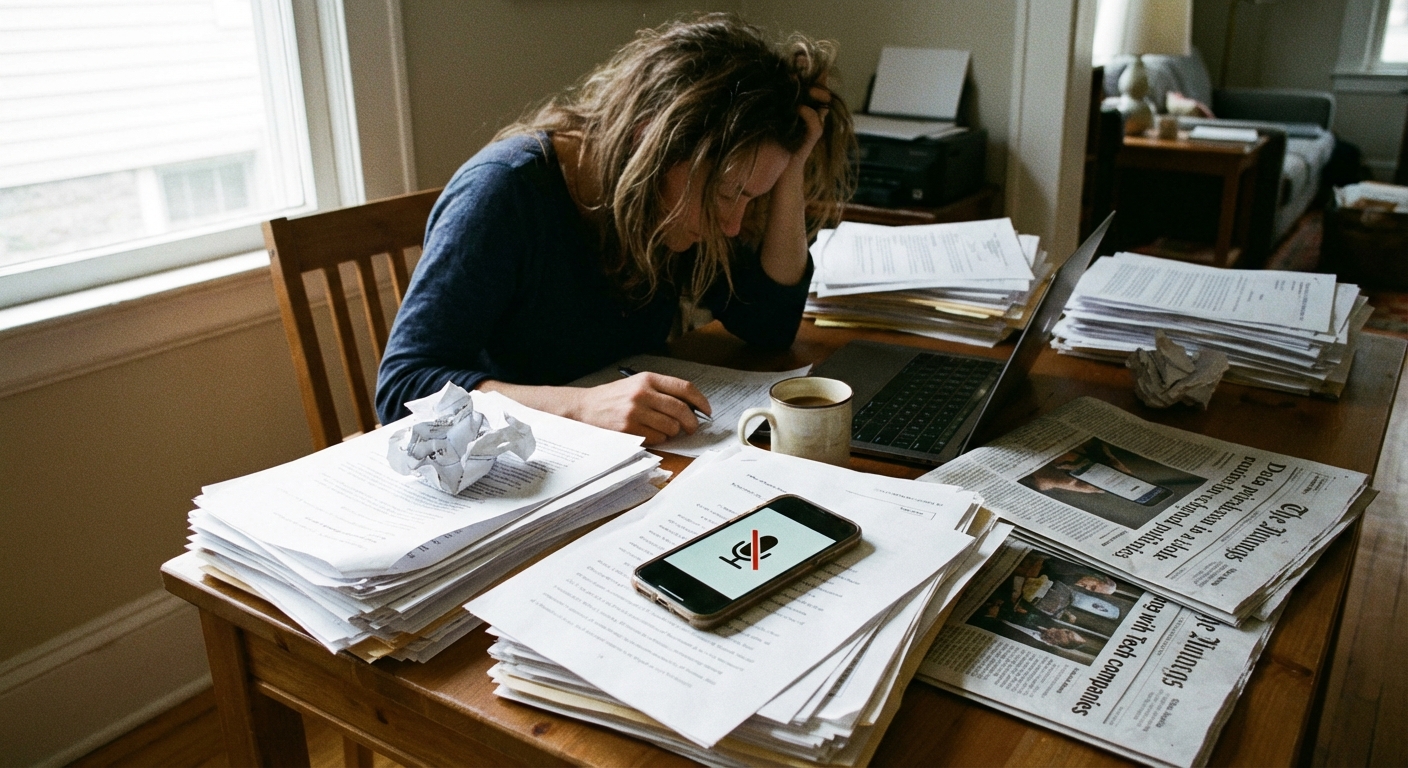
Scope and purpose: This timeline examines the claim that “phones always listen for ads.” It compiles key dates, primary documents, public company statements, reporting, and academic work so readers can see what is documented, what is disputed, and what remains unproven. The phrase phones always listen for ads is treated here as a claim under review, not as established fact.
Phones Always Listen for Ads — Timeline: key dates and turning points
- May 2014 — Facebook launches a “Identify TV and Music” feature that listens for ambient audio when users choose it. Early coverage and user reports spark rumors that the Facebook app could be “always listening.” Source type: company feature launch and media coverage.
- June 2016 — Facebook issues a public denial: the company says it does not use mobile microphones to inform ads or News Feed content after public concern over apparent conversation-related ads. Source type: company statement reported by mainstream media.
- 2018 — Reports and corporate disclosures surface about human review programs: several major voice assistant providers acknowledged that contractors sometimes reviewed short audio clips to improve transcription and assistant performance, prompting privacy concern coverage. Source type: investigative reporting and company responses.
- October 2019 — Apple adds opt-out controls and changes practices for Siri after disclosure that contractors had reviewed some recordings; Apple says it will give users more control over Siri grading. Source type: company policy change and reporting.
- 2019–2023 — Persistent public anecdotes and polling show many users believe their phones eavesdrop to serve ads; researchers begin studying these “listening” beliefs and their social drivers. Source type: peer-reviewed research and social science studies.
- 2019–2024 — Technical explanations for targeted ads (data brokers, cross-device tracking, app permissions, browsing history, location, credit card and purchase data) are repeatedly offered by privacy researchers and advocacy groups as alternatives to microphone eavesdropping. Source type: privacy analyses and expert commentary.
- January 2025 — A proposed class-action settlement: Apple agrees to a settlement related to allegations that Siri surreptitiously recorded conversations; reporting emphasizes that the settlement did not include an admission that audio was sold for advertising. Source type: AP and major news reporting on legal settlement.
- Early 2025 — Apple publicly reiterates that Siri data has “never been used to build marketing profiles” and “has never been sold” as part of statements around the settlement; Apple also emphasizes privacy protections for Siri. Source type: company statement reported by news outlets.
- 2024–2025 — Academic work measuring public belief in device eavesdropping and conversation-related advertising finds that strong surveillance beliefs persist even where technical and documentary explanations exist; researchers document why the claim spreads. Source type: peer-reviewed journal article.
- 2025 — Class-membership and claim-filing deadlines for the Apple settlement draw attention to the earlier human-review programs and to anecdotes used in the suit; reporting notes the settlement did not require Apple to admit it used Siri recordings for advertising. Source type: reporting on settlement process.
- 2025 — Ongoing regulatory scrutiny in some jurisdictions (for example, complaints reported in France) references recorded Siri material and privacy questions; these are independent regulatory or complaint filings and are separate from the U.S. settlement process. Source type: international media reporting on regulatory complaints.
- 2025 – present — Tech explainers and privacy guides summarize the technical mechanisms by which voice assistants listen for wake words locally and how ad targeting commonly uses non-audio signals, creating a body of explanatory material that contradicts the simple “phones always listen for ads” narrative. Source type: technical explainers and privacy-focused outlets.
Where the timeline gets disputed
There are several major points where participants disagree about what the timeline means:
- Do wake-word listeners equate to “always listening” for advertising? Companies and many technical analyses distinguish local, low-power wake-word detection (which runs on-device to detect e.g. “Hey Siri”) from continuous streaming of conversations to servers. Critics point out that wake-word systems still require the microphone to be in a ready state and that accidental activations have occurred. Both statements are documented, but they do not prove that audio is routinely harvested for ad targeting.
- Do accidental or contractor-reviewed recordings imply advertising use? Documented programs showed that small samples of voice assistant interactions were reviewed for quality control at times, which led to public policy changes and opt-outs. Those documented practices led to lawsuits and settlements but do not, in the public record, prove systematic sale of audio clips to advertisers. Some settlements resolved claims without admission of wrongdoing.
- Are user anecdotes reliable evidence of microphone-based ad targeting? A large social-science literature and technical analyses argue that many other data signals (web browsing, search history, location, data brokers, cross-device matching) can explain targeted ads; academic surveys also show that suspicion and pattern-seeking fuel the belief that phones are listening. Thus anecdote ≠ proof.
- Do company denials resolve the question? Companies (Apple, Facebook/Meta, Google) have repeatedly denied using microphone data to target ads, but denials coexist with documented human-review programs and with product features that require microphone permission. The public record therefore contains both firm denials and admissions of limited human review, creating an evidentiary gap rather than a single definitive answer.
Evidence score (and what it means)
Evidence score: 45/100
- Documented practices: There is clear, documented evidence that voice assistant systems have—at times—retained short audio clips and used human reviewers to improve services; those practices precipitated policy changes and litigation.
- Company denials: Major platform companies have issued explicit denials that they use microphone audio to target advertising, and in some cases have made public commitments and policy changes.
- Alternative mechanisms: Multiple technical and privacy analyses document robust non-audio mechanisms for ad targeting that plausibly explain the observed correlation between conversation and ads.
- Legal outcomes: Settlements and complaints exist, but the public record shows settlements without admissions of guilt and regulatory complaints that remain unresolved in public reporting.
- Social-science evidence: Peer-reviewed work shows persistent public belief in listening devices; this explains spread of the claim but does not establish the technical mechanism.
Evidence score is not probability:
The score reflects how strong the documentation is, not how likely the claim is to be true.
This article is for informational and analytical purposes and does not constitute legal, medical, investment, or purchasing advice.
FAQ
Do phones always listen for ads?
The short answer: the public record does not show verified, wholesale selling of ambient phone audio to advertisers as a routine ad-targeting method. Companies have denied such use, while some documented practices (like occasional human review of recordings and wake-word detection) show microphones have captured audio in particular contexts. The strongest documented items are the human-review programs and subsequent policy changes; the jump from those documents to a conclusion that phones are routinely listening to feed ads remains unproven in public sources.
How do companies explain ads that match recent conversations?
Privacy researchers and advocacy groups point to multiple non-audio explanations — for example, prior web searches, app behavior, location data, offline purchases reported by data brokers, and simple coincidence or pattern recognition by users. These channels are well documented and often provide plausible mechanisms that do not require microphone eavesdropping.
What did the Apple Siri settlement say about listening?
Reporting on the 2025 proposed settlement states Apple agreed to pay to resolve claims that Siri sometimes recorded private conversations. The coverage emphasizes the settlement did not include an admission that audio was sold for advertising; Apple also issued public statements reiterating it does not use Siri data to build marketing profiles or sell recordings. That combination — settlement plus denial — is why the record documents problems (accidental recordings and earlier human review) but does not by itself prove systematic use of mic audio for ads.
What evidence would prove the claim one way or the other?
Direct, verifiable documentation that audio streams from consumer devices were routed to advertising systems, or internal records showing audio files were used to build ad-targeting profiles and then sold or shared with advertisers, would be strong proof. Conversely, independent technical audits showing no server-side collection of ambient audio tied to ad systems, combined with verifiable explanations for candidate anecdotal cases, would cut against the claim. At present, public documents provide partial pieces but not that definitive, public proof in either direction.
Why do people keep believing phones listen for ads?
Social-science research finds that people form surveillance beliefs when they notice coincidences, lack transparent explanations for targeted content, or distrust the advertising ecosystem. Those studies show belief persistence even when technical explanations exist, and explain why the claim spreads widely in the absence of definitive public proof.

Tech & privacy writer: surveillance facts, data brokers, and what’s documented vs assumed.