
Scope and purpose: This timeline analyzes the claim commonly summarized as “Tupac is alive.” It maps key dates, primary documents, and turning points in how the claim formed and evolved — separating contemporaneous official records and investigative actions from later rumors, sightings, and contested materials. The article treats “Tupac is alive” as a claim under examination rather than an established fact.
This article is for informational and analytical purposes and does not constitute legal, medical, investment, or purchasing advice.
Timeline: key dates and turning points
- September 7, 1996 — Drive-by shooting in Las Vegas. Tupac Shakur was shot while riding in a car on Las Vegas Boulevard after an altercation at the MGM Grand. Initial police reports and contemporaneous news coverage documented the shooting and transport to a hospital.
- September 13, 1996 — Pronounced dead at University Medical Center. Multiple mainstream reports from the time state Tupac died after six days in the hospital; contemporary obituaries and later summaries list the official date of death as September 13, 1996, with cause of death tied to gunshot wounds and subsequent complications. These hospital/pronouncement details form the primary documentary basis that the artist died in 1996.
- November 5, 1996 — Posthumous release of The Don Killuminati: The 7 Day Theory. Tupac’s posthumous Makaveli album was released about two months after his death; the alias “Makaveli” and imagery on the album later became one of the narrative elements cited by people who say he staged his death. The album’s timing and Makaveli persona are frequently referenced in discussions of the claim.
- Late 1990s–2000s — Early rumor propagation and alleged sightings. Within months and years of his death, online forums, fan pages, and tabloid outlets circulated rumors, purported sightings, and speculative interpretations of lyrics and artwork as evidence that Tupac faked his death; these sources are mostly anecdotal or speculative rather than primary records. Examples of recurring alleged sightings and viral “evidence” were reported in entertainment sites and social media in later decades.
- 2000s–2010s — Documentary and reporting era (investigative books, TV). Investigative reporters and documentary producers examined the 1996 attack and its aftermath. At the same time, some documentaries and books also amplified claims and testimonies that later circulated as evidence for alternate theories. These works sometimes mixed archival reporting, interviews, and hearsay; their content has been used by both researchers and conspiracy proponents.
- 2008–2019 — Duane “Keffe D” Davis statements and on-camera accounts. In interviews and in a proffer session discussed by investigative reporters and in Greg Kading’s accounts, Duane Davis (often identified as Duane “Keffe D” Davis) gave statements asserting knowledge of or involvement in the 1996 shooting. These on-camera and recorded statements focused on who shot Tupac rather than whether he survived; they later contributed to renewed official attention.
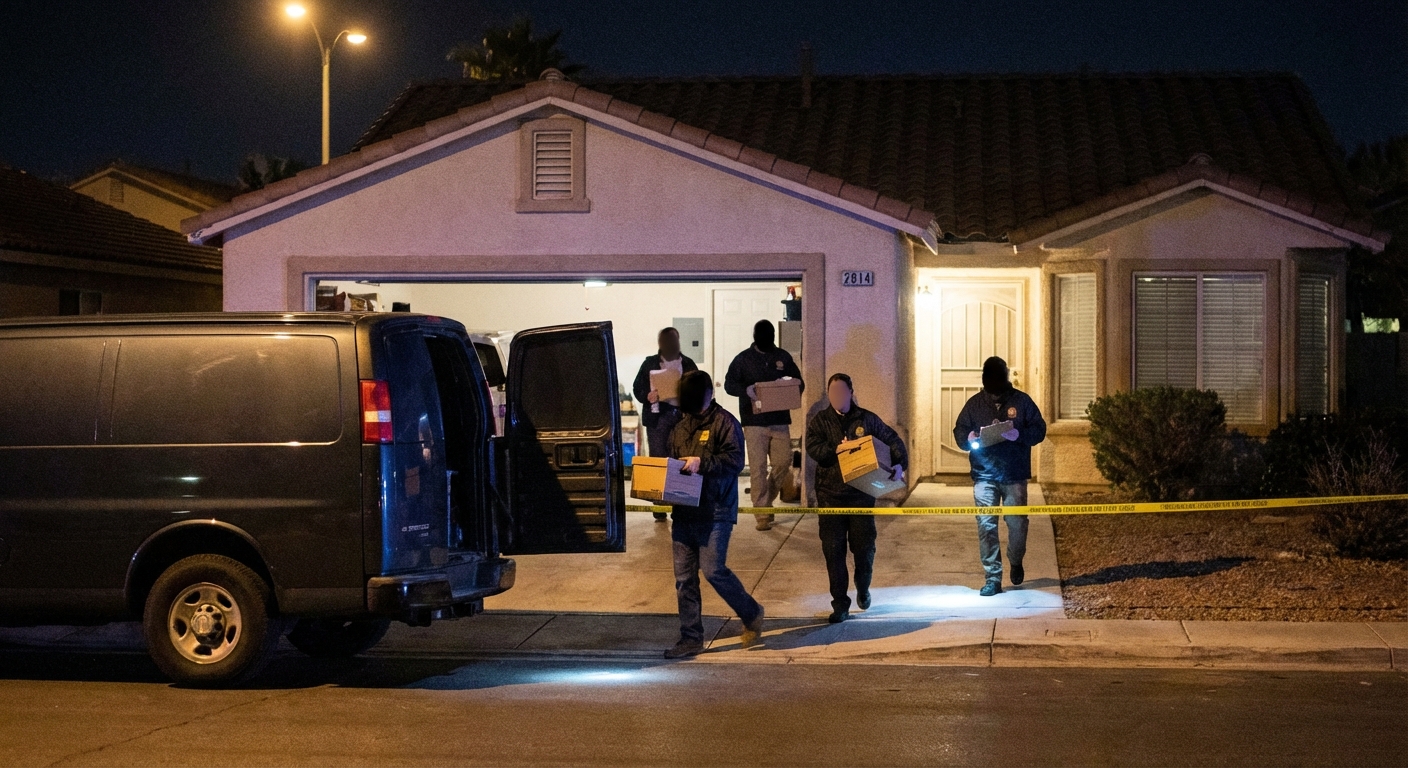
- July 17–18, 2023 — Las Vegas Metropolitan Police execute a search warrant in Henderson, Nevada, tied to the homicide investigation. The LVMPD publicly confirmed that a search warrant was executed in Henderson as part of the ongoing investigation into Tupac’s killing; local reporting and a published search-warrant affidavit described items sought and collected. That search and the documents tied to it reactivated widespread public interest in both the homicide investigation and ancillary rumors.
- September 29, 2023 — Arrest and indictment of Duane Davis in Las Vegas on a first-degree murder charge (according to published reports). In late September 2023, Davis was arrested and later indicted in connection with the 1996 killing; news reports note that the case relied on decades of investigative work and prior statements. These legal actions concern accountability for the shooting and are separate from any claim that Tupac survived 1996.
- 2023–2025 — Court motions, evidentiary disputes, and local reporting. Court filings and motions in the Davis matter (including defense motions to suppress search-warrant evidence) were reported by major outlets; these filings discuss evidentiary sources, timing of warrants, and alleged inconsistencies in witness accounts. Such public court activity is a primary-document layer relevant to assessing later claims that authorities mishandled or concealed evidence.
Where the timeline gets disputed
Three broad categories contain the dispute points about the “Tupac is alive” claim: (1) contemporaneous official records and their authenticity, (2) interpretive readings of art, lyrics, and posthumous releases, and (3) anecdotal sightings and low-verification digital content. Each category has different evidentiary weight and different kinds of supporting sources.
1) Official records and investigative documents: The core documentary anchors for assessing whether Tupac died in 1996 are hospital pronouncements, contemporaneous news coverage, coroner/death-certificate information (publicly reported by major outlets), and police homicide files. These primary records consistently indicate a September 1996 death; they are the strongest documentary evidence against the “alive” claim. At the same time, some researchers and commentators have cited the existence of police files, FBI/FOIA disclosures, and search-warrant affidavits to argue that the investigation was mishandled or incomplete — not that the death did not occur.
2) Artistic materials, aliases, and posthumous production: Tupac’s late-career adoption of the Makaveli name and the quick posthumous release of The Don Killuminati: The 7 Day Theory (Nov. 5, 1996) are frequently invoked by proponents of the “alive” claim as suggestive. Scholarly and journalistic accounts show that Makaveli was an artistic choice and a reference with historical and literary precedents, and the album’s posthumous release is documented — but neither constitutes proof that a death was staged. Using artistic output as direct evidence requires caution because creative choices often invite symbolic interpretation without supporting documentary corroboration.
3) Sightings, images, and viral claims: Over decades, many alleged sightings, photos, and videos have circulated online and in tabloids. Investigations of these items routinely find low provenance (uncertain origin), suspect editing, or absence of corroborating records such as travel logs, eyewitness affidavits with verifiable identity, or contemporaneous official documentation. Entertainment and tabloid sites repeat sightings and viral posts; those sources document the fact the rumors exist but do not verify the underlying claim.
In short: primary official records and mainstream contemporary reporting document Tupac’s hospitalization and death in 1996; other materials (lyrics, imagery, alleged sightings) are ambiguous, often low-quality, and do not by themselves overturn primary documentary evidence. Where sources conflict (for example, contested photos or later recollections vs. official records), those conflicts are gaps to be resolved by verifiable documentation — not by inference alone.
Evidence score (and what it means)
- Evidence score: 18 / 100
- Drivers of the score:
- High-quality contemporaneous documentation (hospital pronouncement and mainstream obituary reporting) that Tupac died in September 1996.
- Primary investigative records (police files, FOIA/FBI releases, and recently executed search warrants) exist and are being used in official investigations; they have not produced authenticated primary evidence that Tupac survived.
- Significant volume of anecdotal claims, viral images, and interpretive readings of art — these are low provenance and do not provide primary documentation.
- Legal filings and recent arrests address accountability for the shooting (who pulled the trigger) rather than whether the victim ultimately lived; that legal record is independent of the survival claim.
- Where evidence conflicts, disputes are typically between low-verification materials and primary official sources; no publicly available primary document credibly supports the proposition that Tupac survived 1996.
Evidence score is not probability:
The score reflects how strong the documentation is, not how likely the claim is to be true.
FAQ
Q: Does the documentary record support the claim “Tupac is alive”?
A: The contemporaneous documentary record (hospital pronouncements, mainstream news obituaries, and official homicide files) supports that Tupac was shot on September 7, 1996, and subsequently pronounced dead on September 13, 1996. Publicly available investigative actions (search warrants, FOIA/FBI releases) and later court filings have focused on determining responsibility for the shooting rather than producing credible primary evidence that he survived. These official records remain the most reliable documentary anchors.
Q: Why do people say “Tupac is alive”?
A: The claim draws on several threads: symbolic readings of Tupac’s Makaveli persona and lyrics, rapid posthumous releases and imagery, decades of viral sightings and social-media posts, and the natural human tendency to attach symbolic meaning to artists who die young. Producers of sensational content sometimes conflate artistic symbolism and rumor with documentary evidence; careful analysis separates the two.
Q: Are there any primary documents that would decisively prove or disprove the claim?
A: Decisive, public, primary documents would include authenticated coroner’s reports released with verifiable provenance, authenticated hospital records, or unambiguous, verifiable contemporaneous eyewitness affidavits that can be corroborated with objective data (surveillance footage with chain-of-custody, verifiable travel records, etc.). To date, mainstream primary records publicly reported corroborate the 1996 death; materials offered in favor of the “alive” claim have not produced such verifiable documentation.
Q: Does recent police action (search warrants, arrests) change the assessment?
A: Recent investigative steps (notably the LVMPD search-warrant execution in July 2023 and related arrest/indictment activity) show renewed official attention to who shot Tupac. Those developments concern homicide accountability and investigatory evidence; they do not, in and of themselves, substantiate the “alive” claim. They are, however, important because they produced new primary documents and disclosures that researchers can evaluate.
Q: Where should readers look for the most reliable updates?
A: Prefer primary-source documents (court filings, search-warrant affidavits, police press releases) and reporting from established news organizations that link to or publish those documents. Be cautious with unverified social-media posts, viral videos, or entertainment pieces that recycle old rumors without adding verifiable evidence. Recent mainstream reporting and released court documents are the most credible places to start for developments.

Culture writer: pop-culture conspiracies, internet lore, and how communities form around claims.