
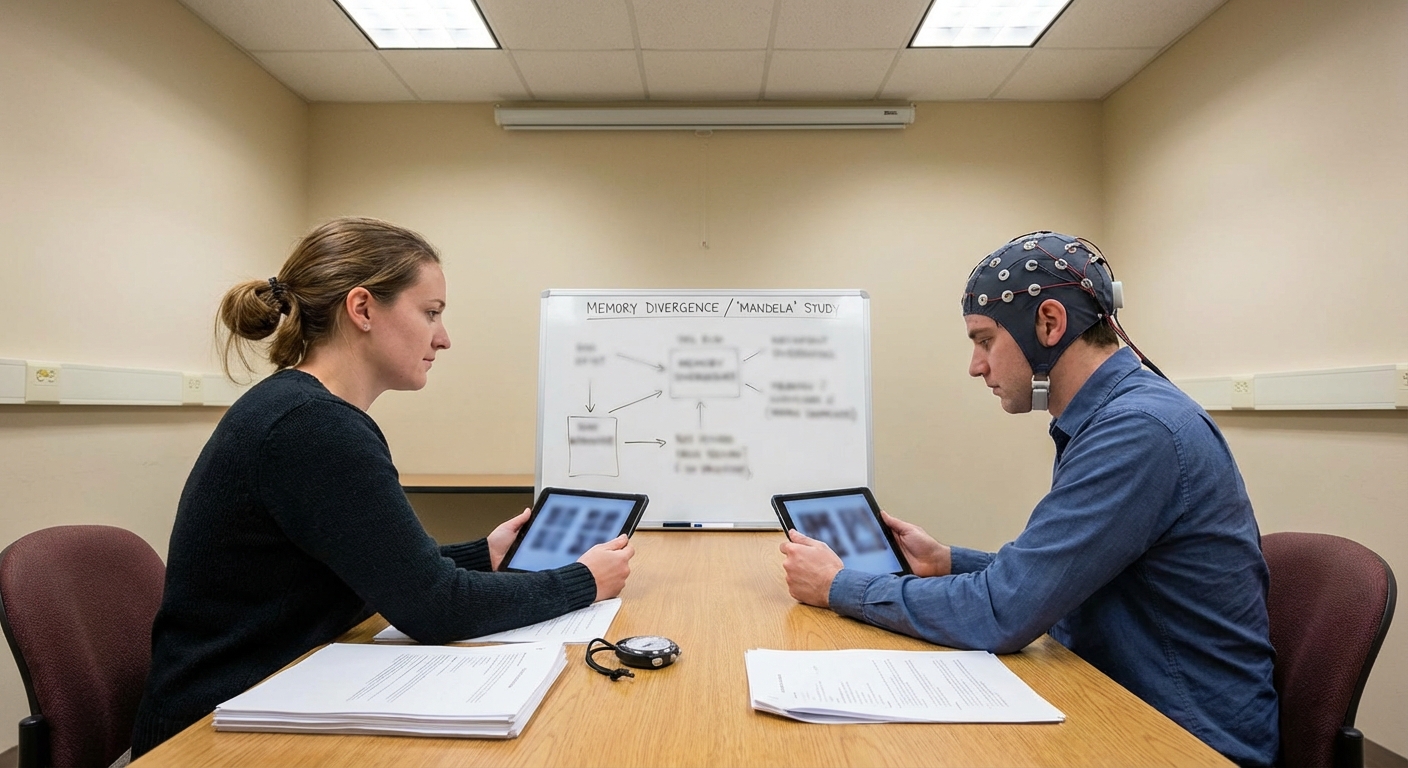
Scope and purpose: This timeline analyzes the claim that the “Mandela Effect” is proof of parallel universes, listing key dates, documents, and turning points and separating documented records from disputed or unproven interpretations. The phrase “Mandela Effect as proof of parallel universes” is used here only to identify the claim under review; the article treats that claim as unproven and examines the documentary record and scientific literature.
Timeline: key dates and turning points
- Late 1970s–1990s: Background events that later seeded misattributions — deaths and media coverage of anti-apartheid figures such as Steve Biko (d. 1977) and later political violence were part of public memory in some countries and could plausibly be conflated with memories of Nelson Mandela by some observers. (source type: historical record and reporting).
- 2009–2010: Term coined and website created — Paranormal researcher Fiona Broome reported that she and others remembered Nelson Mandela dying in prison in the 1980s and then created a website where people shared similar recollections; the name “Mandela Effect” and an online repository of examples became public in this period. (source type: primary origin accounts and contemporaneous site archive).
- 2010s: Viral spread of pop-culture examples — Internet threads, blogs, and social platforms amplified specific examples such as the spelling of the Berenstain Bears, the Monopoly Man’s monocle, and misremembered film lines; mainstream outlets began reporting on the phenomenon and listing examples. (source type: press coverage and encyclopedia entries).
- 2016–2019: Popular-culture consolidation — The topic inspired widely viewed videos, forums, and a 2019 fictional film titled The Mandela Effect that dramatized timeline-shift ideas, further popularizing speculative explanations that invoke parallel universes. (source type: film and cultural reporting).
- 2022: Peer-reviewed empirical work on visual examples — Researchers Deepasri Prasad and Wilma A. Bainbridge published an empirical study quantifying the “visual Mandela effect,” demonstrating that certain iconic images reliably elicit consistent false memories across participants and providing open data and stimuli. The study tested visual recognition and recall across multiple experiments and found that some images elicit consistent, specific false-memory errors in groups of people. (source type: peer-reviewed psychological research).
- 2022–2025: Science journalism and synthesis — Coverage in outlets such as National Geographic, Popular Mechanics, and major health institutions summarized the academic work and emphasized mainstream cognitive explanations (false memory, suggestion, schema-driven reconstruction) while noting that some proponents continue to prefer speculative physics explanations. (source type: science journalism and health reporting).
- Ongoing: Continued debate and contested anecdotal claims — Forums and social media continue to circulate new and historical examples; researchers and fact-checkers document specific instances while emphasizing cognitive mechanisms and archival records as counterevidence to claims that the phenomenon demonstrates literal timeline changes or parallel-universe interactions. (source type: ongoing web discussion, fact-checking, and academic commentary).
Where the timeline gets disputed
Several parts of this timeline are agreed upon in documentation; others are disputed or interpreted differently by advocates and skeptics.
- Origin year and narrative: Most reliable secondary references place Fiona Broome’s publicization of the term around 2009–2010 and her website as the locus of early discussion; some forum posts and retrospective accounts give slightly different dates or emphasize parallel earlier discussions on late-night radio, creating minor discrepancies about exactly when the label crystallized. (documentation: Broome’s site and encyclopedia summaries vs. forum retrospectives).
- Individual examples and archival records: Many cited examples (Berenstain Bears spelling, Monopoly Man monocle, film quotes) have verifiable archival records showing the current canonical form existed historically; disagreements often arise about individual memories and isolated physical artifacts. When claimants present supposed archival items (old packaging, VHS labels), those items sometimes conform to the canonical record upon inspection, while at other times the provenance of the item is unclear. (documentation: publisher records, board-game histories, and fact-checking).
- Interpretation of empirical studies: The 2022 psychological research documented reliable, shared false memories for some visual icons, but the authors explicitly interpreted their results in cognitive terms (memory, perception, prior exposure) and did not conclude the data supports literal universe-hopping. Advocates of the parallel-universe interpretation argue the consistency of some false memories is evidence for a non-cognitive cause; the research community treats that as an interpretive leap not supported by the study’s methods or controls. (documentation: Prasad & Bainbridge 2022 and follow-up reporting).
- Physics versus psychology: Explanations invoking quantum many-worlds or timeline shifts are popular in online discussion, but these are speculative and not empirically connected to the documented memory phenomena; mainstream physics literature and empirically oriented psychology literature treat those as distinct domains and do not provide observational tests linking the Mandela Effect to multiverse hypotheses. When proponents claim a physics mechanism, they rarely present testable predictions that differ from cognitive explanations. (documentation: surveys of the scientific literature and commentary).
Evidence score (and what it means)
- Evidence score: 28/100
Drivers of this score:
- Clear documentation (low-to-moderate strength) that the term “Mandela Effect” originated as an internet/community label and that specific pop-culture examples are widely discussed and archivable.
- Peer-reviewed experimental evidence demonstrating shared, specific false memories for visual icons (Prasad & Bainbridge 2022), which documents that consistent memory errors occur at measurable rates.
- Strong counterevidence for literal timeline changes: archival records, publisher histories, and fact-checking frequently show canonical forms have documentary continuity, undermining claims that physical records were altered by a timeline shift.
- Interpretive gap: Proponents’ claims that the phenomenon is proof of parallel universes rely on inference rather than direct, testable evidence linking memory discrepancies to physics; this weakens the evidentiary basis for the parallel-universe claim.
- Ongoing social amplification: viral sharing and retrospective reinterpretation of memories increase reports but do not provide independent verification of a physical event such as a timeline change. (documentation: journalism and online behavior studies).
Evidence score is not probability:
The score reflects how strong the documentation is, not how likely the claim is to be true.
FAQ
Q: Does the scientific literature support the “Mandela Effect as proof of parallel universes”?
A: No mainstream scientific literature provides empirical support that the Mandela Effect demonstrates parallel-universe interactions. Laboratory research has shown that people can and do share consistent false memories for certain images and phrases, but that research interprets the phenomenon in terms of memory, perception, and exposure, not as evidence of literal timeline shifts. See the 2022 Psychological Science study for the strongest empirical work on shared visual false memories.
Q: When did the term “Mandela Effect” first appear and who coined it?
A: The label was popularized by Fiona Broome after she and others reported a shared memory of Nelson Mandela dying in prison; Broome’s website and accounts date to about 2009–2010 and are the primary origin sources for the term. Encyclopedias and major outlets summarize this origin consistently.
Q: Are there documented archival records that contradict specific Mandela Effect examples (for example, Berenstain vs Berenstein)?
A: Yes. For several high-profile examples, archival records, publisher information, and packaging from earlier decades show the canonical form that currently exists (for example, the Berenstain Bears spelling and many Monopoly images). Fact-checkers and historians have repeatedly located primary-source documentation for those canonical forms, which conflicts with widespread memories but does not by itself imply a timeline change.
This article is for informational and analytical purposes and does not constitute legal, medical, investment, or purchasing advice.

Culture writer: pop-culture conspiracies, internet lore, and how communities form around claims.