
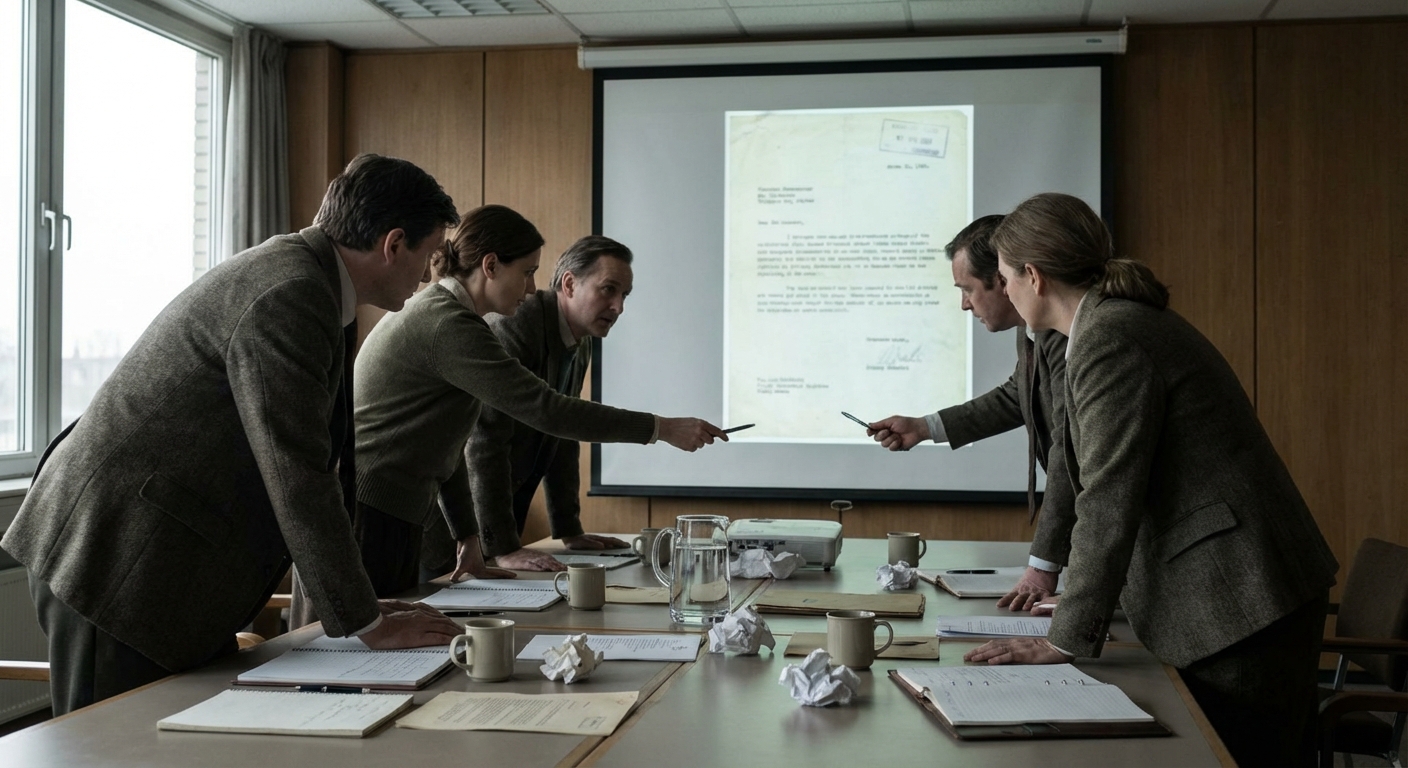
Scope and purpose: This timeline examines the claim known as Operation Northwoods (Declassified Proposal). It traces key documents, dates of creation and release, and moments when the record has been questioned. The subject is treated as a claim: this article summarizes what is documented in primary sources, notes disputed readings of those documents, and highlights gaps where inference has been offered in lieu of direct evidence.
This article draws primarily on the Joint Chiefs of Staff memorandum dated 13 March 1962 (commonly cited as the Northwoods document), related contemporaneous memoranda and meeting notes, and the declassification and public release history managed through the Assassination Records Review Board / National Archives and independent archives. Whenever possible, primary documents are cited so readers can inspect the originals or authoritative reproductions.
Timeline: key dates and turning points
- February 2, 1962 — “Possible Actions to Provoke, Harass or Disrupt Cuba” (memo attributed to Brig. Gen. William H. Craig). A memo dated 2 February 1962 and associated drafts in the Operation Mongoose/“Cuba Project” record list proposed provocative actions and suggested pretexts. Elements of this material are later incorporated among the options cataloged in the broader Northwoods materials. Secondary summaries and archival collections point to a Craig memorandum in early February 1962 as one source of ideas later collected in March.
- 9–13 March 1962 — Joint Chiefs draft and finalize a memorandum titled “Justification for US Military Intervention in Cuba” (the document commonly labeled “Northwoods”), signed by JCS Chairman Lyman L. Lemnitzer and forwarded to the Secretary of Defense. The declassified memorandum dated 13 March 1962 contains an appendix and an annex that list hypothetical “pretexts” — including simulated or real attacks and incidents — that the Joint Chiefs described as possible means to create public and international justification for U.S. military intervention. The full text of the March 13, 1962 memorandum and its annexes is available in declassified reproductions. The document itself is explicit about its status as a preliminary planning submission and repeatedly frames proposals as “for planning purposes.”
- 13 March 1962 — Presentation to Secretary of Defense Robert McNamara. The JCS memorandum was formally addressed to the Secretary of Defense on or about 13 March 1962; the memorandum’s header and distribution lines identify McNamara as the addressee. Contemporary summaries and later archival descriptions confirm this handoff to civilian defense leadership.
- 16 March 1962 — White House meeting notes / Lansdale memorandum referencing a meeting with the president. A memorandum for the record attributed to Edward Lansdale (often cited as “Meeting with the President, 16 March 1962”) recounts White House discussion shortly after the Northwoods memo reached McNamara. Researchers have used this Lansdale memorandum and related materials when assessing how civilian leadership (including President John F. Kennedy) reacted to the proposals. Archival reproductions of the Lansdale notes and related records are preserved in JFK-related collections. Scholars point to these meeting notes as the strongest direct documentary evidence that the proposals were discussed at high levels and were not approved for implementation.
- Late 1990s — Assassination Records Review Board demands and document transfers to NARA; select documents become available to researchers. Materials from the JCS Central Files and other agency holdings that included the Northwoods memo were identified and reviewed under the ARRB process during the 1990s. The ARRB compelled the transfer/release of many JFK-related records into the National Archives’ JFK collection; some Northwoods-related materials were made available to researchers in this period.
- 1998–2001 — Public posting and press coverage: National Security Archive and media reporting bring the Northwoods memorandum to wider public attention. Portions of the Northwoods materials were posted online by the National Security Archive (publicized in the late 1990s and posted more fully in 2001), and mainstream outlets reported on the declassified documents. Contemporary news reporting and archival posts summarize the memo and highlight the suggested pretexts in the annex; major outlets described the plan as a “menu” of proposed pretexts rather than an executed operation.
- 2001 onward — Scholarly and public discussion; reproduction and hosting of the March 1962 memo in multiple online archives. After initial publicity, the Northwoods materials were reproduced by multiple archival repositories and independent sites (including scanned PDFs), enabling broader scholarly review and footnoted treatments in books and journalistic accounts. The primary March 13, 1962 memorandum text is widely preserved in archival PDF form.
- 2017–2018 and later periodic releases — Additional JFK Collection releases and NARA releases expand the available contextual materials (meeting notes, related memos) though classification and redaction choices continue to affect how much context is visible in each release. Subsequent NARA indexed releases and supplementary uploads added more context to the Mongoose/Northwoods files kept in the JFK Collection; these releases show the documentary chain but leave some interpretive questions about intent and approval in scholarly debate.
Where the timeline gets disputed
1) Terminology and scope: Some writers and commentators treat “Operation Northwoods” as an operational order ready to execute; the declassified memorandum itself repeatedly labels the material “preliminary” and “for planning purposes,” and does not appear in the record as a signed, executable presidential order. Primary documents identify the March 1962 JCS memo as a JCS recommendation and planning submission rather than a presidential directive or an executed covert operation.
2) Who “approved” the plan: The JCS memorandum was signed by the Chairman of the Joint Chiefs of Staff and presented to the Secretary of Defense; that signature documents the Joint Chiefs’ authorship and their recommendation to civilian leadership. Multiple sources indicate civilian leadership (McNamara, and according to meeting notes, the president) did not authorize implementation; however, contemporary internal notes and some secondary accounts differ slightly about the tone and content of high-level discussions after presentation. The Lansdale meeting notes are widely cited as the best contemporary evidence of a blunt presidential rejection, but different researchers emphasize different lines from those notes; readers should inspect the Lansdale memo and related records to see the exact wording.
3) Intent vs. planning documentation: Historians and analysts debate whether the memo documents realistic plans that would have been operationalized or whether it primarily cataloged hypothetical options to satisfy a planning request. The memo itself frames items as brainstorming options for planning and repeatedly cautions about involvement of the Soviet Union; historians differ about how seriously the Joint Chiefs and other participants intended the specific pretexts. This is an interpretive dispute rooted in the difference between a military “menu” of planning options and an explicit order to carry out false-flag attacks.
Evidence score (and what it means)
Score: 75 / 100
- Direct primary documentation: A declassified Joint Chiefs of Staff memorandum dated 13 March 1962 exists and is publicly available; it explicitly lists proposed “pretexts” and is signed by JCS Chairman Lyman L. Lemnitzer. This is the single strongest driver of the score.
- Archival provenance and release: The document’s arrival in public collections via the ARRB/NARA/independent archives is documented; multiple archival copies and reputable reproductions exist. This supports verifiability of the underlying records.
- Contemporaneous meeting notes: Related meeting memoranda (e.g., Lansdale notes) corroborate that civilian leaders discussed and pushed back on some proposals; these notes strengthen the chain of custody but leave interpretive gaps.
- Interpretive ambiguity: The memo repeatedly frames proposals as “for planning” and not as an executed operation; historians disagree about whether the memo reflects realistic intended action or brainstorming. That ambiguity reduces the score because documentation does not by itself prove execution or presidential approval.
- Multiple reliable secondary reports: Reputable news outlets and archival institutions reported and summarized the material when it became public, increasing public corroboration and scholarly engagement.
Evidence score is not probability:
The score reflects how strong the documentation is, not how likely the claim is to be true.
This article is for informational and analytical purposes and does not constitute legal, medical, investment, or purchasing advice.
FAQ
Q: What exactly is the Operation Northwoods declassified proposal?
A: The label refers to a March 13, 1962 Joint Chiefs of Staff memorandum titled “Justification for US Military Intervention in Cuba” that includes an appendix and an annex listing suggested pretexts the JCS described as possible options for creating public and international justification for intervention. The document is extant in declassified form and widely reproduced.
Q: When were the Operation Northwoods materials first made public?
A: Portions of the Mongoose/Northwoods material entered the public record via the Assassination Records Review Board transfers in the late 1990s; public posting and wider press coverage followed around 1998–2001 when archival reproductions and media stories circulated. Exact dates vary by file and repository; see the National Security Archive and NARA release indexes for detailed transfer dates.
Q: Did the president approve or order the actions proposed in the Northwoods memo?
A: The declassified record does not show presidential approval or a signed order to implement the annex proposals. Meeting notes and archival memoranda indicate civilian leadership was briefed and that the proposals were not adopted as operational orders; researchers cite Lansdale’s 16 March 1962 memorandum as evidence civilian leaders rejected or did not implement those options. The existence of the JCS memo documents the proposal, not execution or presidential authorization.
Q: How should readers treat claims that the U.S. military “planned terrorist attacks on its own citizens” under Northwoods?
A: Primary documents show proposed options and brainstorming language that include hypothetical covert incidents intended to be blamed on Cuba. The document itself repeatedly frames these as planning suggestions and not as executed orders. Scholarly caution is warranted: the presence of brainstorming about illicit actions is strong documentation that such concepts were discussed at high levels, but those documents do not by themselves prove any implementation or presidential authorization.
Q: Where can I read the primary documents myself?
A: The March 13, 1962 Joint Chiefs memorandum and related annexes are available in archival reproductions (for example, scanned PDFs hosted by independent archives and the National Security Archive). The National Archives’ JFK Assassination Records catalog and the National Security Archive provide pathways to the underlying files. See the references below for starting points.

History-focused writer: declassified documents, real scandals, and what counts as evidence.