
This article examines the UFO/UAP disclosure claims as a set of contested assertions and reviews what is documented in public records, congressional testimony, and official agency reports. We treat “UFO/UAP disclosure claims” as claims (not established facts), summarize the highest-quality documentary evidence, identify disputed points, and list what cannot be proven from available sources.
Verdict: what we know, what we can’t prove
What is strongly documented
1. The U.S. government has publicly acknowledged and studied unidentified aerial phenomena through multiple official efforts, including the Office of the Director of National Intelligence and the Defense Department’s All-domain Anomaly Resolution Office. The ODNI published an unclassified Preliminary Assessment in June 2021 describing the problem set and data limitations.
2. The All-domain Anomaly Resolution Office exists as the DoD’s office with responsibility to collect reports and review UAP cases; AARO has released material and public summaries and maintains an official website with case listings and imagery. Congressional hearings and public briefings document its work.
3. The Defense Department publicly released a congressionally mandated review in March 2024 that reported it found no verified evidence that U.S. investigations had confirmed extraterrestrial technology, and that many historical claims could not be substantiated by archival and interview-based review. The report addressed several high-profile allegations, discussed proposed programs (e.g., a proposed initiative labeled in reporting as “Kona Blue”), and said that some previously circulated specific claims were inaccurate after investigators interviewed witnesses and reviewed materials. Multiple mainstream outlets summarized the unclassified findings.
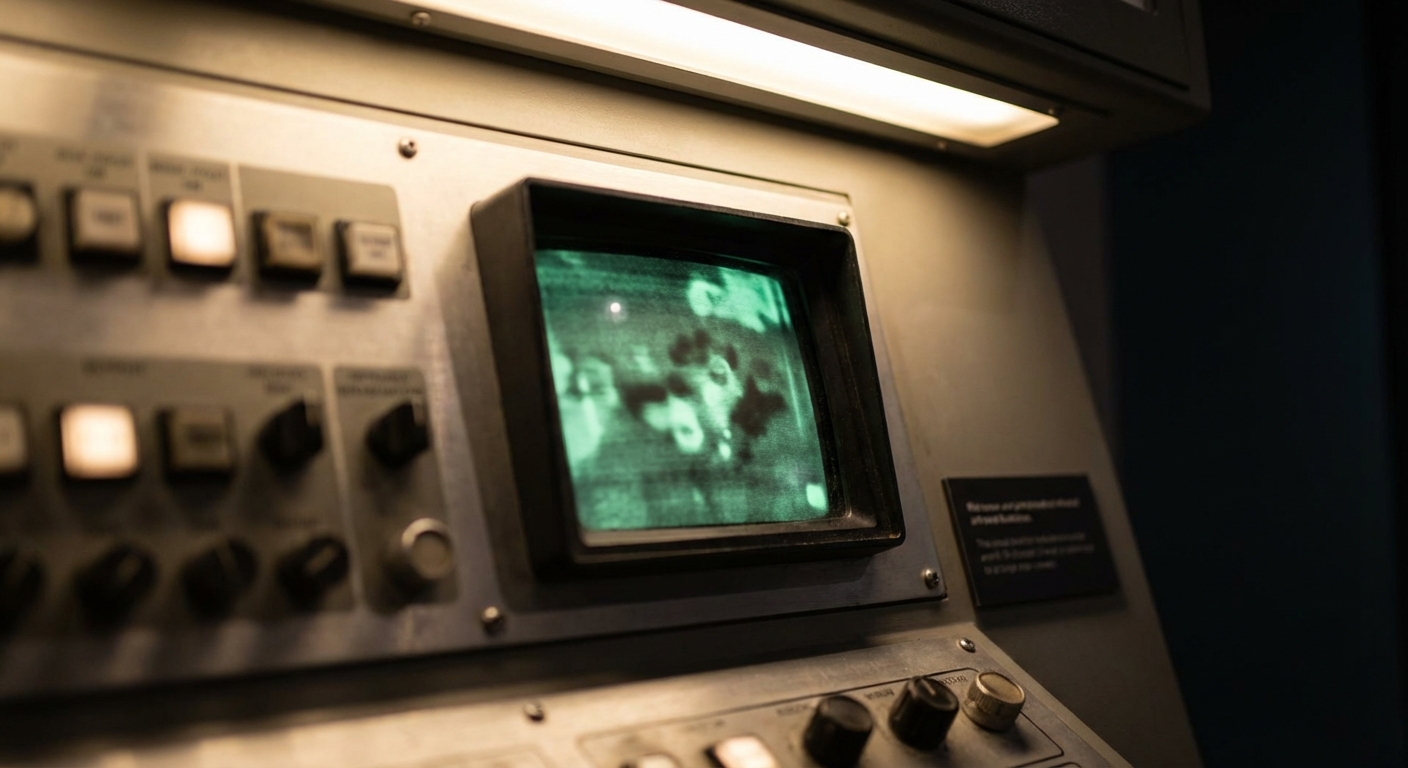
4. Several cockpit/infrared videos captured by U.S. Navy platforms (commonly referred to by their public codenames FLIR1/Tic Tac, Gimbal and GoFast) were authenticated and publicly released by the Pentagon in prior years; those incidents remain part of the documented UAP record even as their explanations remain debated.
What is plausible but remains unproven
1. That classified, compartmented programs existed which generated confusion in oversight and limited AARO’s access to some materials and witnesses. Various public reports and congressional testimony show complexity in cross‑agency authorities and special-access programs; investigators have described access limitations when reviewing historical records. These structural realities make it plausible that some information remains sensitive and fragmented across agencies, but plausibility is not proof of the most extraordinary claims (for example, possession of non-human craft).
2. That some individuals within the intelligence and defense communities privately reported to congressional staff or inspector generals about encounter or retrieval narratives. News reporting and the sworn congressional hearing record confirm that whistleblower allegations and closed briefings occurred; the existence of closed briefings and filings is documented, but the substantive classified material provided in those briefings has not been publicly published for independent verification.
3. That some physical samples offered to investigators proved to be terrestrial alloys on laboratory analysis. The AARO review described at least one case where a sample alleged to be exceptional was analyzed and determined to be manufactured terrestrial alloy; that finding weakens specific claims about anomalous materials but is limited to the specific sample(s) the investigators examined.
What is contradicted or unsupported by available documentation
1. Broad, public documentation supporting the claim that the U.S. government is holding and reverse-engineering multiple intact extraterrestrial vehicles is lacking in the public record. The AARO/DoD review stated investigators were unable to find verifiable evidence substantiating claims of possession and reverse engineering, and publicly released documentation does not show authenticated program files proving such recoveries. Multiple mainstream reports summarized the office’s negative findings on that central allegation.
2. Specific sensational narratives that rely on named programs, widely circulated memos, or supposed test demonstrations of non‑human technology have in several documented cases been refuted, clarified, or shown to be misinterpretations of classified but unrelated programs. AARO interviews disputed or offered alternate explanations for some high-profile personal accounts. Where the AARO review could test a claim, it sometimes found misattribution or ordinary explanations.
3. Public reporting that states the Intelligence Community Inspector General publicly released a document proving reverse‑engineering programs is unsupported. Multiple news accounts say the ICIG received whistleblower complaints and that the ICIG forwarded summaries to Congress; reporting also cites that the ICIG deemed certain procedural elements of a complaint ‘credible and urgent’ in the internal handling process. However, the underlying classified complaint and any detailed ICIG findings have not been published in unredacted form for independent confirmation. The media record therefore documents the existence of the complaint and subsequent oversight actions but does not provide public, verifiable program-level evidence.
Evidence score (and what it means)
Evidence score: 20 / 100
- Why 20? The public record documents agency reviews, congressional testimony, and authenticated sensor/video incidents — which supports that a real phenomenon of unexplained observations exists — but it does not provide corroborated, verifiable documentation for the most extraordinary parts of the disclosure narrative (possession/reverse‑engineering of non-human craft).
- Strong drivers: official ODNI and DoD/AARO reviews; authenticated Navy imagery and pilot testimony; documented whistleblower filings and closed congressional briefings.
- Weak drivers: lack of public, primary-source (unclassified or verifiably declassified) program files, material evidence, chain-of-custody documentation, or independent laboratory reports demonstrating non‑terrestrial origin for samples across multiple independent labs.
- Conflicting reporting and the compartmented nature of classified programs reduce the ability of external investigators to corroborate extraordinary claims.
- Some claims have been directly tested by investigators and, in at least one documented case, disproven or reclassified as terrestrial upon analysis; that lowers the evidentiary weight of anecdotal reports derived from second- or third-hand accounts.
Evidence score is not probability:
The score reflects how strong the documentation is, not how likely the claim is to be true.
Practical takeaway: how to read future claims
1. Evaluate the source and documentary chain. Claims based on named, primary-source documents (declassified memos, audit trails, lab reports with chain-of-custody) are stronger than claims that rely solely on second- or third-hand testimony. The public record shows the difference between authenticated materials (e.g., Navy sensor video) and allegations that remain confined to classified briefings.
2. Distinguish structural secrecy from affirmative proof. That an allegation involves classified programs, restricted special-access authorities, or compartmented funding does not itself constitute proof of the most consequential claims (for example, non-human origin materials). Official reviews have found access limits in some cases but did not locate corroborating materials for those extraordinary assertions.
3. Demand verifiable material evidence when claims are extraordinary. Where possible, seek independent laboratory analyses published in peer-reviewed formats, authenticated document releases, or multiple corroborating primary-source witnesses with verifiable records. The AARO review noted that at least one alleged sample proved terrestrial under analysis — an example of why direct material evidence matters.
4. Treat closed briefings and inspector-general actions as procedural steps, not public proof. The existence of whistleblower complaints and classified briefings (including referrals by inspector generals) is important and warrants oversight, but those actions do not substitute for publicly verifiable evidence.
This article is for informational and analytical purposes and does not constitute legal, medical, investment, or purchasing advice.
FAQ
Q: What do official reports say about UFO/UAP disclosure claims?
A: Official, unclassified reviews (including the ODNI 2021 Preliminary Assessment and the DoD/AARO review released publicly in March 2024) document that UAP encounters exist as a set of unexplained observations, that data quality and reporting processes have been inconsistent, and that investigators who reviewed archives and interviewed witnesses did not find verifiable evidence that U.S. investigations had confirmed extraterrestrial technology or proven reverse-engineering programs in the public record. These reports are publicly available in unclassified summaries and have been summarized by major news organizations.
Q: Did the Intelligence Community Inspector General find whistleblower complaints credible?
A: Reporting indicates that a whistleblower filed a formal disclosure and that inspector-general offices handled and referred certain materials to congressional oversight; some reporting states the ICIG described procedural elements of the complaint as “credible and urgent.” However, the underlying classified complaint and a complete ICIG public report have not been released in unredacted form for independent verification, so public documentation of the specific determinations and underlying classified evidence is limited. Readers should distinguish the procedural fact of a complaint and referral from publicly released program-level evidence.
Q: Are there authenticated U.S. government videos or sensor records of UAP?
A: Yes. The Pentagon has confirmed and released several infrared cockpit and sensor recordings that became publicly known as the FLIR1/Tic Tac, Gimbal and GoFast videos. Those recordings are authenticated incidents in the public record; their physics and causes remain the subject of analysis and debate in different cases.
Q: What would change this verdict?
A: Public release of verifiable primary-source materials — authenticated documents, sustained multi-lab peer-reviewed analyses of physical samples with clear chain-of-custody, or a declassified formal program record that documents possession and reverse-engineering of non-human vehicles — would materially change the evidentiary score. Until such corroborated public documentation exists, claims about possession and systematic reverse‑engineering remain unsupported by the available unclassified record.
Q: How should readers interpret new claims posted online or in the media?
A: Prioritize primary documentation and corroboration. New extraordinary claims should be assessed by: (1) whether they point to primary-source evidence that can be independently verified, (2) whether multiple independent, high‑quality sources corroborate the same facts, and (3) whether researchers with relevant technical expertise have had access to the underlying material. If new material appears, treat it as an item requiring verification rather than as confirmation of the broader disclosure narrative.
Key sources used for this analysis: ODNI Preliminary Assessment (June 25, 2021); AARO public materials and imagery pages; the DoD/AARO congressionally mandated review released March 8, 2024 and associated reporting; the July 26, 2023 House Oversight hearing transcript (David Grusch and others); and authenticated Navy sensor video disclosures. Specific citations are provided inline above for the principal documents and reporting used in this verdict.

Science explainer who tackles space, engineering, and ‘physics says no’ claims calmly.