
This article examines the Philadelphia Experiment claims as a disputed historical narrative and assesses the documentary evidence, credible counterevidence, and remaining gaps. Throughout we treat the story strictly as a claim — not a proven historical event — and separate what is documented, what may be plausible explanation, and what cannot be shown from available records.
Verdict: what we know, what we can’t prove
What is strongly documented
• The modern legend originated in the 1950s with correspondence involving author Morris K. Jessup and a correspondent who used the name “Carlos Miguel Allende” (later identified as Carl Meredith Allen). The annotated copy of Jessup’s book and Allende’s letters are the clear provenance for the narrative that later became the Philadelphia Experiment story.
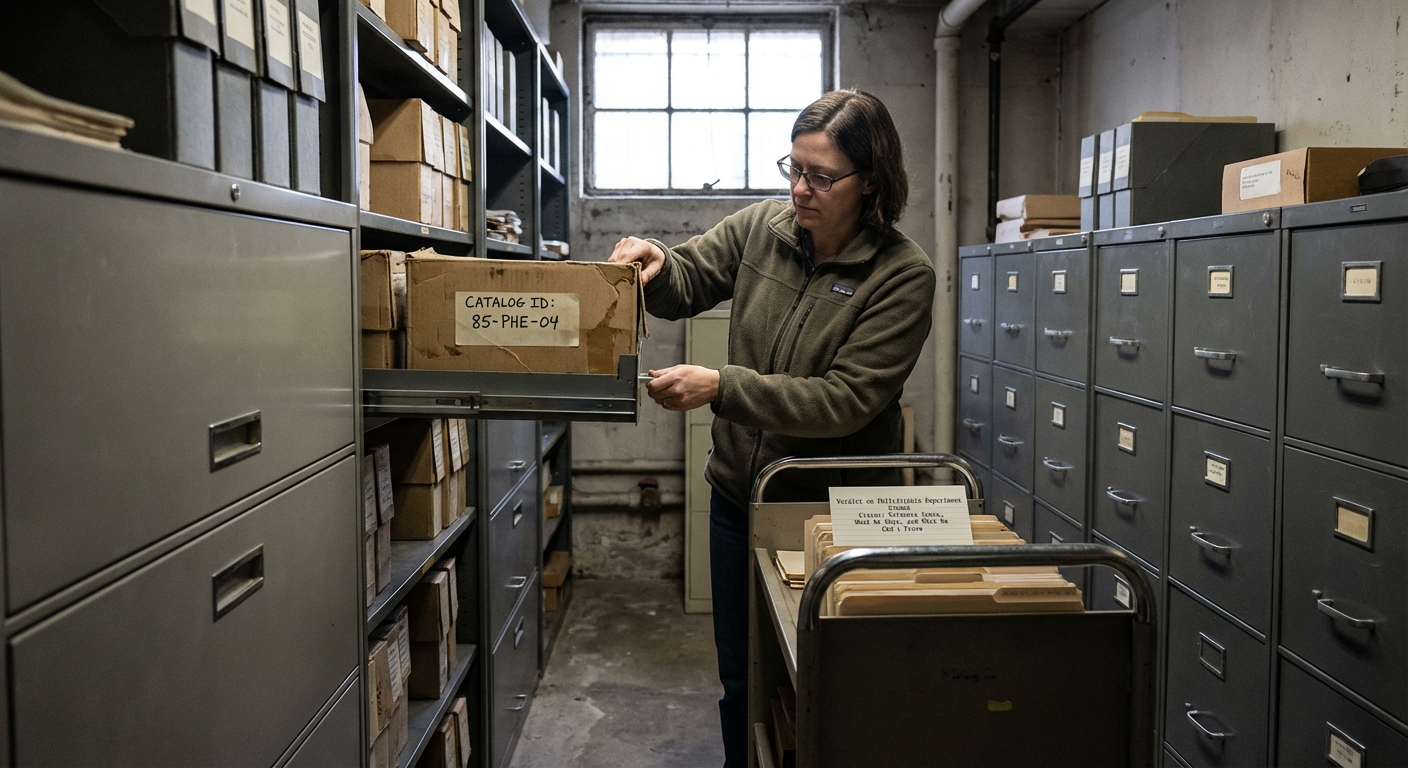
• U.S. naval operational records (deck logs and war diary material for USS Eldridge, DE‑173) have been reviewed by archival staff; surviving action reports and war diaries indicate the Eldridge’s movements in late 1943 do not match the most commonly asserted dates and locations for the alleged experiment. Archival references to the Eldridge deck log/war diary are cataloged (NRS‑1978‑26) and have been the basis for researchers concluding the ship was not in the Philadelphia Naval Shipyard on the dates often given in the claim.
• The Office of Naval Research and Naval historical staff have acknowledged receiving inquiries and materials related to the Jessup/Allende matter in the 1950s; ONR involvement in handling an annotated volume is a documented part of the story that kept the claims in circulation. However, that administrative involvement is not evidence the alleged experiment occurred.
What is plausible but unproven
• Wartime naval research into countermeasures such as degaussing (magnetic signature reduction) is well documented and provides a plausible, non‑mysterious technical practice that could be misunderstood and misreported as an attempt to “make a ship invisible.” Contemporary Navy technical work on magnetic protection and research into signature reduction is real and has been publicly described by Navy publications and sources. This offers a reasonable, ordinary explanation for how rumor and technical language might metamorphose into fantastical claims.
• Some later testimonials and recollections — for example, claims by individuals who later said they remembered unusual incidents attributed to the Eldridge or to other ships — exist in the public record. These personal accounts are part of the corpus of claims but are inconsistent, come decades after the alleged events, and are not supported by contemporaneous official incident reports or medical records. Thus they remain plausible as remembered reports but are not corroborated documentary evidence.
What is contradicted or unsupported
• The most extraordinary elements — instantaneous invisibility to the naked eye, teleportation of a fully crewed warship between two ports in minutes, or crew members fused into bulkheads — lack contemporaneous documentation (ship logs, damage reports, hospital records, or court/military inquiries) that would be expected if such events had occurred. Naval archival reviews and independent fact checks state no official records substantiate these extraordinary physical effects.
• Scientific claims that 1940s‑era equipment produced effects described in the legend are inconsistent with established physics and with documented wartime research programs. While civilian and military research into electromagnetism and signature reduction did occur, there is no experimentally validated mechanism documented in primary sources that would produce the described macroscopic effects (optical invisibility, teleportation, or the fusion of bodies and ship structure).
Evidence score (and what it means)
- Evidence score: 15 / 100
- Primary documentation that would substantiate the extraordinary claims (deck logs, medical/safety reports, contemporaneous Navy incident investigations) is absent or contradicts the claim for the most commonly cited dates.
- The claim’s provenance is traceable to a small number of postwar letters and an annotated book, not to contemporaneous operational orders or experiment reports.
- There are plausible, documented explanations (misunderstanding of degaussing and routine wartime experiments) that account for some claim elements without invoking extraordinary physics.
- Several later personal testimonies and popular books/movies amplified the story, but these were not supported by archival records.
- Lack of contemporaneous medical or operational records for horrific physical effects strongly reduces the evidentiary weight for the most dramatic parts of the claim.
Evidence score is not probability:
The score reflects how strong the documentation is, not how likely the claim is to be true.
Practical takeaway: how to read future claims about the Philadelphia Experiment
• Check contemporaneous primary records first: ship deck logs, war diaries, medical records, and official Naval Historical Center/Operational Archives holdings. When extraordinary physical events are claimed, contemporaneous incident reports and hospital records are the most strong evidence; their absence is important.
• Evaluate provenance: the Philadelphia Experiment legend begins in the mid‑1950s with postwar letters and secondary publication. Claims that rest exclusively on recollections made decades later or on unattributed documents should be treated cautiously.
• Look for plausible technical alternatives: wartime degaussing and radar/magnetic signature work are documented and could be sources of misunderstanding. That does not prove the legend, but it explains how technical language can be misinterpreted as supernatural capability.
• Beware of circular citation: many popular accounts repeat earlier secondary sources (books, podcasters, films) rather than citing primary documents. Trace dramatic claims back to archival records wherever possible.
This article is for informational and analytical purposes and does not constitute legal, medical, investment, or purchasing advice.
FAQ
Q: What are the Philadelphia Experiment claims?
A: The Philadelphia Experiment claims describe an alleged 1943 U.S. Navy test in which the destroyer escort USS Eldridge was reportedly made invisible (to radar or the eye), teleported between ports, and produced severe physical effects on crew. The modern narrative originates with mid‑1950s letters and an annotated copy of an author’s book, not with contemporaneous Navy experiment reports.
Q: Did the Navy ever say anything official about the Philadelphia Experiment claims?
A: Naval historical staff and related fact‑checking work report no official records that substantiate the extraordinary claims; archival reviews of Eldridge logs and war diaries show movements inconsistent with the most commonly asserted dates and locations. ONR did handle an annotated copy of a book in the 1950s as part of public inquiries, but administrative handling is not the same as confirmation of the alleged experiment.
Q: Could wartime degaussing or radar tests be what people remembered as the “Philadelphia Experiment claims”?
A: Yes. The Navy’s wartime research into magnetic signature reduction and other countermeasures is documented and often cited as a plausible non‑mystical origin for the story. Those technical programs sought to reduce detection by magnetic mines or radar; conflation and exaggeration over time can transform technical work into a more fantastical narrative.
Q: Are there eyewitnesses who place the USS Eldridge in Philadelphia when the claim says the experiment happened?
A: Personal testimonies exist but are inconsistent and surfaced long after the alleged event. Independent researchers and archival reviews cite ship logs showing the Eldridge’s locations that do not match the most commonly cited dates; veteran reunions and interviews have not produced contemporaneous corroborating documents for the extreme physical effects described in the legend.
Q: Where can I see the primary records myself?
A: Researchers point to the Eldridge’s deck logs and war diary, which are cataloged in archival inventories (for example NRS‑1978‑26 for microfilm holdings). Ordering procedures and catalog references are typically available through the National Archives and the Naval History and Heritage Command; consulting those primary sources is the best way to verify deployment dates and onboard incidents.

Science explainer who tackles space, engineering, and ‘physics says no’ claims calmly.