
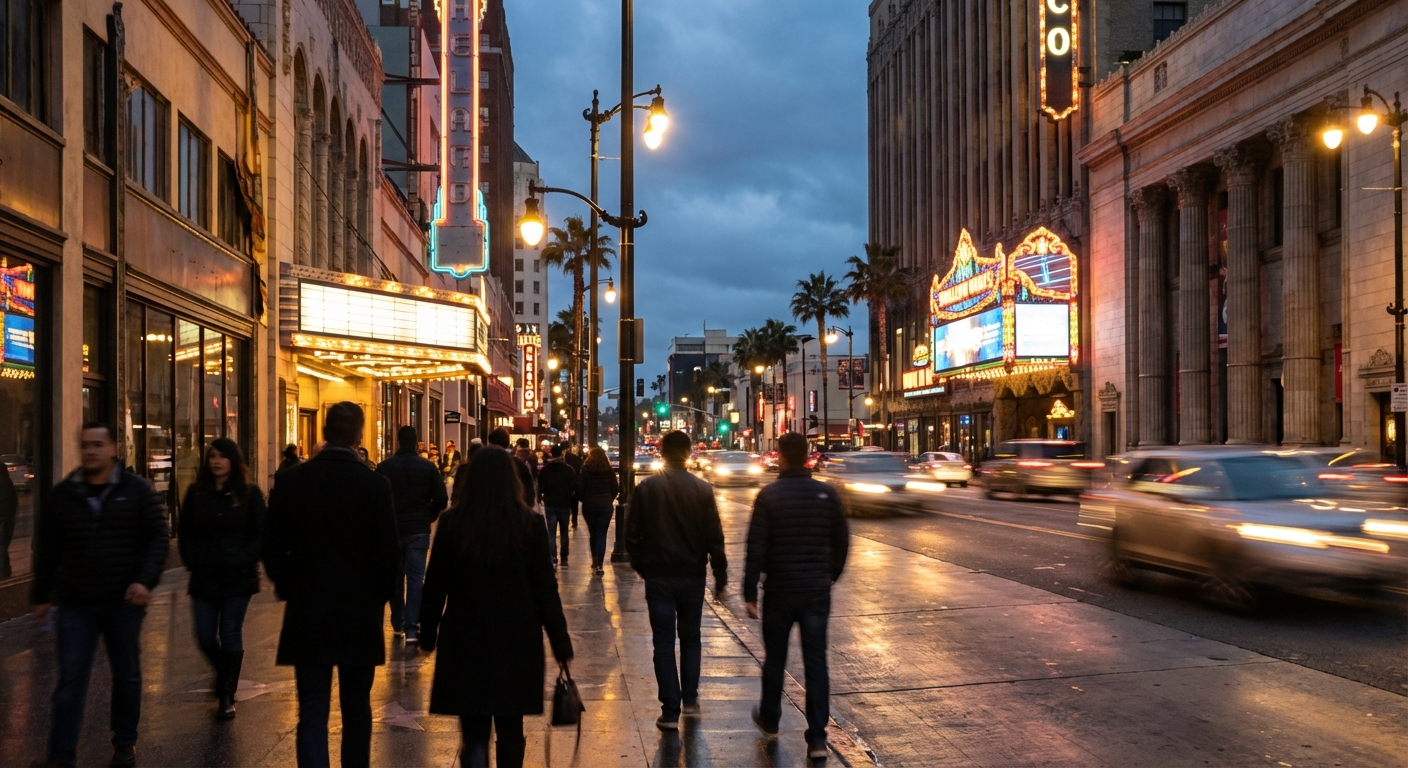
Intro: scope and purpose — This timeline collects documented events, major media reports, and turning points connected to claims about “Hollywood secret societies.” It treats the idea of organized, conspiratorial “secret societies” in Hollywood as a claim under examination, and links each timeline entry to the best available public sources so readers can judge documentation for themselves.
This article is for informational and analytical purposes and does not constitute legal, medical, investment, or purchasing advice.
Hollywood secret societies: claim and scope
The claim framed here—commonly labeled “Hollywood secret societies”—covers several distinct assertions: that formal fraternal groups (like Freemasonry) or elite college societies (e.g., Yale’s Skull and Bones) secretly coordinate Hollywood decisions; that an organized occult or satanic cabal operates inside the entertainment industry; or that criminal networks operating within Hollywood follow ritualized initiation and centralized control. This article does not assume those claims are true; it tests them against primary documents, mainstream investigative reporting, and reputable fact-checking.
Primary public records and mainstream reporting do establish that fraternal orders and elite social networks have historical links to Hollywood (memberships, lodges and social clubs). However, linking such memberships to concealed, coordinated, criminal control requires additional evidence that, in most cases, is absent, disputed, or derived from low-quality sources. Where specific legal investigations, court filings, or high-quality journalism document abusive or criminal behavior, those items are cited separately below. For questions about how claims spread online, see the timeline entries about social media and QAnon-era amplification.
Timeline: key dates and turning points
- Early 1920s — Construction and use of Hollywood Masonic Temple (built 1921–1922). The Hollywood Masonic Temple was built in the early 1920s and for decades functioned as a meeting place for Hollywood-area Masons and celebrities; the building later became the El Capitan Entertainment Center. (source: local history and LA reporting).
- 1920s–1930s — Fraternal clubs, studios and the 233 Club. Publications from the period show organized social clubs and Masonic-affiliated groups (for example the 233 Club) that included studio executives and filmmakers; these were social/fraternal organizations rather than secret political cabals. Contemporary press accounts and later histories document these clubs’ existence.
- Mid-20th century — Verified individual fraternal memberships. Numerous well-documented examples show that prominent Hollywood figures joined mainstream fraternal organizations (e.g., John Wayne’s membership in Freemasonry is recorded by Masonic organizations). These are documented memberships, not proof of conspiratorial control.
- Late 20th century — Skull and Bones and elite college societies: public reporting about Yale’s Skull and Bones (and similar societies) established that they exist, have limited membership, and that alumni sometimes enter high-profile public roles; detailed New Yorker and historical coverage describe the societies’ rituals and secrecy but do not provide evidence they run Hollywood. Allegations tying Skull and Bones directly to Hollywood influence tend to be speculative.
- 2014 — Release and coverage of An Open Secret. Amy Berg’s documentary and contemporaneous press coverage focused on sexual abuse of child actors and alleged enabling by industry gatekeepers; it raised questions about “open secrets” and networks that protected abusers but did not prove the existence of a single, centralized secret society running Hollywood. Critics and outlets urged stronger journalistic corroboration in parts of the film.
- October 5, 2017 — The New York Times and The New Yorker reporting on Harvey Weinstein. Investigative reporting published in early October 2017 documented decades-long allegations of sexual harassment and settlement payments; the journalism catalyzed the #MeToo movement and focused attention on how informal networks and industry power dynamics enabled abuse—often described in public discourse as “open secrets.” That reporting documented systemic problems but does not equate them with a single conspiratorial “secret society.”
- 2017–2019 — Baseline: fact-checking and debunking of celebrity “Illuminati” claims. Major fact-checkers and mainstream outlets (Snopes, the Washington Post and others) repeatedly debunked viral claims that specific celebrities admitted to or belonged to an “Illuminati” or ritual satanic groups. These debunks show many widely-shared claims lack documentary support.
- July 2019 — Jeffrey Epstein arrest and later reporting. Epstein’s arrest on sex-trafficking charges and subsequent reporting about his social connections increased public attention to elite networks and fueled online speculation connecting elites (including some in entertainment) to criminal networks. Epstein’s case is well-documented in court filings and mainstream reporting, but investigators and courts treat Epstein’s network as a criminal trafficking network distinct from the loosely-defined “secret society” narratives often circulated online.
- 2020–2022 — QAnon-era amplification: convergence of celebrity, sexual-abuse, and elite-cabal narratives. Academic and policy research documents how QAnon and pandemic-era misinformation accelerated the blending of pre-existing celebrity conspiracies (Illuminati, satanic panic) with newer claims about trafficking and elites. That period saw rapid social-media amplification but not the release of new primary documents proving a centralized Hollywood cabal.
- 2020s — Ongoing: social media, algorithmic amplification, and fact-checking. Platforms and independent researchers document recurring cycles: viral claims (often relying on symbol-interpretation or anonymous testimony) spread quickly; reputable outlets and fact-checkers repeatedly find the underlying assertions lack primary documentary evidence. Researchers emphasize the role of algorithms and visual pattern-seeking in spreading celebrity-cabal theories.
- Ongoing — Court records vs. online claims: where documentary evidence exists it tends to be criminal case files, settlement records, or recorded memberships. Documentary sources that definitively show a formal, coordinated “secret society” directing Hollywood policy remain absent from the public record; instead the public record contains discrete criminal cases, fraternal membership lists, and investigative journalism about abuse and cover-ups. Readers should distinguish between (a) documented criminal investigations and (b) viral claims without primary-source evidence.
Where the timeline gets disputed
There are several recurring areas of dispute and confusion:
- Membership vs. control: Histories and membership lists confirm that Freemasonry and other fraternal groups included Hollywood figures; critics and conspiracy proponents sometimes infer centralized control from membership alone. Membership is documented in many cases, but membership lists are not evidence of coordinated, conspiratorial control over an industry.
- Documented abuse vs. ritualized cabals: Investigative reporting and court records document criminal behavior by specific individuals and, in some cases, enabling networks or cover-ups (for example, as reported around child-abuse allegations and the Weinstein cases). Those documented abuses are real and important, but prosecutors, journalists and courts treat them as criminal networks or abuses of power rather than evidence of a single occult or ritualized “Hollywood secret society.” Conflating documented criminal behavior with grand occult narratives often mixes proven facts with speculation.
- Symbol-interpretation claims: Many viral claims rely on reading symbols (hand shapes, stage imagery) as proof of membership in a secret society. Fact-checkers show these visual-interpretation claims are easily misapplied and frequently misleading; visual patterns alone rarely constitute primary documentary evidence.
- Conflicting sources and low-quality evidence: The internet hosts many compilations, YouTube documentaries, and blogs that present sensational claims without primary-source evidence. When reputable sources (major newspapers, court filings, academic studies) conflict with low-quality sources, the higher-quality sources must be treated as more reliable. Several fact-checks specifically dispute popular Illuminati/ritual claims.
Evidence score (and what it means)
Evidence score is not probability:
The score reflects how strong the documentation is, not how likely the claim is to be true.
- Evidence score (0–100): 28
- Why this score: 1) There is solid documentary evidence for individual memberships in mainstream fraternal orders and for social clubs in Hollywood’s history (raises baseline documentation).
- 2) High-quality investigative journalism and court records document specific criminal abuses and covering behaviors (e.g., Weinstein reporting, Epstein prosecutions), but these are documented as crimes, not proof of a unitary “secret society” controlling Hollywood.
- 3) Many viral claims rely on weak sources (anonymous posts, recycled conspiracy videos, symbolic readings) with no primary documents; that lowers the overall documentation strength.
- 4) Scholarly and policy research documents how social media amplifies convergence of disparate conspiracies (QAnon-era dynamics), explaining why interest spikes without new primary evidence. This reduces evidentiary weight for viral claims.
Evidence score is not probability:
The score reflects how strong the documentation is, not how likely the claim is to be true.
FAQ
Q: Are “Hollywood secret societies” documented in public records?
A: The term “Hollywood secret societies” bundles different ideas. Public records document (1) fraternal organizations and social clubs that included Hollywood members (e.g., Masonic lodges), and (2) discrete criminal investigations and press reports about abuse or corruption. What is not documented in public records is a single, centralized, occult or criminal “secret society” that runs Hollywood as a unified entity. For membership examples, see Masonic histories and lodge records; for criminal investigations, see mainstream investigative journalism and court filings.
Q: How did the “Illuminati” and celebrity theories become linked to Hollywood?
A: The modern linkage is largely a product of internet-era pattern-seeking, meme culture, and symbolic readings of pop imagery. Fact-checkers like Snopes have repeatedly debunked specific viral claims about celebrities and the Illuminati; academic research shows QAnon-era and pandemic-era misinformation accelerated convergence of older celebrity conspiracies with newer, more extreme narratives. In short: social-media mechanics and symbolic pattern-matching explain much of the popularity of these claims. citeturn3search0turn6search2
Q: Could verified criminal cases in Hollywood be evidence of “secret societies”?
A: Verified criminal cases (for example, proven sexual-abuse cases or trafficking investigations) demonstrate wrongdoing and, in some cases, networks of enabling behavior. Those are serious and well-documented. However, moving from evidence of specific crimes or enabling networks to the claim of a formal, ritualized “secret society” requires independent, corroborated documentation (e.g., organizational charters, internal communications, courtroom exhibits) that specifically show coordinated conspiratorial governance. Such documentary evidence is scarce or absent for the sweeping version of the “secret societies” claim.
Q: If I see a viral video claiming a celebrity is in a secret society, how should I evaluate it?
A: Ask three questions: (1) What primary source is shown? (2) Is the claim corroborated by reputable investigative reporting or public records? (3) Do fact-checkers or mainstream outlets confirm or debunk the specific assertion? Many viral videos rely on visual pattern recognition or anonymous testimony without primary documentation. When in doubt, prefer primary documents, court records, and reputable journalism. See Snopes and major outlets’ fact-checks as starting points.
Q: Where can I find the primary documents cited in this timeline?
A: The timeline links to (a) historical records and local histories about Masonic lodges and the Hollywood Masonic Temple, (b) mainstream investigative journalism (e.g., coverage of Weinstein and Epstein), (c) documentary releases and reviews, and (d) fact-checking sites that address viral Illuminati claims. For those specific entries see the sources cited after each timeline bullet above.

Culture writer: pop-culture conspiracies, internet lore, and how communities form around claims.