
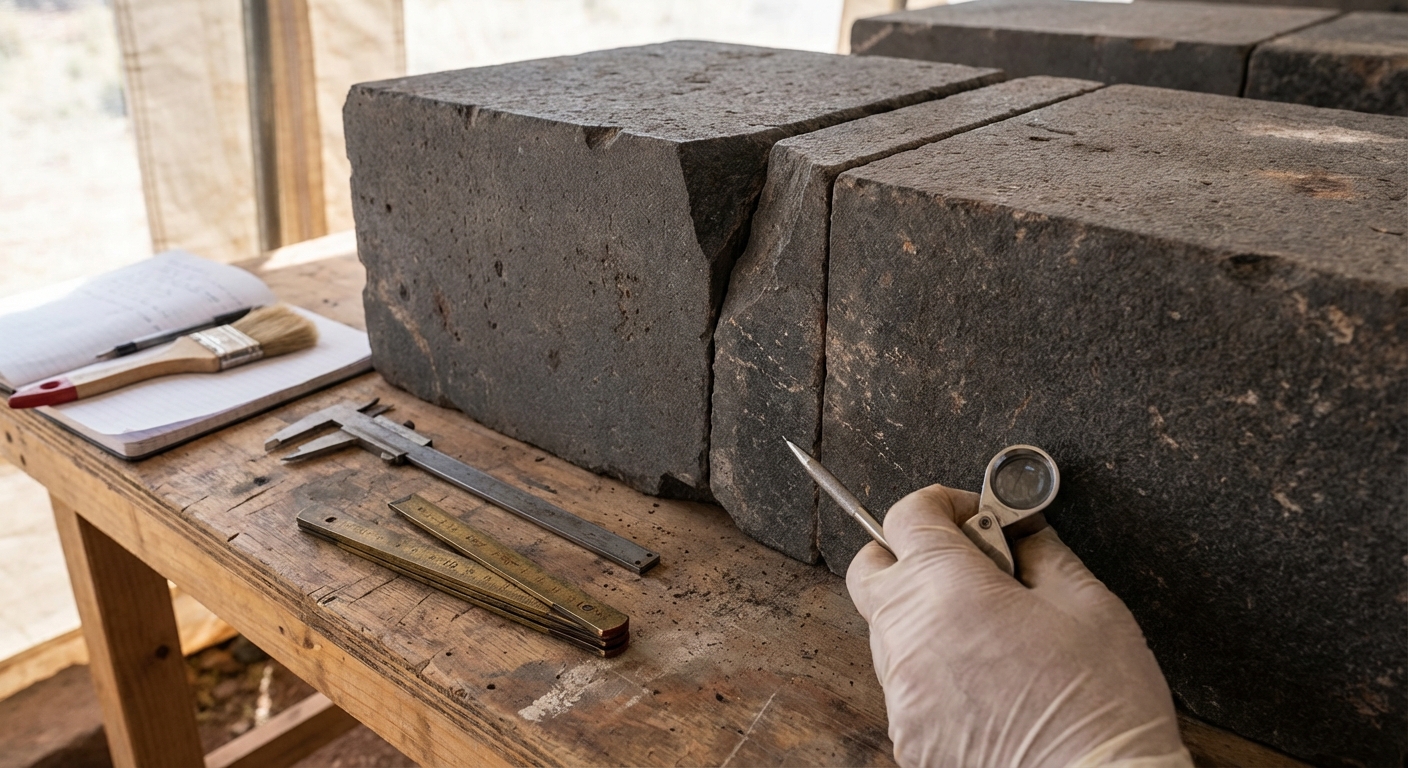
The phrase Ancient Megastructures ‘Impossible Tech’ Claims refers to a set of related assertions that exceptionally large or precisely worked ancient monuments (for example, the Baalbek trilithon, the stonework at Tiwanaku/Puma Punku, submerged formations like Yonaguni, and certain unusual artifacts) can only be explained if ancient builders had access to technologies beyond what conventional archaeology documents. This article treats that idea as a claim and examines the published evidence, experimental archaeology, and scholarly discussion without assuming the claim is true.
What the claim says
Proponents argue that some ancient construction features—very large single stones, millimeter-level stone fits, perfectly right-angled interior cuts, or seemingly anachronistic mechanical devices—cannot reasonably be produced with the tools and methods that mainstream archaeology attributes to the relevant cultures and time periods. The claim is typically couched in one of several forms: that an earlier, lost high-technology civilization produced the work; that non-human (for example extraterrestrial) assistance was involved; or that ancient peoples possessed sophisticated techniques now unknown to us. Supporters often point to specific sites or artifacts as emblematic examples.
Where it came from and why it spread
Three overlapping historical and cultural factors explain the origin and spread of these claims.
- Visible anomalies and scale: Very large or unusually precise stones naturally invite questions about method because the scale and finish are impressive (for example, the colossal blocks at Baalbek, some weighing hundreds of tonnes). Scholarly descriptions of such features, and the difficulty of imagining their movement and placement, created openings for alternative explanations.
- Scholarly curiosity and selective reading: Rigorous archaeological work (excavations, experimental replication, geologic surveys) often documents plausible techniques, but popular writers and some fringe authors have highlighted gaps or emphasized mystery over method. Well-known books and television programs have amplified speculative readings to broad audiences. Academic reviews of pseudoarchaeology trace this pattern.
- Media ecosystems and social platforms: Television shows, books, podcasts, and social-media algorithms prioritize surprising or emotionally engaging narratives. That dynamic amplifies sensational or simple explanations (lost technologies, aliens) over nuanced, technical explanations; recent studies and conference abstracts document the rising prevalence of pseudoarchaeological content on short-video platforms and the difficulty in countering it.
What is documented vs what is inferred
Documented:
- The Antikythera Mechanism: an ancient geared device (Greek, ca. 2nd century BCE) whose existence and mechanical complexity are documented in peer-reviewed publications and high-impact journals; it demonstrates that ancient makers could produce sophisticated mechanical artifacts when the cultural context and purpose existed.
- Göbekli Tepe: formalized monumental architecture in the early Neolithic, with evidence of quarrying, planning, and organized labor; scholarly articles show planned geometry and quarry-derived pillars rather than mysterious machining.
- Puma Punku / Tiwanaku stonework: detailed experimental and analytical studies by specialists (Protzen and Nair and related scholarship) document extremely precise cutting and present experimental replications showing that complex shapes and fine fits can be produced with stone-tool technologies plus geometric knowledge and labor organization. Their monograph and experiments are primary sources for understanding the site’s stonework.
- Baalbek: the site’s monumental Roman-era temple complex and very large quarried blocks are documented by UNESCO and archaeological literature; scholarship discusses plausible transport and ramping methods, though the size of some unplaced quarry blocks remains an engineering puzzle.
- Yonaguni: the submerged rock formation off Japan is well-documented as a geological feature; its interpretation as man-made is controversial and debated among geologists and archaeologists. Neither Japanese cultural authorities nor mainstream archaeology have accepted the site as an engineered urban complex.
Inferred or disputed:
- Claims that these sites require tools or physics-that-do-not-exist today (for example, anti-gravity devices, laser cutting in prehistory, or extraterrestrial machinery) are inferred by proponents from perceived gaps in explanation; such inferences are not substantiated by primary archaeological evidence or peer‑reviewed testing. Where supporters assert impossible physics, mainstream publications and experimental archaeology either provide alternate methods or identify genuine unknowns without endorsing supernatural explanations.
- Arguments that the mainstream chronology is wrong by many thousands of years (used to justify a lost high-tech civilization) are contradicted in many cases by stratigraphy, radiocarbon dating, and other contextual evidence; where dating disputes exist they are debated in specialist literature rather than settled by sensational claims.
Common misunderstandings
- “No-known-tools = impossible”: absence of direct tool finds at a site does not mean the builders lacked effective tools or methods; organic tooling, perishable implements, or non‑diagnostic tool marks may leave little trace, and experimental archaeology can show how tasks could be done with plausible toolkits.
- Cherry-picking features: highlighting isolated impressive features without accounting for the broader archaeological context (settlement patterns, dated materials, quarry locations) produces misleading impressions of impossibility. Professional archaeology emphasizes context and multiple lines of evidence.
- Equating complexity with modern technology: complex outcomes can result from long‑developed craft traditions, large coordinated labor forces, and geometric knowledge rather than from single-step breakthroughs in energy or materials. Experimental replication frequently shows surprising effectiveness of pre-industrial methods.
Evidence score (and what it means)
- Evidence score: forty-five
- Drivers of the score:
- • Strong primary documentation exists for some exceptional artifacts and structures (e.g., Antikythera Mechanism), which are well-published and dated.
- • For many megastructural claims, plausible conventional explanations (quarrying, ramping, leverage, organized labor, geometric design) are published in scholarly literature or demonstrated experimentally (e.g., Tiwanaku replication studies), reducing the need for extraordinary mechanisms.
- • Gaps in direct evidence (missing tool assemblages, partial site preservation, or inaccessible quarries) create real uncertainties that leave room for continued debate, lowering the score.
- • Much of the persuasive force behind the most extraordinary claims depends on inference, selective citation, or popular media amplification rather than new, reproducible primary data, which weakens the evidentiary base.
Evidence score is not probability:
The score reflects how strong the documentation is, not how likely the claim is to be true.
What we still don’t know
There are site‑level and general questions that remain open in scholarship and worthy of further research:
- Specific production and emplacement techniques at a few sites (for example precise lifting methods for exceptionally large monoliths) have competing models; more experimental archaeology, targeted geochemical sourcing, and micro‑stratigraphic fieldwork could narrow possibilities.
- Where exceptionally precise surfaces occur, the absence of preserved toolkits means trace‑analysis and comparative microscopy could help show the most likely tool types. Protzen and Nair’s experiments offer a template for this kind of work.
- Underwater features like Yonaguni require integrated geological, archaeological, and sea‑level research; current mainstream assessment remains that the formation is dominantly natural, but debates about local human modification persist. Focused multidisciplinary fieldwork would be decisive.
FAQ
Q: Are Ancient Megastructures ‘Impossible Tech’ Claims true?
A: The claim that ancient megastructures necessarily required technologies unknown to the builders is not supported by the overall published evidence. Some exceptional artifacts (e.g., the Antikythera Mechanism) show advanced workmanship, but they fit within documented technological traditions and contexts. Where gaps exist, mainstream archaeology seeks testable explanations; extraordinary-technology inferences remain unproven.
Q: Can modern experiments replicate the precise stonework at sites like Puma Punku?
A: Yes—controlled experimental archaeology documented in specialist monographs has replicated many of the precise cuts and fits using stone‑tool methods, abrasive techniques, and geometric procedures; those experiments do not prove the precise historical toolset used everywhere, but they show that high precision is achievable without invoking anachronistic technologies.
Q: Why do these claims keep spreading online?
A: Sensational explanations are easy to communicate and attract attention; popular books and programs have repeatedly promoted hyper-diffusionist or extraterrestrial narratives, and modern social algorithms amplify striking claims faster than careful academic nuance. Recent research presented at professional conferences documents the high prevalence of pseudoarchaeological content on social platforms and the challenges specialists face in public communication.
Q: What would count as decisive evidence for a lost high-technology civilization?
A: Decisive evidence would require reproducible, datable artifacts or in-situ assemblages that could not plausibly be manufactured by known historical technologies, coupled with secure stratigraphy and independent dating (e.g., radiocarbon, luminescence) and peer‑reviewed replication of the observations. Single images, anecdotal reports, or reinterpretations of isolated features do not meet that standard.
This article is for informational and analytical purposes and does not constitute legal, medical, investment, or purchasing advice.

Science explainer who tackles space, engineering, and ‘physics says no’ claims calmly.