
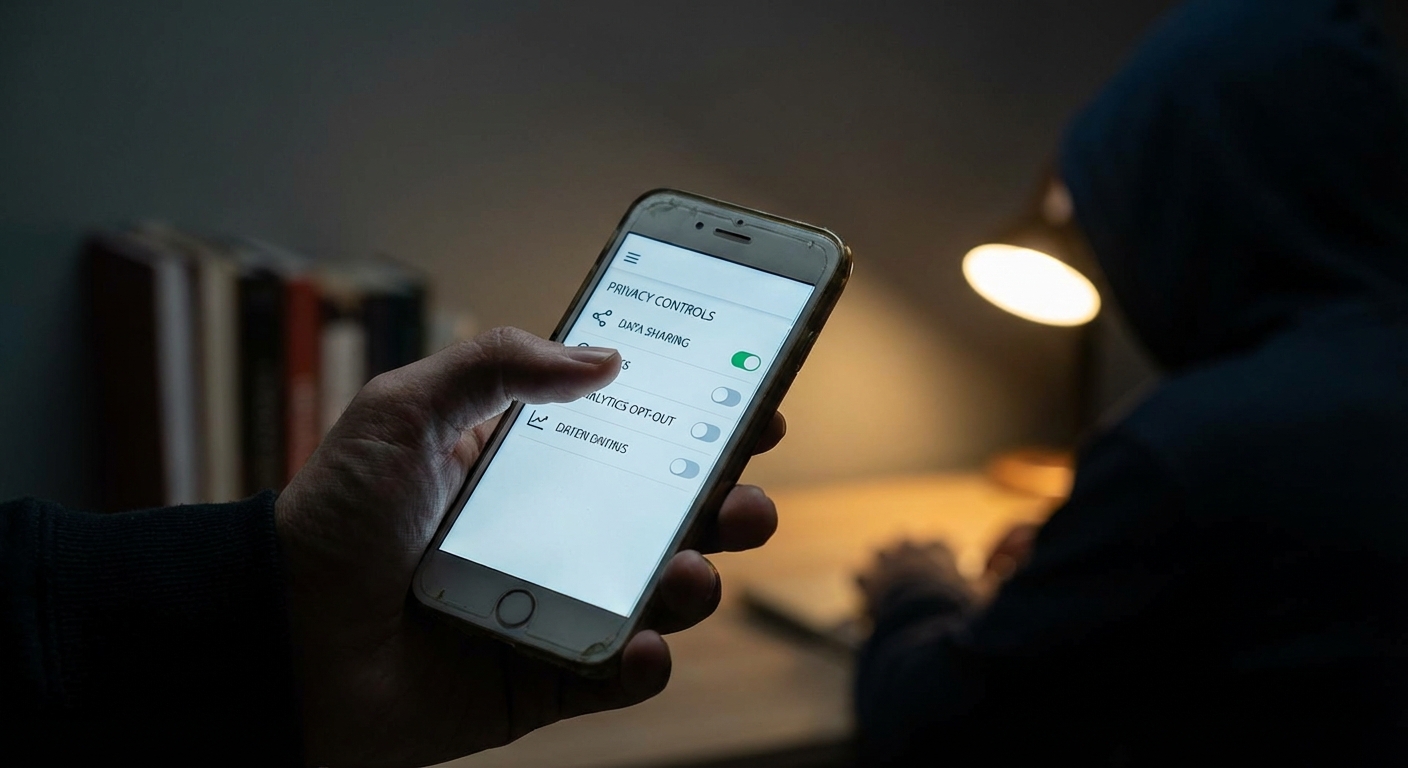
Summary: This verdict examines the claim that data brokers maintain secret or “shadow” profiles on people — including non‑customers — and assesses what is documented, what is plausibly inferred, and what cannot be demonstrated with current public evidence. The focus phrase “data brokers shadow profiles” is used below to guide the evidence review and explain which parts of the claim are supported by official studies, academic work, or credible reporting and which parts remain disputed.
Verdict: what we know, what we can’t prove about data brokers shadow profiles
What is strongly documented
1) Data brokers collect, aggregate, analyze, and sell large quantities of consumer data from many sources. The Federal Trade Commission’s 2014 study of nine data brokers documents systematic collection from offline sources (public records, warranty cards, etc.), online sources (tracking, purchase histories), and third‑party lists, and explains that brokers produce detailed consumer dossiers used for marketing, identity verification, and risk scoring.
2) Companies and platforms can and do infer characteristics about individuals from aggregated signals. Academic and independent research show firms (and platforms) build inferred attributes — for example predicting age, gender, interests or location — by combining disparate data points. Recent quantitative work shows that browsing and tracking data can meaningfully predict personal attributes used in advertising profiles.
3) Government oversight and congressional hearings have treated the data‑broker industry as opaque and capable of assembling detailed profiles without direct consumer interaction. Multiple Senate hearings and committee reports have criticized the lack of transparency in broker practices and called for greater accountability.
What is plausible but unproven
1) That a single broker or network holds a complete, secret dossier on most people that is equivalent to an identity file kept outside all regulation (a complete “shadow profile” for every person). The architecture and business models make it plausible brokers can assemble highly detailed composite profiles for many people, but public documentation does not uniformly show a single definitive, all‑purpose secret file for every individual across all brokers.
2) That non‑users of a specific platform (e.g., people who never signed up for a social network) are always represented in that platform’s internal networks as complete, named profiles. There is documented evidence platforms and brokers receive contact lists, tracking signals, and third‑party data that can create incomplete or inferred records about non‑users; however, the degree, naming, and identifiability of those records vary by company and are often contested between firms and researchers.
What is contradicted or unsupported
1) Blanket claims that every asserted detail of a widely circulated “shadow profile” rumor (for example: specific medical diagnoses, voting intention, or bank account numbers compiled secretly and sold on a mass scale) are proven are unsupported. While brokers create inferred categories and scores, publicly available documentation does not substantiate many detailed, sensational claims about exact contents or uses without company confirmation or legal discovery.
2) Assertions that data brokers always and deliberately break laws to assemble shadow profiles are not uniformly supported by public records. The FTC and other regulators have documented opaque practices and recommended transparency and accountability; they also note legitimate uses (fraud detection, marketing) and the legal complexity of many data flows. Evidence of illegal bulk theft or systematic criminal conduct by the mainstream broker industry is not established in the public reports cited here.
Evidence score (and what it means)
- Evidence score: 57/100
- The score reflects a mix of strong primary documentation that data brokers aggregate and infer consumer data (FTC report, congressional testimony) and high‑quality academic studies showing platforms and brokers can derive sensitive attributes, balanced against gaps where public evidence does not show a single universal “shadow file” or prove many detailed allegations.
- Primary drivers up: FTC 2014 report and later government hearings documenting industry practices and limited disclosures. Academics have measured inference power from web and tracking data.
- Primary drivers down: patchy public disclosures from the industry, limited legal discovery in many cases, and variation among firms—these limit certainty about exact contents, naming, and cross‑company linkages for any given person.
- Conflicts of evidence — for example, company denials vs. independent inference studies — lower the score because they create unresolved questions about scale and identifiability.
- Absent: systematic, contemporaneous audits across the major brokers showing the exact data held for representative individuals.
Evidence score is not probability:
The score reflects how strong the documentation is, not how likely the claim is to be true.
“This article is for informational and analytical purposes and does not constitute legal, medical, investment, or purchasing advice.”
Practical takeaway: how to read future claims
1) Distinguish types of evidence. Primary, government or legal documents (FTC reports; congressional testimony; court filings) offer the strongest basis for claims about industry practice. Peer‑reviewed or reproducible academic work on inference power is the next strongest. Single anecdotes, social posts, or uncited lists are weak evidence without corroboration.
2) Look for specificity. Credible reports name data sources, methods, or companies. Vague statements about “they have everything about you” are not as useful as documentation showing what types of data (purchase records, tracking cookies, public records) are combined and how they are used.
3) Expect variation across firms. Some brokers focus on marketing audiences, others on identity verification or risk scoring. That means practices and data holdings differ; do not generalize a single company’s practices to the entire industry without evidence.
4) Demand audits and transparency. Because the principal weakness in public knowledge is limited disclosure, credible future claims should be backed by audits, regulatory orders, or court records showing what data exist and how they are linked.
FAQ
Q: What exactly are “data brokers shadow profiles”?
A: The phrase refers to asserted dossiers that data brokers or platforms compile about individuals — often without direct interaction or explicit consent — by aggregating public records, commercial transactions, tracking data, and third‑party lists. Government reports and research document that brokers create inferred categories, but the precise size and naming conventions of any single “shadow profile” vary between firms and are not fully publicly disclosed.
Q: Can companies build profiles on people who never used their service?
A: Yes, platforms and brokers can and do build partial or inferred records about non‑users using contact imports, tracking pixels, public records, and purchased data. Multiple journalistic and academic sources document these mechanisms, though the completeness and identifiability of those records differ by company and have been disputed in individual cases.
Q: How much of this is illegal or regulated?
A: Regulation is evolving. The FTC’s 2014 report called for more transparency and recommended possible legislative solutions; some states have adopted laws addressing data‑broker registration or sale of certain sensitive data, but there is no single federal statute that fully governs many aggregator practices. Evidence of illegality is not uniformly present in the public record for the mainstream broker industry, though regulators have flagged problematic practices.
Q: How can I check or reduce my exposure?
A: The FTC report and many consumer guides recommend reviewing opt‑outs on known broker sites, using privacy controls on platforms, limiting third‑party cookie tracking, and reviewing public records where feasible. Note that opt‑outs vary in effectiveness and visibility across brokers; documented guidance is available in the FTC materials cited below.
Q: Why do people keep using the “shadow profile” label if it’s imprecise?
A: “Shadow profile” is a concise term that captures a real privacy concern — that companies can assemble data about people without their direct knowledge. But the label can be used loosely; careful analysis separates documented practices (data aggregation and inference) from stronger claims about fully formed secret dossiers or specific data items that lack public corroboration. This article treats the phrase as a claim to be tested, not as an accepted fact.
Key sources used for this verdict: Federal Trade Commission, “Data Brokers: A Call for Transparency and Accountability” (May 2014); U.S. congressional hearings and committee records on data brokers (2015–2019); academic work quantifying inference power and platform shadow profiles (examples include arXiv and peer research); and investigative journalism on platform and broker practices. These sources are cited inline above where they support specific statements.

Tech & privacy writer: surveillance facts, data brokers, and what’s documented vs assumed.