
Intro: This article tests the claim that the “Mandela Effect” is proof of parallel universes against the best available counterevidence and expert explanations. The phrase Mandela Effect as proof of parallel universes describes a claim — not an established fact — that apparent collective memory differences reflect shifts between alternate realities. Below we summarize where the documentation points, cite peer-reviewed and reputable reporting, and separate what is documented, what is plausible but unproven, and what is contradicted or unclear.
Mandela Effect as proof of parallel universes — The best counterevidence and expert explanations
-
Origin and definition: The popular label “Mandela Effect” was coined in the late 2000s after paranormal researcher Fiona Broome described a shared memory that Nelson Mandela had died earlier than he did in reality; the term was then applied to many collective memory examples. This origin and early online documentation are publicly traceable.
-
Well-documented cognitive science on false memories: Decades of experimental psychology show that human memory is constructive, fallible, and subject to systematic errors (source-monitoring errors, confabulation, suggestion and imagination inflation). Researchers report that repeated imagining, suggestive cues, and social reinforcement can create confident false memories that spread through groups. These mechanisms are documented in experimental and review literature and summarized in mainstream reporting.
-
Collective false memory research maps directly to many Mandela Effect patterns: Controlled studies of collaborative recall and the transmission of false items show how groups can converge on the same incorrect details even when documentary records disagree. That laboratory work offers a repeatable, parsimonious explanation for large-scale shared misrememberings without invoking cross-universe transfers.
-
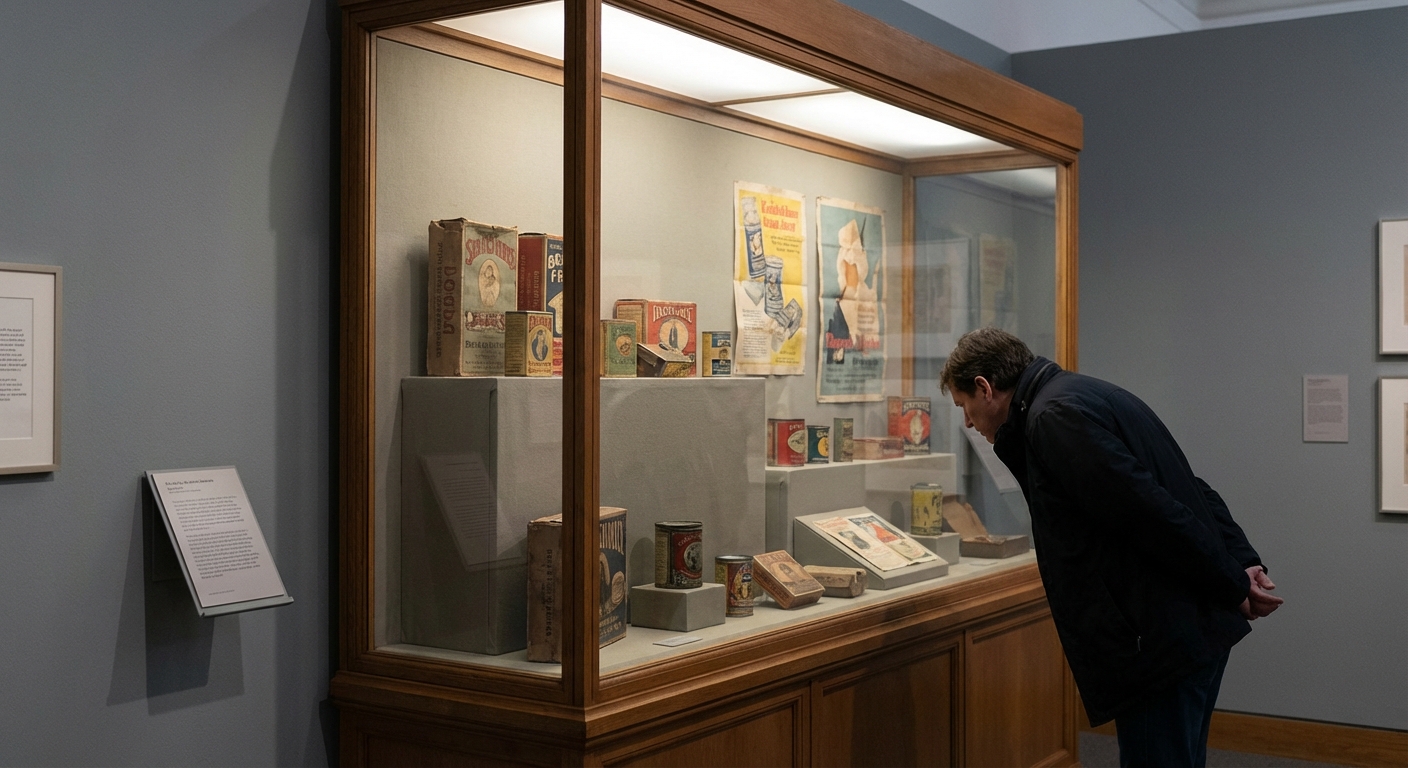
Case checks for iconic examples often show accessible explanations: Specific widely cited items (for example, the “Berenstain Bears” spelling, brand spellings like Febreze, or product-name confusions) have documented historical evidence, packaging, and advertising archives that match the current record; the apparent mismatch usually results from memory, phonetics, or branding history rather than missing documentary traces. Reputable accounts and reporters summarize these case-level checks.
-
Physics explanations do not provide an easy observational mechanism: Mainstream interpretations of quantum mechanics that posit multiple branches or many worlds (for example the Everett/many-worlds interpretation) describe non-communicating branches or mathematically emergent structures. Most statements from physicists and formal analyses emphasize that these frameworks do not predict observable, documentable transfers of macroscopic facts between branches in the way the claim requires; many-worlds remains debated and, in practical terms, non-falsifiable for this kind of cross-branch communication.
-
Conflicts and limits of the counterevidence: While cognitive science explains many Mandela-Effect patterns, not every single anecdote has been exhaustively checked against archival evidence; in some minority of cases archival searches are incomplete or contested. Where archival records are clear, they tend to contradict the claim of changed realities; where records are incomplete, the claim remains unproven, not proven.
Alternative explanations that fit the facts
-
Constructive memory + source-monitoring error: Memory does not store perfect recordings. When retrieval reconstructs an event, people can misattribute imagined or heard information to direct experience. Over time, these errors can become highly confident beliefs and be shared socially. This is the leading psychological explanation for many Mandela-Effect examples.
-
Social transmission and reinforcement: Internet forums, social media, and traditional media can amplify an initial misremembering. People cite and repeat others’ reports, which reinforces the false memory into a culturally shared narrative. Experimental work on collaborative recall shows how such shared false memories form and persist.
-
Branding, orthography, and phonetic confusions: Many cited examples involve similar-sounding names (Berenstain vs Berenstein), brand renaming or stylized spellings, or regional differences. These mundane explanations account for large proportions of reported cases once historical packaging and marketing evidence is checked.
-
Memory biases amplified by media and imagination: Repeated imagining (for instance, mentally rehearsing a line or image) increases the chance the image is later judged to be a genuine memory. Journalistic reporting and experimental summaries document this pathway.
What would change the assessment
-
Documented, timestamped records showing a verifiable change in a public, dated artifact (for example, original magazine issues, broadcast recordings, or archival web pages) where those primary sources themselves contain contradictory versions with authenticated timestamps would be necessary to reopen the claim. In practice, documentary records checked to date generally back the current version.
-
A reproducible, independently verifiable physical signal that matches theoretical predictions from a multiverse model and also permits cross-branch information exchange would be required for the parallel-universe explanation to be scientific rather than speculative. Current many-worlds physics does not provide such an observational channel.
-
Comprehensive archival studies that find authenticated, dated instances of alternate public records inconsistent with contemporary documentary chains would also change the assessment; absence of such evidence favors psychological and social explanations.
Evidence score (and what it means)
- Evidence score: 18/100
- Drivers of the score:
-
- Strong documentation exists for the term’s origin and for many case-level archival checks that contradict the claim.
- Robust experimental literature explains collective false memories and provides repeatable mechanisms that match reported patterns.
- The physics proposals cited by supporters (many-worlds or multiverse ideas) do not, in current formulations, predict observable cross-branch edits of macroscopic documentary facts; physics literature emphasizes non-communication between branches or the interpretive nature of the mathematics.
- Some anecdotal reports remain incompletely checked, leaving isolated gaps where archival evidence is sparse; these gaps lower confidence in giving a stronger score.
Evidence score is not probability:
The score reflects how strong the documentation is, not how likely the claim is to be true.
This article is for informational and analytical purposes and does not constitute legal, medical, investment, or purchasing advice.
FAQ
Is the Mandela Effect proof of parallel universes?
No. The claim that the Mandela Effect as proof of parallel universes demonstrates cross-universe changes is not supported by the best-available documentation. Psychological and social-science research provides repeatable mechanisms for collective false memories, while physics literature does not offer a tested observational mechanism for macroscopic information transfer between branches. Where archival checks exist, they typically back the present record rather than show switched facts.
What kinds of studies most directly challenge the parallel-universe interpretation?
Controlled memory studies (collaborative recall, source-monitoring experiments), archival case checks of product packaging and published sources, and journalistic fact-checking most directly contradict the need for a parallel-universe explanation. These approaches either reproduce the observed phenomena in laboratory settings or validate the documentary record for specific examples.
Do physicists accept the many-worlds idea as evidence for Mandela-Effect-style shifts?
Most working physicists treat many-worlds as an interpretation of quantum mechanics with subtle philosophical implications; it does not provide a standard empirical pathway for macroscopic facts to shift between branches in the way the Mandela Effect claim requires. Prominent discussions of many-worlds emphasize that branches are effectively non-communicating for ordinary observations.
Could future evidence change this conclusion?
Yes. The assessment would change if independently authenticated, timestamped primary sources showed verifiable, documented discrepancies that cannot be explained by record-keeping, marketing, regional differences, or memory error — or if physics provided a tested, reproducible mechanism for cross-branch communication. Absent such evidence, the claim remains unproven and weakly documented.
What should someone do if they encounter their own Mandela-Effect experience?
Start by checking primary sources with reliable timestamps (original packaging, contemporary advertising, library archives, recordings). Consider cognitive explanations (misremembering, suggestion, imagination) and whether social reinforcement could have created a collective memory. When in doubt, consult multiple independent primary records before concluding an anomalous explanation.

Culture writer: pop-culture conspiracies, internet lore, and how communities form around claims.