
Intro: This article tests the claim that certain films and objects are “cursed” against the best available counterevidence and expert explanations. We treat “cursed” as an assertion made about causal influence (that a movie or object produced an abnormal cluster of harms), and we evaluate documentary records, contemporaneous reporting, expert commentary, and scientific explanations for why people perceive a curse. The primary phrase used here for search and framing is “Cursed movies and objects.”
The best counterevidence and expert explanations
-
Documented incidents are real, but causal links to a supernatural “curse” are not documented. High-profile examples cited by claimants—such as on-set deaths or accidents associated with films often called “cursed”—are verifiable as events in public records and reporting, but independent investigations or official findings typically identify natural, medical, or human factors (accident, negligence, illness, or crime), not paranormal causation. For example, Brandon Lee was fatally wounded by an accidental prop-gun discharge on The Crow set in 1993; the district attorney concluded negligence caused his death and no criminal conspiracy or supernatural cause was substantiated.
-
Individual deaths tied to the so-called “Poltergeist curse” (commonly cited examples include Dominique Dunne and Heather O’Rourke) are documented as separate incidents with different medical and criminal explanations: Dominique Dunne was murdered in 1982 and Heather O’Rourke died in 1988 from complications linked to a congenital intestinal condition and septic shock, according to contemporaneous reporting. The existence of those tragedies is not disputed; what is disputed is whether they were caused by any shared external force tied to the film.
-
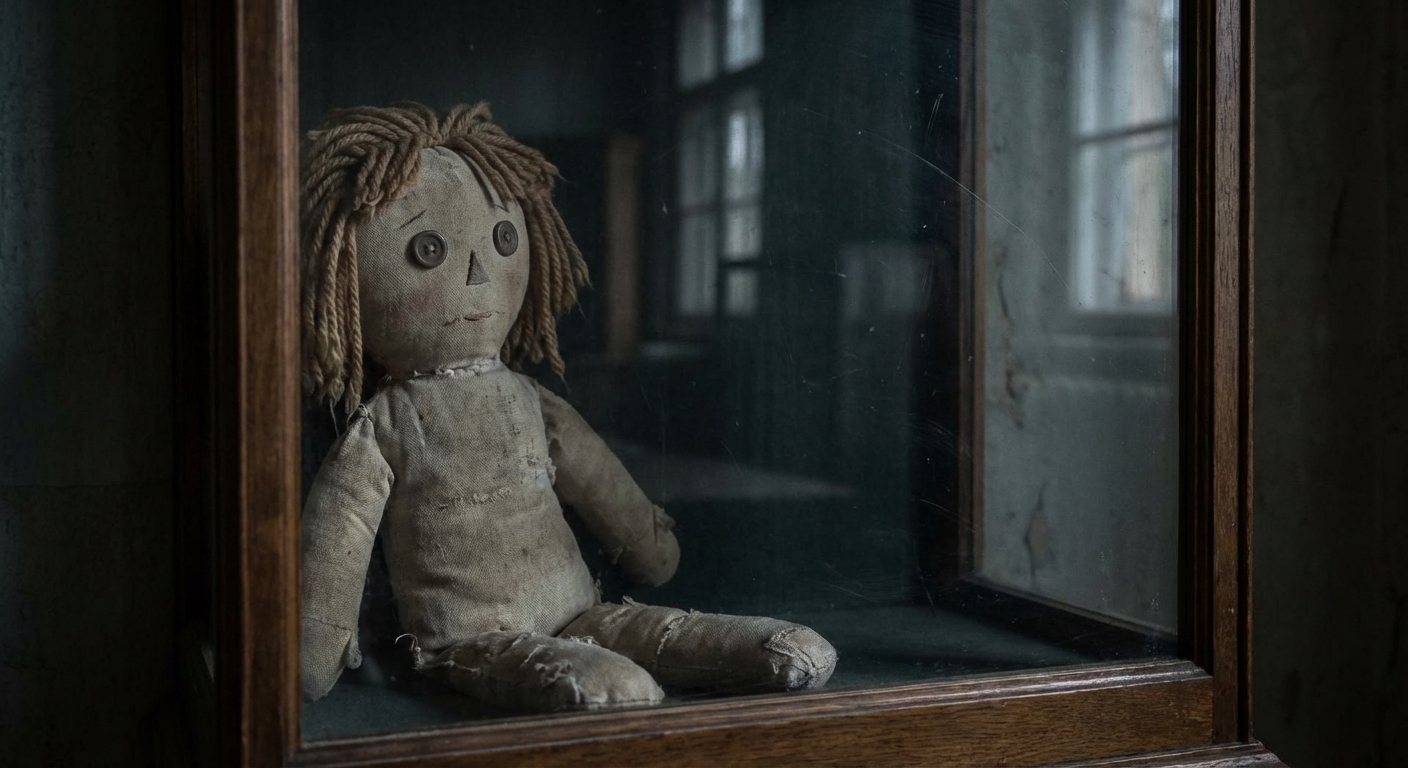
“Haunted” or “cursed” physical objects—most famously the Warrens’ stories about a Raggedy Ann doll and similar artifacts that inspired horror films—rest primarily on personal testimony and the investigators’ accounts. Independent verification is limited: historians and skeptical investigators note that the public record for these claims often relies on the storytellers’ reports rather than corroborating documentary evidence, and critics argue that theatrical retellings and media amplification altered or elaborated original accounts. That discrepancy is highlighted in investigative reporting and skeptical analyses.
-
Psychology and pattern-seeking provide a well-documented alternative explanation for why people perceive curses. Cognitive phenomena such as confirmation bias (favoring information that fits a prior belief), apophenia/pareidolia (detecting patterns or faces in ambiguous stimuli), and the Texas sharpshooter reasoning (focusing on apparent clusters while ignoring larger data) are established by psychological literature and explain how unrelated accidents or coincidences can be interpreted as connected evidence of a curse. These are mainstream scientific concepts offered as counterevidence to supernatural readings.
-
Industry safety failures and ordinary risks on film sets explain many high-profile tragedies without invoking a curse. Investigations into on-set deaths (weapon mishandling, inadequate safety procedures, medical conditions, criminal acts) commonly identify specific operational or medical causes. In recent years, regulators and unions have emphasized formal safety standards, training for armorers and stunt crews, and legislative reforms to reduce those risks—concrete policy responses inconsistent with an unexplained supernatural cause.
-
Media, books, and documentary projects that compile “cursed” lists create selection bias: curators emphasize tragic or uncanny coincidences and omit the much larger number of productions and objects without notable harm. Multiple entertainment outlets publish such lists, but those lists are descriptive compilations, not controlled analyses that compare baseline risk or statistical expectation. The presence of many online lists and retrospective features contributes to perception of a pattern by concentrating memorable examples.
Alternative explanations that fit the facts
When the same cluster of events is presented as evidence of a curse, the documented alternative explanations below fit the available records better than a supernatural causal claim. Each can operate alone or together.
-
Accident and human error: firearms mishandling, stunt failures, or inadequate medical response have direct, testable mechanisms and are repeatedly documented in investigations of set incidents (e.g., prop-gun accidents). These explanations are supported by police reports, DA statements, and later reforms in industry safety practice.
-
Medical causation: an actor’s death attributed by medical examiners to congenital conditions, infection, or other natural disease processes is testable by autopsy and hospital records (for example, the reporting around Heather O’Rourke’s death). These are empirical medical findings, not evidence of a curse.
-
Crime: some tragic events (murder, assault) are crimes with separate legal and forensic explanations; those facts are part of public records and court documents and should not be reinterpreted as supernatural.
-
Cognitive bias and meaning-making: people who already accept a paranormal framework will selectively interpret coincidences as confirming, while others will see the same facts as unrelated. Scientific literature on confirmation bias and apophenia clarifies why clustering and pattern perception are expected psychological responses.
-
Media amplification and narrative shaping: storytellers, documentarians, and film historians may frame a sequence of events as a coherent narrative (a “curse” story). This framing increases salience and can itself change community memory of events, creating a feedback loop that sustains the claim. Multiple entertainment outlets and books collect these stories without comprehensive controls.
What would change the assessment
The current counterevidence does not prove the negative (that no curse exists) but tests the claim against alternative, testable explanations. The assessment would change if any of the following occurred:
-
Reproducible, independently recorded phenomena tied temporally and physically to the same object or production, confirmed by multiple qualified observers and instruments, with rigorous controls and documentation. In practice, paranormal claims have not been supported by such reproducible, independently verified data in academic or forensic literature for these cases.
-
Discovery of documentary records showing coordinated foul play or deliberate tampering intended to create coincidental tragedies; that would convert an unexplained cluster into a criminal investigation with testable evidence. Existing investigations of prominent incidents have typically concluded with accident, illness, or criminal explanations where applicable.
-
Statistical analysis comparing the rate of unusual harms on productions/objects singled out as “cursed” against a well-defined baseline of similar productions, controlling for size, location, stunt frequency, and other risk factors. To date, most “cursed” lists are curated, not statistical, and therefore cannot establish elevated risk beyond expectation.
This article does not assert that every element of a popular account is false; rather, current documentation typically supports mundane explanations or shows insufficient corroboration for paranormal causation. When experts analyze these claims from psychology, forensic investigation, and industry safety perspectives, non-supernatural explanations usually fit the available evidence better.
This article is for informational and analytical purposes and does not constitute legal, medical, investment, or purchasing advice.
Evidence score (and what it means)
- Evidence score: 28 / 100
- Drivers of the score:
- Documentation of individual incidents (deaths, accidents) is strong and well-sourced: contemporary news, police/DA statements, and medical records exist for major examples.
- Direct evidence for supernatural causation is weak or absent: most claims rest on testimonial accounts, retrospective compilations, or selective storytelling rather than controlled, independently verified data.
- Alternative, testable explanations (accident, crime, medical causes, cognitive bias) are plausible and supported by forensic, regulatory, and psychological sources.
- Media amplification and selection bias inflate the perception of a pattern; many lists and books collect memorable tragedies without baseline comparison.
- Some primary-source gaps remain (private files, unshared records, or disputed oral histories), which prevent a complete accounting in certain cases—this lowers the score but does not add support for paranormal causation.
Evidence score is not probability:
The score reflects how strong the documentation is, not how likely the claim is to be true.
FAQ
Q: Are these claims entirely made up, or do any have factual bases?
A: The underlying incidents (accidents, deaths, odd events) are usually factual and documented in news or legal records. What is not documented is a demonstrated causal mechanism linking those incidents to a supernatural “curse.” In many cases the documented cause is medical, criminal, or accidental.
Q: Why do so many people believe in “cursed” movies and objects?
A: Human cognition favors pattern detection and coherent narratives; confirmation bias and apophenia make compelling story arcs sticky. Media that highlight a string of tragedies without context strengthen belief even when alternative explanations exist. Psychological and media-research literature explains this tendency.
Q: Could improved safety regulations eliminate the accidents people call a “curse”?
A: Many on-set incidents trace to preventable safety failures. Industry training, union standards, and legislative measures (for example, firearm-handling rules and safety advisors) address these known risks and aim to reduce accidents—policy responses that align with non-supernatural explanations.
Q: What should journalists and researchers do when encountering a new “cursed” claim?
A: Treat the claim as an assertion that requires testing: (1) verify each underlying incident through primary records (police, hospital, coroner, contemporaneous reporting); (2) look for alternative explanations (accident, crime, medical); (3) seek corroboration beyond eyewitness testimony; and (4) avoid narrative selection bias—compare the rate of incidents against a defined baseline. This is a standard evidence-first approach.
Q: Can any of these claims be definitively disproven?
A: Definitive disproof of a negative supernatural claim is usually impossible (absence of evidence is not disproof), but a claim can be weakened decisively when concrete, testable explanations account for the observed events and when no independent, reproducible evidence for paranormal causation exists. For the most prominent cases, counterevidence and stronger mundane explanations reduce the credibility of the curse claim.

Culture writer: pop-culture conspiracies, internet lore, and how communities form around claims.