
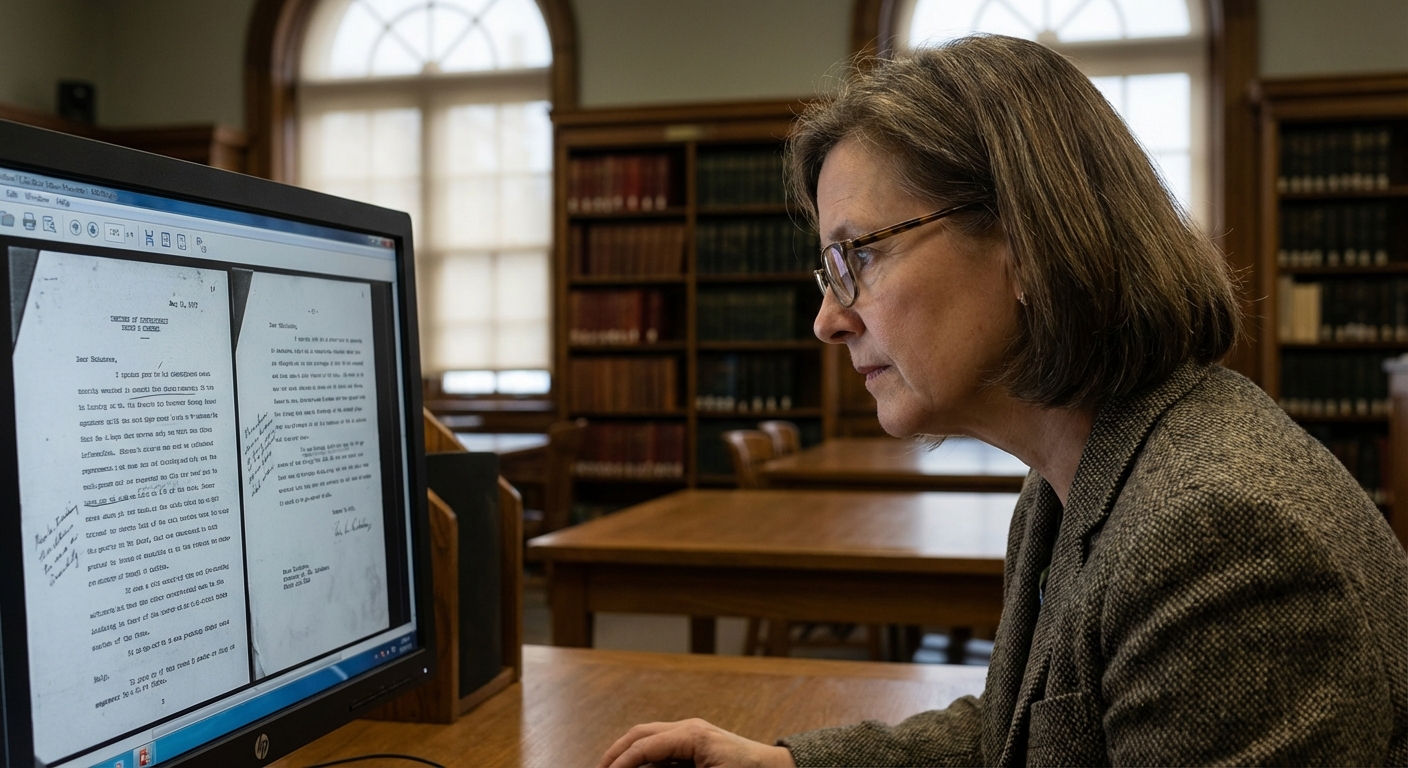
Below are the arguments people commonly cite to support claims about the Tuskegee Syphilis Study (1932–1972). These entries present each argument, identify where it originated (documentary or testimonial source types), and suggest concrete verification tests. The pieces below are arguments people cite, not a statement that every claim is true; each entry points to documentary evidence or the lack of it.
The strongest arguments people cite about the Tuskegee Syphilis Study (1932–1972)
-
Claim: The U.S. Public Health Service enrolled ~600 Black men beginning in 1932 to observe untreated syphilis, and the study ran until 1972. Source type: government/agency records and mainstream historical summaries. Verification test: check CDC timelines and digitized Public Health Service documents. (See CDC timeline and official historical summaries.)
Support & verification: The Centers for Disease Control and Prevention and other historical overviews state the study began in 1932 with 600 men (399 with syphilis, 201 controls) and continued until 1972.
-
Claim: Participants were not told they had syphilis and were misled with the term “bad blood”; informed consent was not obtained. Source type: study records, federal panel findings, historical scholarship. Verification test: inspect Ad Hoc Advisory Panel minutes, contemporaneous PHS memos, and the digitized document collection now held by NLM.
Support & verification: The CDC and the National Library of Medicine digitized collection document that participants were told they were being treated for “bad blood” and that informed consent was not obtained. The Ad Hoc Advisory Panel later concluded the study did not secure informed consent.
-
Claim: Penicillin—an effective treatment by the 1940s—was withheld from infected participants so researchers could observe the disease’s natural progression. Source type: internal memos, later panel reports, and scientific reviews. Verification test: review PHS/CDC medical records and panel deliberations about treatment availability after 1945.
Support & verification: CDC and historical reviews report that by the 1940s penicillin became the standard treatment for syphilis but was not offered to study subjects; the Ad Hoc Advisory Panel and later ethicists flagged withholding penicillin as a central ethical failure.
-
Claim: A Public Health Service whistleblower (Peter Buxtun) leaked documents that led to press exposure and termination of the study in 1972. Source type: whistleblower testimony and contemporary journalism. Verification test: read contemporaneous Associated Press coverage, journalist accounts, and interviews with Buxtun.
Support & verification: Accounts by PBS and CDC describe Peter Buxtun’s internal complaints and his provision of documents to journalists, which contributed to AP reports in 1972 and the study’s end.
-
Claim: A federal Ad Hoc Advisory Panel reviewed the program and declared it “ethically unjustified,” prompting termination and later reforms (including institutional review boards). Source type: federal panel report and government action. Verification test: consult the Ad Hoc Advisory Panel report and subsequent HEW/HHS records and legislation (National Research Act, Belmont Report lineage).
Support & verification: The Ad Hoc Advisory Panel’s findings are summarized by CDC and by the NLM collection; the panel described the study as ethically unjustified and recommended stronger protections for research subjects, helping spur reforms such as the National Research Act and the Belmont Report.
-
Claim: The government settled a class-action lawsuit and issued an official apology decades later. Source type: legal settlement records and presidential statement. Verification test: consult settlement summaries and the 1997 presidential apology transcript or official press release.
Support & verification: Contemporary summaries note a 1974 settlement that provided compensation and health benefits; President Bill Clinton issued a formal apology in 1997. These events are recorded in mainstream reference summaries and government timelines.
How these arguments change when checked
When each argument above is examined against primary and high-quality secondary sources, several patterns appear:
-
Solid documentary base: The basic chronology (1932–1972), enrollment counts (roughly 600 men), the use of the term “bad blood,” the whistleblower role of Peter Buxtun, the creation of an Ad Hoc Advisory Panel, and later federal reforms are supported by contemporaneous government records and reputable historical summaries. These points are documented in CDC materials and the digitized USPHS collection curated by the National Library of Medicine.
-
Well-documented ethical failures: Multiple official reviews and later historical analyses identify absence of informed consent and failure to offer penicillin after it became standard care as core ethical breaches. The Ad Hoc Advisory Panel explicitly labeled the study ethically unjustified.
-
Where nuance matters: Some phrasing that circulates in public discussion compresses or extends claims beyond what the primary records show. For example, claims that the PHS intentionally infected people with syphilis are sometimes conflated with the well-documented fact that PHS followed infected men without treating them. The distinction—intentional infection versus withholding treatment of already infected participants—matters for causal and legal interpretations and should be tested against primary enrollment and clinical records. Examine original PHS intake records and admission/diagnosis memos in the NLM collection to check that distinction.
-
Disputed numbers and downstream impacts: Different sources sometimes report different totals for deaths, infections of spouses/children, or the precise distribution of compensation. These differences often stem from whether the source counts probable syphilis-related deaths, confirmed cases, or downstream family infections. Compare government settlement documents, the Ad Hoc Panel report, and later peer-reviewed demographic studies for precise figures.
-
Effects on public trust are empirically supported but methodologically complex: Multiple studies link the Tuskegee revelations to lower medical trust and different health-seeking behavior among Black Americans, but the magnitude and mechanisms are debated in the literature. Use peer-reviewed social-science research to quantify these effects rather than relying solely on narrative accounts.
This section does not exhaust the documentary material; researchers can consult the NLM digitized collection and CDC historical pages for primary documents and contemporaneous summaries.
This article is for informational and analytical purposes and does not constitute legal, medical, investment, or purchasing advice.
Evidence score (and what it means)
Evidence score is not probability:
The score reflects how strong the documentation is, not how likely the claim is to be true.
- Evidence score (0–100): 86.
- Drivers: Strong primary documentation for the study dates, enrollment, lack of informed consent, and the failure to provide penicillin once it became standard care (PHS/CDC/NLM documents).
- Drivers: Contemporaneous journalism and whistleblower testimony (Peter Buxtun) are corroborated by internal memos and panel minutes.
- Limitations: Some downstream numeric claims (exact counts of syphilis-attributed deaths, family transmission totals) vary between sources or depend on post-hoc interpretation; those require case-level clinical records to resolve.
- Limitations: Causal claims that extend beyond documented actions—such as assertions about intentional infection of uninfected people—are not supported by the core PHS enrollment records and need separate primary-evidence proof. Check original intake and diagnostic files to assess such claims.
FAQ
Q: What does the phrase “Tuskegee Syphilis Study (1932–1972)” refer to in primary records?
A: It refers to the U.S. Public Health Service study that enrolled about 600 Black men in Macon County, Alabama beginning in 1932 to observe the natural history of syphilis; the program continued through 1972 and is documented in CDC timelines and in a digitized USPHS document collection at the NLM.
Q: Did the government intentionally infect people with syphilis?
A: That specific allegation is different from the well-documented fact that infected men were followed without receiving penicillin once it was standard treatment. Primary PHS enrollment documents and later reviews show the study enrolled men who already had syphilis and then withheld effective treatment; allegations of deliberate infection require separate, direct documentary evidence and are not established by the core PHS enrollment and clinical records. Consult the digitized records for case-level verification.
Q: Who exposed the study and how did it end?
A: A Public Health Service employee, Peter Buxtun, raised internal complaints and later provided documents to journalists; Associated Press reporting in 1972 and subsequent public pressure led the Department of Health, Education and Welfare to convene a panel that recommended termination. The panel described the study as “ethically unjustified.”
Q: How certain are the numbers often quoted (deaths, infected spouses/children, settlement amounts)?
A: Many mainstream sources report estimates (for example, the commonly cited $10 million total settlement or per-person settlement figures reported in 1974 coverage). Some numeric totals vary by source depending on how deaths are attributed to syphilis versus other causes; use original settlement documents, Ad Hoc Panel reports, and clinical case records for precise accounting.
Q: What sources should researchers consult to verify contentious points?
A: Primary sources: the NLM digitized USPHS Tuskegee collection (scanned memos, meeting minutes, and correspondence), CDC timelines and museum materials, the Ad Hoc Advisory Panel report, contemporaneous AP and other journalism from 1972, and peer-reviewed historical or ethics literature. These sources together permit case-level checks and contextual analysis.
Selected primary and authoritative resources used in this article: CDC historical pages and museum materials, the NLM digitized USPHS collection, PBS reporting on whistleblower Peter Buxtun, Britannica and peer-reviewed ethics literature. Where sources conflict or use different counting methods, we highlight those differences and point readers to the original documents for verification.

History-focused writer: declassified documents, real scandals, and what counts as evidence.