
This article tests the claim known as the “Watergate Scandal (1972–1974)” against the most direct documentary counterevidence and expert explanations. We treat the subject as a claim under review, summarize primary records and legal findings, note where sources conflict or leave gaps, and explain what those documents do — and do not — prove. Key public records include the Senate Select Committee’s work, the White House tape recordings, the Special Prosecutor’s proceedings, and the Supreme Court decision ordering production of tapes.
This article is for informational and analytical purposes and does not constitute legal, medical, investment, or purchasing advice.
Watergate Scandal (1972–1974): The best counterevidence and expert explanations
-
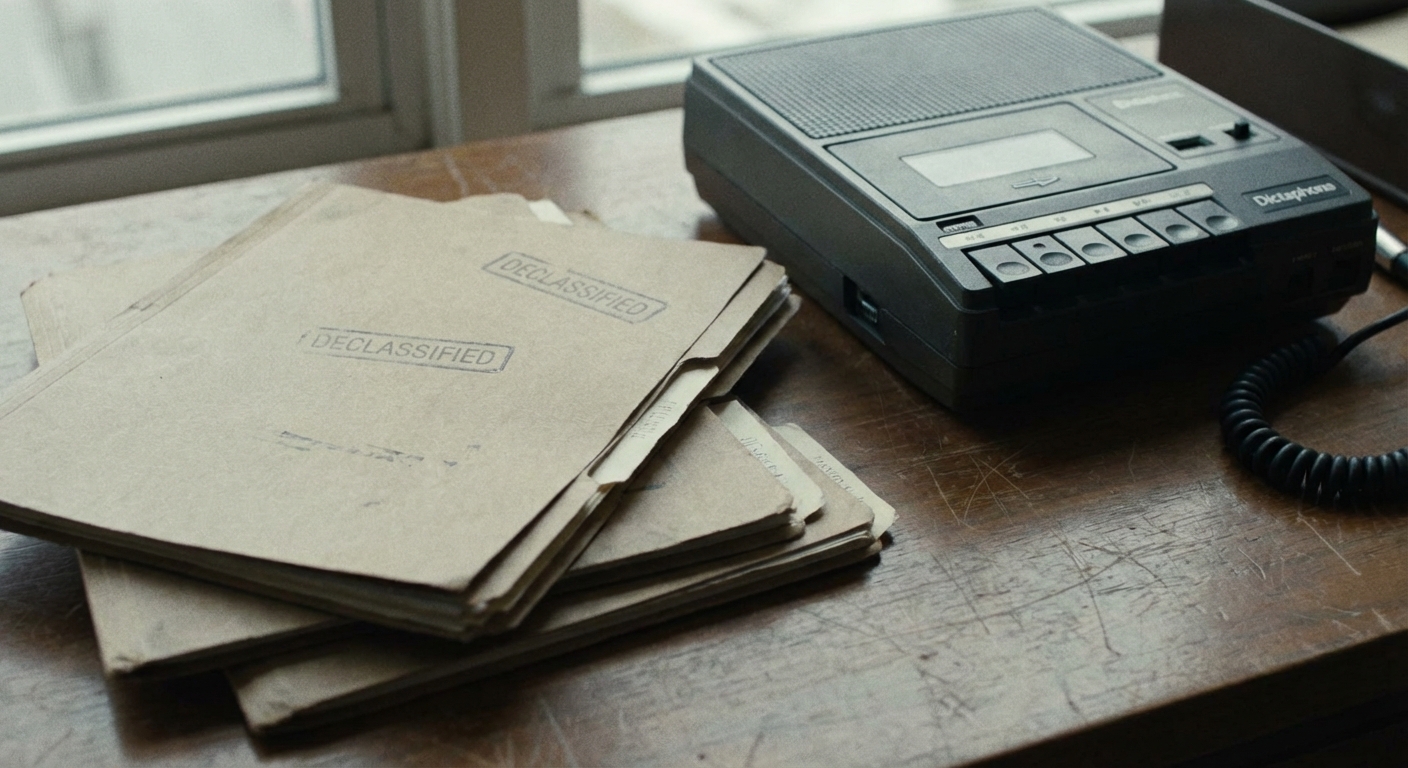
White House tape recordings and contemporaneous appointment logs: The Nixon White House installed an automatic taping system and many of the recorded conversations and detailed tape logs are archived and publicly available. These recordings were the central documentary evidence used by investigators and, after judicial review, were ordered produced to prosecutors. The existence, provenance, and partial release of the tapes are documented by the Richard Nixon Presidential Library and the National Archives. Why it matters: contemporaneous audio and recorded appointment logs are unusually strong documentary evidence because they predate later recollection and provide direct context for senior officials’ discussions. Limits: not every minute of every conversation survives; some recordings were edited, some remain restricted under archival rules, and portions released earlier were edited by the White House before wider review.
-
United States v. Nixon — Supreme Court ruling ordering tape production: The Supreme Court unanimously held that the president’s generalized claim of executive privilege could not block production of subpoenaed tapes in the criminal prosecution. Why it matters: the ruling removed a constitutional shield claimed for the recordings and established judicial authority to review privilege assertions; that decision allowed investigators to hear recordings that informed later findings. Limits: the Court did not decide every factual question about the content — it decided a legal review standard and ordered production for judicial inspection.
-
Senate Select Committee on Presidential Campaign Activities (the Ervin Committee) final report and public hearings: The Senate committee conducted public hearings, subpoenaed documentation, and issued a final report summarizing investigative findings and recommending reforms. Why it matters: the committee compiled witness testimony, documents, and legal analysis in an official congressional record that forms a primary basis for later narratives about the events. Limits: committee reports reflect the evidence the committee obtained and how it framed those items; committees do not make criminal verdicts and some investigative details were later handled in closed sessions or by prosecutors.
-
James McCord’s letter to Judge John Sirica (March 1973) and subsequent testimony: McCord — one of the arrested burglars — submitted a letter saying that perjury had occurred and that defendants were pressured to remain silent; that disclosure triggered renewed investigative focus and helped prompt Senate hearings. Why it matters: it was a contemporaneous statement from a participant that raised questions about broader coordination and possible obstruction; it moved judges and investigators to probe further. Limits: the letter is one person’s account and needed corroboration; it did not by itself determine all responsible actors.
-
Investigative journalism and corroborated sourcing (Woodward & Bernstein, and other outlets): The Washington Post’s reporting, supported by confidential confirmatory sources and later corroboration, helped uncover links between the burglars and campaign or White House figures and kept public attention on the investigations. Why it matters: journalism surfaced leads that prosecutors and Congress followed; public reporting changed political pressure and disclosure dynamics. Limits: newspaper accounts rely on sources and documents that must be checked against official records; some early press reports were incomplete or revised as new documents emerged.
Alternative explanations that fit the facts
When assessing counterevidence, analysts consider multiple hypotheses that could explain the same documentary record. Below are alternative explanations that have been proposed and how primary documents bear on them.
-
Accidental or isolated criminal activity by low-level operatives (no White House direction): This explanation interprets the June 17, 1972 break-in and related actions as the operations of a small criminal team that did not operate under higher-level political direction. Counterevidence: McCord’s letter and subsequent testimony, the links uncovered by investigative reporting, and the content of some taped conversations point to connections between campaign operatives and White House aides; those connections undermine a purely isolated-actor explanation but do not, by themselves, resolve intent or chain-of-command questions.
-
Deliberate White House and campaign coordination to obstruct investigation: This interpretation reads recorded conversations, document trails, and prosecutorial findings as indicating coordination at higher levels to impede detection and investigation. Counterevidence to this alternative (i.e., reasons to doubt a fully centralized, preplanned cover-up) includes gaps in the record — missing or edited tape segments, redactions, and disagreements among participants’ accounts — which complicate assertions about who ordered what and when. The Supreme Court decision meant the tapes had to be examined in court; researchers should rely on the full unedited evidentiary record where available rather than summary accounts.
-
Conflation or overinterpretation by contemporaneous reporting and later narratives: Some observers argue that investigative momentum and subsequent narratives (books, films) emphasized particular links and inferences that go beyond what any single primary document proves. Counterevidence: researchers can and do compare contemporaneous transcripts, court records, and official reports to test later narrative claims; discrepancies between press accounts and primary archives are documented in scholarly reviews. Limits: major documentary findings (tapes, court orders, congressional reports) remain central and cannot be dismissed by narrative critique alone.
What would change the assessment
The evaluation of the claim “Watergate Scandal (1972–1974)” depends on the documentary record. Evidence that would materially change the assessment includes:
-
Release of any withheld or heavily redacted, contemporaneous White House recordings or logs that materially alter the chronology or introduce new participants not previously documented. The Nixon tape program is an archival collection; additional releases or authenticated tapes would need re-examination.
-
Discovery of authenticated documentary proof (letters, memos, meeting minutes) that unequivocally establish a different chain of command or contradict sworn testimony relied on in congressional or prosecutorial findings. Official committee records are useful comparators.
-
New, verifiable testimony from primary participants with supporting documentary corroboration that materially revises prior accounts (for instance, authenticated contemporaneous correspondence that contradicts later statements). Until then, analyses must weigh contemporaneous records more heavily than recollections produced long after the events.
Evidence score (and what it means)
- Evidence score: 86 / 100
- Drivers:
- Strong primary documentary base: recorded White House tapes, appointment logs, and court-ordered disclosures boost score.
- High-quality official review: a unanimous Supreme Court ruling (United States v. Nixon) gave legal force to production of evidence.
- Comprehensive congressional investigation: the Senate Select Committee’s public hearings and final report compiled witness testimony and documents.
- Corroborating contemporaneous statements from participants (e.g., McCord) and investigative journalism that generated additional leads.
- Score reduced for limits: missing/edited tape segments, redactions, and the need to interpret motives and intent from recorded conversations rather than explicit confessions.
Evidence score is not probability:
The score reflects how strong the documentation is, not how likely the claim is to be true.
FAQ
Q: What does the evidence show about the Watergate Scandal (1972–1974)?
A: The primary documentary record — recorded Oval Office conversations and appointment logs, the Senate committee record, court filings, and the Supreme Court’s order to produce tapes — provide a dense factual substrate for investigating alleged misconduct and obstruction. Those materials are publicly archived and have been examined by prosecutors, Congress, and courts. They form the strongest basis for claims and counterclaims; where documents are missing or redacted, reasonable uncertainty remains and is noted in official records.
Q: How reliable are the White House tapes as evidence?
A: Contemporaneous audio recordings are high-value evidence because they are created at the time of events. Courts and investigators treated them as central to fact-finding once their authenticity and chain of custody were established. Limitations include selective release and, in some cases, missing segments; legal and archival reviews determine what can be publicly released.
Q: Did the Supreme Court rule that the tapes proved criminal conduct?
A: No. United States v. Nixon addressed whether the president could invoke executive privilege to prevent production of tapes in a criminal subpoena; the Court ruled that privilege did not justify withholding the material. The Court’s decision cleared the way for judicial review and prosecutorial use of the tapes but did not itself render factual findings about criminal guilt. Those factual determinations came from subsequent review of the recordings and related evidence.
Q: Are there major conflicts in the documentary record?
A: Some conflicts and gaps exist: the White House initially provided edited transcripts, some tapes were missing or altered, and participants’ later recollections sometimes diverge from contemporaneous records. Official repositories (the Nixon Library and National Archives) publish tape logs and many recordings; where sources disagree, responsible analysis notes those conflicts, cites the original materials, and avoids speculation beyond what documents show.
Q: Where can I read the primary documents myself?
A: Key primary sources include the Nixon White House tape collections and finding aids (Nixon Library / National Archives), the Senate Select Committee materials and final report, the text of United States v. Nixon, and contemporary court records and transcripts. Researchers should consult those repositories directly to verify quotations and context.
Note on sources and conflicts: this article draws on official archival holdings (Nixon Library, National Archives), the Senate Select Committee summary, the Supreme Court opinion, contemporary reporting, and later retrospective accounts. Where sources conflict (for example, different press narratives vs. archival transcripts or where tape segments are missing), we explicitly identify the disagreement and cite the underlying records rather than offering speculative resolutions. Readers who need to pursue legal or historical conclusions should inspect the original docketed materials and unedited transcripts in the cited repositories.

History-focused writer: declassified documents, real scandals, and what counts as evidence.