
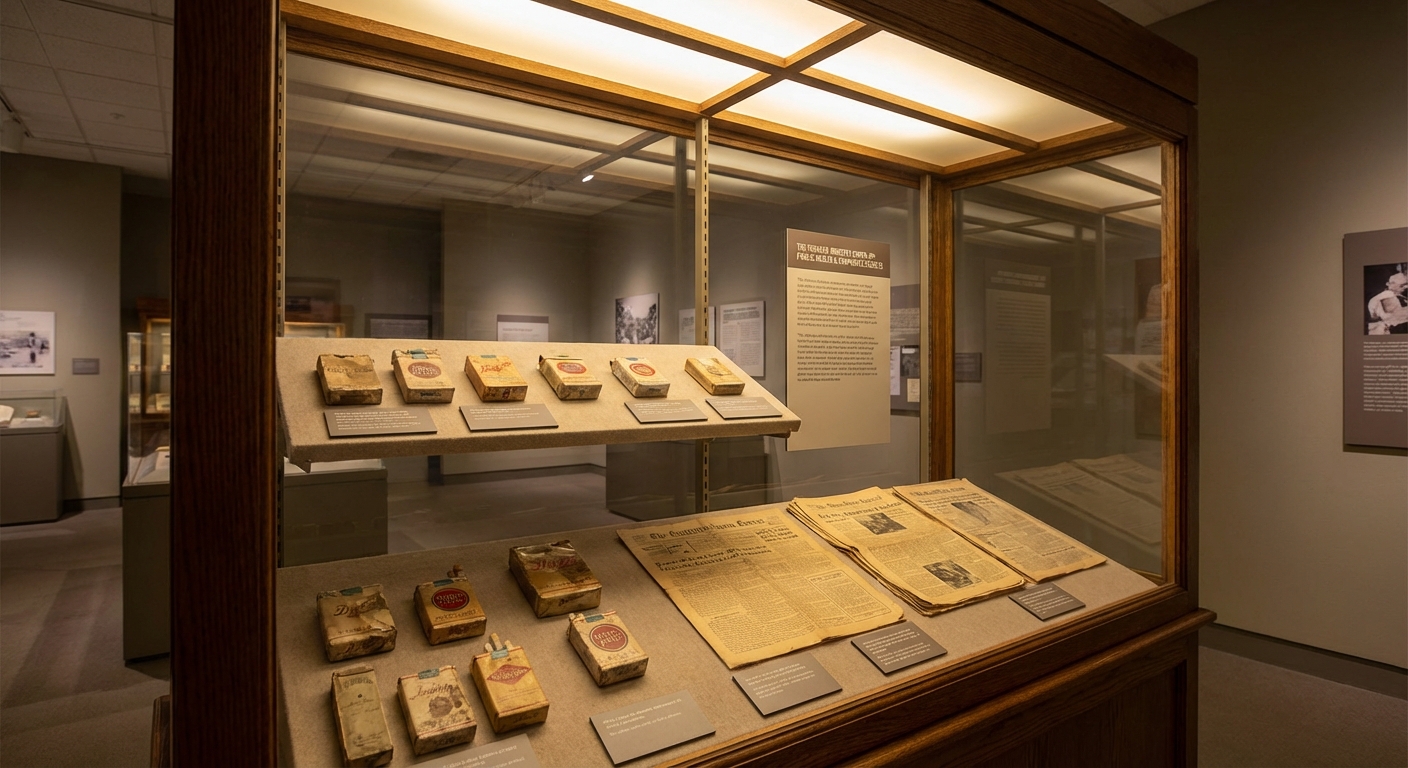
Intro — scope and purpose. This timeline examines the claim titled “Tobacco Industry Cover-Up of Smoking Harms” by tracing key dates, internal documents, legal milestones, and published reports that supporters and critics cite. It focuses on documentary and official records (industry internal documents, Surgeon General and agency reports, court findings, and the Master Settlement Agreement) so readers can judge what is documented, what is disputed, and what remains unresolved. The primary search phrase for this article is: Tobacco Industry Cover-Up of Smoking Harms.
Timeline: key dates and turning points for the Tobacco Industry Cover-Up of Smoking Harms
- 1950 — Early epidemiology links smoking and lung cancer: Case-control and cohort research by Richard Doll, Austin Bradford Hill and others provides early, peer-reviewed evidence of an association between cigarette smoking and lung cancer. (source type: peer-reviewed epidemiology).
- 1953–1954 — Industry response and the “Frank Statement”; formation of the Tobacco Industry Research Committee (later Council for Tobacco Research): Major U.S. tobacco firms (through PR and new industry bodies) publish the “Frank Statement to Cigarette Smokers” and establish the Tobacco Industry Research Committee / Council for Tobacco Research, presented publicly as funding independent research. (source type: industry announcements and archival records).
- January 11, 1964 — U.S. Surgeon General report: The U.S. Surgeon General’s Advisory Committee issues its landmark report concluding cigarette smoking is a cause of lung cancer in men and is linked to other serious diseases; the report is widely regarded as pivotal in changing public and policy views. (source type: federal public-health report).
- 1965–1969 — Federal actions: Laws that required health warnings and restricted broadcast advertising are passed (Federal Cigarette Labeling and Advertising Act of 1965 and Public Health Cigarette Smoking Act of 1969). (source type: federal legislation and CDC historical summaries).
- 1969 — Internal industry documents showing a strategy of manufacturing doubt: Documents from tobacco-company files later released in litigation include memoranda (often cited with the phrase “Doubt is our product”) describing use of controversy and PR to counter emerging science. These documents are now archived in collections such as the UCSF Industry Documents Library. (source type: internal corporate memoranda archived in public document libraries).
- 1970s–1980s — Continued industry-funded research, public-relations campaigns, and specialized research centers: The industry funds research programs and creates or supports organizations (CTR, Tobacco Institute, Center for Indoor Air Research) that participated in shaping public discussion about smoking risks and secondhand smoke. (source type: historical/archival records and investigative reporting).
- 1994–1996 — Leaked and litigated internal documents made public: Large sets of internal company documents (for example, Brown & Williamson materials) reached researchers and the public in the mid-1990s (Stanton Glantz and colleagues published analyses such as The Cigarette Papers), triggering new journal articles and congressional interest. (source type: archival releases, published analyses).
- 1998 — Master Settlement Agreement: Attorneys general from 46 states negotiated a settlement with major tobacco companies that (among other things) required disclosure of many internal documents and imposed marketing restrictions; it created a public archive of materials and funded anti-tobacco initiatives. (source type: multistate legal settlement and public records).
- September 22, 1999 — U.S. Department of Justice files a civil RICO suit: The United States sued multiple cigarette manufacturers, alleging a longstanding conspiracy to deceive the public about smoking harms, nicotine addictiveness, and secondhand smoke. (source type: federal civil complaint).
- August 17, 2006 — District Court findings in United States v. Philip Morris (Judge Gladys Kessler): After a lengthy bench trial, the court issued a detailed opinion finding that defendants had engaged in racketeering activity, made false and misleading statements, and coordinated public relations, scientific and legal efforts to deceive the public — based on documentary evidence and testimony. (source type: federal court opinion and findings of fact).
- 2006–2012 — Remedies, appeals, and continued document archiving: Appeals and remedial proceedings followed the Kessler decision; court orders and consent remedies required continued public access to documents and corrective statements in some forms. UCSF’s Industry Documents Library remains a primary public repository for documents released through litigation and court orders. (source type: appellate decisions, remedial orders, archival repository).
Where the timeline gets disputed
The above events are supported by multiple public records, but different parties disagree about interpretation and intent. Areas of dispute include:
- Whether documented internal discussions and PR strategies constitute a deliberate, company-wide “cover-up” as a matter of intent versus strategic legal and public-relations choices. Courts and historians have reached different emphases: litigation findings (Judge Kessler) describe coordinated deceptive conduct, while industry statements and some commentators characterize activity as lawful advocacy or legitimate scientific dispute. Readers should note the distinction between (a) documented internal strategy to create public doubt and (b) legal conclusions about criminal intent — the latter depends on statutory standards and judicial findings. (source types: court findings; industry statements; academic analysis).
- Timing and awareness questions: Some records show industry scientists acknowledged health risks internally at an earlier date than they acknowledged publicly; debates continue about exactly who knew what and when at specific corporate entities. Public, peer-reviewed science (and Surgeon General reports) had already indicated harm by the 1950s–1960s, but determining a particular executive’s or company’s subjective state of mind in specific years is harder and sometimes contested in the secondary literature and by company filings. (source types: Surgeon General reports; internal documents; scholarly analyses).
- Scope of evidence beyond U.S. litigation: International archives and scholarship add context and occasionally highlight different timelines for specific companies or markets; not all documents are uniformly available across jurisdictions, so global conclusions require checking multiple archives. (source types: international archives and historical studies).
Evidence score (and what it means)
Evidence score: 85 / 100
- Strong documentary base: Large numbers of internal company documents (now archived at UCSF and cited in peer-reviewed papers and books) explicitly discuss strategies to influence public opinion and scientific debate.
- Independent government findings: The U.S. District Court in United States v. Philip Morris produced detailed factual findings describing coordinated deceptive conduct; the Master Settlement Agreement required public disclosure of many internal documents.
- Corroborating academic analyses: Multiple scholarly reviews and investigative reports draw consistent inferences from the same document corpus (PR strategies, research funding patterns, and internal memos).
- Limits on direct proof of uniform intent: While documentary patterns are strong, attributing a single unified motive across all firms and actors at all times is more interpretive; some legal and historical claims require careful reading of context.
- Public-health consensus separates the factual link (smoking harms) from the separate question of industry intent: the harms are well-documented by federal and international health agencies, while the debate about concealment focuses on documentary interpretation and legal standards.
Evidence score is not probability:
The score reflects how strong the documentation is, not how likely the claim is to be true.
“This article is for informational and analytical purposes and does not constitute legal, medical, investment, or purchasing advice.”
FAQ
Q: What is meant by the phrase “Tobacco Industry Cover-Up of Smoking Harms”?
A: The phrase is used here as the claim under review: it alleges that tobacco companies knowingly withheld or misrepresented information about the health harms of smoking and coordinated actions (PR, funding, and litigation strategies) to obscure those harms from the public and regulators. This timeline treats that phrasing as a claim and evaluates documentary and legal records relevant to it.
Q: What are the strongest primary sources supporting the claim?
A: The most directly relevant primary sources are (1) internal company memoranda and research records that were produced in litigation and archived publicly (e.g., UCSF Industry Documents Library), (2) the Master Settlement Agreement that required disclosure of many documents, and (3) the U.S. District Court findings in United States v. Philip Morris, which summarize thousands of documents and testimonial records. Together these are the backbone of the documentary argument.
Q: Is the public-health science that smoking is harmful in dispute?
A: No. Federal and international public-health reports (for example, the U.S. Surgeon General series and HHS summaries) document that cigarette smoking causes multiple diseases; the scientific consensus that smoking is harmful is well-established in peer-reviewed literature and government reports. The claim under review is about industry conduct in relation to that science, not about the science itself.
Q: How does the phrase Tobacco Industry Cover-Up of Smoking Harms appear in legal contexts?
A: In U.S. litigation (notably United States v. Philip Morris), plaintiffs argued that defendants engaged in a decades-long scheme to deceive the public; the district court issued extensive findings concluding defendants had participated in RICO violations and deceptive practices based on documentary and testimonial records. Those court findings are part of the public record and inform the documentary timeline.
Q: Where can I read the documents mentioned here myself?
A: Many litigation-produced internal tobacco documents are archived in public repositories such as the UCSF Industry Documents Library (Truth Tobacco Industry Documents). The Master Settlement Agreement and federal court opinions are public records available from state attorney general pages, court dockets, and government archives. For entry points, search the UCSF Industry Documents Library and the D.C. District Court dockets for United States v. Philip Morris.

History-focused writer: declassified documents, real scandals, and what counts as evidence.