
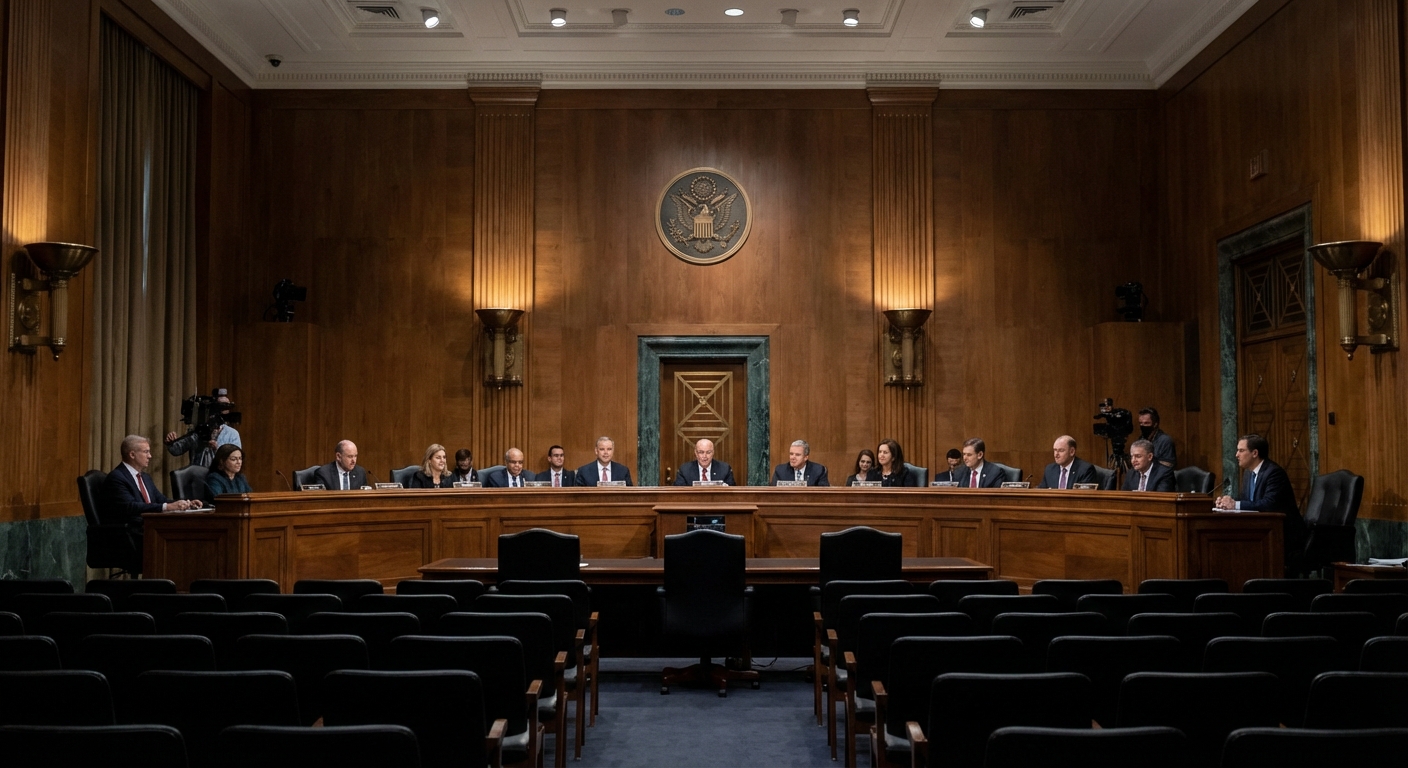
This article examines the claim commonly called “deep‑state ‘control’ narratives”: the idea that an organized, unelected network inside government (and sometimes allied private actors) secretly controls policy and blocks elected leaders. The piece treats this as a claim to be evaluated, summarizes documented facts, separates what is inferred or disputed, and explains mechanisms that have helped the narrative spread.
What the claim says
At base, deep‑state control narratives allege that a coordinated group of career officials, intelligence actors, security services, corporate interests, or other institutional actors operate independently of elected leaders to steer policy and preserve their own power. Versions vary: some portray a loose, institutional resistance (career civil servants or intelligence professionals acting on norms); others describe a purposefully coordinated clandestine cabal that actively sabotages elected officials. Supporters present the claim as an explanation for policy outcomes, leaks, investigations, or bureaucratic resistance.
Where deep‑state control narratives came from and why they spread
The term “deep state” is a calque of the Turkish phrase derin devlet and historically described alleged covert coalitions of military, intelligence and organized‑crime elements in countries such as Turkey and Egypt. Over time the phrase was adopted in other contexts and used both as an analytic descriptor for entrenched institutional power and, separately, as a conspiratorial claim.
In the United States the phrase and related claims predate the 21st century, but they became widely prominent in mainstream political discourse during and after the 2016–2017 period, when political leaders and media figures used the term to explain leaks, investigations, or policy disputes. Multiple journalistic accounts, polling and scholarship document that the claim moved from fringe forums into prominent media and political rhetoric in that timeframe.
Why the narratives spread: scholars and journalists point to several interacting drivers. First, historical plausibility and prior examples (e.g., documented instances of covert operations, intelligence misconduct, or bureaucratic self‑interest) make simplified narratives plausible to many people. Second, partisan political incentives: accusing opponents of being part of a secret network can mobilize supporters and delegitimize investigations. Third, modern information systems — recommendation algorithms, cross‑platform amplification, and networked influencers — have repeatedly been shown to accelerate and broaden reach for conspiracy narratives. Platforms’ earlier recommendation systems amplified sensational content, and organized networks of promoters and sympathetic media outlets further expanded reach.
What is documented vs what is inferred
Documented (what multiple public records, reporting, and scholarship support):
- There are historical and contemporary cases in several countries where unelected security, military, or bureaucratic actors exerted substantial political influence—sometimes covertly—creating a legitimate basis for the phrase in certain contexts.
- The phrase “deep state” entered U.S. political discourse and was invoked publicly by politicians, media figures, and commentators during the 2010s and especially around 2016–2018. Polling from that period showed substantial segments of the public found the idea plausible.
- Platform mechanics and social networks contributed to the rapid spread of conspiratorial claims generally; several platform changes since 2018 were explicitly designed to reduce algorithmic amplification of borderline conspiratorial content.
Inferred or contested (what proponents commonly infer from the documented record but which is not directly established):
- That a single, centrally coordinated, secret cabal currently controls major policy outcomes across the U.S. federal government. This stronger form of the claim requires evidence of centralized command, unified intent, and covert operational control; available public evidence does not establish that pattern. Scholarly treatments emphasize that American institutions are complex, divided, and constrained, not monolithically coordinated.
- That routine bureaucratic resistance (e.g., legal constraints, civil‑service norms, professional judgment, or normal litigation/leak dynamics) is equivalent to conspiratorial control. Many observed behaviors attributed to a “deep state” are also consistent with institutional friction, standard oversight, or partisan contestation.
Contradicted or unsupported claims:
- Claims that rely on single‑source anonymous leaks, unverified documents, or patternless aggregation of unrelated events to assert a comprehensive secret plot are not supported by corroborated public evidence. Independent investigations, reporting standards, and public records often contradict neat narratives that link disparate events into one coordinated conspiracy.
Common misunderstandings
Several misunderstandings recur in public discussion of deep‑state control narratives:
- Equating expertise or career civil‑service employment with secret control. Civil servants can exercise influence through expertise, institutional memory, and rule‑based authority without constituting a conspiratorial cabal.
- Conflating bureaucratic constraints (courts, laws, regulations) with covert sabotage. Legal checks and administrative procedures that slow or block actions are often transparent and codified, not secretive conspiratorial activity.
- Assuming that every leak or investigation implies a politically motivated secret network. Investigations and leaks have varied origins and motives; some are partisan, others result from whistleblowing, oversight, or routine oversight mechanisms. Assess each episode on its evidentiary merits.
This article is for informational and analytical purposes and does not constitute legal, medical, investment, or purchasing advice.
Evidence score (and what it means)
Evidence score is not probability:
The score reflects how strong the documentation is, not how likely the claim is to be true.
- Evidence score (0–100): 28
- Driver 1 — Historical basis: verified cases in other countries and documented influence by unelected actors give the term historical grounding.
- Driver 2 — Public adoption: the phrase and related claims are well documented in U.S. political rhetoric and polling, showing widespread belief but not proof.
- Driver 3 — Weak direct evidence for centralized secret control: available public records, journalism, and scholarship do not provide corroborated evidence of a single unified clandestine cabal controlling broad policy in the U.S.
- Driver 4 — High amplification but low verification (moderate‑low): platform dynamics and partisan media clearly amplify the narrative, increasing visibility without improving evidentiary support.
What we still don’t know
Even after extensive reporting and scholarship, several open questions remain and should guide further inquiry rather than assumption:
- Which specific episodes that are cited as evidence (individual leaks, documents, or internal communications) can be independently verified or traced to named, accountable sources? Public verification remains uneven.
- To what extent do documented acts of institutional resistance reflect coordinated political intent versus professional judgment, legal constraints, or partisan calculation? The lines are sometimes blurred and contested in available sources.
- How have platform interventions changed the real‑world reach and influence of these narratives since platform policy changes in 2018–2020? Early studies show reduction in algorithmic recommendations for fringe content, but downstream networks and alternative platforms complicate measurement.
FAQ
Q: What exactly are “deep‑state control narratives” and how are they different from valid criticism of bureaucracies?
A: “Deep‑state control narratives” is a label for claims that an organized, secretive network covertly controls policy. That differs from standard criticism of bureaucracy, which points to visible procedures, legal frameworks, and public records where power and responsibility are documented. Evaluating a claim requires examining direct evidence (documents, corroborated testimony, public records) rather than rhetorical labels.
Q: How common is belief in these narratives?
A: Surveys since the mid‑2010s show substantial segments of the public find the idea plausible in various forms. Rising media attention and political use of the term contributed to this belief; however, prevalence varies by question wording, year, and political subgroup.
Q: How should I evaluate a new claim that “the deep state” did X?
A: Demand corroboration: look for named sources, contemporaneous documents, chain of custody for materials, independent verification by credible journalists or oversight bodies, and plausible motive/means. Consider alternative explanations such as standard legal checks, inter‑agency process, or partisan leaks. Corroboration and transparency matter more than repeating aggregated assertions.
Q: Do platform algorithms cause people to believe the claim more?
A: Algorithms and cross‑platform promotion have materially increased the visibility of conspiratorial narratives, making it easier for such ideas to find receptive audiences; platform interventions have reduced some algorithmic recommendations but have not eliminated networked amplification. Assessing effect size requires careful study, but amplification is well documented.
Q: Are there documented examples where unelected actors did exercise undue control?
A: Yes — in certain countries and historical contexts, unelected military or intelligence actors have exercised overt or covert control; these documented cases give the general term historical meaning but do not by themselves prove the stronger U.S. conspiracy claims. Each case must be evaluated on its own documented evidence.

Beginner-guide writer who builds the site’s toolkit: how to fact-check, spot scams, and read sources.