
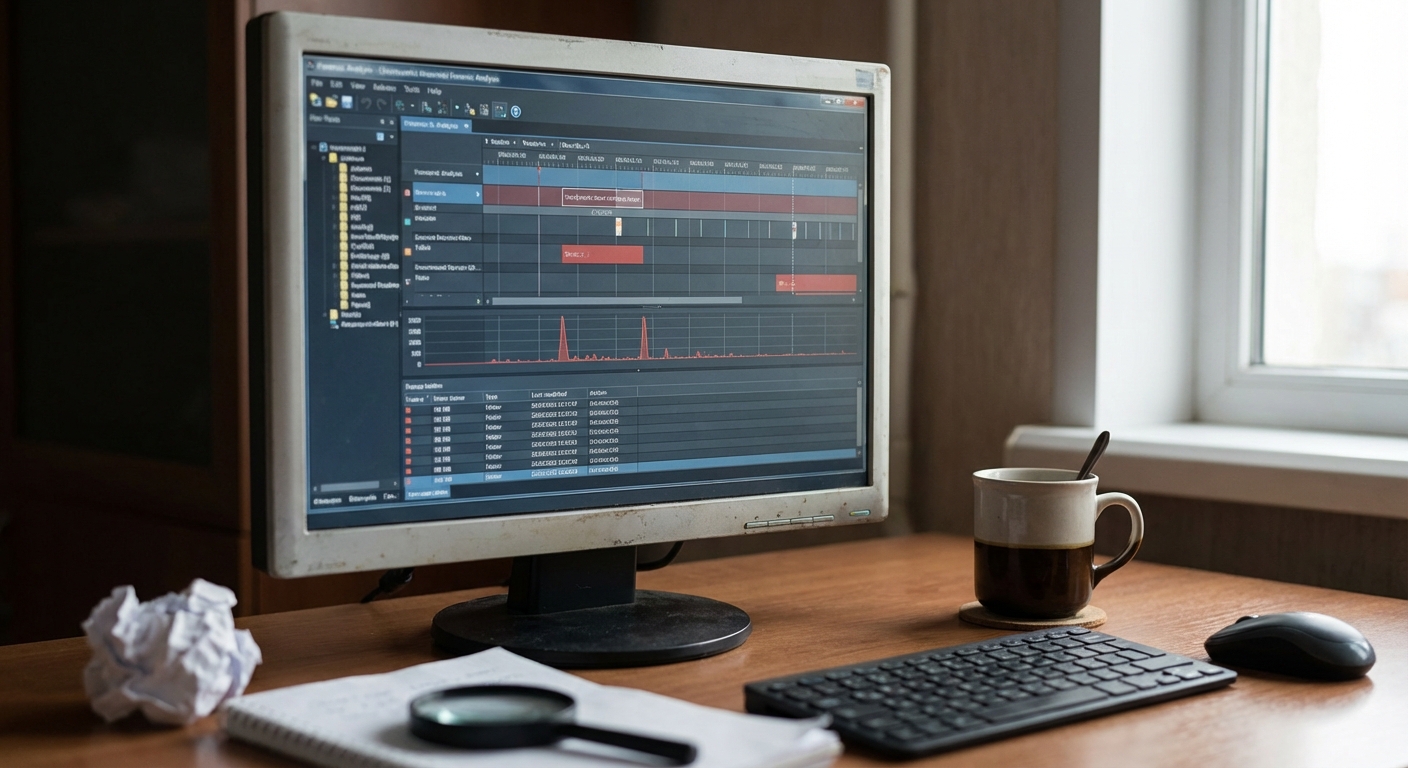
This article tests the claim “how to verify viral screenshots” against the best available counterevidence and expert guidance. It explains which verification signals are documented and reliable, which methods are suggestive but limited, and which are known to be misleading — citing primary standards, journalism toolkits, and forensic analyses throughout.
The best counterevidence and expert explanations
-
Provenance standards (C2PA / Content Credentials) can show source and edit history when they exist — but screenshots frequently strip those credentials, so their absence is not evidence of falsity. The Coalition for Content Provenance and Authenticity defines cryptographically-signed manifests that record origin and editing; when present they are robust indicators of provenance, but adoption is voluntary and signatures can be lost when an image is re-saved or copied (for example, by taking a screenshot). This means provenance systems are powerful when the credential is present and verifiable, but screenshots often remove the very metadata those systems rely on.
Limit: Provenance is only useful if the image or original file retains the signed metadata; many social workflows (screenshots, image re-encoding, platform re-hosting) remove or detach credentials.
-
Reverse-image searching and locating the original post is consistently recommended by newsrooms and verification toolkits. Tools such as Google/TinEye reverse search, InVID-WeVerify keyframe extraction for video, and aggregator workflows are primary ways journalists trace earlier or original versions of an image or screenshot; finding an earlier, dated source with original context often disproves claims tied to a viral screenshot. Fact-checking guides explicitly advise going to the original source rather than trusting a screenshot alone.
Limit: Reverse searches depend on the earlier image being online and indexed; many original images are private, deleted, or not indexed, leaving gaps that searches cannot close.
-
File metadata from camera originals can document capture device, timestamps, and sometimes GPS coordinates — but screenshots typically contain little or no EXIF camera data. Authors and guides note that while EXIF can be strong evidence for original photos, screenshots usually remove camera EXIF so the presence or absence of EXIF in a screenshot is poor evidence on its own. Treat EXIF as strong only when you can access the original media file with intact metadata.
Limit: Many images shared on social platforms are re-encoded or sanitized by the platform; some platforms explicitly strip EXIF for privacy. Always prefer the original file from a verified source.
-
Pixel-level forensic tools (Error Level Analysis, noise analysis, AI-based detectors) can reveal anomalies consistent with edits, but these tools do not provide definitive proof and can be misinterpreted. FotoForensics’ Error Level Analysis and related tools are useful for highlighting recompression inconsistencies, but leading forensic discussions warn ELA is heuristic and must be interpreted by experts; ELA can flag legitimate processing steps or create false positives if used alone.
Limit: Forensic outputs require expert interpretation and context; automatic or lay readings of ELA often lead to incorrect conclusions.
-
AI detection and deepfake-scoring tools can help flag synthetic elements, but detection models are imperfect, evolving, and produce false positives and false negatives. Industry teams and platform researchers are integrating provenance metadata and detection signals, but both approaches have gaps: provenance depends on creators opting in and retaining credentials, while detection models lag behind new generative techniques.
Limit: Detection outputs should be treated as advisory; they work best as part of a multi-step workflow rather than as dispositive proof.
-
Primary-source confirmation (contacting the purported publisher, checking an organization’s official feeds or archives) remains the most reliable counterevidence for claims shown only in screenshots. Newsroom fact-check protocols stress contacting organizations named in screenshots and searching official sites and verified social accounts to confirm or refute the content. Direct confirmation from the source is high-quality documentation when available.
Limit: Sources may be unresponsive or records removed; absence of a response is not confirmation of falsity. Document attempts and timestamps.
Alternative explanations that fit the facts
-
Edited or fabricated screenshots: a viral image may be a crafted image that mimics UI, logos, or documents. Skilled editing can make fabricated screenshots look plausible without being true. Forensic signals and reverse search can often show prior versions, templates, or reused interface elements indicative of fabrication.
-
Out-of-context reuse: a genuine screenshot from a different time, account, or region may be reposted with a misleading caption. Reverse image search or archive timestamps sometimes reveal earlier provenance that changes the contextual claim.
-
Screenshot artifacting and platform processing: some apparent anomalies in a screenshot (odd text rendering, missing UI elements) result from platform compression, device scaling, or screenshot utility differences rather than deliberate tampering. These artifacts complicate automated forensic checks and must be considered when interpreting pixel analysis.
What would change the assessment
-
Access to the original image/file with intact, signed provenance data (C2PA/Content Credentials) would materially increase the strength of documentation because it can cryptographically link the file to a creator and show edits.
-
Independent archival evidence (a timestamped upload on a verified newswire, a crawl by the Internet Archive, or a cached copy on a publisher’s site) that predates the viral post and matches the screenshot would significantly strengthen verification. Reverse-image and archive findings are commonly used by journalists to establish earlier provenance.
-
Expert forensic analysis performed on original files (camera RAWs, log files, server records) rather than compressed social-media screenshots would change conclusions. Many public forensic techniques are suggestive but not conclusive unless experts can analyze originals.
Evidence score (and what it means)
- Evidence score: 45 / 100
- Drivers: provenance standards exist and are high-quality when present (raises score).
- Drivers: common newsroom verification methods (reverse-image search, source confirmation) are reliable when originals or archives are found (raises score).
- Drivers: screenshots commonly strip metadata and may be re-encoded by platforms, significantly reducing direct evidence in many viral cases (lowers score).
- Drivers: forensic heuristics (ELA, noise analysis) are helpful but prone to misinterpretation without expert review (lowers score).
- Drivers: AI-detection and content-credential adoption are improving but incomplete; reliance on these alone is premature (lowers score).
Evidence score is not probability:
The score reflects how strong the documentation is, not how likely the claim is to be true.
This article is for informational and analytical purposes and does not constitute legal, medical, investment, or purchasing advice.
FAQ
Q: How to verify viral screenshots quickly?
A fast, practical checklist: 1) Reverse-image search extracted or cropped regions (Google, TinEye); 2) Search the named organization’s official accounts and website; 3) Look for provenance indicators or original-file links; 4) If available, run a forensic tool for anomalies and treat results as suggestive; 5) Contact the source if the claim is consequential. This workflow reflects practical newsroom guidance and verification tools.
Q: Can EXIF data in a screenshot prove authenticity?
Usually no. Screenshots typically do not preserve camera EXIF metadata (device model, GPS) in a way that ties back to an original capture. EXIF is useful when you have the original media file retrieved from a device or verified server, not when you only have a social-media screenshot.
Q: Is Error Level Analysis conclusive?
No. ELA can highlight recompression inconsistencies that may indicate edits, but it is a heuristic tool and can be misleading if used alone. Photo-forensics practitioners stress that ELA results require context and expert interpretation. Treat ELA as one clue among others.
Q: Should I trust AI-detection tools or content-credential badges?
Both should be used carefully. Content-credentials (C2PA/Content Credentials) are cryptographically strong when present but are not yet universal; detection tools can help flag synthetic content but produce false positives/negatives and evolve as generative methods improve. Use both as part of multi-step verification, not as sole proof.
Q: What if sources disagree or tools give conflicting results?
If sources conflict or tools disagree, document the disagreement, avoid definitive claims, and prioritize primary-source confirmation (official records, timestamped archives, or verified publisher statements). Where conflicts persist, state uncertainty clearly rather than speculate. This conservative approach follows journalistic verification best practices.

Beginner-guide writer who builds the site’s toolkit: how to fact-check, spot scams, and read sources.