
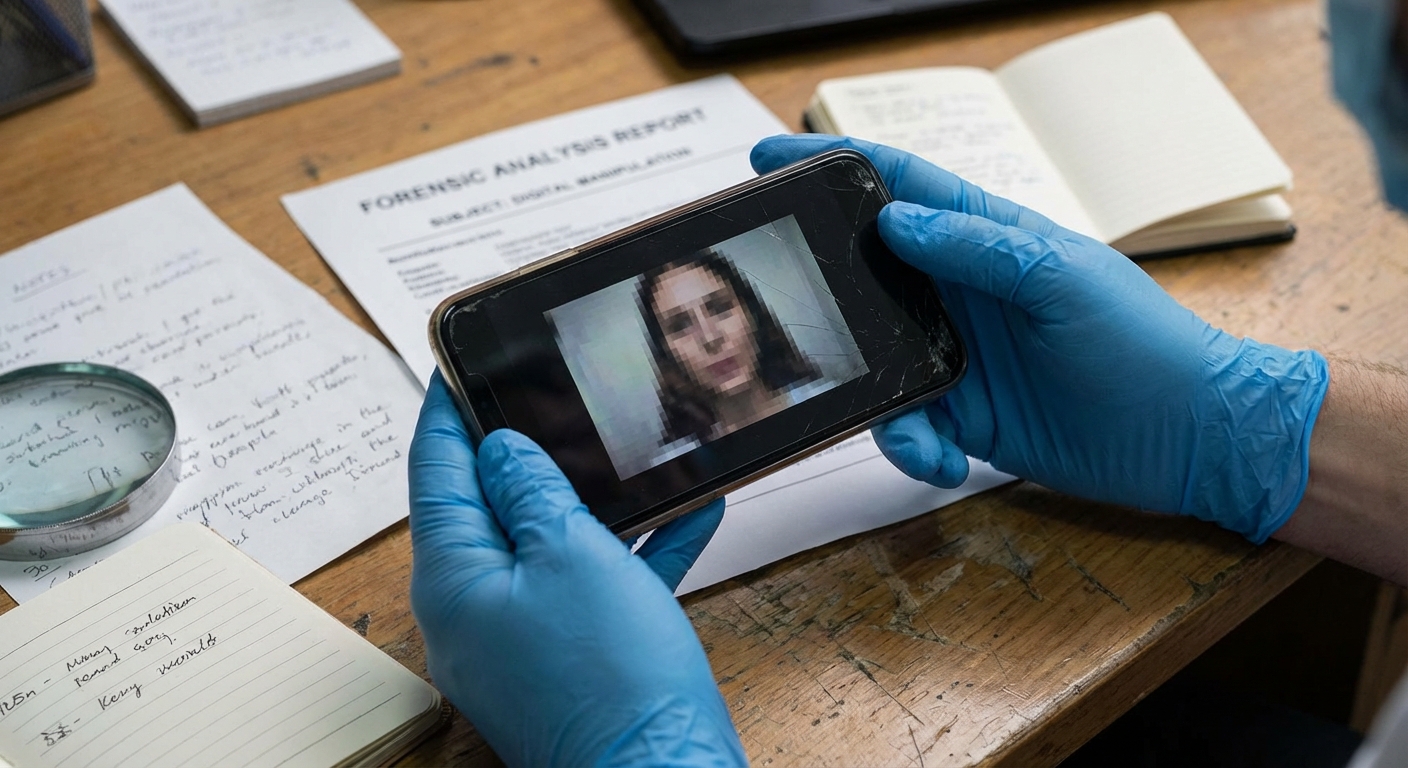
The claim titled “What Is Deepfakes and ‘Nothing Is Real’ Panic, Claims: Claim Summary, Origins, and Why It Spread” asserts that advances in AI-generated media have produced a widespread societal panic in which people believe that nothing captured on camera or audio can be trusted. Deepfakes are AI-generated or AI-manipulated images, video, or audio that can portray people saying or doing things they did not do; scholars, journalists, and technical references discuss both the technology and its harms.
What the claim says
The core claim is twofold: (1) deepfake technology has reached a point where many media artifacts are indistinguishable from authentic footage, and (2) that perception has produced a broad social panic often summarized as “nothing is real,” where individuals, institutions, or entire publics doubt the authenticity of recorded evidence. Proponents of the claim sometimes link this panic to political disinformation, legal evasion (e.g., denial of incriminating evidence), and widespread loss of trust in journalism and public institutions. This article treats that description as a claim to be examined, not as an established fact.
Where it came from and why it spread
The technology and the phrase have separate but connected origins. The term “deepfake” emerged from online communities in 2017 when face‑swap and AI‑edited pornographic videos circulated and attracted mainstream attention; academic and journalistic histories trace early viral examples and the term’s development.
High‑visibility incidents — such as manipulated political or celebrity media — and the publicity around scams and extortion have amplified public concern. Governments and law‑enforcement agencies have repeatedly warned that deepfakes are being used in fraud, sextortion and impersonation schemes, and have issued consumer guidance and alerts. At the same time, researchers and some longform journalists have argued that truly deceptive, high‑stakes deepfakes that reliably fool experts or courts remain relatively rare, creating a debate between alarmist and more cautious interpretations. These competing perspectives helped the “nothing is real” narrative spread quickly on social platforms and in public debate.
Public anxiety and policy responses also accelerated the spread. Polling and surveys show notable public worry about AI and media authenticity; legislative and regulatory proposals—plus industry initiatives such as detection challenges—have drawn media coverage that further magnified public attention. Those feedback loops (incident → media coverage → public anxiety → policy proposals) have been central to the claim’s diffusion.
What is documented vs what is inferred
Documented / verified:
- Deepfake technology exists and is used across domains (entertainment, pornography, political hoaxes, scams).
- Law enforcement and federal agencies (including the FBI) have reported and warned about scams and sextortion that use AI‑generated voices or images, and they provide guidance to victims.
- Technical efforts and datasets (e.g., the Deepfake Detection Challenge) and ongoing forensic work (including NIST evaluations) document both progress and limits in detection tools. Detection is an active research area with measurable but imperfect results.
Plausible but unproven:
- That deepfakes are currently so ubiquitous and indistinguishable that most ordinary audio/video evidence in public life should be treated as unreliable. (This is plausible in some narrow contexts but not established across the board.)
- That the existence of deepfakes alone has caused a generalized, permanent collapse of trust in all visual or recorded media. Some surveys show heightened concern; whether that equals a durable, universal collapse of trust is not proven.
Contradicted or unsupported:
- The stronger claim that “everything you see or hear online is fake” is unsupported. Investigations and scholars note that while convincing synthetic media are possible, most viral deepfakes remain detectable or confined to niche misuse; the most damaging political disinformation events usually rely on edited or repurposed authentic content rather than perfect AI‑generated illusions.
- Assertions that detection is hopeless or that forensic methods cannot improve are contradicted by ongoing technical progress and standards work (e.g., datasets, detection competitions, and NIST‑style evaluations). Those efforts document limitations but also incremental improvements.
Common misunderstandings
- Misunderstanding: “Deepfake” is a single tool that makes perfect fakes on demand. Reality: “Deepfake” describes a range of AI methods and outputs, varying widely in quality and detectability.
- Misunderstanding: If something could be faked, it therefore probably was faked. Reality: Possibility is not evidence; many authentic recordings remain verifiable through provenance, corroboration, and forensic signals.
- Misunderstanding: Humans will always be able to reliably spot deepfakes. Reality: Studies show humans struggle with some speech deepfakes and that awareness alone provides limited improvement; detection is nontrivial and benefits from forensic tools.
- Misunderstanding: Technical detection = complete solution. Reality: Detection tools can help but have limits (generalization, adversarial adaptation, and dataset bias); legal, platform, and media‑literacy responses are also part of the solution.
This article is for informational and analytical purposes and does not constitute legal, medical, investment, or purchasing advice.
Evidence score (and what it means)
- Evidence score: 56 / 100
- Drivers: existence of deepfake technology and documented misuse (scams, sextortion) — strong documentation.
- Drivers: repeated official warnings and policy activity (FBI alerts, legislative proposals) — documented and verifiable.
- Drivers: technical literature showing detection is difficult in realistic settings (DFDC results, peer research) — supports caution but not total collapse-of-trust claims.
- Drivers: credible counterarguments from investigative journalism and scholars that most everyday media are not being replaced by indistinguishable deepfakes — reduces the score for the broadest version of the claim.
- Limited primary data on the prevalence of high‑quality political deepfakes that consistently deceive experts or courts — lowers overall certainty.
Evidence score is not probability:
The score reflects how strong the documentation is, not how likely the claim is to be true.
What we still don’t know
- True prevalence of highly convincing, high‑impact deepfakes in mainstream news cycles — many incidents are reported, but a comprehensive, peer‑reviewed prevalence study covering 2022–2025 is lacking.
- How public trust will evolve if deepfake generation and detection both improve quickly — there are plausible futures where tools and norms keep pace, and plausible ones where trust erodes further.
- How legal and platform interventions (labeling, watermarking, penalties) will affect both misuse and perceptions — pilot laws and bills exist, but long‑term effects are unmeasured.
- Whether and how malicious actors will scale production of high‑quality political deepfakes timed to influence critical events — there are case studies and arrests, but not clear evidence of systemic, election‑changing operations at scale.
FAQ
Q: Does the “Deepfakes and ‘Nothing Is Real’ panic” mean we should assume all videos are fake?
No. The claim describes a perception and a set of possible risks; it does not mean every recording is fake. Authenticity still relies on verification: provenance, corroborating evidence, metadata, and forensic analysis remain important ways to assess media. Detection tools and investigative methods are imperfect but useful.
Q: How often are deepfakes actually used in scams or political manipulation?
There are repeated, documented examples of deepfakes being used in fraud, impersonation, and political hoaxes, and authorities have issued warnings and arrests related to AI‑enabled scams. However, the frequency of high‑quality, large‑scale political deepfakes is still limited compared with other forms of disinformation that rely on edited legitimate material.
Q: Can people reliably detect deepfakes themselves?
Research indicates humans are not reliably accurate, especially for speech deepfakes; awareness helps somewhat but is not sufficient. Relying solely on subjective impressions is risky; specialists and automated forensic tools add value.
Q: What practical steps reduce the risk that a deepfake will mislead you?
Check multiple independent sources, seek original or high‑quality provenance, look for official statements from people shown in a clip, and use platform reporting tools. For organizations and journalists, digital forensics and metadata analysis combined with corroboration remain best practice.
Q: If deepfakes are dangerous, why do some analysts say the “nothing is real” panic is exaggerated?
Some investigative pieces and scholars note that although the technology can produce convincing artifacts, the number of verified cases where AI‑generated media alone has decisively altered major public events remains small; many doomsday narratives conflate potential with present reality. That cautionary perspective does not deny harms but urges measured assessment of frequency and impact.

Beginner-guide writer who builds the site’s toolkit: how to fact-check, spot scams, and read sources.