
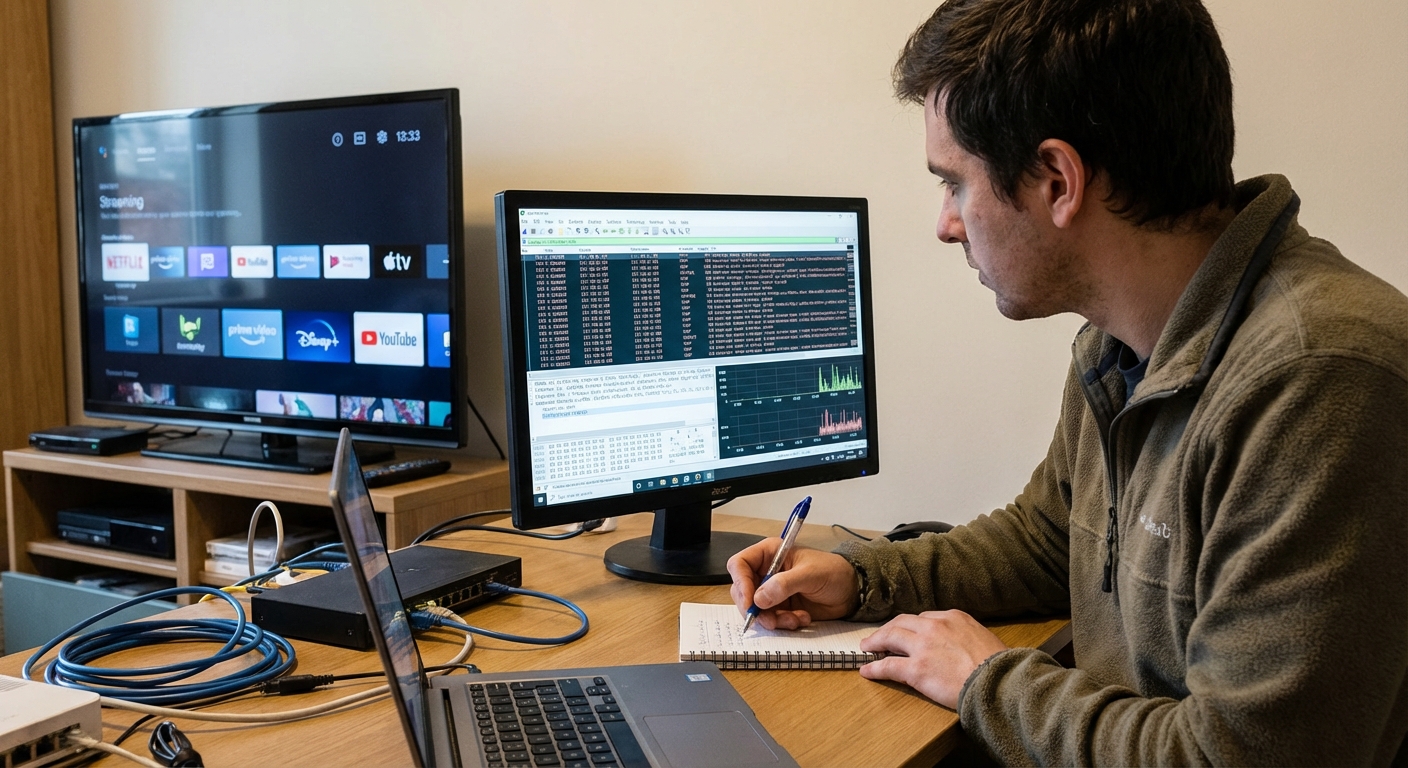
This article tests the claim that “Smart TV tracking” collects and sells detailed personal data—sometimes described online as televisions that are constantly “watching” or “listening” to users—against the strongest available counterevidence and expert explanations. We treat the claim as a contested assertion and focus on documentation, technical analyses, and official statements.
This article is for informational and analytical purposes and does not constitute legal, medical, investment, or purchasing advice.
Smart TV tracking — The best counterevidence and expert explanations
-
Regulatory settlements show some data collection practices, but they also require remediation and disclosures: The FTC and the New Jersey Attorney General settled with VIZIO after finding that certain VIZIO smart TVs captured second-by-second viewing information across inputs and shared it without adequate disclosure; the settlement required deletion of certain historical data and stronger disclosure/consent practices. This documents that some manufacturers have collected viewing metadata in ways regulators judged unfair or deceptive.
Why it matters: a government action confirms that at least one large manufacturer collected and sold fine-grained viewing data without sufficient notice.
Limits: the VIZIO case documents viewing-history collection and third-party sharing, not—by itself—continuous microphone eavesdropping or the sale of raw audio captured from living rooms. The settlement describes programmatic targeting using viewing metadata and appended demographics, not voice data sales.
-
Security research documented specific technical problems on older models (unencrypted voice-transmission): independent researchers found that some early-model smart TVs transmitted voice-recognition data and associated metadata in ways that were not fully protected, which created plausible routes for interception. That work exposed actual vulnerabilities on identifiable models and prompted vendor responses.
Why it matters: a technical audit with reproducible network traces shows real-world exposure of voice-related data in at least some devices and firmware versions.
Limits: these findings apply to specific models/firmware at a point in time; vendors have changed software, and later models or updates may mitigate earlier weaknesses. The existence of earlier unencrypted transmissions does not prove that all smart TVs currently transmit raw conversational audio to advertisers.
-
Vendor disclosures and privacy settings document both data collection features and opt-outs: major device platforms publish privacy pages describing data uses (for example, targeted ads, content recommendations, and ACR—automatic content recognition) and provide settings or opt-outs to limit certain collection or personalization features. Roku and other platforms explicitly describe targeted-ad functionality and consumer choices in their privacy materials.
Why it matters: company policies show the mechanisms vendors claim to use, and the availability of settings shows a route for consumer control.
Limits: policy text may be broad and technical; opt-outs sometimes remove personalization but can leave ancillary telemetry enabled. The presence of a stated opt-out does not guarantee that all prior-collected data were removed or that opt-out flows are easy to discover for average users.
-
Contextual technical analyses emphasize that some tracking claims conflate distinct mechanisms: academic and industry commentary distinguishes ACR (matching displayed audio/video fingerprints to content) from microphone-based continuous recording. ACR can track what’s on-screen across inputs without recording human conversation, while voice-control features generally activate on a hot word and send short command audio to a speech processor. Several analyses note that confusing these mechanisms fuels overbroad claims.
Why it matters: separating ACR metadata from raw audio narrows what is documented (viewing behavior and content identifiers) versus what is alleged (continuous eavesdropping and sale of conversational audio).
Limits: labeling and user-facing disclosures vary by vendor, so consumers may not clearly understand which mechanism is active.
-
Recent reporting on current models shows continuing differences between manufacturers: some recent reviews and reporting indicate that modern TVs and platforms still collect viewing and device data for analytics and ad personalization, but the specifics (what is collected, whether audio is retained, and how data are shared) vary sharply between vendors and over time. Reporting recommends checking privacy menus and software updates.
Why it matters: it demonstrates heterogeneity—claims that treat all smart TVs identically ignore substantial variation across brands, firmware, and user settings.
Limits: journalism highlights potential risks but is not a substitute for device-level forensic analysis or regulatory proof about current data flows for every product line.
Alternative explanations that fit the facts
When people observe targeted ads, inferred profile data, or inexplicable recommendations and attribute them to an always-listening TV, at least three alternative mechanisms often fit the observed facts without requiring secret continuous eavesdropping:
-
Automatic Content Recognition: ACR fingerprints on-screen audio/video and matches it to databases to identify programs, ads, or channels. That produces precise viewing metadata that can be used for cross-device ad targeting without recording household conversation. The VIZIO enforcement action describes this type of second-by-second metadata collection.
-
Cross-device matching and ad-tech linking: Advertising ecosystems join device identifiers, IP-address-based inferences, and data from connected apps to produce personalized ads. User behavior on one device (phone, browser) can produce ads on another without any microphone involvement. Roku’s privacy materials and ad platforms explain such practices and available opt-outs.
-
Targeted suggestions based on installed apps and account data: Smart TV platforms often use app usage, search queries, and account history to recommend content. Those signals can produce eerily accurate recommendations that are technically consistent with local activity logging rather than remote eavesdropping. Company privacy pages reference these personalization mechanisms.
What would change the assessment
To move from a disputed claim to a documented conclusion, evidence would need to show one or more of the following with clear provenance:
-
Forensic network captures and reproducible analyses showing continuous transmission of raw conversational audio from a currently sold TV model to advertising parties (not just to speech-recognition processors) under default settings. The 2015 research that found unencrypted voice-recognition data on specific older Samsung models illustrates the type of technical proof that would be necessary.
-
Vendor internal documents or court filings proving that raw audio recordings were retained and sold or shared with advertisers as a regular business practice beyond limited speech-command processing.
-
Regulatory findings or criminal/civil discovery showing that consumer audio was appended to profiles and distributed by advertising partners, with timelines and datasets identified.
-
Wide-scale, independent device audits covering current models that replicate any alleged continuous-audio collection under default settings.
Evidence score (and what it means)
Evidence score: 45 / 100
- Documented regulatory enforcement confirms that at least one major manufacturer collected and shared fine-grained viewing metadata without adequate disclosure, which increases the documentation score.
- Independent technical research has demonstrated real vulnerabilities in specific models and firmware (e.g., unencrypted voice-recognition traffic), but those findings are historically bounded and model-specific.
- Vendors publish privacy controls and statements that, if accurate and used correctly, limit some kinds of tracking—this reduces the strength of an across-the-board claim that all smart TVs continuously sell household audio.
- Journalism and expert commentary validate risks and user confusion, but reporting alone cannot establish that current mainstream devices engage in the most sweeping versions of the claim (continuous eavesdropping and sale of raw audio).
- The evidence is mixed, model-dependent, and in some cases historic—this uncertainty lowers the overall documentation strength.
Evidence score is not probability:
The score reflects how strong the documentation is, not how likely the claim is to be true.
FAQ
Q: What exactly does “Smart TV tracking” usually refer to?
A: The phrase is used for several related practices: (1) ACR that fingerprints on-screen audio/video to log what is being watched, (2) telemetry and app usage data sent to vendors for analytics, and (3) limited voice-command audio sent to speech-recognition services. These are distinct technical mechanisms and should not be conflated without evidence. For example, the VIZIO case specifically described second-by-second viewing metadata rather than sale of continuous conversational audio.
Q: Is there solid evidence that TVs record conversations and sell them to advertisers?
A: No definitive, widely-accepted, manufacturer-agnostic evidence has been published that proves routine continuous recording of household conversations by modern smart TVs and sale of that raw audio to advertisers. There is documented evidence of viewing-metadata collection and of specific technical vulnerabilities on some older models (Samsung research), but those findings do not on their own prove the broad claim that all or most smart TVs record conversations and sell them to ad networks.
Q: How can I reduce the chance my smart TV is collecting data about me?
A: Practical steps include reviewing the TV’s privacy/settings menu to disable features labeled ACR, viewing data collection, or interest-based advertising; disabling voice recognition if you do not use it; keeping device firmware up-to-date; and, when possible, limiting the TV’s connection to the internet or using a separate streaming device you control. Vendors typically document these options on their privacy pages and support sites.
Q: If I see targeted ads on my TV, does that prove my TV listened to me?
A: No. Targeted ads can result from cross-device ad-tech linking, app data, IP-based inferences, and prior browsing on other devices. ACR and viewing-history data can also produce precise ad targeting without any microphone involvement. Distinguishing among these causes requires technical forensics or clear vendor disclosure.
Q: Where do sources disagree, and why is the picture unclear?
A: Disagreement arises because vendor statements often emphasize privacy controls and limited use of voice data, while independent researchers and consumer groups have demonstrated model-specific vulnerabilities and regulatory agencies have found undisclosed data collection practices. These differences reflect heterogeneous product designs, changing firmware, corporate privacy practices, and the difficulty of conducting comprehensive, up-to-date forensic audits across many device models. When sources conflict, the correct inference is uncertainty rather than certainty.
Closing summary
Summary: The claim that “Smart TV tracking” continuously records household conversations and sells those raw audio recordings to advertisers is not fully documented in the public record. There is clear documentation that some smart TVs have collected detailed viewing metadata and shared it without adequate disclosure, and there are documented technical vulnerabilities on certain older models (e.g., unencrypted voice-recognition transmissions). At the same time, vendor disclosures, available privacy controls, and the technical distinction between ACR and voice-command processing mean the sweeping form of the claim is not universally proven. Sources conflict on scope and mechanism; resolving that conflict requires device-level forensic evidence, vendor transparency backed by audits, or regulatory findings focused specifically on audio retention and resale.

Tech & privacy writer: surveillance facts, data brokers, and what’s documented vs assumed.