
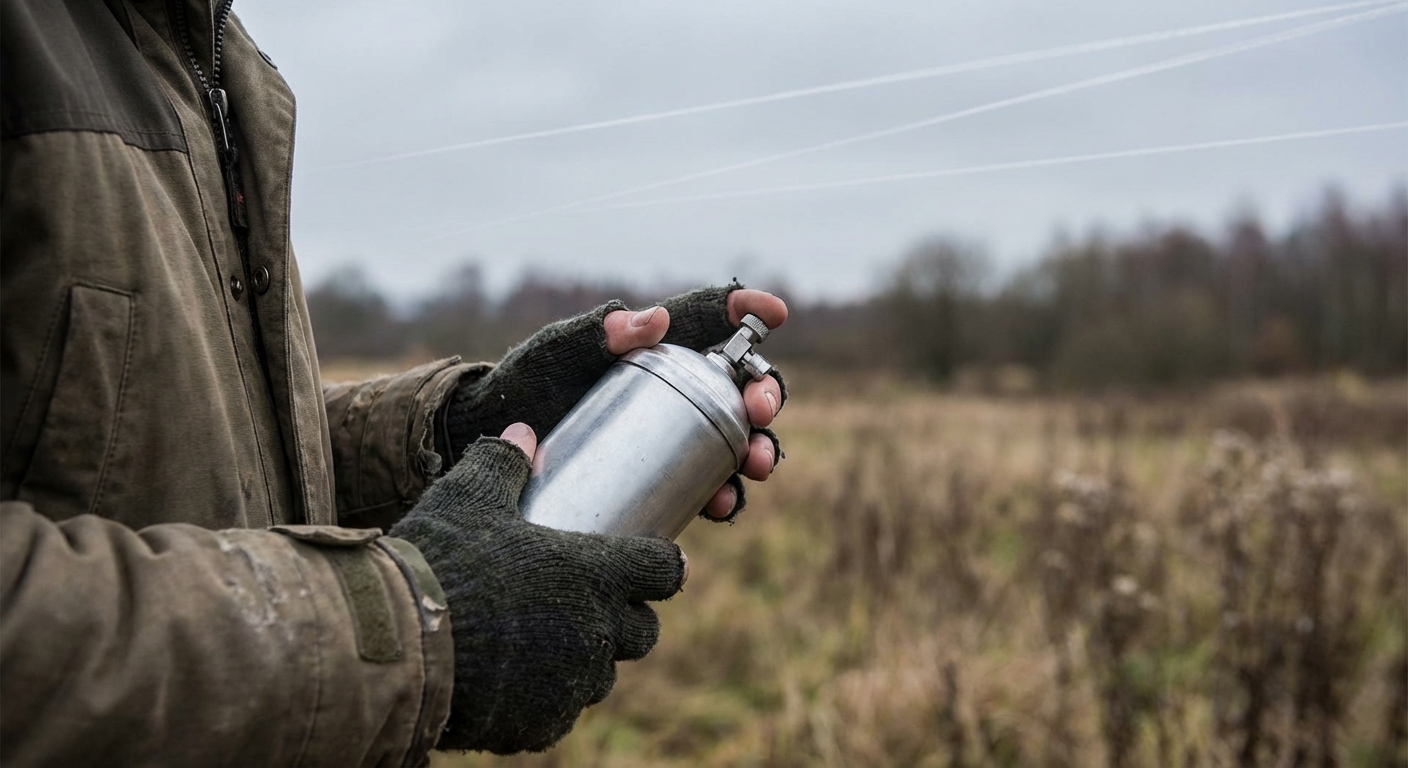
“What is chemtrails” is usually asked in the context of a claim: that some or all white streaks behind aircraft are not ordinary condensation trails, but deliberate chemical/biological spraying for hidden purposes. This overview does not assume the claim is true; it summarizes what agencies and researchers document about contrails, what chemtrails narratives assert, and why the idea spread.
This article is for informational and analytical purposes and does not constitute legal, medical, investment, or purchasing advice.
What the claim says
Most “chemtrails” narratives share a core assertion: that long-lasting or spreading airplane trails are evidence of intentional, covert aerosol release—sometimes framed as population control, weather manipulation, mind control, or secret climate intervention.
A common internal test used by proponents is: “normal contrails dissipate quickly; trails that linger must contain additives.” However, aviation and atmospheric science sources describe persistence as a function of conditions aloft (temperature and humidity), not necessarily what was emitted. For example, the FAA explains that contrails form when aircraft fly through cold, humid air and ice crystals form from water vapor in exhaust; persistence depends strongly on atmospheric moisture and temperature layers.
The EPA explicitly notes that “chemtrails” is a term some people use to inaccurately claim routine contrails are intentional releases of dangerous chemicals or agents for nefarious purposes (including population control, mind control, geoengineering, or weather modification).
Where it came from and why it spread
“Chemtrails” didn’t emerge in a vacuum; it grew at the intersection of (a) real, visible sky phenomena that can look suspicious, (b) documented historical episodes that show governments have experimented with weather-related ideas in limited contexts, and (c) the online attention economy.
1) A visible phenomenon with counterintuitive behavior. Persistent contrails can last for hours and spread into cirrus-like cloudiness, which can look unlike the quick “short trails” many people expect. NASA notes that contrails can be short-lived in dry air but long-lived in humid conditions; satellites have observed clusters persisting up to ~14 hours, and they can spread until they resemble natural cirrus.
2) A frequently cited origin point: a 1996 U.S. Air Force “future concepts” paper. Chemtrails lore often references an Air Force-related document about weather modification, sometimes presented online as proof of a current program. A version of the 1996 “Weather as a Force Multiplier: Owning the Weather in 2025” paper includes a disclaimer that it was produced in an academic environment and does not reflect official policy, and that it contains fictional representations of future scenarios.
3) A modern feedback loop: politicization and proposed laws. In recent years, news reporting has documented U.S. state-level legislative efforts to ban “chemtrails” or “geoengineering,” despite mainstream scientific and agency rejections of the chemtrails premise. These proposals can amplify the public impression that “something must be happening” even when evidence isn’t provided in the bills themselves.
4) Confusion with real, disclosed aerial spraying programs. There are legitimate uses of aircraft to disperse substances at low altitude (e.g., agriculture, firefighting) and there is real research interest in climate interventions—creating a setting where people can conflate “something exists” with “this specific secret program exists.” The EPA addresses this confusion by distinguishing contrails from intentional spraying and by discussing how contrails form and persist.
What is documented vs what is inferred
To evaluate “what is chemtrails” as a claim, it helps to separate (A) what is documented and repeatable from (B) what is plausible but unproven, and (C) what is contradicted or unsupported by the cited sources.
Documented / verified
- Contrails are real and well-described: The FAA describes contrails as ice crystals formed when hot, moist exhaust meets cold, humid air at cruise altitudes, with persistence dependent on atmospheric conditions.
- Persistent contrails can last hours (sometimes longer): The EPA states persistent contrails can last from minutes to longer than a day when aircraft pass through supersaturated layers; NASA describes long-lived contrails and notes satellite observations of long persistence and spreading into cirrus-like clouds.
- Grid/cross patterns can be ordinary: The EPA and FAA both note that contrails can appear in straight, grid/cross, curved, or fragmented patterns depending on winds, flight paths, and atmospheric structure; start/stop appearances can occur when aircraft enter/exit humid layers.
- Government agencies explicitly reject “chemtrails” as described by the conspiracy claim: EPA’s contrails page directly frames “chemtrails” as an inaccurate term used to claim routine contrails are intentional dangerous releases.
Plausible but unproven (often argued, not demonstrated)
- “The trails look different lately, so something changed”: It is plausible that people observe changes in air traffic density, routes, or weather aloft. But concluding this equals covert spraying requires additional evidence (documentation of a program, validated sampling, chain-of-custody lab work, and clear linkage to specific aircraft operations). The cited agency materials explain persistence through atmospheric conditions rather than additives.
- “It’s geoengineering”: Geoengineering research exists as a subject area, and there are private actors experimenting with stratospheric aerosol concepts via balloons in some cases, but that does not verify that ordinary commercial contrails are a coordinated secret spraying program. Reporting on private geoengineering ventures illustrates why people may connect dots—yet it is a different claim than “routine air traffic is spraying chemicals.”
Contradicted or unsupported (based on available sources)
- “Long-lasting trails can’t be contrails”: NASA and the FAA directly contradict this premise by describing conditions under which contrails persist for hours and spread into cloudiness.
- “Grid patterns prove intentional spraying”: The EPA and FAA describe grid/cross patterns as compatible with normal flight patterns and atmospheric conditions.
Common misunderstandings
Mistake 1: Assuming ground-level humidity matches humidity at cruise altitude. The EPA notes upper-atmosphere humidity can be very different from what people experience on the ground, which is key to why contrails sometimes persist even when the surface air feels dry.
Mistake 2: Treating “persistence” as evidence of additives rather than meteorology. NASA and the FAA both describe persistence as largely controlled by atmospheric conditions (cold, humid or ice-supersaturated layers) and explain that contrails can evolve into cirrus-like cloudiness.
Mistake 3: Reading a speculative or academic document as proof of an operational program. The 1996 “Owning the Weather in 2025” paper includes a disclaimer that it is not official policy and contains fictional future scenarios; it is commonly circulated online as “proof,” even though the document itself frames its purpose differently.
Mistake 4: Collapsing multiple different topics into one. Contrails (an observed atmospheric phenomenon), cloud seeding (a limited, disclosed weather modification technique in some places), and solar geoengineering proposals (controversial, not broadly deployed and often not governed) are distinct issues. News coverage shows public controversy around cloud seeding and geoengineering can feed chemtrails interpretations even when the underlying activities differ from the chemtrails claim.
Evidence score (and what it means)
Evidence score: 18/100
- Multiple official sources document contrail formation, persistence, and pattern variability without invoking secret spraying.
- The central chemtrails allegation (covert harmful chemical/biological dispersal via routine aircraft) lacks corroborating primary documentation in the sources reviewed (no program records, validated sampling with chain of custody, or verified operational evidence).
- Some “origin” material often cited by proponents (the 1996 Air Force future concepts paper) includes disclaimers that it is not official policy and contains fictional future scenarios, limiting its value as proof.
- Real controversies around geoengineering proposals and cloud seeding can make the broader idea feel plausible to audiences, but that does not directly substantiate the specific “routine contrails are chemtrails” claim.
Evidence score is not probability:
The score reflects how strong the documentation is, not how likely the claim is to be true.
What we still don’t know
1) How widespread public belief is right now (with high precision). Surveys exist, but belief levels can change quickly with news cycles and social media amplification. Recent political and legislative attention suggests the topic remains active in public discourse, but that does not measure truth—only salience.
2) The exact contribution of contrail cirrus to regional climate effects in specific conditions. NASA notes contrails can influence climate by reflecting sunlight and trapping infrared radiation, and the EPA says models indicate a small net warming effect with more research needed. This is a real scientific question separate from the chemtrails claim.
3) How to best communicate “altitude meteorology” to non-specialists. Agency explainers exist, but persistent misunderstandings show that better public-facing explanations (and better trust) are still needed.
FAQ
What is chemtrails supposed to mean?
In common usage, “chemtrails” refers to the claim that visible aircraft trails are deliberate chemical/biological spraying for hidden purposes. The EPA describes “chemtrails” as a term used to inaccurately label ordinary contrails as intentional releases of dangerous substances.
Can contrails really last for hours (or all day)?
Yes. NASA describes contrails that can be short-lived in dry air but long-lived in humid conditions, including satellite observations of clusters lasting up to about 14 hours. The EPA also states persistent contrails can last longer than a day when conditions aloft are right.
Do “grid” patterns in the sky prove spraying?
Not by themselves. The FAA and EPA describe that contrails can form straight lines, grids/cross patterns, curves, and fragmented shapes depending on flight paths, winds, and moisture layers. A pattern can be consistent with normal air traffic and meteorology without indicating chemicals.
Did the Air Force say it would “own the weather” by 2025?
A frequently cited 1996 paper titled “Weather as a Force Multiplier: Owning the Weather in 2025” includes a disclaimer stating the views are those of the authors, not official policy, and that it contains fictional representations of future scenarios. That makes it a weak foundation for claims of an active secret program.
Is geoengineering the same thing as chemtrails?
No. Geoengineering typically refers to proposed or experimental climate interventions (e.g., solar radiation management ideas) that are debated publicly in scientific and policy circles. Chemtrails claims assert a covert program using routine aircraft trails. Reporting on private geoengineering ventures can help explain why people connect the topics, but it does not verify that everyday contrails are secret spraying.

Science explainer who tackles space, engineering, and ‘physics says no’ claims calmly.