
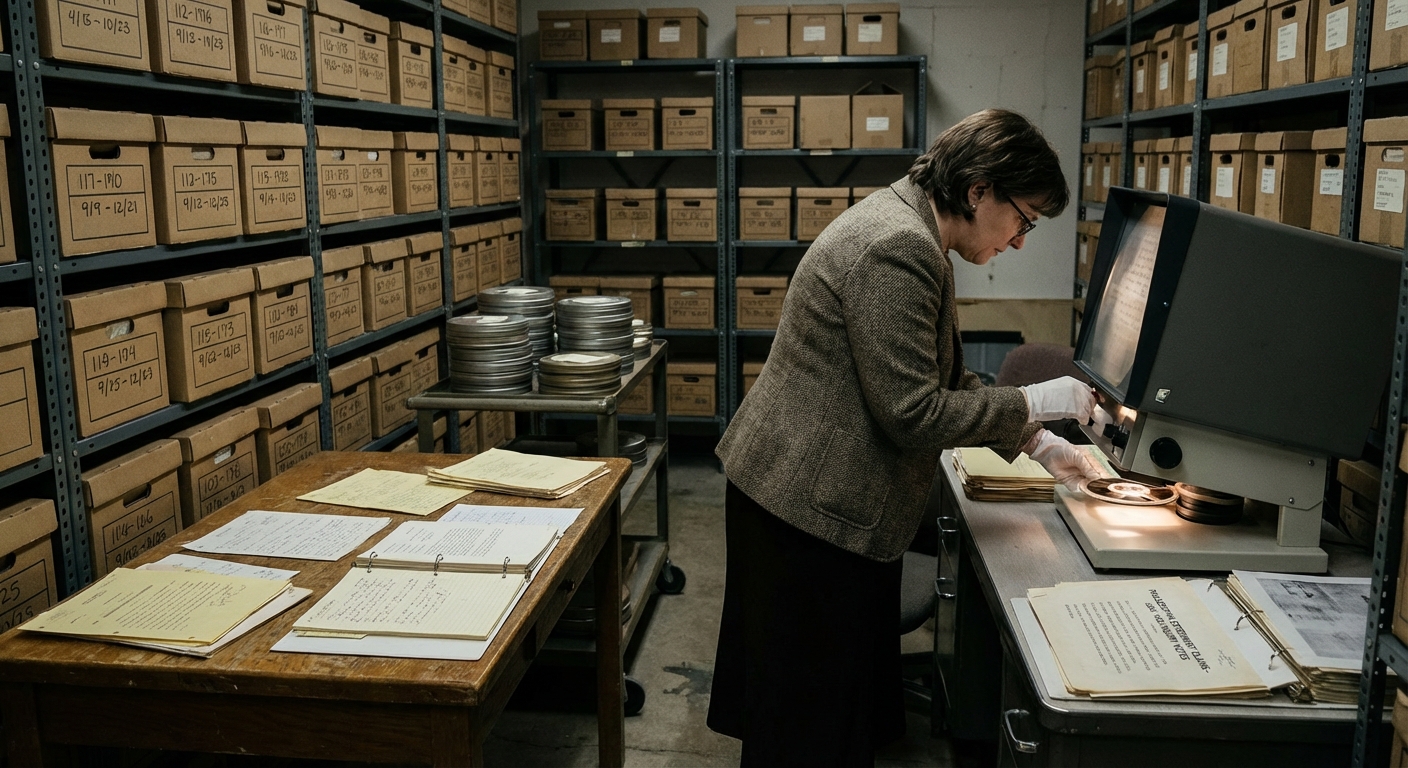
This timeline examines the Philadelphia Experiment claims neutrally: what the claim asserts, where the key documents and testimonies come from, and how official records and later investigations support, contradict, or leave open elements of the story. The term “Philadelphia Experiment claims” is used here only to describe the set of allegations (invisibility, teleportation, and harmful side effects aboard USS Eldridge) and to frame the documentary record and turning points that shaped public belief.
Timeline: key dates and turning points
- June–August 1943 — World War II naval research and degaussing context: Allied navies developed degaussing and deperming techniques to reduce ships’ magnetic signatures and protect them from magnetic mines; the practice used powerful cables and electrical pulses and was widely deployed by 1943. (Source type: technical history and naval science literature.)
- 25 July 1943 — USS Eldridge launched; 27 August 1943 — Eldridge commissioned. (Source type: official naval ship history / DANFS.)
- October 1943 — The core claim date: later accounts place an experiment at the Philadelphia Naval Shipyard around 28 October 1943 in which USS Eldridge was made invisible or teleported; this is the date most often cited in popular retellings. (Source type: claim origin and later secondary retellings.)
- 1955–1956 — Morris K. Jessup publishes The Case for the UFO; in late 1955–1956 Jessup receives a heavily annotated copy of his book (the so-called “Varo edition”) and a series of letters from a writer using names including “Carlos Allende” (also identified later as Carl M. Allen). The annotations and letters discuss exotic physics and include references to the Philadelphia Experiment narrative; these communications are the immediate documentary source that introduced the story into UFO/folklore circles. (Source type: contemporaneous letters and reprints; Varo edition reproduction.)
- 1957 — Office of Naval Research personnel reviewed Jessup’s annotated copy and met with Jessup; the annotated volume later became known in ufology as the “Varo edition.” ONR officers recorded no evidence that a Navy program had rendered ships invisible in 1943. (Source type: Navy / ONR involvement documented in government/archival reports and later information sheets.)
- April 20, 1959 — Morris K. Jessup found dead from carbon-monoxide inhalation; his death was officially ruled a suicide. Jessup’s death and the mysterious letters amplified public interest and conspiracy interpretations. (Source type: contemporaneous reporting and later investigative analysis.)
- 1960s–1970s — Fragmentation and early circulation: the Allende/Jessup materials and the Eldridge story circulate in magazines and small-press publications; various versions appear, some adding dramatic crew injuries and other impossible physical effects. (Source type: magazine and small-press publications; ufology literature.)
- 1965–1979 — Popularization: Vincent Gaddis and others repeat elements of the story; the 1979 book The Philadelphia Experiment: Project Invisibility by Charles Berlitz and William L. Moore heavily popularized the tale and expanded dramatic details. That book is widely credited with taking a marginal story into mainstream popular-culture circulation. (Source type: commercial books and popular media.)
- 1980 — Research and identification of the Allende letter-writer: investigative reporting (for example Robert A. Goerman in FATE magazine) traced “Carlos Allende” to Carl Meredith Allen and documented his stream of letters and eccentric behavior; researchers subsequently concluded Allen was the primary, and possibly sole, originator of the detailed testimonial material. (Source type: investigative journalism / magazine article.)
- 1980s–1990s — Veteran reunions and official records examined: reunions of Eldridge veterans and examination of deck logs, war diaries, and DANFS histories were repeatedly cited by researchers as placing the Eldridge on convoy duty in the Atlantic and Mediterranean rather than in Philadelphia on the 1943 dates claimed. These official records are central to the dispute over the timeline. (Source type: official ship logs / veteran testimony / naval history resources.)
- 1994 — Scholarly review and alternative analysis: Jacques Vallée and others published analytical pieces treating the story as primarily a hoax or a conflation of wartime practices (degaussing, radar countermeasures) with misremembered eyewitness reports; Vallée’s review explored plausible roots (e.g., degaussing operations at Philadelphia yards, witnesses in civilian craft) while emphasizing contradictions in timelines and testimony. (Source type: peer-reviewed / scholarly analysis in the Journal of Scientific Exploration and related outlets.)
- 1996 (and later) — Official Navy information: the Office of Naval Research and Naval History offices issued information denying any Navy experiment that rendered ships invisible or teleported them, and pointed out that ONR as an organization did not exist in 1943 (it was established in 1946); Navy historians also note that the Eldridge’s action reports and logs do not corroborate the dramatic elements of the story. (Source type: Navy information sheet / archival materials.)
- 1979–present — Ongoing cultural legacy and contested claims: the story continues in books, documentaries, websites, and interviews (including late-life claims by people such as Alfred Bielek), while researchers continue to point to the same core documentary contradictions (ship logs, convoy duty, degaussing practices, absence of corroborating primary-source eyewitnesses) that undermine the extraordinary versions of the claim. (Source type: media accounts, interviews, researcher compilations.)
Where the timeline gets disputed
Three types of disagreement recur across the record:
- Location and movement of USS Eldridge in 1943: official ship histories, deck logs and veteran statements place Eldridge in convoy and Mediterranean duties at times that conflict with the October 1943 Philadelphia date in many versions of the claim. Some believers have suggested alternate ships or falsified logs, but those alternatives remain unsupported by primary naval records. (Source type: DANFS, naval records, veteran statements.)
- Origin and reliability of primary testimonial material: the Allende/Allen letters and the Varo-annotated volume are the documentary seeds of the narrative; investigators including Robert Goerman traced many of the letters to Carl Meredith Allen and documented his erratic correspondence, which many researchers treat as the primary authoritative source for the most dramatic claims. Supporters sometimes point to other later testimonial additions (e.g., Alfred Bielek) but those are often unverifiable. (Source type: investigative journalism; Varo edition reproduction.)
- Interpretation of wartime experiments: some analysts (e.g., Jacques Vallée) argue that real wartime activities such as degaussing, high-voltage generator tests, or radar countermeasures could have been misinterpreted or exaggerated into an ‘‘invisibility’’ narrative; others emphasize that the physical phenomena described (optical invisibility, teleportation, crew members fused to bulkheads) are inconsistent with known physics and are unsupported by primary records. These competing interpretive frameworks lead to different conclusions even when they rely on some of the same documentary material. (Source type: scholarly analysis; technical history.)
Evidence score (and what it means)
- Evidence score: 18 / 100
- Drivers of the score:
- Primary documentary seeds for the claim exist (Allende/Allen letters, the Varo annotated volume), but they trace largely to one individual whose reliability has been challenged.
- Official naval histories and ship records (DANFS, deck logs, veterans’ reunions) contradict the most specific timeline and location claims for USS Eldridge.
- Wartime technical work (degaussing, radar countermeasures) provides a plausible seed for confusion but does not support the extraordinary physical effects claimed.
- Key allegations (teleportation, fusion to metal, large-scale optical cloaking) lack corroborating primary-source witnesses, medical logs, or official documents.
- Academic and investigative reviews tend to treat the story as hoax, misinterpretation, or folklore rather than established historical fact.
Evidence score is not probability:
The score reflects how strong the documentation is, not how likely the claim is to be true.
This article is for informational and analytical purposes and does not constitute legal, medical, investment, or purchasing advice.
FAQ
1) What are the Philadelphia Experiment claims, exactly?
The claims assert that the U.S. Navy conducted a wartime experiment (commonly dated to October 1943) that made the destroyer escort USS Eldridge invisible to observers or radar, teleported it briefly, and produced severe and bizarre injuries or alterations among crew members. These allegations derive primarily from the Allende/Allen letters and later popular accounts.
2) Are there official Navy documents that prove the experiment happened?
No publicly available official Navy documents corroborate the extraordinary invisibility/teleportation claims. The Navy’s historical records (DANFS, action reports) and an ONR information sheet treat the story as unsupported and point to routine wartime activities (e.g., degaussing) as likely seeds of the legend. Those official resources are often cited by researchers who dispute the claim.
3) Who started the Philadelphia Experiment narrative?
The narrative entered public awareness in the mid-1950s after the author Morris K. Jessup received an annotated copy of his 1955 book and letters from a correspondent using the name Carlos Allende (later identified as Carl M. Allen by researchers). The annotations and letters contain the earliest detailed modern versions of the story. Investigative reporting subsequently traced much of the material to Allen’s correspondence.
4) If the ship didn’t vanish, what real activities might explain the story?
Documented wartime operations provide plausible partial explanations: degaussing/deperming, high-voltage generator tests that create corona discharges, and radar countermeasures were all carried out during WWII and could have been described informally as attempts to make a ship “invisible” to mines or detection systems. Analysts note these practices do not produce the optical/teleportation effects that the sensational accounts describe, but they can explain how ordinary naval procedures became conflated with extraordinary claims.
5) Why do versions of the story keep changing?
Because the claim passed from a small set of letters into books, media, and oral retellings over decades, details were added, dramatized, or altered. Popular books and films amplified sensational elements; at the same time, investigative researchers repeatedly returned to primary records (ship logs, military histories, and journalists’ interviews) and found contradictions that undermine the most dramatic versions of the claim. The divergence between sensational retellings and primary records is the central reason the timeline remains contested.
Key sources consulted for this timeline include the Varo/ONR documents and reproductions of Jessup’s annotated copy, contemporary and retrospective investigative reporting that traced Carl M. Allen’s correspondence, the Dictionary of American Naval Fighting Ships and related naval records for USS Eldridge, technical histories of WWII degaussing practice, and analytical treatments such as Jacques Vallée’s review and subsequent skeptical inquiries. Where sources conflict, the article indicates that they conflict rather than resolving contradictions without documentary basis.

Science explainer who tackles space, engineering, and ‘physics says no’ claims calmly.