
Scope and purpose: this timeline surveys the major dates, primary documents, and turning points in the history of Hollow Earth claims. It treats “Hollow Earth” as a claim under examination (not a fact), highlights primary sources and influential publications, and flags where the record becomes contested or speculative. The phrase “Hollow Earth claims” is used here to identify the subject under review.
Timeline: key dates and turning points
- c. 1690s — Edmond Halley proposes concentric‑sphere model. Primary idea: 17th‑century astronomer Edmond Halley suggested a layered Earth with inner concentric shells (and internal magnetism mechanisms) in correspondence and early essays. This was a scientific hypothesis of its era, framed to explain observations of magnetic variation rather than a literary or occult claim.
- April 10, 1818 — John Cleves Symmes Jr. issues Circular No. 1 publicizing a hollow‑Earth proposal. Symmes’s circular (a direct primary document) argued the planet was hollow and open at the poles and invited public and governmental support for an expedition. The original circular text and later transcriptions are available in archival reproductions. Symmes’s campaign turned a speculative idea into a public movement and literary trope.
- 1820s — Early fiction and travel narratives popularize the idea. Works such as the anonymous Symzonia and other adventure fictions used Symmes‑style premises and helped seed Hollow Earth imagery in popular culture. These literary treatments blurred lines between speculation and storytelling.
- 1906 — William Reed publishes The Phantom of the Poles. Reed’s book collected polar anecdotes and reinterpreted them as evidence for polar openings and an interior world; it is an early 20th‑century example of promoting the claim in book form and is still cited by later proponents. Reed’s work is widely available in repro and archive copies.
- Mid‑20th century (1950s–1960s) — Revival and fusion with UFO/occult narratives. Authors such as Raymond Bernard (pen name of Walter Siegmeister) published works that linked Hollow Earth ideas to UFOs, Atlantis, and other fringe topics; these books popularized the modern conspiracy framing and introduced fabricated or poorly sourced “diaries” and testimonial claims into the circulation. Bernard and similar authors are major nodes in how the claim moved from curiosity to conspiracy literature.
- 1926–1940s — Actual polar exploration and Byrd’s published expeditions. Admiral Richard E. Byrd conducted and published well‑documented polar flights and expeditions (e.g., North Pole flight claims in the 1920s and Antarctic expeditions). Byrd’s published accounts and institutional archive holdings document these expeditions; however, he did not publish or document any Hollow Earth encounter in his authenticated papers.
- 1946–1947 — Operation Highjump becomes a conspiracy focal point. The large U.S. Navy Antarctic expedition (Operation HIGHJUMP) is fully documented in official reports and press coverage as a post‑war naval scientific and logistical operation. In later decades, this operation was reinterpreted in fringe narratives as a secret attempt to confront inner‑Earth forces—an interpretation not supported by the operation’s contemporaneous documents.
- Post‑1960s onward — The “Secret Diary” / Admiral Byrd texts circulate in popular conspiracy media. A purported “missing diary” and derivative pamphlets and books claiming Byrd entered the interior and encountered advanced civilizations have been produced by later authors; these items lack corroboration in Byrd’s authenticated archival papers and are widely regarded by historians and archivists as later forgeries or inventions. Institutions that hold Byrd’s papers have reported receiving inquiries about such diaries and state there is no archival evidence supporting the extraordinary diary claims.
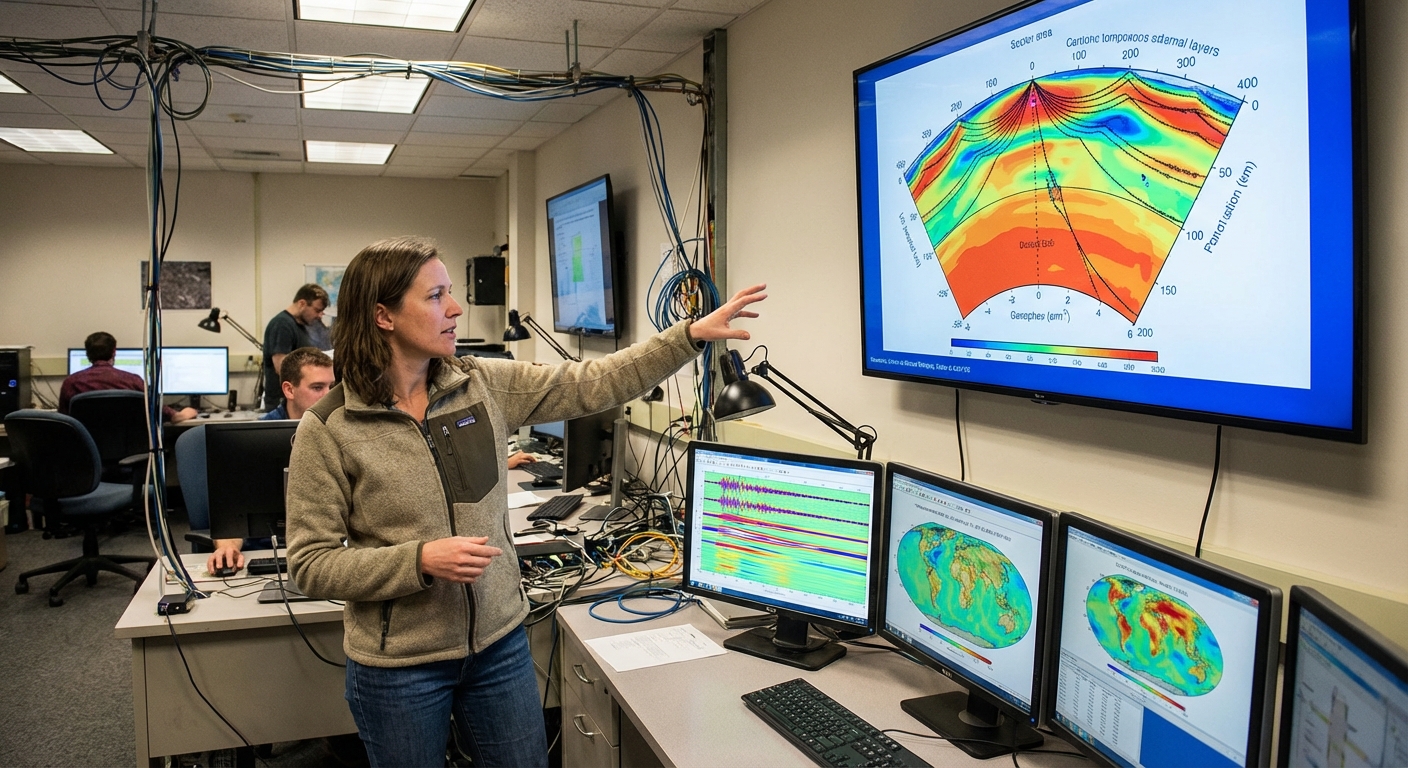
- Modern era (2000s–2020s) — Cultural persistence and scientific refutation. Hollow Earth claims continue to appear online, in books, and in documentary‑style videos. At the same time, geophysics (seismology, gravity, and magnetic surveys) provides documented, high‑resolution models of Earth’s layered interior that contradict a macroscopic hollow planet. Peer‑reviewed seismic tomography, USGS/NASA summaries, and NSF‑funded research show a solid mantle and a dense metallic core; these methods are the primary scientific evidence used to reject a literal hollow‑Earth model.
Where the timeline gets disputed
Three principal dispute zones recur in the literature and public conversation:
- Authenticity of late‑appearing “primary” documents: the so‑called “missing diary” of Admiral Byrd and some mid‑20th‑century pamphlets are widely treated as retroactive inventions. Archivists and researchers note there is no corroborating entry in Byrd’s publicly cataloged papers that supports the extreme Hollow Earth version of the diary story. Proponents often cite photocopies or obscure reprints; independent archival checks do not verify these items as Byrd’s authenticated writings.
- Interpretation of older proposals: Halley and Symmes wrote in scientific and public contexts very different from contemporary conspiracy storytelling. Halley’s concentric spheres were offered as a physical hypothesis (in the language and limits of 17th–18th century science), while Symmes’s 1818 circular was an open appeal that mixed personal conviction with public promotion. Some later readers treat these early texts as literal endorsements of an inhabited hollow world; historians treat them instead as speculative or rhetorical products of their time.
- Use of exploration reports and modern remote sensing: proponents sometimes point to ambiguous photographs, pilot anecdotes, or selective readings of expedition reports as evidence of openings near the poles. Mainstream historical and scientific sources attribute those same photos and reports to ice dynamics, mirages, mapping errors, or deliberate embellishment in press retellings. High‑quality satellite imagery, airborne surveys, and seismic records do not show polar openings of the kind claimed. Where sources conflict, the conflict is between later secondary conspiracy narratives and contemporaneous scientific/archive records.
Evidence score (and what it means)
- Evidence score (0–100): 12
- Drivers: (1) Clear primary documents exist for early proposals (Halley, Symmes) but they describe speculative geometries, not verified populated interiors.
- (2) Key 20th‑century claims (e.g., Admiral Byrd’s “secret diary”) lack corroboration in institutional archives that hold Byrd’s authenticated papers.
- (3) Modern geophysical data (seismology, gravity, tomography) provide systematic, peer‑reviewed models of a layered, largely solid Earth inconsistent with a macroscopic hollow interior.
- (4) The claim’s persistence is driven primarily by secondary books, pamphlets, and online media that recycle earlier speculative sources rather than new primary evidence.
- (5) Remaining uncertainties are procedural or documentary (authenticity of specific late‑appearing documents), not geophysical: archives and scientific instruments can be queried and tested.
Evidence score is not probability:
The score reflects how strong the documentation is, not how likely the claim is to be true.
FAQ
What do the best sources say about Hollow Earth claims?
Historical sources show the idea evolved from scientific speculation and public promotion into fiction and later conspiracy literature; modern geophysics provides robust, directly measured evidence of a layered, solid mantle and metallic core that contradict a literal hollow planet. Major archives and scientific institutions do not verify the extraordinary 20th‑century diary claims.
Are there authenticated primary documents claiming Byrd discovered a hollow interior?
No authenticated diary or official report in the Byrd archival collections supports a claim that Admiral Byrd flew into or documented an inhabited inner Earth. The “missing diary” materials cited in many popular retellings are not corroborated by the institutional archives that hold Byrd’s papers. Researchers and archivists caution that those texts appear in later secondary publications and are not accepted as original Byrd documents.
How does seismic evidence address the Hollow Earth idea?
Seismology and seismic tomography map the propagation of earthquake waves through Earth; they reveal sharp discontinuities (e.g., the Mohorovičić and Gutenberg discontinuities) and velocity patterns consistent with dense, solid and molten layers, not large internal hollow cavities. Peer‑reviewed imaging (and decades of global seismograph data) are the primary scientific basis for the modern model of Earth’s interior.
Why do Hollow Earth claims persist despite contrary scientific data?
Several factors sustain the claim: the dramatic narrative value of an interior world, the recycling of early speculative texts in modern fringe media, selective reading of exploration reports, and the social dynamics of conspiracy transmission (appeal to suppressed knowledge or authoritative witnesses). Cultural analyses trace how literary and pseudoscientific works in the 19th and 20th centuries transformed an old speculative idea into a modern conspiracy motif.
“This article is for informational and analytical purposes and does not constitute legal, medical, investment, or purchasing advice.”
How could the assessment change — what would count as strong new evidence?
Documentary changes that would alter this timeline: verified, dated primary documents from credible archival custodians directly attributable to named historical actors (for example, authenticated expedition logs or contact reports from a known explorer) or reproducible geophysical measurements demonstrating large, persistent voids at depth inconsistent with current seismic models. Until such evidence is produced, authenticated, and peer reviewed, the documentation available remains weak for the extraordinary claim.

Science explainer who tackles space, engineering, and ‘physics says no’ claims calmly.