
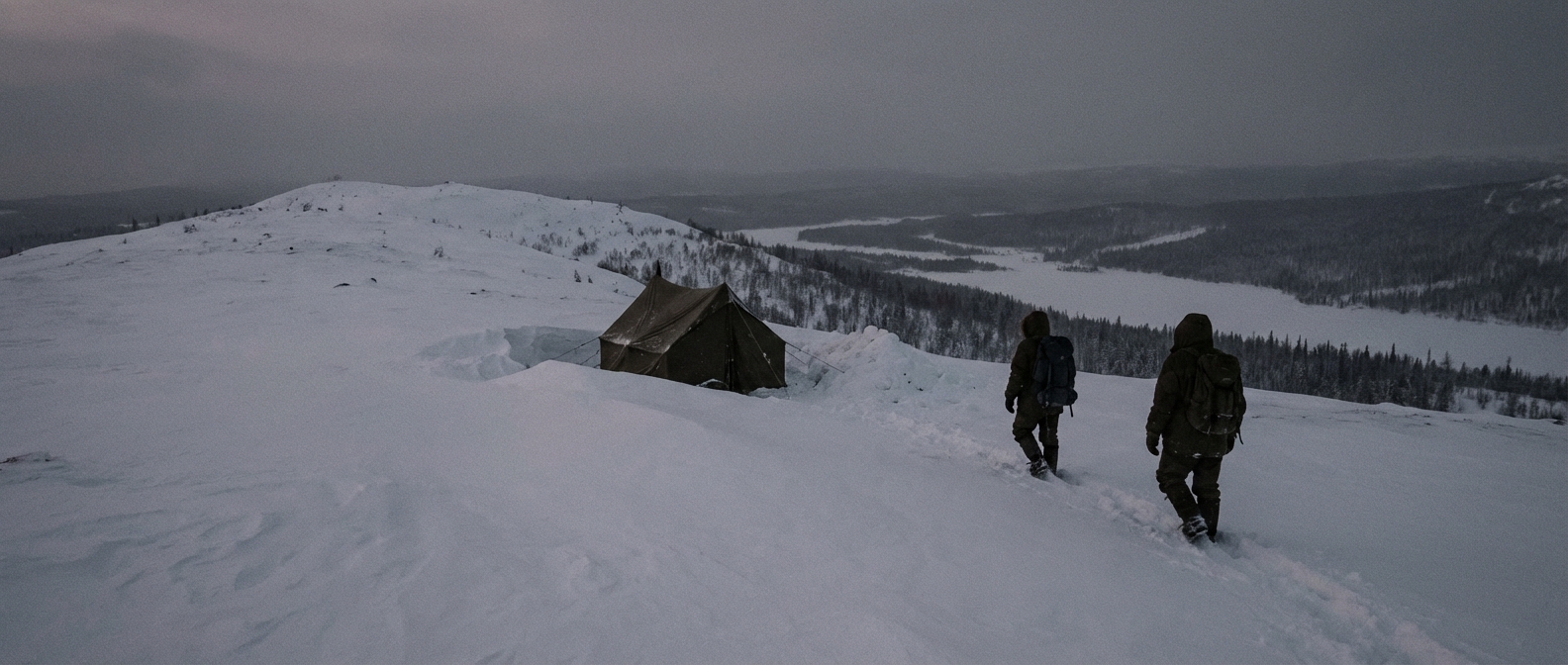
Scope and purpose: this timeline analyzes the Dyatlov Pass cover-up claims and traces key dates, documents, and turning points while treating the subject as a CLAIM rather than a proven fact. This article uses available archival records, official statements, and peer-reviewed research to map what is documented, what is disputed, and where gaps remain. The primary focus phrase for this piece is Dyatlov Pass cover-up claims timeline and it is used to anchor the scope of events covered below.
Timeline: key dates and turning points
- January–February 1959 — The expedition and the night of the incident: The Dyatlov group (nine hikers led by Igor Dyatlov) were last seen alive on January 31–February 1, 1959; the incident occurred on the night of February 1–2, 1959 at Kholat Syakhl (the «Mountain of the Dead»). This timeframe is the canonical starting point for all subsequent investigations.
- February 26–27, 1959 — Discovery of the tent and bodies: Searchers located the group’s abandoned tent on February 26, 1959; the first two bodies (partially dressed) were discovered under a cedar tree on February 27, followed by additional bodies over the next days and weeks. These recovery dates and the condition of the scene are recorded in Soviet-era reports and summarized in later overviews.
- May 1959 — Autopsies and official closure: Soviet forensic examinations were carried out in the months after recovery, and by May 1959 the official criminal case was closed with the recorded conclusion that the deaths were caused by a “compelling natural force.” The archival case file language and the abrupt closure are frequently cited by both mainstream accounts and skeptics.
- 1990s–2000s — Release and republication of some archive materials: Over decades various documents, witness memoirs, photographs, and partial copies of case files became publicly available through researchers, journalists, and dedicated collectors. These releases expanded access to original materials but did not produce a single new consensus explanation.
- 2015–2019 — Official re-examination by Russian bodies: The Investigative Committee of the Russian Federation reopened review of the case materials beginning in 2015 and, after examinations and field checks, reported in 2019 that an avalanche (or related snow-slab phenomena) was the most probable cause among natural hypotheses. The ICRF analysis and subsequent public statements triggered further discussion.
- 2019–2020 — Prosecutor General’s review and July 11, 2020 announcement: The Prosecutor General’s Office conducted its own review and on July 11, 2020, a regional prosecutor’s office spokesman publicly stated that investigators considered an avalanche (or related natural forces) the official explanation. Families and independent researchers continued to dispute aspects of that conclusion, citing missing documents and unanswered forensic questions.
- 2020–2022 — Peer-reviewed modelling and field expeditions: Independent scientific work modeled slab-avalanche mechanisms compatible with the physical constraints of the site, and field expeditions documented that small snow-slab avalanches can and do occur in the area—findings published in peer-reviewed outlets (Nature Communications and follow-ups) supported the plausibility of an avalanche-type scenario but did not settle all contested forensic anomalies.
- 2018–2021 — Forensic and radiological testing requested or re-run: In the late 2010s, Russian investigators ordered further physical and technical expertise, including radiological testing of clothing and tissue fragments; public reporting indicates more recent laboratory analyses were performed or authorized, but interpretation and completeness of those reports remain disputed among researchers.
- 2020s — Ongoing debate and competing narratives: After official statements favoring natural causes, independent researchers, family groups, and enthusiasts continued to publish alternative readings (including claims of censorship or incomplete archives). Scholarly work has narrowed some physical mechanisms but left other forensic issues (severe internal injuries, patterns of clothing removal, timeline of movements) debated.
Where the timeline gets disputed
The Dyatlov Pass cover-up claims timeline becomes contested at several nodes where documentary gaps, differing interpretations of forensic records, or disputed releases of archival material intersect.
- Completeness of original files: Researchers differ on whether the 1959 case file is complete in public archives; some claim that relevant pages are missing or stamped into secret archives, while others point to multiple declassified packets and reproduced documents. The disagreement about what exists in state archives is central to “cover-up” allegations.
- Interpretation of autopsies: The autopsy summaries (and the language used in 1959 reports) are read differently by forensic specialists and lay researchers. Specific internal injuries (rib and skull fractures) are sometimes presented by critics as inconsistent with the avalanche hypothesis; proponents note that blunt-force trauma from a slab or impact with trees/ice can produce similar findings, and that documentation quality from 1959 limits certainty.
- Radiological and material testing: Orders for radiological testing (noted in recent reviews) have been cited by those alleging a cover-up, but published summaries and full lab reports are unevenly available; this lack of transparent chain-of-evidence reporting fuels disagreement.
- Official conclusions vs. family and researcher reception: While investigators in 2019–2020 presented natural causes as the most probable explanations, families of the deceased and some independent experts have publicly rejected that result and called for additional open access to archives—an institutional dispute that is documented in press coverage.
Evidence score (and what it means)
- Evidence score: 48/100
- Drivers that pull the score upward: availability of primary archival case files (partial reproductions), recent official re-examinations (Investigative Committee, Prosecutor General’s Office), and peer-reviewed physical modelling showing avalanche mechanisms can fit some observed constraints.
- Drivers that pull the score downward: gaps and disputed completeness in released documents, ambiguities in 1959 forensic reports, and unresolved questions about certain severe internal injuries that some researchers argue are not fully reconciled with the most-cited natural explanations.
- Moderating factors: repeated field expeditions that have documented avalanching potential at the pass, and public prosecutorial statements that favor natural explanations, raise plausibility but do not eliminate documentary uncertainty.
- Needed to raise score substantially: full, transparent publication of the complete archival file set (with forensic lab reports), independent reanalysis of tissue/clothing samples with published methods, and open chain-of-custody documentation for any modern tests.
Evidence score is not probability:
The score reflects how strong the documentation is, not how likely the claim is to be true.
This article is for informational and analytical purposes and does not constitute legal, medical, investment, or purchasing advice.
FAQ
Q: What does the Dyatlov Pass cover-up claims timeline cover?
A: This timeline traces the documented sequence of events from the 1959 incident and recovery through later reopenings, scientific studies, and public statements; it focuses on dates and documents cited in public reports rather than endorsing any one explanatory narrative.
Q: Did Russian investigators officially say “avalanche” in 2020?
A: Officials associated with the Prosecutor General’s Office announced in July 2020 that natural forces, notably avalanche-type mechanisms, were considered the most probable cause after the re-examination; those official findings are documented in press briefings and summarized by multiple outlets. Families and some independent researchers publicly disputed aspects of those conclusions.
Q: Where in the Dyatlov Pass cover-up claims timeline are the biggest evidentiary gaps?
A: The largest documented gaps are (1) the completeness and accessibility of the original 1959 case documents and forensic files in public archives, and (2) the availability of fully published modern forensic and radiological reports with clear chain-of-custody details. These gaps are the principal basis for persistent “cover-up” allegations.
Q: Have peer-reviewed studies changed the timeline interpretation?
A: Peer-reviewed modelling (notably work published in Nature Communications and related field expeditions) has shown that small slab-avalanches compatible with some site constraints are physically plausible; that modelling changes some interpretations of the physical events but does not by itself close disputed documentary or forensic questions.
Q: How can I verify the documents referenced in this timeline?
A: Primary materials are held across Russian regional archives, reproduced collections published by researchers, and public press briefings; groups that maintain document repositories (including independent Dyatlov researchers) provide access to many scanned items, but full verification requires checking archival references against originals where available. Where sources conflict, we have noted the disagreement rather than speculated.
Q: Why does this article call it the “cover-up claims” timeline instead of a definitive history?
A: The term “cover-up claims” signals that this article treats arguments about withheld or suppressed evidence as a claim that must be evaluated against documentary records; it avoids asserting disputed propositions as fact and highlights where evidence is documented versus where inferences or allegations predominate.

Science explainer who tackles space, engineering, and ‘physics says no’ claims calmly.