
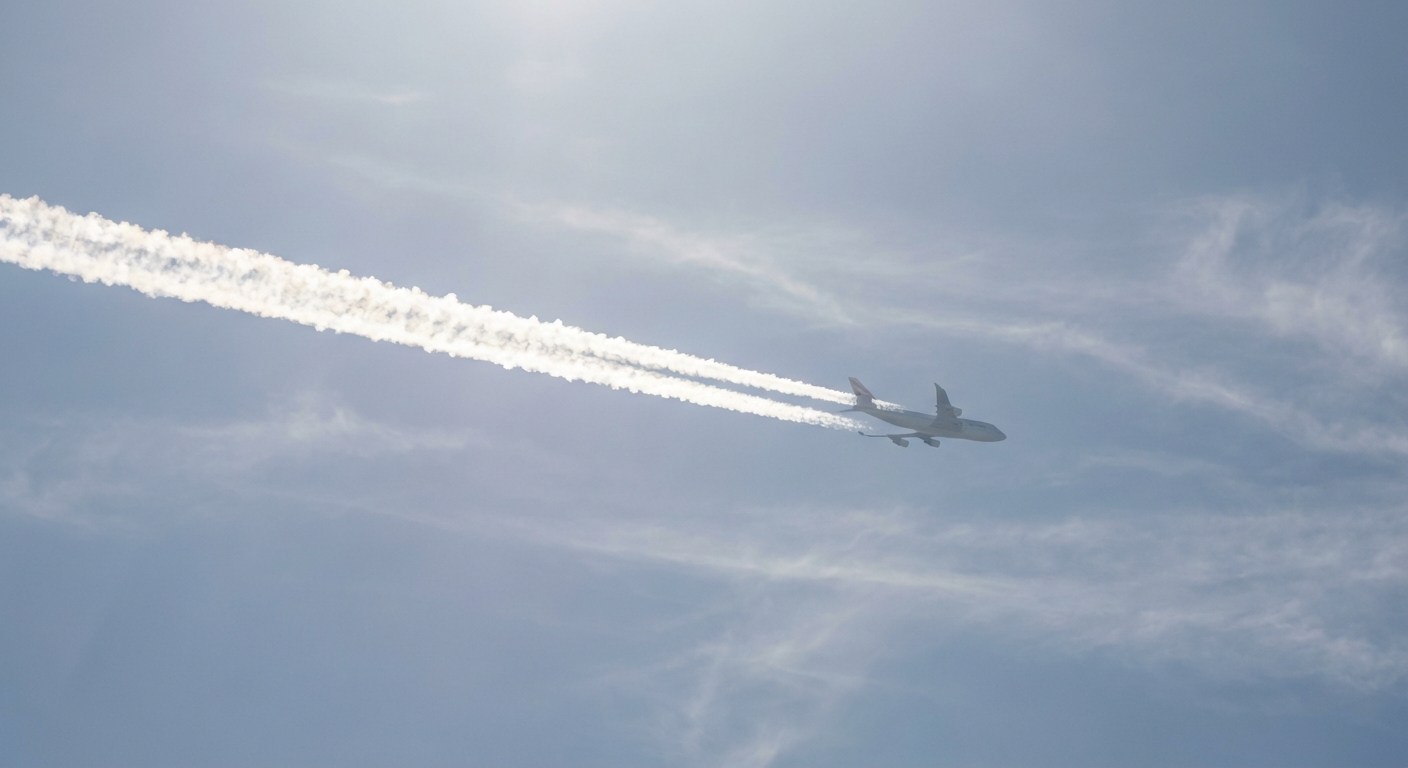
Chemtrails claims typically argue that some airplane condensation trails are actually deliberate chemical or biological releases for hidden purposes (weather modification, population control, or covert geoengineering). This timeline focuses on traceable documents, public statements, and research milestones—separating what is documented from what is asserted.
This article is for informational and analytical purposes and does not constitute legal, medical, investment, or purchasing advice.
Timeline: key dates and turning points
-
1996 — “Weather as a Force Multiplier: Owning the Weather in 2025” circulated as a future-oriented scenario paper (military academic/strategic writing, later widely cited in chemtrails narratives). In later years, the U.S. Air Force stated that this type of cited “weather” paper did not reflect current policy or capability and was treated as a future scenario exercise rather than evidence of an active spraying program. Source type: USAF clarification referenced in later summaries.
-
Early 2000s–2005 — U.S. Air Force public responses rejecting “chemtrail” allegations (official military public-affairs materials). Public summaries describe an Air Force fact sheet and a 2005 clarification that the cited “Owning the Weather in 2025” paper did not represent current military programs, and that the Air Force was not conducting weather modification experiments. Source type: USAF statements as reported in secondary summaries.
-
2015 — U.S. Environmental Protection Agency updates public-facing material addressing contrails vs. “chemtrails” (official agency explainer). The EPA frames “chemtrails” as a term used to inaccurately claim routine contrails are intentional releases for nefarious purposes, and it provides basic contrail science and links to further resources. Source type: EPA webpage and update notes.
-
2015 — HAARP management transition referenced in chemtrails-adjacent conspiracies (official context inside EPA explainer). The EPA notes HAARP has been linked to conspiracies and states it is not aware of scientific evidence supporting claims of “nefarious activities,” while also describing the program’s management history and public documentation. Source type: EPA webpage.
-
August 2016 — Peer-reviewed expert-survey study published and widely reported (scientific literature summarized by an institutional press release). A research team associated with Carnegie Institution for Science and collaborators reported results of an expert survey in which 76 of 77 participating scientists said they had not encountered evidence of a secret large-scale atmospheric spraying program, and said the “evidence” commonly cited could be explained by known processes (contrails, sampling issues). Source type: institutional press release summarizing Environmental Research Letters publication.
-
2015–2017 — Multiple “chemtrails” petitions submitted and rejected on procedural grounds (official parliamentary petitions record). These show public interest and recurring allegations, but the rejections document that petitions were rejected for reasons such as unclear requests or matters not within Parliament/Government responsibility as framed. Source type: UK Parliament petitions site.
-
March 2015 (historical reporting) — U.S. media coverage highlights EPA material and the contrail explanation (journalistic secondary source quoting/characterizing agency materials). Coverage described EPA pointing readers to a contrails factsheet and summarizing how contrails form and why persistence varies with atmospheric humidity. Source type: journalism describing/quoting agency resources.
-
2024–2025 — “Chemtrails” language appears in U.S. state-level legislative debates (news reporting on proposed/passed bills). Reporting documents that some state bills seek to ban “intentional release” of chemicals in the atmosphere, often echoing chemtrails-aligned language even when not using the term; coverage also records expert objections that contrails are not evidence of secret spraying. Source type: high-trust journalism (AP, The Guardian).
-
July 22, 2025 — EPA updates its contrails page and links an “Interagency Contrails Fact Sheet” (official agency explainer + interagency resource). The EPA page explicitly defines “chemtrails” as an inaccurate claim about routine air traffic contrails and separates that from legitimate, regulated uses of aerial spraying at lower altitudes for things like firefighting or agriculture. Source type: EPA webpage and linked resource notice.
-
2025 — FAA maintains a public explainer on contrails and “aviation induced cloudiness” (official aviation agency explainer). The FAA describes contrails as ice crystals forming under cold/humid conditions at cruise altitude and notes some contrails persist and spread into contrail cirrus depending on atmospheric conditions, engine/fuel factors, and humidity aloft. Source type: FAA webpage.
Where the timeline gets disputed
Dispute 1: “Documents prove a secret spraying program.” A recurring chemtrails argument is that strategic or technical documents (especially the 1996 “Owning the Weather in 2025” paper) “prove” an operational program. Official summaries of Air Force responses say the paper was treated as a scenario/fictional future-oriented exercise and not reflective of current capability or policy. The dispute is often less about whether a document exists and more about what it means.
Dispute 2: “Persistent contrails = chemicals.” Agency explainers (FAA, EPA) explicitly describe why contrails can persist and spread—mainly meteorology at altitude (cold, humid/ice-supersaturated regions) and how exhaust water vapor and particles seed ice crystals. Chemtrails communities often interpret persistence, grid-like patterns, or hazy outcomes as evidence of spraying; agencies and many atmospheric scientists treat these as expected outcomes of traffic patterns and atmospheric conditions.
Dispute 3: “Government admissions.” Some online commentary frames official contrail discussions (including contrail cirrus and climate impacts) as “admissions of chemtrails.” The primary-source agency language frames contrails as a known physical phenomenon and treats “chemtrails” as an inaccurate label for routine contrails, while noting that some legitimate aircraft spraying exists (e.g., firefighting/agriculture) and is regulated and documented.
Dispute 4: “Geoengineering discussions blur into chemtrails claims.” News coverage notes that public debate about proposed solar geoengineering (e.g., stratospheric aerosol injection as a theoretical climate intervention) is sometimes conflated with chemtrails allegations, even though agencies and experts cited in reporting emphasize there is no evidence of a secret ongoing spraying program. This is a messaging and interpretation dispute, not a resolved factual equivalence.
Evidence score (and what it means)
Evidence score: 18/100
-
Strong documentation exists for contrail physics and for official agency explanations describing contrails and explicitly labeling “chemtrails” as an inaccurate claim.
-
Peer-reviewed work and expert surveys exist rejecting evidence of a secret large-scale spraying program (as summarized in reputable institutional communication).
-
Public belief and political attention are documented (petitions, bills, hearings/news coverage), but those are not evidence that a program exists—only evidence the claim circulates.
-
Key “proof” materials are often interpretive (e.g., scenario documents cited as operational evidence), and official context disputes that interpretation.
-
Core allegation lacks verifiable operational documentation (e.g., confirmed programs, budgets, flight logs, procurement chains) in the public record presented by proponents; agencies publicly deny the claim as framed.
Evidence score is not probability:
The score reflects how strong the documentation is, not how likely the claim is to be true.
FAQ
What are chemtrails claims, in plain terms?
Chemtrails claims assert that some visible trails behind aircraft are not normal contrails but deliberate chemical or biological releases for hidden goals (such as weather modification or covert geoengineering). The EPA describes “chemtrails” as a term used to inaccurately claim routine contrails are intentional releases for nefarious purposes.
Do official agencies acknowledge that contrails can persist and spread?
Yes. The FAA explains that some contrails become persistent and can diffuse into contrail cirrus, depending on atmospheric conditions at altitude and engine/fuel factors. This is described as contrail science, not as evidence of covert spraying.
Does the EPA say “chemtrails” are real?
No. The EPA’s contrails page presents “chemtrails” as an inaccurate label for routine contrails, while also noting that aircraft can spray substances for legitimate, regulated purposes (e.g., firefighting or farming), which are separate from the conspiracy claim.
What is the most-cited “document” in chemtrails discussions, and what is disputed about it?
A commonly cited item is the 1996 Air University paper “Weather as a Force Multiplier: Owning the Weather in 2025.” The dispute is interpretive: proponents treat it as evidence of an active program; public summaries of Air Force responses say it was a future scenario exercise and not reflective of current policy or capability.
What kind of evidence would materially change this assessment?
High-quality, independently verifiable operational records—such as authenticated program documentation, procurement chains, audited budgets, confirmed aircraft modifications, and reproducible chemical measurements tied to specific flights with proper sampling protocols—would be the kind of evidence needed to move beyond claims and counterclaims. Current agency explainers and published expert assessments do not provide support for a secret large-scale spraying program.

Science explainer who tackles space, engineering, and ‘physics says no’ claims calmly.