
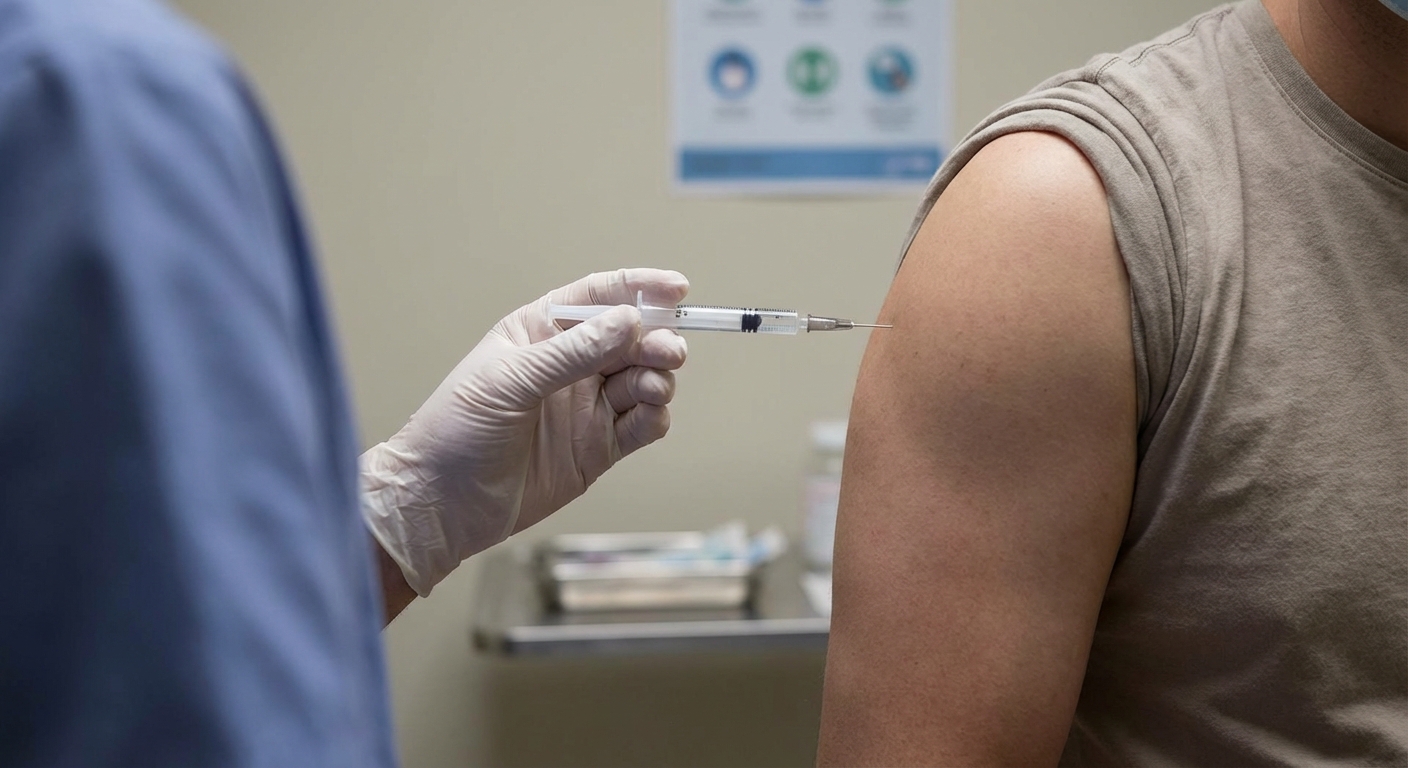
The claim that there are “microchips in vaccines” (often framed as hidden tracking devices) is a recurring conspiracy claim, especially around COVID-19 vaccines. A careful review of publicly available vaccine ingredient disclosures and official agency statements finds no documented evidence that licensed/authorized vaccines contain microchips. Many “proof” narratives trace back to misinterpretations of unrelated technologies (like digital health records, vial-tracking ideas, or patents about wearables) and to viral videos that do not provide verifiable chain-of-custody evidence.
This article is for informational and analytical purposes and does not constitute legal, medical, investment, or purchasing advice.
Verdict: what we know, what we can’t prove
What is strongly documented
1) Public-health agencies explicitly deny “microchips in vaccines” and describe it as a myth. The U.S. CDC’s “Myths and Facts” page states: “COVID-19 vaccines do not contain microchips” and says vaccines are not administered to track movement.
2) Vaccine ingredient disclosures and official materials list excipients and do not include microchips or microelectronics. Ingredient lists for specific vaccines are public. For example, COMIRNATY prescribing information lists mRNA, specific lipids, buffers, and sucrose—no microelectronics.
3) Official FDA communications to the public also state COVID-19 vaccines do not contain microchips. The FDA’s multilingual myths toolkit includes a direct Q/A format: “Do #COVID19Vaccines have a microchip to track you? NO.”
4) Claims often use “magnet” or “chip reader” videos, but fact-checking reviews and source context do not support them as evidence of microchips. For example, FactCheck.org notes there is no support for microchip claims based on magnet videos and highlights the inability to verify key details in such clips (vaccination status, objects used, other substances).
What is plausible but unproven
1) Confusion between “tracking vaccine doses” vs “tracking people.” It is plausible for governments and health systems to track vaccination records (who received which vaccine and when) using databases, because that is a standard public-health practice. This is fundamentally different from embedding a microchip in the injected product. The CDC’s myth page explicitly frames the claim around movement tracking and rejects it.
2) Some medical products can contain digital sensors, which fuels misunderstanding. Separately from vaccines, there have been FDA-approved medicines that incorporate ingestible sensors for adherence tracking (a “digital pill” concept). Viral posts sometimes conflate this idea with vaccines. A widely shared clip attributed to Pfizer’s CEO was instead about a sensor-enabled pill unrelated to COVID-19 vaccines.
3) Technical research on tiny devices exists, but it does not demonstrate covert microchips in licensed vaccines. The existence of miniaturized electronics, RFID tags, and wearable monitoring tech can make the claim feel intuitively possible to some audiences. However, establishing the vaccine-microchip claim would require direct, reproducible, independently verified evidence tied to real vaccine vials and chain-of-custody testing—evidence that is not present in the materials reviewed here. (Absence of evidence is not proof of impossibility; it is a statement about documentation.)
What is contradicted or unsupported
1) The central claim (“microchips in vaccines”) is contradicted by official ingredient disclosures and agency statements. The CDC and FDA directly deny it, and published ingredient lists do not include microchips or microelectronics.
2) “Magnet” and “microchip scanner” demonstrations do not establish that a vaccine contained a chip. Fact-checking investigations point out missing verification steps (identity of the device, controls, repeatability, and confirmation of vaccination status) and note that such videos do not support the conclusion that vaccines contain microchips.
3) A frequently cited “Microsoft patent” narrative is a mismatch to the claim. The Microsoft patent often referenced in memes is about a cryptocurrency system using body activity data and is typically described as involving wearables; it does not document a plan to microchip people via vaccines.
Evidence score (and what it means)
Evidence score: 8/100
- Strong official denials: Multiple public-health sources explicitly state vaccines do not contain microchips.
- Public ingredient disclosures: Vaccine labeling/prescribing information and ingredient lists do not include microchips or microelectronics.
- Claim evidence is weak/viral: Common “proof” relies on unverifiable videos and anecdotes rather than controlled, independent lab analysis tied to real vials.
- Frequent conflation: Unrelated technologies (wearables, digital certificates, vial logistics, patents) are repeatedly misread as evidence for microchips in vaccines.
- No primary documentation: No credible primary source (regulator, manufacturer labeling, independent validated lab report) supports microchips in administered vaccine doses.
Evidence score is not probability:
The score reflects how strong the documentation is, not how likely the claim is to be true.
Practical takeaway: how to read future claims
1) Demand a chain of custody. For “microchips in vaccines,” decisive evidence would require a documented path from a sealed vial (with lot numbers), to controlled sampling, to independent lab analysis—ideally replicated by multiple labs. Viral clips of magnets or scanners typically skip these steps.
2) Separate “records tracking” from “implant tracking.” Health systems can track who received which vaccine via databases without anything being embedded in the injection. Claims often blur this distinction.
3) Check the primary documents first. For vaccines, that means regulator pages (e.g., FDA product pages), package inserts/prescribing info, and official agency myth/FAQ resources. These sources directly address the microchips claim and provide ingredient information.
4) Watch for “topic drift.” If the evidence offered is a patent, a wearable device, a digital certificate idea, or a sensor-enabled pill, ask whether it actually demonstrates anything about vaccine contents. Often it does not.
FAQ
Do COVID-19 vaccines contain microchips?
Based on official U.S. public-health communications and publicly available ingredient disclosures, COVID-19 vaccines are described as not containing microchips, and ingredient lists do not include microelectronics.
If there are no microchips in vaccines, why do some videos show magnets “sticking” after vaccination?
Those videos do not establish that a vaccine contained a chip or any magnetic material. Investigations note the lack of controlled conditions and basic verification details (what substance was on the skin, what magnet was used, whether vaccination occurred, repeatability, etc.).
Could a microchip even fit through a vaccine needle?
Some fact-checking analyses cite experts arguing that covertly injecting a functional tracking chip through standard vaccination needles is not practical with current technology, especially given size, power, and transmission constraints. These arguments address feasibility, but the key point remains: feasibility arguments are not a substitute for direct evidence and chain-of-custody testing.
Did Bill Gates or Microsoft create a plan to microchip people through vaccines?
Commonly cited references include a Microsoft patent that is described as involving body activity data and wearables; it does not document a plan to microchip people via vaccines. Claims tying that patent to vaccine microchips are not supported by the patent-focused fact-checking summaries reviewed.
What kind of evidence would change this verdict on “microchips in vaccines” claims?
Credible, independently replicated lab results from sealed vials with documented lot numbers—showing identifiable microelectronics in the injectable product—would be necessary. Also relevant would be corroborating disclosures from regulators and manufacturers that match those findings. In the sources reviewed here, such evidence is absent.

Investigative-style editor who turns conspiracy claims into structured, source-first pages: claim → evidence → counterevidence → verdict.