
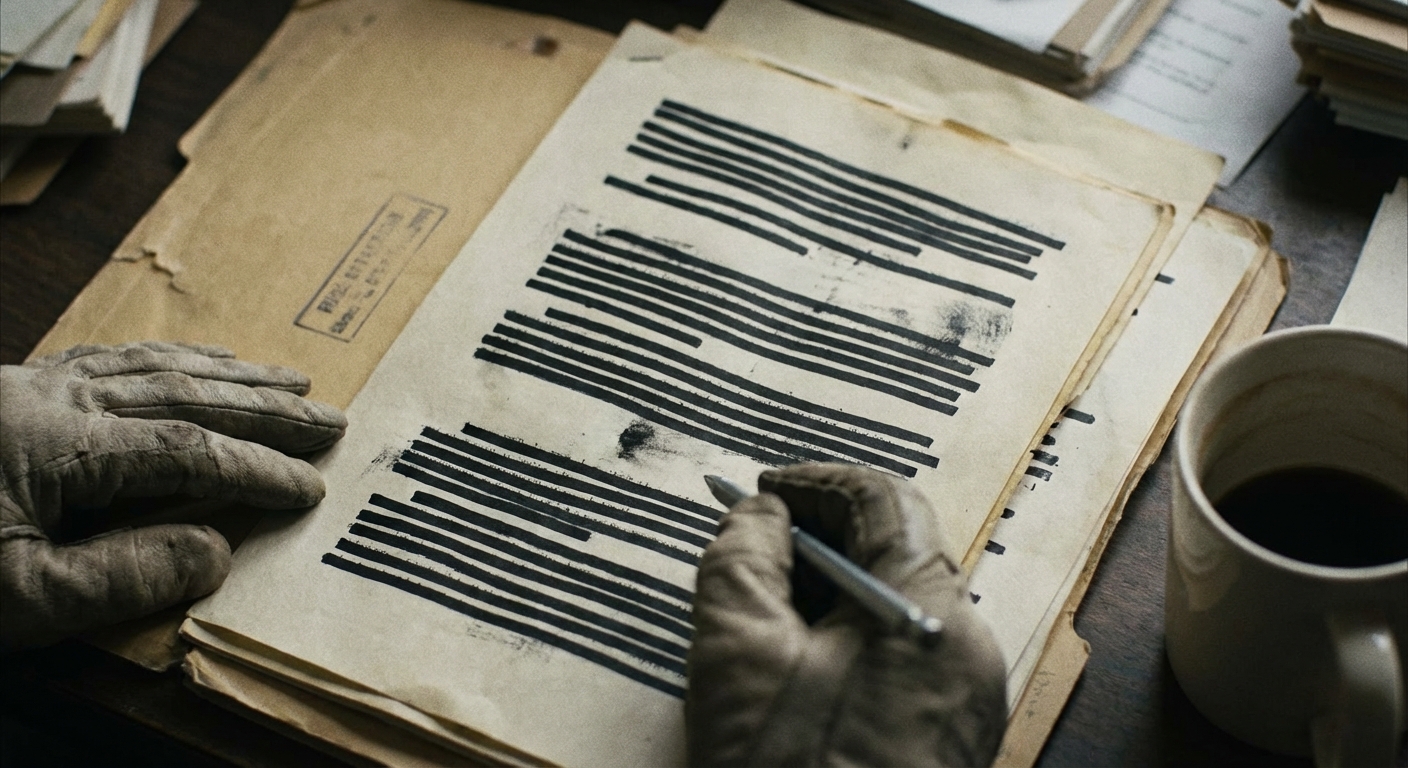
Below are the arguments people cite to support the claim that there was external involvement in the 1973 Chile coup; these are arguments supporters make, not proven conclusions. The phrase 1973 Chile coup external involvement appears in many primary documents and scholarly discussions, and this piece examines where those arguments come from, what kinds of evidence back them, and what verification tests can be applied.
This article is for informational and analytical purposes and does not constitute legal, medical, investment, or purchasing advice.
The strongest arguments people cite
-
Project FUBELT / “Track II” covert CIA operations: supporters point to declassified CIA materials and National Security Archive collections describing covert programs aimed at preventing Salvador Allende’s consolidation and encouraging opposition in Chile between 1970–1973. These documents are cited as evidence that the U.S. ran political-action and psychological-warfare programs targeting Chilean politics. Source type: declassified CIA memos and National Security Archive releases. Verification test: read the declassified memoranda, tasking orders, and agency summaries to confirm specific operational objectives and whether they include explicit instructions to promote or assist a military coup.
-
Church Committee material and Senate hearings: the 1975 Church Committee produced a public case study, “Covert Action in Chile: 1963–1973,” that documents U.S. covert activities in Chile (political influence, contacts, and funding) while concluding limits on direct proof of U.S. orchestration of the coup itself. Source type: congressional report and archived hearing transcripts. Verification test: compare the Church Committee’s public conclusions with the raw exhibits and witness testimony it relied on to see which actions it documented and which it said lacked evidence.
-
Declassified State Department and NSC cables: internal U.S. government cables (Foreign Relations of the United States volumes and Nixon NSC files) show policy discussions on Chile, requests for help from the junta after the coup, and advice on supporting consolidation—interpreted by some as at least tacit U.S. support. Source type: FRUS volumes, NSC memoranda. Verification test: inspect dated cables and memoranda to determine timing (pre- vs post-coup), the content of requests for assistance, and whether they authorized or limited direct involvement.
-
Economic and diplomatic pressure (the so-called “invisible blockade”): researchers and historians cite U.S. efforts to limit Chile’s access to credit, trade, and international financial support as an effort that helped destabilize Allende’s government. Source type: Treasury, State Department records, and secondary histories. Verification test: examine contemporaneous economic policy papers, international loan records, and State Department instructions to determine the scale and intent of economic pressure.
-
Links between U.S. intelligence and Chilean security services: FOIA-released CIA documents and other archives show contacts between U.S. agencies and Chilean officers, often framed as intelligence collection or relationship-building; critics interpret closeness and material support as facilitation. Source type: CIA FOIA releases, embassy cables. Verification test: analyze cables for requests to provide arms, training, or operational support and check whether transfers actually occurred.
-
Assassination and destabilization plots referenced in congressional materials: the Church Committee documented discussions and alleged plots (for example, links in the broader historical record to the assassination of General René Schneider in 1970 and other episodes). Supporters of the claim point to these events as evidence of a pattern of covert action against Chilean democratic actors. Source type: congressional report, historical investigations, National Security Archive compilations. Verification test: read the original committee exhibits and corroborating investigative files to separate documented agency actions from allegations and third-party claims.
-
Post-coup assistance and diplomatic support for the junta: records show U.S. discussions about providing assistance and about the need to manage human-rights fallout—used to argue that the U.S. was complicit in enabling the regime after the fact. Source type: State Department meeting notes, FRUS entries. Verification test: confirm the timing and type of assistance (humanitarian, military, diplomatic) and whether policy choices effectively endorsed the new regime.
-
Investigative journalism and later calls for declassification: contemporary reporting and later appeals (including recent calls by U.S. lawmakers) highlight remaining closed records and argue that fuller disclosure could change assessments. Source type: investigative media, congressional statements, National Security Archive campaigns. Verification test: track which records remain classified and whether newly released documents alter prior conclusions.
How these arguments change when checked
When each argument is checked against primary sources, a mixed picture emerges rather than a single, settled fact. Several points merit emphasis:
-
Some claims are strongly documented: the U.S. government ran covert political-action programs to oppose Allende, and those programs are recorded in declassified CIA and NSC documents. These materials show explicit efforts at funding opposition groups, influencing media, and cultivating contacts within Chile. That documentation is the basis for the argument of external involvement in Chilean politics.
-
Other claims are more disputed or unproven: whether U.S. agencies directly planned and executed the 11 September 1973 military coup (meaning: operationally orchestrated the coup on the ground) is disputed. The Church Committee’s public reports concluded there was no conclusive evidence the U.S. directly orchestrated the coup, while later releases and historians emphasize how covert actions created conditions that may have helped a coup succeed. These accounts therefore conflict, and one cannot simply equate covert political action with direct orchestration without further specific proof.
-
Timing and causal claims are sensitive: documents that show U.S. interest in undermining Allende date to 1970–1973, but proving a direct causal link from specific U.S. actions to the decision by Chilean officers to carry out the coup requires contemporaneous testimony or documentary evidence showing coordination. Such direct coordination is not fully substantiated in the public record.
-
Post-coup assistance is better documented than pre-coup orchestration: there are clear diplomatic and policy records showing rapid attention by U.S. officials to the junta after 11 September, including discussions about assistance and human-rights concerns. That helps explain assertions that the U.S. enabled the regime’s survival, though “enabled” is distinct from physically conducting the coup.
Evidence score (and what it means)
Evidence score: 70 / 100
- Declassified CIA and NSC documents clearly show covert political-action programs and contacts with Chilean actors (strengthens documentation).
- Congressional inquiry (Church Committee) publicly traced covert conduct but did not claim conclusive operational orchestration of the coup (creates an evidentiary gap).
- FRUS and State Department cables document policy discussions and post-coup assistance, which are well-sourced (solid primary material).
- Some assertions depend on inference (causation vs. correlation) or on records not yet or never released (limits the strength of proof).
- Independent historians and archival projects (National Security Archive) provide curated evidence that strengthens certain claims, but scholarly interpretations vary.
Evidence score is not probability:
The score reflects how strong the documentation is, not how likely the claim is to be true.
FAQ
Q: What do documents say about “1973 Chile coup external involvement”?
A: Declassified documents show the U.S. engaged in covert political action in Chile (funding opposition, media influence, contacts in the military) and later engaged the junta diplomatically; those documents do not, in the public record, provide an undisputed internal operational order from U.S. agencies that directly carried out the coup. Different official reviews and historians interpret these documents differently, so the records support claims of substantial external pressure and covert activity but fall short of a universally accepted proof of direct orchestration.
Q: Did the Church Committee find that the U.S. caused the coup?
A: The Church Committee documented covert actions directed at Chile and criticized some U.S. practices, but its public case study did not assert conclusive proof that the U.S. directly planned and executed the 1973 coup; later declassifications and historians have emphasized the extent of destabilizing activity, leading to ongoing scholarly debate. The committee’s materials remain an essential primary source for what was known publicly in 1975.
Q: What would count as definitive proof of direct U.S. orchestration?
A: Definitive proof would generally require contemporaneous, authoritative operational records (e.g., orders, tasking memos explicitly instructing or coordinating coup execution), corroborated testimony from participants in U.S. agencies or the Chilean military confirming direct operational coordination, or other contemporaneous documentary evidence showing direction of specific actions that produced the coup. To date, public records show covert influence and contact but not an uncontested, explicit operational order to stage the coup.
Q: Are there still classified records that could change the picture?
A: Yes. Researchers and some lawmakers continue to call for declassification because additional records—if they exist and are released—might clarify timing, intent, or operational links. Assessments should be updated if new primary materials are released.
Q: How should readers treat claims about the coup’s external involvement?
A: Treat such claims as hypotheses that can be stronger or weaker depending on documentary support. Distinguish between (a) documented covert actions that sought to influence Chilean politics, (b) plausible but unproven causal inferences that link those actions directly to the coup, and (c) claims that contradict available primary sources. Where evidence conflicts, prioritize contemporaneous primary records and transparent scholarly debate.

Geopolitics & security writer who keeps things neutral and emphasizes verified records over speculation.