
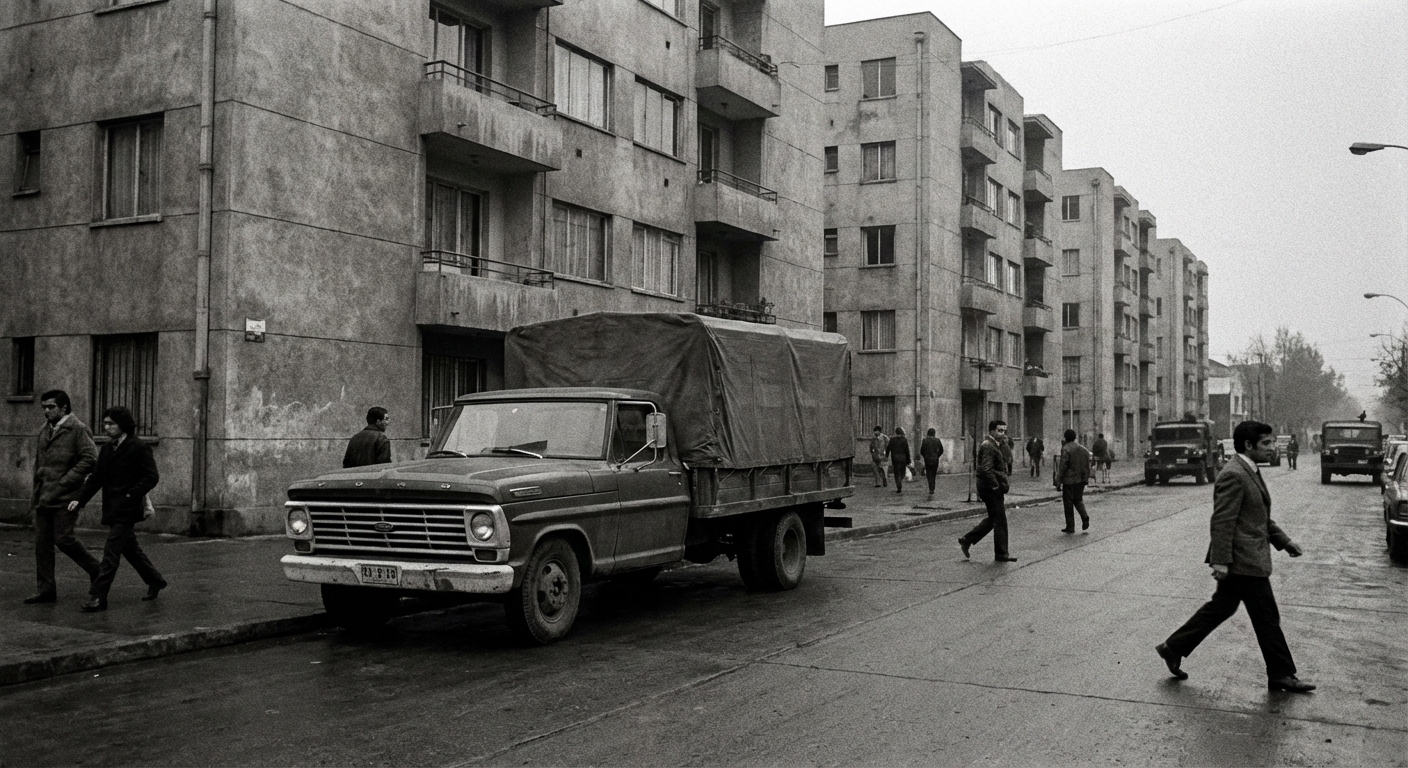
Intro: This timeline examines the claim titled “1973 Chile Coup: External Involvement.” It compiles primary documents, government reports, and reputable secondary sources to show what is documented, where interpretations diverge, and which questions remain unresolved. The purpose is analytical: to list key dates, identify source types, and flag where evidence is strong or contested.
Timeline: key dates and turning points — 1973 Chile Coup: External Involvement
- September 15, 1970 — White House meeting where “make the economy scream” is recorded in CIA director Richard Helms’s hand-notes. This entry is a primary-level record in the Foreign Relations of the United States collection and is widely cited as evidence of early U.S. intent to pressure Allende’s government economically.
- October 22–25, 1970 — Assassination attempt and death of General René Schneider. Schneider, a constitutionalist army chief, was shot on Oct. 22 and died days later; subsequent U.S. investigations and congressional inquiries studied contacts between coup plotters and U.S.-linked actors. The Church Committee and later archival research document U.S. awareness of plots and contacts with Chilean conspirators.
- 1970–1973 — Project FUBELT / Track II and other covert actions. Declassified CIA and NSC materials (gathered and published by the National Security Archive and in the FRUS series) describe clandestine programs to influence Chilean politics, including funding for media and opposition groups. These records include internal CIA memoranda, 40 Committee approvals, and NSC notes.
- September 1971–May 1973 — CIA funding and media operations. Declassified CIA cables and memoranda show covert financial support to the Chilean newspaper chain El Mercurio and to selected opposition activities; National Security Archive documents summarize these authorizations and disbursements. The CIA later credited propaganda projects with contributing to the political environment in which the coup occurred.
- June 29, 1973 — El Tanquetazo (the “tank putsch”): a failed military uprising in Santiago led by Lt. Col. Roberto Souper. Contemporary intelligence reports recorded this event as a key turning point that weakened constitutionalist commanders and shifted military balances.
- August 23–24, 1973 — Resignation of Gen. Carlos Prats as Army Commander; appointment of Gen. Augusto Pinochet as commander-in-chief. Prats’s departure is widely treated as a critical military turning point before the September coup. Primary Chilean records and contemporaneous reporting document the change in command and its political effects.
- September 4–10, 1973 — Intensification of strikes, protests, and reports of a pending coup. U.S. intelligence reporting in this period included warnings of an imminent military action; FRUS and CIA cables record monitoring of these developments.
- September 11, 1973 — Military seizure of power; La Moneda attacked; Salvador Allende dies during the takeover. After the coup the new junta consolidated power; subsequent U.S. documents and later archival releases discuss U.S. knowledge, prior covert activities, and post-coup relations with the junta. Documentation includes contemporaneous intelligence reports and later internal agency assessments.
- 1975 — Senate Select Committee (Church Committee) public hearings and the staff study “Covert Action in Chile, 1963–1973.” The Committee published findings on extensive and continuous covert U.S. activities in Chile in the period, and produced classified staff reports and public hearings that remain central primary sources for assessing U.S. operations.
- 1998–2000s — Major declassifications and National Security Archive publications. Starting in 1998 the National Security Archive released collections of declassified documents (including CIA memoranda and NSC records) that have become foundational for researchers examining U.S. covert initiatives in Chile. These releases include operational memoranda, CIA station cables, and 40 Committee records.
Where the timeline gets disputed
The sequence above is a compilation of dated events and the documentary sources that record them. Where interpretation diverges is mostly about causation and degree of direction:
- Extent of operational direction vs. permissive support: Declassified U.S. documents clearly show financial support for opposition press and political actors, operational planning language (Project FUBELT/Track II), and high-level directives to apply economic and political pressure. However, the documents provide less direct, conclusive evidence that U.S. agencies physically planned or executed the September 11 military operation itself; scholars and official reports differ on whether U.S. actions amounted to direct orchestration or to destabilizing support that increased coup probability.
- Role of individual actors and private corporations: Records document contacts between U.S. officials, private companies (for example, ITT has been discussed in historical research), and Chilean actors. The motivations and precise effects of corporate actions versus government covert policy are debated, and different sources emphasize different causal chains.
- Interpretation of intelligence reporting: U.S. intelligence reporting noted coup plotting and military discontent. Some historians read these reports as showing foreknowledge and active encouragement; others argue the reports show awareness without operational control. The documentary record supports both positions in part, which is why scholars flag conflicting interpretations.
This article separates (A) documented actions recorded in primary sources from (B) contested causal claims and (C) conjectures that rely on inference beyond available documents.
Evidence score (and what it means)
- Evidence score: 70/100
- Drivers of the score:
- • Strong documentary base: multiple declassified CIA, NSC, and State Department records (handwritten notes, memoranda, 40 Committee papers) document explicit U.S. programs aimed at destabilizing Allende’s government.
- • Verified covert funding: archival cables and CIA memoranda detail financial support for media (notably El Mercurio) and selected opposition activities.
- • Gaps on direct coup orchestration: while destabilizing activities are documented, the record contains fewer unambiguous operational orders tying U.S. agencies to the exact execution of the September 11 military assault, leaving room for contested interpretation.
- • High-quality public investigations (Church Committee, later archival releases) corroborate the pattern of U.S. covert action but also show contested internal debates about scope and disclosure.
Evidence score is not probability:
The score reflects how strong the documentation is, not how likely the claim is to be true.
This article is for informational and analytical purposes and does not constitute legal, medical, investment, or purchasing advice.
FAQ
Q: What does “1973 Chile Coup: External Involvement” specifically claim?
A: The phrase denotes the claim that outside actors—principally elements of the U.S. government and allied private actors—played a meaningful and possibly decisive role in producing or enabling the September 11, 1973 military coup in Chile. This timeline treats that as a claim and distinguishes documented actions from contested inferences.
Q: Do declassified U.S. documents show the U.S. government tried to prevent Allende from governing?
A: Yes. Declassified FRUS pages and CIA records include notes and memoranda (e.g., Helms’s notes from Sept. 15, 1970) that show high-level directives to apply pressure, including the phrasing “make the economy scream,” and an approved program of covert actions aimed at undermining Allende’s political position. These are primary documentary sources that scholars commonly cite.
Q: Does documentation prove the U.S. directly carried out the coup on September 11, 1973?
A: The documentary record clearly shows covert destabilization efforts, funding for media and opposition, and contacts with Chilean actors. However, available declassified records and public congressional reports do not provide a single, uncontested document that is an explicit operational order from U.S. agencies to execute the September 11 military seizure. Historians therefore debate whether U.S. actions constituted direct orchestration or substantial enabling/support that increased the coup’s likelihood.
Q: What are the best primary sources to consult if I want to verify items in this timeline?
A: Key primary sources include the FRUS volume covering Chile (1969–1973) containing Helms notes and NSC records, the Senate Select Committee (Church Committee) staff study and transcripts on covert action in Chile, and declassified CIA station cables and memoranda published by the National Security Archive. These sources are cited throughout this article.
Q: Where do researchers disagree most sharply?
A: Disagreements turn on causation and intent—how directly U.S. policies caused the coup, whether covert actions crossed into operational orchestration, and how to weigh documented funding and contacts against the autonomy of Chilean military actors. The declassified record supports multiple, sometimes competing interpretations.
Q: Can this timeline prove criminal responsibility of specific individuals?
A: No. This timeline compiles public documentary evidence and reputable reports but does not attempt legal adjudication. Questions of criminal responsibility require legal standards of proof, access to investigative evidence, and judicial processes that exceed the scope of this analytical timeline.

Geopolitics & security writer who keeps things neutral and emphasizes verified records over speculation.