
Below are the arguments people cite when they describe “Fukushima ‘Secret Radiation’ Claims.” These are reported claims and arguments — not proven conclusions. Each item notes the source type and a practical verification test readers or researchers can use to check the claim against primary records and expert reviews.
The strongest arguments people cite about Fukushima secret radiation claims
-
Claim: Government agencies withheld or delayed release of SPEEDI (computer plume) forecasts and U.S. radiation maps that showed hot plumes and could have informed evacuations. Source type: contemporaneous government documents, investigative journalism, and later government-panel reports. Verification test: compare dates of SPEEDI outputs and U.S. aircraft radiation-mapping products with official public advisories and evacuation orders; inspect ministry minutes and panel reports that reviewed information flows in March 2011.
-
Claim: TEPCO and plant operators measured very high levels of radionuclides (for example, record strontium-90 or unexpectedly high groundwater beta activity) and did not promptly share the data. Source type: operator internal sampling records, regulatory queries, and later press reporting. Verification test: request or review TEPCO sampling logs, NRA (Nuclear Regulation Authority) correspondence, and contemporaneous regulator press statements to compare reported detection dates with public disclosure dates.
-
Claim: Independent NGOs and survey teams (for example Greenpeace) found localized hotspots and post-cleanup readings higher than official summaries suggest. Source type: NGO field surveys and measurement reports. Verification test: compare NGO sampling methodologies and raw measurement points with prefectural monitoring networks and peer-reviewed environmental monitoring studies; check whether NGO sampling was targeted to known contamination pockets or broad-area surveys.
-
Claim: The thyroid-screening program found many childhood thyroid cancers, which some argue indicates previously hidden radiation exposures. Source type: Fukushima Health Management Survey screening data and medical case reports. Verification test: compare the FHMS screening detection rates, age distribution, and geographic patterns with expected background rates, and evaluate dose–response correlations using dose reconstructions (UNSCEAR municipal absorbed-dose estimates).
-
Claim: Decisions around permissible exposure limits, delayed iodine prophylaxis distribution, or relaxed provisional standards (e.g., early adoption of higher temporary limits) amounted to official concealment of risk. Source type: government emergency guidelines, public-health advisories, and contemporaneous statements by officials. Verification test: review the timeline and text of exposure-limit changes, communications about potassium iodide distribution, and internal meeting minutes/panel findings to assess intent versus emergency triage reasoning.
-
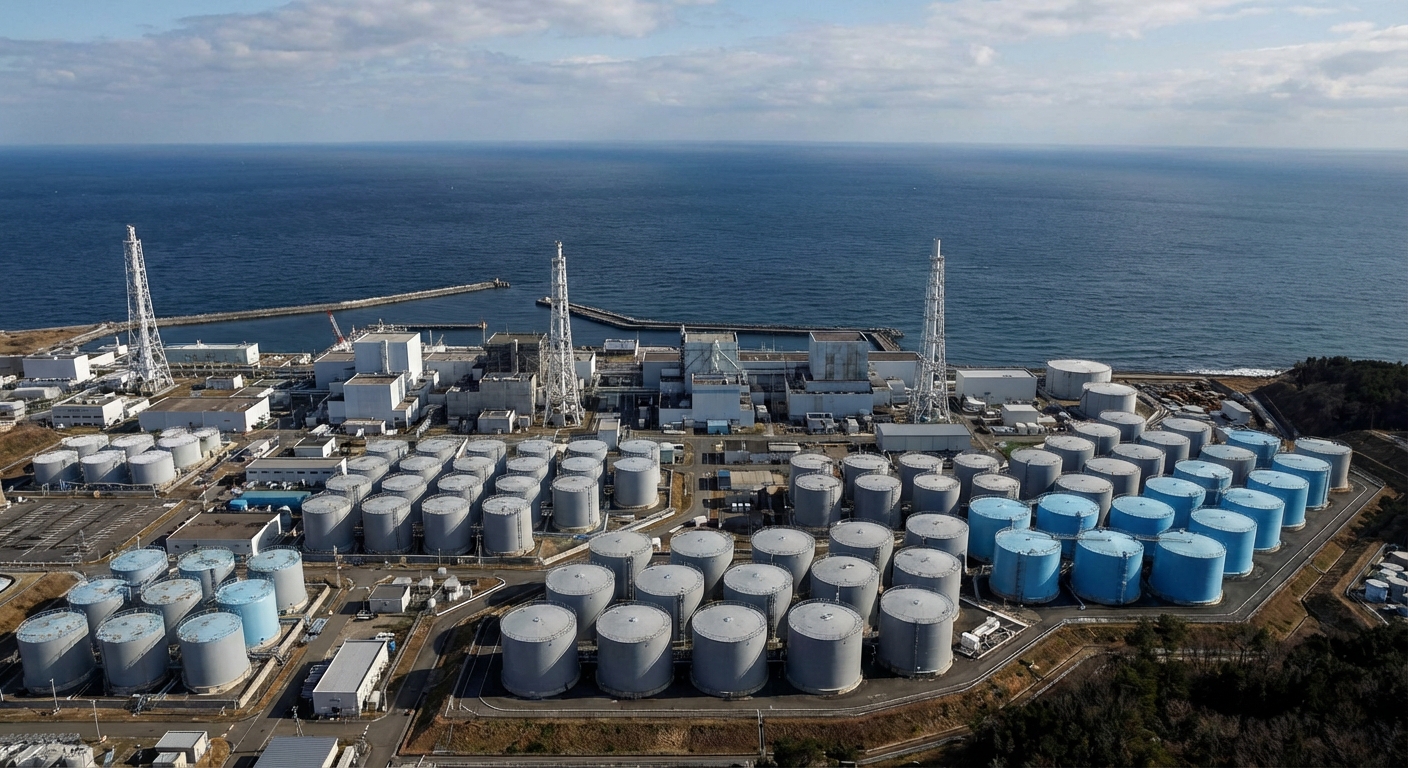
Claim: Releases of treated wastewater and periodic discovery of non‑tritium radionuclides in tank samples indicate ongoing concealment or underreporting. Source type: TEPCO sampling reports, regulator notices, and international reviews of ALPS (Advanced Liquid Processing System) performance. Verification test: examine TEPCO analytical certificates for each discharge batch and NRA/IAEA reviews of ALPS performance and reporting procedures; verify independent seawater monitoring near discharge times.
How these arguments change when checked
When researchers and auditors follow the verification tests above, three patterns typically appear: (1) strong documentary evidence that some data existed and was not released immediately; (2) mixed results where measurement errors, re-analyses or methodological differences explain some late disclosures; and (3) independent scientific reviews that place measured exposures in a broader dose context that does not, by itself, prove widespread secret releases that created high population doses.
-
SPEEDI and early mapping: multiple investigations and reporting show that SPEEDI model outputs and U.S. aircraft-based maps existed early in March 2011 and that some of that predictive data was not made public promptly. The Japanese science ministry and later panels acknowledged delays and disputed how to interpret incomplete model inputs; some local officials and researchers have argued the withheld outputs could have changed specific evacuation routing. These are documented in post‑event reviews and reporting.
-
TEPCO sample disclosures: there are documented cases where TEPCO revised measurement results (for example, re-analysis of well samples that yielded higher strontium-90 figures) and where the regulator pressed for more timely reporting. Those facts are recorded in regulator statements and news coverage, but the existence of late reporting does not automatically prove a deliberate, long‑term conspiracy; it does show failures in monitoring, quality control, and communication.
-
Independent NGO surveys vs. official monitoring: groups such as Greenpeace published targeted surveys documenting elevated readings at specific sites, especially in forests and undisturbed soils where radionuclides persist. These targeted results do not contradict the measured fact of hotspots, but they must be compared to standardized monitoring grids and long‑term dose reconstructions to assess population exposure. Inspecting methods and spatial coverage is essential to avoid overgeneralizing localized findings.
-
Thyroid-screening results: Fukushima’s large ultrasound screening program found a higher-than-expected number of thyroid cancers detected by screening. Fukushima Medical University and oversight committees have repeatedly noted that detection is consistent with intensive ultrasound screening effects and that so far there is no consistent dose–response pattern linking municipal dose reconstructions to screening-detected cancers; UNSCEAR and peer-reviewed studies have emphasized the difficulty of attributing early screening-detected cases to low-dose environmental exposure. Still, some researchers and advocacy groups argue the epidemiology remains unsettled and call for long-term follow-up.
-
Treated-water discharges: TEPCO’s ALPS system removes many radionuclides but not tritium; regulatory releases and IAEA/independent reviews document both strict discharge standards and instances where non‑tritium radionuclides were detected at trace levels in some batches, prompting regulator scrutiny and public concern. The documentation shows a mix of monitored compliance and procedural shortcomings in sampling and transparency.
Evidence score (and what it means)
- Evidence score: 45 / 100.
- Drivers that lower the score: time-stamped primary records show delays in disclosure (SPEEDI outputs, some TEPCO sample re-analyses), and independent field surveys have documented localized hotspots.
- Drivers that raise the score: authoritative scientific reviews and organized health surveys (Fukushima Health Management Survey) provide large-scale dose reconstructions and medical screening data that have not found evidence of widespread, high population doses sufficient to explain many of the most alarming versions of the claim.
- Methodological uncertainty: sampling re-analyses, targeted NGO sampling, and differences between predictive models and measured concentrations introduce uncertainty about the spatial extent of any undisclosed releases.
- Transparency and governance concerns: documented communication failures and regulatory criticisms mean there is good documentation of missteps and late disclosures even where the existence of a coordinated long-term “secret” program is not demonstrated.
Evidence score is not probability:
The score reflects how strong the documentation is, not how likely the claim is to be true.
This article is for informational and analytical purposes and does not constitute legal, medical, investment, or purchasing advice.
FAQ
Q: What exactly are the “Fukushima secret radiation claims” people search for?
A: The phrase is used for several related assertions: that authorities withheld plume forecasts or U.S. mapping; that TEPCO delayed disclosure of very high radionuclide readings (for example, strontium measurements); that independent groups later found hotspots not reflected in official maps; and that official screening programs hide the health effects of exposure. Each of these is a distinct claim requiring separate document-based checks.
Q: Did international agencies find evidence of large population doses after Fukushima?
A: Major international scientific reviews (UNSCEAR and related follow-ups) concluded that, overall, population doses were generally low and that detectable increases in most cancers at the population level were not expected — though they recommended long-term monitoring and noted uncertainties for specific groups. These reviews contrast with localized measurements of contamination that can be significant in particular sites.
Q: If TEPCO revised sample results, does that mean they were hiding data?
A: A later re-analysis or delayed internal reporting can reflect quality-control problems, re-calibration, or procedural failures as well as poor transparency. Regulation documents and press reporting confirm late disclosures in some cases; investigators interpret the reasons differently, and an isolated late report is not proof of an organized concealment campaign. Document inspection (regulator letters, TEPCO lab certificates) is the right verification route.
Q: How can a reader check these claims independently?
A: Start with primary sources: UNSCEAR reports and press notices, Fukushima Health Management Survey published data, regulator statements, TEPCO sampling reports, and timestamped SPEEDI outputs where available. For NGO findings, review raw sampling logs and the stated methodology so you can compare targeted samples with broad monitoring networks. Where possible, prefer peer-reviewed analyses and regulator archives.
Q: Should the presence of localized hotspots change national-level assessments?
A: Localized hotspots are real and scientifically documented in several studies and NGO reports; they matter for local remediation and return decisions. However, national-level epidemiological projections and international reviews look at aggregated dose distributions and population-weighted exposures, which may downplay isolated high‑concentration sites. Both levels of information are relevant but answer different questions: individual-site cleanup versus population health projections.

Science explainer who tackles space, engineering, and ‘physics says no’ claims calmly.