
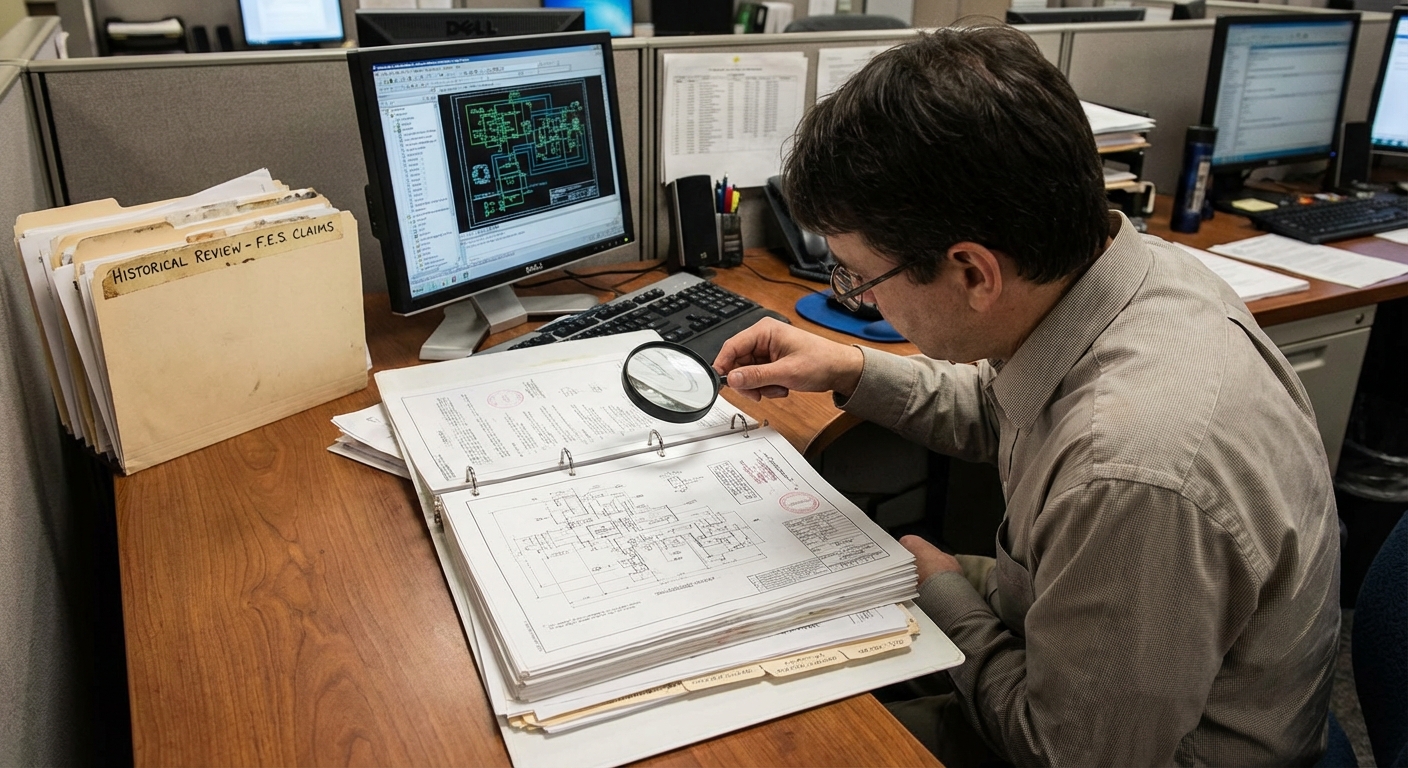
Intro: scope and purpose — This timeline examines the “free energy suppression claims” as claims (not established fact). It compiles key dates, documents, and turning points cited by proponents and critics, highlights where documentary evidence exists, and flags disputed or unproven assertions. The goal is to present sources so readers can judge which parts are documented, which are contested, and where gaps remain.
This article is for informational and analytical purposes and does not constitute legal, medical, investment, or purchasing advice.
Timeline: key dates and turning points
- Late 18th–19th century — Perpetual motion claims and early skepticism. Multiple inventors proposed perpetual‑motion devices and free‑energy concepts; by the 19th century scientific and patent authorities had developed rules and skepticism about machines that appeared to violate conservation laws. Patent offices began treating perpetual‑motion claims with special scrutiny.
- 1894–1905 — Nikola Tesla’s patents and Wardenclyffe project. Tesla patented methods for wireless transmission and experimented with large‑scale towers. The project was funded in part by investors such as J.P. Morgan but stalled, and the tower site was foreclosed and ultimately demolished in 1917. Proponents later cited Wardenclyffe as an origin story for claims that a practical, suppressed “free energy” system once existed; historians note Tesla’s interest in wireless power transmission but not a proven, working scheme for costless energy distribution.
- 1920s–1930s — Thomas Henry Moray and “radiant energy” demonstrations. Moray presented devices he called radiant‑energy generators and staged demonstrations; his claims were never reproduced under independent, controlled conditions and remain contested. Some contemporary and later accounts record demonstrations and patent attempts, while secondary accounts describe lost documentation and disputed witness testimony.
- Mid 20th century — Patent law and “incredible utility.” Patent offices and courts developed and applied legal doctrines (e.g., “incredible utility”) that require credible, demonstrable utility for inventions; examples include refusals or close scrutiny of perpetual‑motion and related claims. These policies are part of the record and explain why many alleged free‑energy devices are unlikely to succeed at the patent stage without demonstrable working models or convincing evidence.
- March 1989 — Fleischmann and Pons announce cold fusion. The announcement of possible room‑temperature fusion (cold fusion) produced immediate global attention and rapid attempts at replication; early positive reports were not consistently reproducible and were followed by intense skepticism and institutional review. The episode is central in debates about whether mainstream institutions suppressed alternative energy research or correctly applied scientific standards.
- 1989–1990 — DOE and advisory reviews of cold fusion. The U.S. Department of Energy convened panels (ERAB and DOE advisory reviews); their reports concluded that cold fusion had not been convincingly demonstrated while recommending limited further study in carefully controlled settings. These official reports are frequently cited by both proponents and critics to support conflicting narratives.
- 1990s — Stanley A. Meyer and the “water fuel cell.” Stanley Meyer promoted a water‑fuel device and demonstrations. In civil litigation and subsequent reporting, court‑appointed experts concluded the device operated by conventional electrolysis and an Ohio court action resulted in rulings adverse to Meyer’s claims; his death in 1998 has been the subject of speculation in some circles, but official reports list natural causes. Because of the court findings and lack of independent replication, Meyer’s example is widely cited in discussions of suppression and fraud alike.
- 1990s–2000s — Intellectual property and contested patents. Several high‑profile episodes (cold fusion patent reviews, contested patentability of “over‑unity” devices) illustrate that patent examiners and courts may reject claims inconsistent with established science unless credible demonstrable utility is shown. The patent record is a documented arena where many free‑energy claims fail to clear procedural and evidentiary bars.
- 2000s–2010s — Online spread, documentaries, and community building. The internet accelerated the circulation of alleged free‑energy designs, personal testimonies, and conspiracy narratives. Skeptical outlets and mainstream science writers documented the growth of communities around “free energy” while pointing to repeated failures of independent replication and misunderstandings of thermodynamics. Scholarly skeptical analyses highlight how online ecosystems amplify unverified claims.
- 2010s–present — Persistent claims, niche research, and renewed interest in LENR/LENR‑related terms. A small community continues to pursue low‑energy nuclear reaction and related research; some groups publish preprints and small‑scale reports. Official science agencies and mainstream journals remain cautious, and policy, funding, and peer review practices continue to shape what research is visible and funded. Proponents point to classified or commercial suppression in some cases, while critics emphasize lack of reproducible open evidence.
Where the timeline gets disputed
Three main dispute categories recur:
- Interpretation of genuine historical setbacks (e.g., Wardenclyffe) as evidence of deliberate suppression. The historical facts (construction, financial problems, foreclosure, demolition) are documented, but interpreting those facts as active censorship or a coordinated suppression strategy is an inference not supported by primary archival proof.
- Anecdotes about harassment, buyouts, or mysterious deaths. Individual narratives (threats, alleged buyouts, or suspicious deaths) appear frequently in secondary or advocacy sources. Some reported events (lawsuits, deaths) are documented; causal links to a suppression campaign often rely on speculation or on contested secondary accounts rather than primary corroborating evidence. For example, the legal judgments against Stanley Meyer and the coroner’s findings about his death are in public record, but claims of deliberate poisoning or coordinated confiscation are not substantiated by official records cited in mainstream reporting.
- Scientific replication and patent outcomes. Institutional decisions—e.g., DOE reviews or patent rejections—are documented; however, whether such decisions reflect sound scientific evaluation or politically motivated suppression is disputed. In many cases the documentary record (panel reports, patent office guidelines) shows technical reasons for rejection or caution (lack of reproducible data, conflicts with established physical laws). Critics of institutions sometimes point to procedural errors or biases; where that is claimed, independent documentation is mixed and often contested.
Evidence score (and what it means)
- Evidence score: 25 / 100.
- Drivers: A) Many primary documentary items exist for individual events (patent records, DOE reports, court filings, contemporary news coverage), which helps verify the chronology.
- B) The technical claims (devices that produce net energy out of nothing) lack reproducible, independently verified experimental demonstrations accepted by mainstream science; where reproducible evidence is absent, claims remain unproven.
- C) Much of the narrative of coordinated suppression rests on secondary accounts, conjecture, or interpretation of financial and institutional actions rather than sealed official documents proving conspiratorial intent.
- D) Some disputed events (lawsuits, patent rejections, panel reports) are well documented and reduce uncertainty about specific turning points; this increases the score for documentation of events but not for verification of the underlying technical claims.
- E) Online amplification and selective sourcing have created many unverifiable secondary narratives, lowering the overall evidence strength for a coordinated suppression thesis.
Evidence score is not probability:
The score reflects how strong the documentation is, not how likely the claim is to be true.
FAQ
What does the evidence show about free energy suppression claims?
Answer: The documentary record shows a pattern of high‑profile claims (e.g., Wardenclyffe construction and collapse, cold‑fusion announcements, patent disputes, and court rulings) and institutional responses (DOE reviews, patent office guidelines). Those documents verify that events occurred; they do not, however, prove a coordinated, long‑running program to suppress a working free‑energy technology. Many suppression narratives extrapolate from isolated documented events to broader conspiratorial claims without primary documentary proof of organized suppression.
Why do patent offices reject many free‑energy claims?
Patent examiners apply utility and operability tests; inventions that appear to conflict with well‑established scientific principles or lack credible demonstration can be rejected or require stronger evidence. The USPTO guidance on “incredible utility” and the requirement to show credible operability explains many rejections and is a documented, public policy matter.
Are there documented legal cases related to these claims?
Yes. Examples include investor litigation over Stanley Meyer’s water‑fuel claims, where court‑appointed experts examined devices and the court ruled against the inventor in proceedings reported in contemporaneous coverage and collected in public records. Such legal documents are part of the documented timeline, but legal rulings address civil or criminal liability and factual findings in specific cases—not broad proof of suppression conspiracies.
How have mainstream institutions responded to controversial energy claims (e.g., cold fusion)?
Institutional responses are documented: after the 1989 Fleischmann‑Pons announcement, many labs attempted replication; the DOE convened review panels whose reports concluded that cold fusion had not been convincingly demonstrated while recommending limited further study in controlled conditions. Those records are publicly available and are often cited in debates about whether scientific review was appropriate or unduly dismissive.
How can readers evaluate new free‑energy claims they encounter online?
Look for independent peer‑reviewed replication, open data, credible measurement methods, and responses in mainstream scientific literature. Verified patent grants or media coverage alone are not sufficient; documented, independently replicated experimental results are the strongest form of support for extraordinary physical claims. Skeptical analyses and expert commentary (e.g., Skeptical Inquirer) can help identify common methodological errors and patterns of online amplification.
Closing note
This timeline shows where documentary evidence exists and where interpretation or inference is required. Some episodes in the record (patent practice, DOE reports, courtroom findings) are solidly documented; many broader suppression narratives rely on contested inferences, anecdote, or disputed secondary sources. Where sources conflict, the conflicts are noted above and further archival or primary‑source research would be required to shift the evidence score.

Science explainer who tackles space, engineering, and ‘physics says no’ claims calmly.