
This article examines the Dyatlov Pass ‘weapon test’ claims as a claimed explanation for the 1959 deaths of nine hikers. It treats the idea strictly as a claim — not an established fact — and reviews primary documents, official investigations, peer-reviewed research, and how the hypothesis spread through media and online communities. The goal is to separate what is documented, what is reasonably inferred, and what remains unsupported.
What the claim says
The Dyatlov Pass ‘weapon test’ claim holds that some form of military experiment, weapons test, or accidental detonation (sometimes described specifically as parachute mines, radiological tests, or other secret weaponry) either directly killed the hikers or created circumstances that led them to flee their tent and subsequently die. Proponents point to reported atmospheric lights, alleged radioactive traces on some garments, and unusual internal injuries as evidence consistent with an accidental military event. This article addresses those elements as claims and examines the documentary record and research linked to them.
Where it came from and why it spread
Ideas that the Dyatlov group were harmed by military testing trace back decades. In part this is due to contemporaneous and later reports of unusual lights or flares in the region and to published autopsy/testing notes that record elevated radioactivity on a small number of garments — items that have been widely reproduced in secondary sources and case-file repositories. The official 1959 case file used language such as “a compelling natural force,” leaving room for speculation and fueling alternative theories.
During the Cold War and afterward, a combination of factors amplified the weapon-test framing: limited early disclosure of the full files, untranslated or hard-to-access documents, sensational media and book treatments, and later internet-era re-sharing on forums, YouTube, and social platforms where dramatic hypotheses attract attention. Community threads, video series, and sensationalist episodes have repeatedly presented military-test narratives alongside other theories, which helped the claim reach broad public visibility despite important evidentiary gaps. Examples of this spread include popular threads and videos on platforms such as Reddit and various documentary-style YouTube episodes.
What is documented vs what is inferred
Documented (primary/official sources):
- The 1959 Soviet criminal investigation recorded autopsy findings, concluded that the deaths were due to a “compelling natural force,” and documented both hypothermia and serious internal injuries in some victims. These case files and investigator notes are the basis for most later analysis.
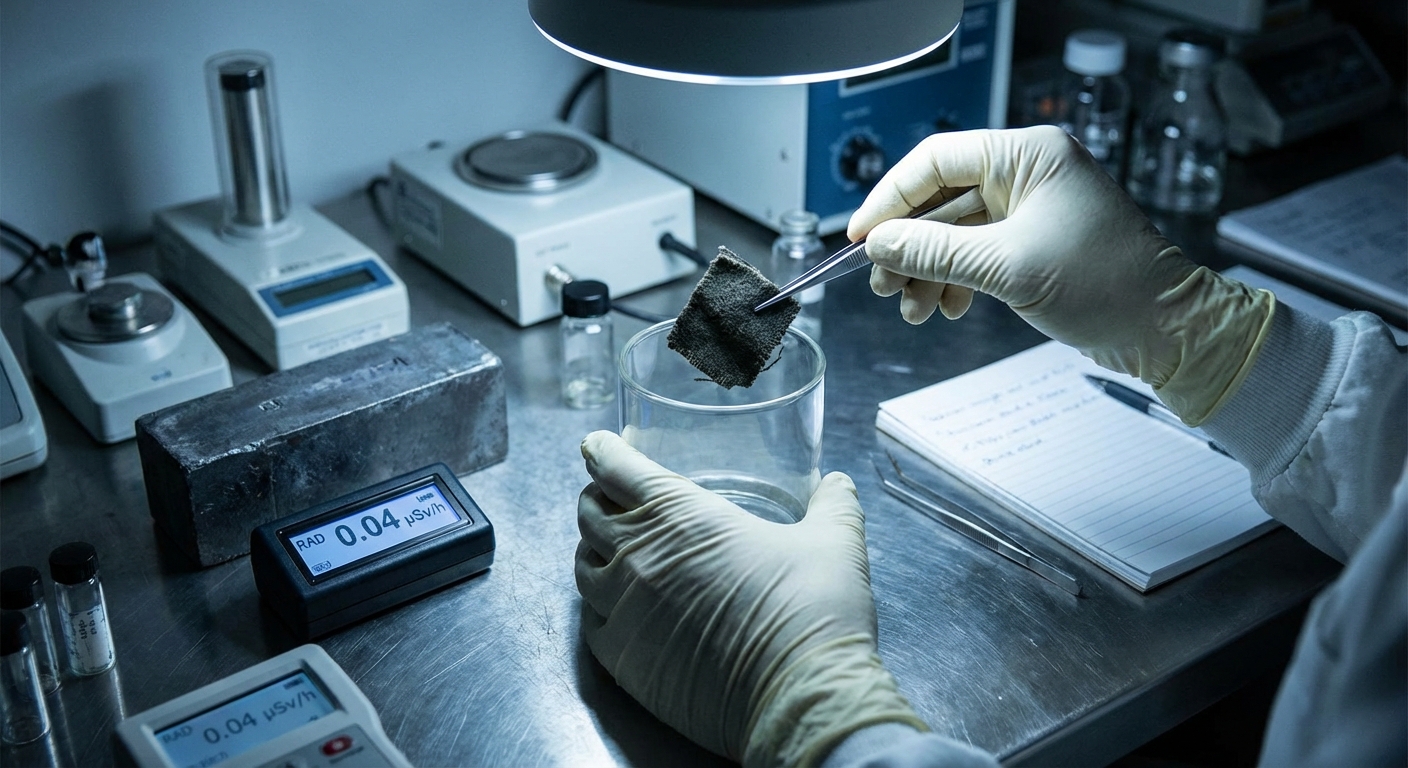
- Formal radiological testing recorded elevated beta-emitter readings on some garments (for example, entries in the 1959 radiation analysis list show unusually high counts on specific sweaters and pants). The case file includes a radiology/resolution note summarizing decay-rate measurements performed by a radiologist in Sverdlovsk. Those test results are in the archival material that researchers now publish and discuss.
- Russia reopened the investigation in 2019 and announced an official determination in 2020 that a slab-avalanche scenario best fits the available material evidence; independent peer-reviewed modelling work by Gaume & Puzrin provided a physical mechanism for a delayed slab avalanche that could reconcile several anomalous observations. These are published, citable findings.
Reasonable inferences (plausible but not proven):
- That elevated activity on a small number of garments indicates exposure to a localized radiological source (dust, contaminated object, or handling) is plausible from the measurement pattern; however, the measurements themselves do not by themselves identify a cause, time-of-exposure, or a weapon origin. The original radiology notes even record that rinsing reduced counts, indicating surface contamination rather than systemic whole-body irradiation.
- That some of the internal injuries could match a blast-concussive mechanism (for example, parachute-mine blast waves) has been argued historically and remains a point of analysis, but it is not directly proven by the case file alone because similar internal damage can be modeled from heavy compressive impacts (including certain avalanche scenarios). Peer-reviewed modelling shows small slab avalanches can create severe internal injuries under specific conditions.
Contradicted or unsupported by documentary evidence:
- There is no clear archival proof that a documented military test struck the hikers or that military records definitively place a weapons exercise exactly at the campsite and time that would explain all observations. Publicly available military logs that would unambiguously confirm an accidental weapons release in that exact spot have not been produced. Claims that the state concealed an explicit admission of a weapons accident rest on inference, not on a released authoritative military record.
- Assertions that the measured radioactivity requires a nuclear detonation or similar large-scale radiological release are inconsistent with the measured values in the archived radiology notes (surface beta contamination on a few garments), and several plausible non-weapon sources (industrial contamination, contaminated personal items, or localized dust) have been proposed. The file does not contain isotopic analysis that would uniquely identify a nuclear device signature.
Common misunderstandings
- “Radiation on the clothes = a nuclear weapon test.” The radiology records indicate beta contamination on specific items; they do not document an atomic detonation or isotope fingerprinting consistent with a device. Surface contamination has multiple possible sources and the historic tests recorded only decay rates, not full isotopic analysis.
- “Official silence = cover-up of a weapon test.” The original case file was handled in the Soviet legal/administrative framework of 1959, which included secrecy practices; that context encourages speculation, but absence of public military logs is not definitive proof of a weapons accident. The later prosecutor review and modern peer-reviewed modelling add context that points toward natural explanations for several key anomalies.
- “All odd injuries require a single exotic cause.” Multiple mechanisms (delayed slab avalanche impacts, subsequent falls into ravines, exposure injuries, scavenging on decomposed remains) may together account for the pattern of injuries and missing soft tissue without invoking an exotic weapon. Peer-reviewed work explicitly noted that not every observation is explained even if an avalanche is plausible.
Evidence score (and what it means)
- Evidence score: 35 / 100
- Drivers of the score:
- Primary documentation exists (1959 autopsy/case files and recorded radiology tests) — these are strong documentary anchors.
- Key measurements (radiation counts) are limited in scope and lack isotopic/speciated lab data that would identify a weapon signature; this reduces evidentiary power.
- Independent, peer-reviewed physical modelling has provided a plausible and testable natural mechanism (delayed slab avalanche) that accounts for many anomalous observations; that work lowers the need to invoke a weapon test to explain the physical outcomes.
- There is no publicly released, contemporaneous military record that confirms a weapons exercise hitting the campsite; that absence is a major gap for the weapon-test claim.
Evidence score is not probability:
The score reflects how strong the documentation is, not how likely the claim is to be true.
What we still don’t know
- Exact provenance and isotopic composition of the beta contamination on some garments — the archived notes record decay rates but do not include isotopic fingerprints that would uniquely identify a military radiological source. Without isotopic lab data, the contamination’s source remains ambiguous.
- Whether any unreleased military logs, field orders, or test reports exist that would place a live weapons exercise (for example parachute-mine testing) at the precise site and time — such a record would materially change the assessment but has not been produced in public archives.
- How to reconcile all forensic anomalies (pattern of missing soft tissue, distribution of injuries, post-mortem changes) into a single causal chain; multiple partial explanations remain viable and are not mutually exclusive. Peer-reviewed modelling addresses some but not all inconsistencies.
FAQ
Q: Do the Dyatlov Pass ‘weapon test’ claims prove the hikers were killed by a military experiment?
A: No. The available archival record documents elevated beta counts on certain garments and records unusual injuries, but it does not include an authoritative military log or isotopic analysis that unambiguously proves a weapons test caused the deaths. The documented tests are consistent with surface contamination on a few items, and modern peer-reviewed modelling shows natural mechanisms (a delayed slab avalanche) can reproduce key injury and behavioral features. Because of these gaps, the weapon-test idea remains a claim, not a proved fact.
Q: Were radioactive materials definitely found on the hikers’ clothing?
A: Measurements recorded in the 1959 radiology material show elevated beta-emitter decay rates on a small number of items (for example, specific sweaters and trousers). Those counts exceed expected surface-background thresholds recorded in the original notes, and rinsing reduced the counts, consistent with surface contamination rather than whole-body irradiation. The record documents the measurements but does not identify the contaminant isotopes.
Q: If the clothes had radiation, doesn’t that mean a nuclear or radiological weapon was used?
A: Not necessarily. Measured beta contamination on clothing can result from many sources: localized industrial contamination, handling of radioactive materials, atmospheric deposition of radioactive dust, or even naturally occurring radioactive materials concentrated on fabric. Without isotopic analysis and corroborating environmental data, the presence of beta activity alone does not identify a weapon test.
Q: Why do many people still promote the weapon-test theory online?
A: The theory persists because it offers a simple, dramatic explanation for several odd pieces of evidence (lights seen in the sky, radiation on clothes, unusual injuries), and because limited early disclosure and cultural distrust of Soviet-era secrecy made official accounts seem incomplete. Internet platforms reward compelling narratives, and once a claim circulates in documentaries, forums, and social video, it can reach a large audience even where direct documentary support is limited.
This article is for informational and analytical purposes and does not constitute legal, medical, investment, or purchasing advice.
Sources and further reading
- Primary case-file repositories and curated document websites that publish the 1959 materials and later prosecutor notes.
- Peer-reviewed modelling: Gaume J., Puzrin A.M., “Mechanisms of slab avalanche release and impact in the Dyatlov Pass incident in 1959,” Communications Earth & Environment.
- Contemporary coverage and syntheses summarizing the reopened investigation and academic work (e.g., Wired, Live Science, Ars Technica summaries).
- Reference overviews summarizing theories and public claims about military testing and other hypotheses.

Science explainer who tackles space, engineering, and ‘physics says no’ claims calmly.