
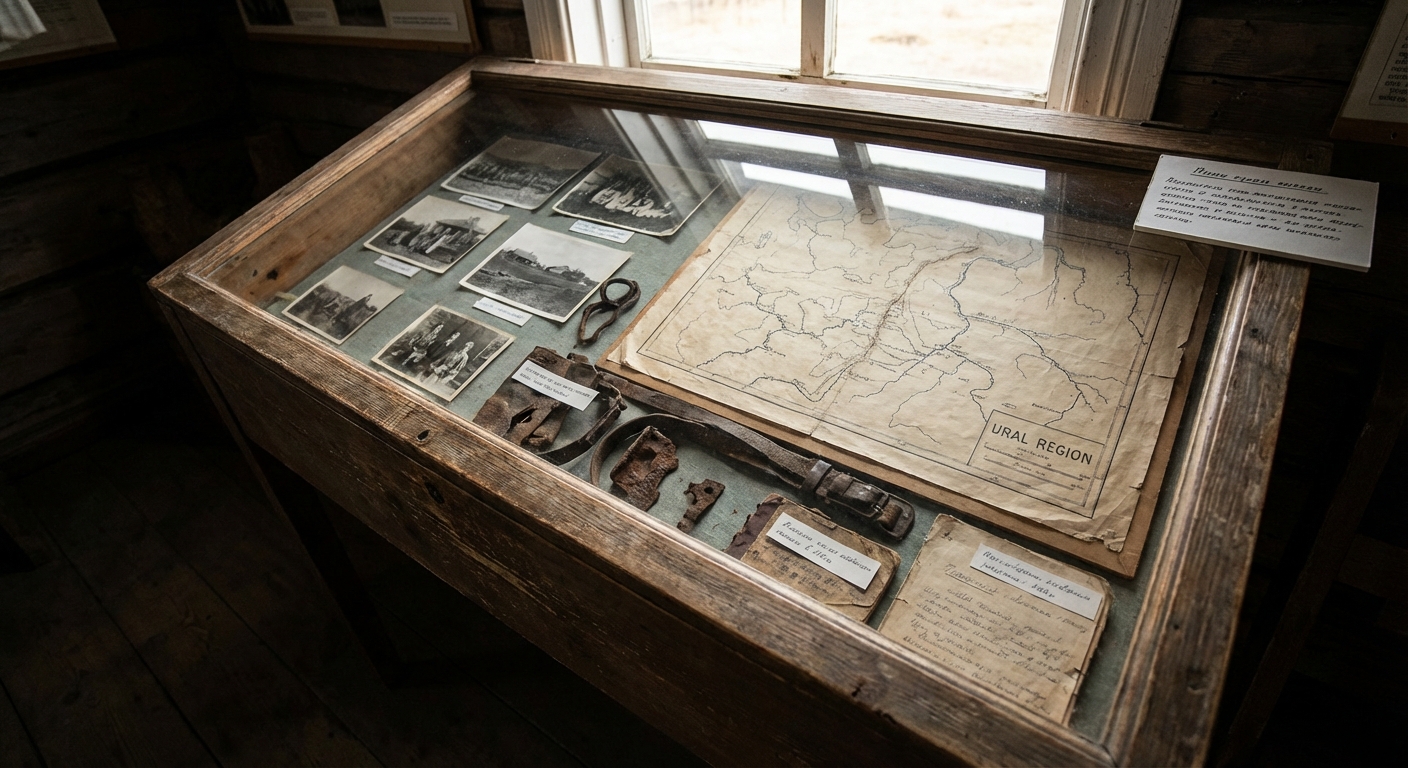
Below are the main arguments people point to when advancing the Dyatlov Pass ‘weapon test’ claims. These are arguments cited by proponents, not proven facts; each item includes where the argument originated, what kind of source supports it, and a practical test or piece of evidence that would strengthen or falsify the claim. The phrase “Dyatlov Pass weapon test claims” is used throughout as the subject under examination.
The strongest arguments people cite
-
Radioactivity found on some clothing: source type — forensic notes, later summaries, and press accounts; why it’s cited — supporters say radioactivity implies exposure to a nuclear or radiological weapons test or accident. Verification test — isotope-specific laboratory analysis on preserved cloth samples with an unbroken chain of custody to determine radionuclide types and whether levels are consistent with local environmental contamination (for example, the Mayak/Kyshtym incident) or with a weapons dispersal signature. Public summaries and older case files note traces of beta radiation on a few items; some modern reviewers point to the East Ural radioactive trail as an alternative explanation.
-
Eyewitness and investigator reports of glowing/orb-like lights in the sky: source type — later interviews, memoirs of searchers, and secondary reporting; why it’s cited — glowing spheres are interpreted by some as falling test munitions, flares, or missile/rocket debris. Verification test — contemporaneous, dated original witness statements and the undeveloped negatives from the 1959 cameras (examined by credible archivists) would need to show the phenomenon in context; corroborating military test schedules for the same geographic area and dates would also strengthen the claim. The original investigation and later reporting note claims of fireballs or spheres but the primary case files are inconclusive on this point.
-
Records or circumstantial evidence of military tests nearby (parachute mines / explosive tests): source type — researcher books, retrospective accounts, and some public archives cited by case researchers; why it’s cited — supporters argue that Cold War-era weapons tests (parachute mines, rocket tests) could produce concussive injuries, bright lights, and disorientation. Verification test — declassified military test records or logbooks tied to the relevant dates/coordinates, plus physical debris with confirmable provenance (metallurgical or serial-number matches). Many accounts reference earlier claims in books and local research, but direct archival military documentation linked to the Dyatlov coordinates and hours remains absent or disputed in public sources.
-
Unusual internal injuries without corresponding external trauma: source type — autopsy summaries and medical reports; why it’s cited — supporters point out that crush injuries and fractured chests could be consistent with blast or high-pressure events rather than blunt trauma from a fall. Verification test — modern re-analysis of autopsy records with forensic blast-injury criteria and, if possible, preserved tissue samples or detailed pathology photos to evaluate whether injuries are consistent with explosion/concussion patterns versus mechanical compression (including the small-avalanche simulations). The medical summaries are the basis for this argument, but experts disagree about how uniquely the injuries point to man-made blasts.
-
Reported metal fragments / alleged wreckage in the region (cited by some researchers and online accounts): source type — researcher claims and forum reports; why it’s cited — physical wreckage could indicate a failed test or crash. Verification test — chain-of-custody to recovered fragments, laboratory metallurgical and serial-number analysis, and matching to known test programs or airframe/munitions designs. Public reporting on such fragments exists mainly in investigative books, forums, and non-academic sources; authoritative chain-of-custody and published laboratory results are not publicly accessible.
How these arguments change when checked
When each argument is put under scrutiny, many move from being circumstantial coincidences to either weakened or unresolved lines of inquiry. Below are typical patterns seen when supporters’ arguments are checked against available documentation or scientific analysis.
-
Radioactivity: documented traces exist in case summaries, but modern prosecutors and independent commentators note plausible alternative sources — especially contamination from the East Ural radioactive trail (Kyshtym fallout) and routine environmental background in the era — which would make isolated beta contamination on garments explainable without invoking weapons testing. Without isotope-specific lab records tied to a secure chain of custody, the claim retains ambiguity rather than confirmation.
-
Lights in the sky: multiple later witnesses and some investigators reported luminous phenomena, but these accounts are inconsistently dated and often recorded years after the event; photographic negatives have been discussed in the literature but do not provide an unambiguous image of a weapon or test device. Corroborating military test logs would be decisive, but publicly cited test logs directly tying an official exercise to that night and location are lacking.
-
Military testing records and wreckage: secondary sources and researcher books reference tests in the broader region and occasional metal finds, but reputable primary archival evidence published in peer-reviewed or government releases that directly links a known test to the incident site and time is not in the public record. Claims that rest on circumstantial debris remain unverified until laboratory provenance is published.
-
Injury interpretation: medical reports do show severe internal trauma among some victims, which supporters argue is consistent with explosive concussive effects. However, recent physics-based modeling of a small slab avalanche demonstrates that a localized snow slab could produce similar compression injuries in the constrained geometry of the tent. That scientific modeling weakens the exclusivity of the ‘weapon blast’ interpretation, though it does not by itself disprove alternatives.
Evidence score (and what it means)
- Evidence score: 28/100.
- Why this score — documentation supporting isolated components of the weapon-test claim exists (autopsy summaries, contemporaneous statements about lights, traces of radiation), but the pieces are fragmented, often secondhand, and lack the chain-of-custody or primary archival military records that would be needed to make a stronger documentary case.
- Key positive documentation — autopsy/case summaries and later prosecutor statements are available in public reporting and archives, establishing the factual basis for the anomalies that fuel the claim.
- Main weaknesses — alternative scientific explanations (notably slab-avalanche modeling), inconsistent witness accounts, and the absence of publicly verifiable weapons-test logs or authenticated debris with provenance.
- Where new evidence would move the score — declassified military test schedules for the precise coordinates/dates, isotope-level reports on preserved clothing with laboratory chain-of-custody, or authenticated metallurgical analysis of wreckage linked to known munitions.
- Documentation quality — much of the material cited by proponents is derived from memoirs, investigator recollections years later, or researcher compilations; high-quality primary evidence is sparse in the public domain.
Evidence score is not probability:
The score reflects how strong the documentation is, not how likely the claim is to be true.
This article is for informational and analytical purposes and does not constitute legal, medical, investment, or purchasing advice.
FAQ
What exactly are the “Dyatlov Pass weapon test claims”?
That phrase groups a set of related assertions: that the Dyatlov group were exposed to military or experimental weapons testing (explosives, parachute mines, radiological dispersal, or missile debris) which directly caused their deaths or contributed to the chain of events. The claims are an interpretive overlay placed on a number of anomalous facts from the case (radiation traces, unusual injuries, and luminous phenomena). Publicly available sources document the anomalies; they do not provide a single unambiguous, well-documented military test linked to the site and exact time.
Has any government or independent body confirmed a weapons test caused these deaths?
No authoritative government body has released publicly verifiable documents that directly tie an official weapons test to the Dyatlov Pass deaths. Russian prosecutors reopened the case and in July 2020 announced a natural explanation (an avalanche-type event) as the most plausible cause; independent scientific modeling also produced a credible avalanche-based reconstruction. Supporters of the weapons-test claim point to circumstantial evidence, but the necessary primary military archives and authenticated material evidence remain absent from the public record.
Why do some researchers still favor a weapons/test explanation?
Researchers who favor that explanation emphasize: (1) the odd internal injuries without matching external wounds, (2) eyewitness reports of bright/orb-like phenomena, (3) traces of radioactivity on clothing in some reports, and (4) historical context—the area was used for military testing at times. Those points are often persuasive as circumstantial evidence, but each has alternative explanations and none, by itself or in the aggregate public record, constitutes conclusive proof.
What would be the strongest new evidence for a weapon-test hypothesis?
The strongest evidence would be a combination of (a) declassified military test logs or telemetry tying a specific test to the exact area and hours of February 1–2, 1959; (b) laboratory-grade isotope signatures from preserved clothing or artifacts with an uninterrupted chain of custody showing weapons-type radionuclides; and (c) authenticated metallurgical analysis of debris traceable to a particular munition or rocket stage. Any one item would be powerful; together they would materially change the assessment.
Where can I read the scientific critique of the weapon-test idea?
Key critical work includes peer-reviewed avalanche and snow-mechanics simulations showing how a small slab avalanche could explain many anomalous injuries and the behavior of the group; that study is a major modern scientific contribution and is one reason many analysts find the avalanche-based explanation stronger in explanatory power than a weapons-test hypothesis. For example, a 2021 modeling paper in Communications Earth & Environment explored slab-avalanche release mechanisms consistent with many case details.
How should readers treat remaining uncertainty?
Separate three analytic categories: (1) documented facts (medical reports, the tent condition, the timing of searches), (2) plausible but unproven interpretations (radiation trace origin, witness reports of lights), and (3) contradicted or unsupported narratives (specific claims that require primary military logs or authenticated debris that are not publicly available). Where evidence conflicts, note the conflict and prioritize primary, contemporaneous records and peer-reviewed analyses.

Science explainer who tackles space, engineering, and ‘physics says no’ claims calmly.