
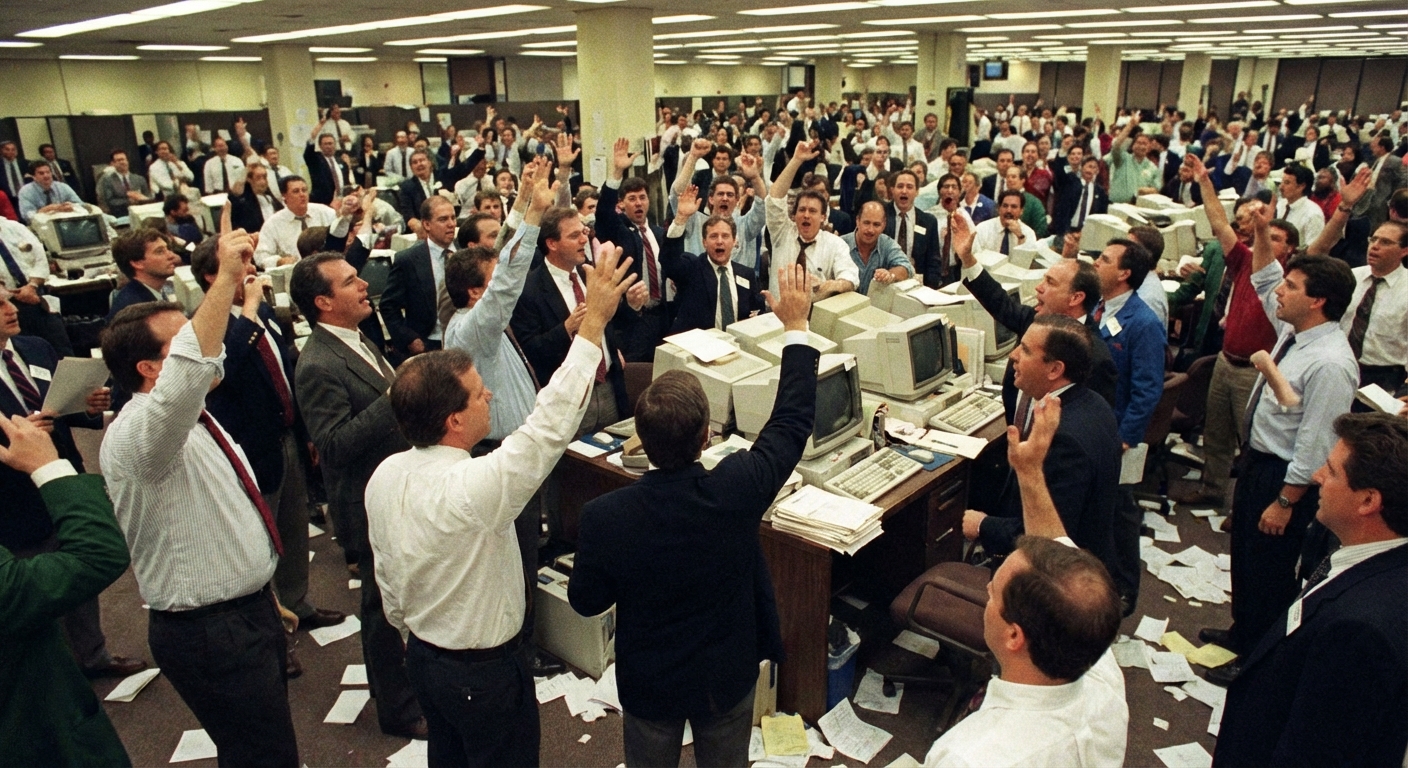
This article examines the claim commonly referred to as “gold price suppression”—what it means to those who advance it, how the idea originated and spread, and which elements are documented versus inferred. Readers should treat the subject as an asserted claim under investigation rather than an established fact.
What the claim says
At its broadest, the “gold price suppression” claim holds that a combination of central banks, bullion (or “precious metals”) banks, and large traders have systematically acted to keep the market price of gold lower than it would otherwise be. Variants of the claim propose different mechanisms: official-sector leasing or swaps of central‑bank gold; coordinated sales or limits on official sales; manipulation of twice‑daily London gold pricing procedures (the historical “gold fix”); and illegal trading practices such as spoofing, naked shorting or coordinated trading immediately around benchmark-setting events. Proponents present this as either occasional intervention (to stabilize markets) or as a long-running and deliberate effort to suppress gold for policy or profit reasons. Advocacy groups and some investors have summarized these allegations and pointed to selected public records to support them.
Where it came from and why it spread
Several historical touchpoints help explain the claim’s origin and its persistence:
- Public comments by officials. Federal Reserve Chairman Alan Greenspan’s July 24, 1998 testimony referenced central banks ‘‘stand[ing] ready to lease gold in increasing quantities should the price rise.’’ That statement is frequently cited by critics as evidence that official‑sector gold leasing has been used to influence prices.
- Central‑bank coordination on sales. In response to market concerns about disruptive official sales, a group of European central banks announced the 1999 “Washington Agreement on Gold” (the first Central Bank Gold Agreement), which limited collective sales and sought to provide transparency about official sector activity. The existence of those agreements is documented and widely discussed.
- Failures and regulatory actions around benchmark price setting. The historical London Gold Fix (a twice‑daily process) drew scrutiny and resulted in regulatory enforcement and procedural reform—most notably fines and control‑failings findings (for example, an FCA action against Barclays) and the 2015 replacement of the old telephone‑based Fix with an electronic LBMA Gold Price auction administered by ICE/IBA. These events fed narratives that the old, opaque process was vulnerable to manipulation.
- Enforcement and litigation involving banks and traders. Over the 2010s and 2020s, regulators have pursued cases against individual traders and financial firms for spoofing or manipulative conduct in precious‑metals futures; plaintiffs also launched class actions alleging benchmark manipulation, some of which led to settlements (e.g., Deutsche Bank settling certain claims) or regulatory penalties (e.g., CFTC actions). Such enforcement and litigation have been widely reported and have helped the claim spread beyond specialist forums.
Because the claim touches both opaque official‑sector activity (reserve management, swaps, leasing) and opaque private trading practices, it appeals to groups suspicious of market integrity and to investors with economic interest in higher gold prices. Public enforcement actions and benchmark reforms gave these communities concrete events to point to, increasing media coverage and online circulation of the claim.
What is documented vs what is inferred
Separating documented items from inference and speculation is critical. Below we group key statements into (A) documented public record, (B) plausible but not fully proven in open sources, and (C) contradicted, retracted, or unsupported assertions.
Documented / verified (public record)
- Central banks entered a public agreement in 1999 (the Washington Agreement) to limit and coordinate certain official‑sector gold sales; the text and signatories are public and have been analyzed by the World Gold Council and others. This is not a secret — it was an explicit coordination on official sales policy.
- High‑profile regulatory enforcement and litigation have documented instances of misconduct in precious‑metals markets, including: (a) the UK regulator fining Barclays for failures that enabled a trader to influence the gold fix; (b) settlements by banks in class actions alleging manipulation around fixing processes; and (c) multiple CFTC orders and criminal pleas against individual traders for spoofing or manipulative trading in gold and silver futures. These actions prove that illegal or abusive trading has occurred in specific cases.
- The London gold pricing mechanism was materially reformed: the telephone‑based London Fix was replaced in 2015 with an electronic LBMA Gold Price auction administered by ICE/IBA, a process explicitly designed to increase transparency and auditability. The reform itself is documented in industry and regulatory filings.
Plausible but inferential (supported by some documents, contested interpretation)
- Central‑bank operations such as leasing, swaps, and lending of official gold reserves have occurred in various forms; those operations can affect available physical supply for settlement and, therefore, price formation in certain venues. The interpretation that those operations were used deliberately and continuously to “suppress” the gold price over decades is a claim that requires additional, specific documentary proof of intent and coordinated policy beyond the existence of the operations themselves. The primary‑source evidence (e.g., minutes or letters) shows capacity and occasional use, but linking that to a continuous price‑suppression program is interpretive.
- Some banks’ trading desks engaged in spoofing and other manipulative tactics in precious‑metals futures in specific periods; prosecutions and admissions by traders (and CFTC orders) make it plausible that abuses occurred inside institutions. Extending that to a claim of institution‑wide, coordinated price suppression across markets and decades requires stronger documentary proof (internal policies, explicit coordination with authorities) than currently public in most cases.
Contradicted, retracted, or unsupported
- Assertions that a single institution or a specific central bank definitively admits a decades‑long secret program to fix the gold price are not supported by indisputable public documents. In some cases, remarks attributed to officials have been clarified or disclaimed (for example, public discussion exists about the accuracy and interpretation of a 1995 FOMC transcript passage that has been used by proponents). Where officials later disavowed or clarified earlier statements, those clarifications are also part of the public record.
- Claims that missing physical bullion proves market rigging are often contradicted by documented improvements in benchmark mechanisms, settlement practices, and exchange inventories; the evidence tends to be complex and mixed rather than categorical. Benchmark reform and enforcement demonstrate vulnerabilities and fixes, not necessarily the full extent of any coordinated suppression program.
Common misunderstandings
- “A fine or settlement proves the entire claim”: No. Enforcement actions show specific bad acts (trader spoofing, poor controls, or isolated misconduct) but do not by themselves prove a decades‑long, centrally coordinated suppression program. Those are different evidentiary standards: one requires proof of particular illegal acts, the other requires proof of sustained intent and coordination among many actors.
- “Central‑bank transparency equals admission of suppression”: Central banks have legitimate reasons to manage reserve assets, and transparency steps (e.g., the Washington Agreement limiting sales) were presented as market‑stabilizing measures. Such measures can be consistent with both stabilizing policy and, in some interpretations, price dampening — the intent is debated and often not stated in legal‑proof terms.
- “Benchmarks were ‘fixed’ forever”: The historical London Fix had vulnerabilities and a record of problematic conduct for which regulators penalized firms; but the mechanism was reformed in 2015 to an electronic auction designed to reduce discretionary influence. Saying the benchmark was ‘fixed’ indefinitely is an overgeneralization.
Evidence score (and what it means)
Evidence score is not probability:
The score reflects how strong the documentation is, not how likely the claim is to be true.
- Evidence score (0–100): 48
- Drivers: several well‑documented enforcement actions (CFTC, FCA) and benchmark reform increase the documentation score because they prove that manipulation and control failures occurred in parts of the system.
- Drivers: documented central‑bank coordination on official sales (the Washington Agreement) shows official sector capacity to influence supply, but the agreement’s stated purpose was to limit disruptive sales rather than explicitly to “suppress” price.
- Drivers reducing the score: the central pieces of the strongest version of the claim—an explicit, continuous, covert program by central banks and bullion banks to suppress gold prices across decades—lack a single, decisive primary‑source document proving coordinated intent; much of that narrative rests on interpretive readings of incomplete records.
- Drivers reducing the score: some key quoted documents have been clarified or disputed by the speakers or their offices, creating uncertainty about their original meaning.
What we still don’t know
Important open questions remain and would materially change the assessment if resolved with primary evidence:
- Are there internal central‑bank or inter‑bank records that directly instruct sustained, covert suppression of gold prices across jurisdictions? (No public document of that kind has been produced that proves a decades‑long covert program.)
- To what extent were bullion‑bank trading desks acting under explicit direction that tied into official‑sector policy, versus independently pursuing profit with poor controls (which could nonetheless produce similar price effects)?
- How many instances of proven market abuse in precious‑metals futures were isolated bad actors, and how many reflect systemic weaknesses that allowed persistent distortions? Existing enforcement actions demonstrate both individual misconduct and institutional control failures, but full causal attribution across markets remains contested.
“This article is for informational and analytical purposes and does not constitute legal, medical, investment, or purchasing advice.”
FAQ
Q: What is “what is gold price suppression” supposed to mean?
A: The phrase “what is gold price suppression” (as used by claim proponents) asks whether official‑sector actions or coordinated private trading have kept gold prices lower than they would be in an unconstrained market. It’s shorthand for a cluster of related claims about leasing, swaps, benchmark‑influence, and illegal trading practices; each mechanism has different types of evidence and requires separate analysis.
Q: Have regulators proven that banks or governments ran a long‑term suppression program?
A: Regulators have proven particular illegal acts (trader spoofing, control failures, and in some cases conduct leading to fines or settlements). They have not, in publicly released documents, proven a single, continuous, decades‑long conspiracy combining all central banks and all bullion banks to suppress gold prices. Evidence supports targeted wrongdoing and vulnerabilities; a broader, uniform program remains an interpretation rather than an established legal fact.
Q: Did the change from the London Fix to the LBMA Gold Price fix the problem?
A: The 2015 reform replaced an opaque, phone‑based Fix with an electronic, auditable auction administered by ICE/IBA and subject to new governance, which reduced discretionary elements and improved audit trails. That reform addressed a known procedural vulnerability, but no mechanism can entirely eliminate all forms of illicit trading or poor controls; enforcement and monitoring must continue.
Q: If I see a story claiming absolute proof of suppression, how should I read it?
A: Ask what primary documents are cited (official minutes, regulator orders, court filings with exhibits). Distinguish between (1) verified enforcement actions and public agreements, (2) plausible inferences built from partial records, and (3) speculative claims that lack primary‑source backing. When sources conflict, rely on high‑trust primary documents (regulatory orders, court filings, central‑bank releases) and note where commentators or advocacy groups interpret those documents differently.
Selected primary and high‑trust sources used in this article
- Alan Greenspan testimony to U.S. House Committee, July 24, 1998 (Federal Reserve Board).
- World Gold Council summary of Central Bank Gold Agreements (Washington Agreement, 1999).
- FCA and major‑media coverage of the Barclays gold‑fix enforcement.
- CFTC press releases and orders charging spoofing/manipulative conduct in gold and silver futures.
- Reports and court filings in class actions and settlements involving precious‑metals benchmark claims (examples include Deutsche Bank settlements and related court dockets).
If you want, I can produce a timeline of key dates and court filings (with direct links to court dockets and regulator orders) or an annotated list of the most‑cited primary documents used by proponents of the claim. I can also convert this overview into a shorter explainer or a timeline‑style article that highlights turning points and legal milestones.

Finance/corporate scandal writer: fraud cases, market manipulation claims, and evidence standards.