
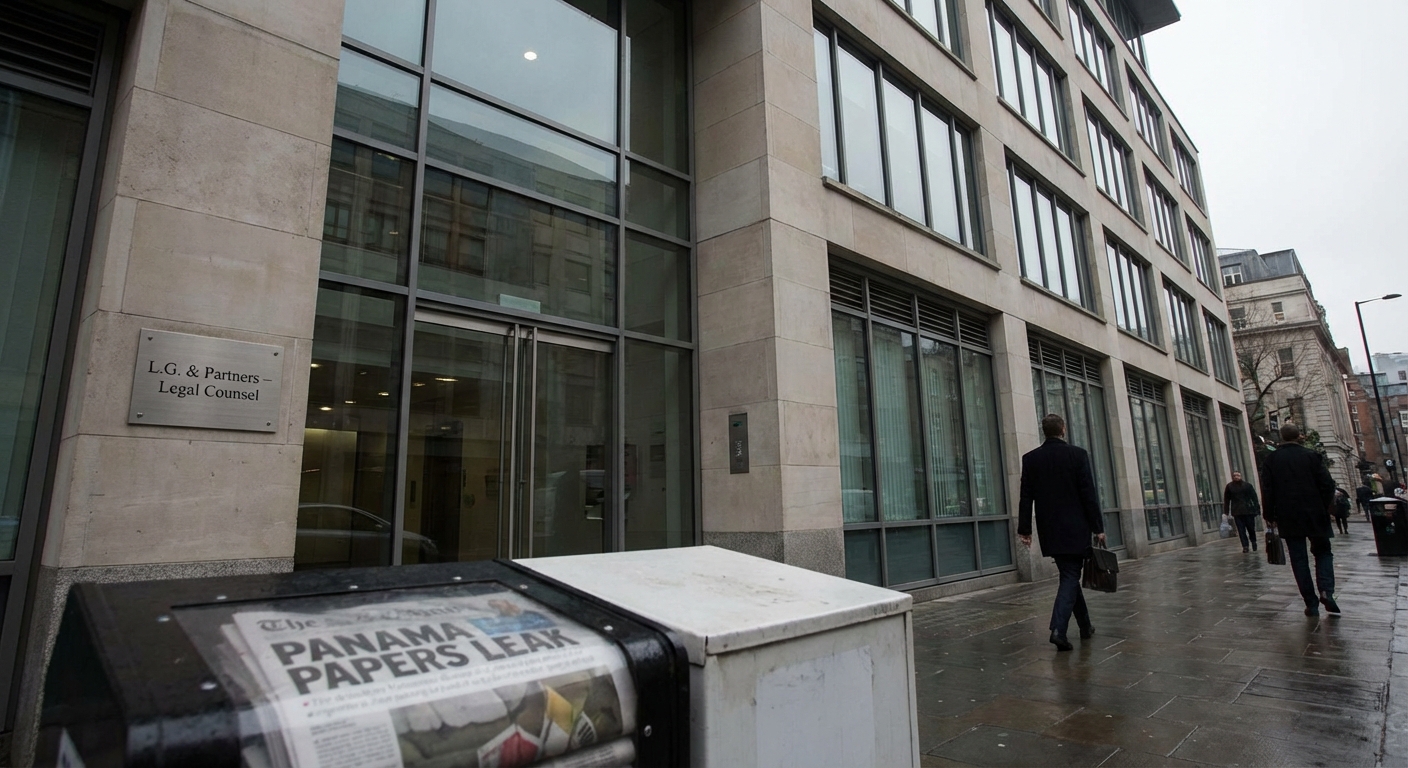
Scope and purpose: this timeline examines the claim “Panama Papers: What Was Revealed” by tracing the major dates, documents, and turning points tied to the 2016 leak and its aftermath. The goal is to show what is documented in primary reporting and public records, what remains disputed, and where the evidence is incomplete. The phrase “Panama Papers what was revealed” is used throughout as the anchor for the claim under review.
Timeline: key dates and turning points
- March 2016 — Internal breach at Mossack Fonseca (discovery reported March 9): Journalistic reporting based on the firm’s internal records indicates that Mossack Fonseca employees discovered a large data copy from their systems on or about March 9, 2016; the documents later identified as the Panama Papers covered company records, emails, PDFs and scanned images spanning decades.
- April 3, 2016 — Coordinated public release begins: At 2:00 p.m. U.S. Eastern Time on April 3, 2016, the German newspaper Süddeutsche Zeitung and the International Consortium of Investigative Journalists began publishing coordinated reports based on the leaked material. Media partners released investigative stories that same day describing millions of files and naming politicians, business figures and intermediaries.
- April 3–6, 2016 — Key findings publicized and immediate responses: ICIJ and partners summarized the leak as more than 11.5 million documents (about 2.6 terabytes) from the Panama-based law firm Mossack Fonseca, including records dating back to the firm’s founding years. The reporting alleged links between offshore companies and public officials, banks, and other intermediaries; governments and tax authorities worldwide announced inquiries within days.
- April 5, 2016 — Political fallout: Iceland’s prime minister steps aside: Public protest and reporting tied to the leak led Iceland’s prime minister, Sigmundur Davíð Gunnlaugsson, to step aside amid scrutiny over his family’s offshore holdings; major political consequences in other countries followed in varying forms. (Reporting: ICIJ and international news outlets.)
- May 9, 2016 — ICIJ searchable database release (partial dataset): ICIJ published a searchable database derived from the materials, describing hundreds of thousands of entities drawn from the larger cache; ICIJ emphasized that inclusion in the database is not proof of illegality and that offshore companies can have legitimate uses. The release increased public access to names and linkages but did not put the full raw dataset into unrestricted public circulation.
- 2016–2019 — International investigations and regulatory responses: The leak prompted dozens of official inquiries, audits and prosecutions in multiple countries and numerous regulatory reviews. ICIJ and partners reported more than 150 official investigations, and some governments opened criminal probes or tax audits tied to information in the leak. At the same time, media organizations and authorities debated appropriate use and sharing of the leaked data.
- March 2018 — Mossack Fonseca ceases public operations: The firm announced it would stop its public operations in March 2018, citing reputational damage, legal pressure and operational difficulties following the leak and related investigations. The firm said it had been a victim of a cyberattack and disputed some allegations published about its conduct.
- 2018–2024 — Legal proceedings and contested evidentiary issues: Prosecutors in several jurisdictions pursued charges or investigations tied to individuals and intermediaries named in reporting; in Panama, a high-profile criminal case connected to the leak reached trial phases in 2024. In June 2024, a Panamanian court acquitted 28 defendants in cases linked to the Panama Papers and the Operation Car Wash investigation, citing evidentiary problems including chain-of-custody questions about material obtained from firm servers. That judicial finding explicitly highlights disputes about how leaked electronic evidence was handled.
- Leaker’s explanation and whistleblower context: The anonymous source who provided the files to Süddeutsche Zeitung and ICIJ later released a manifesto explaining motives and asserting a civic purpose; the identity of the source and their motives remain matters of public reporting and debate rather than settled fact.
Where the timeline gets disputed
The chronological sequence above (discovery → media release → database patching → investigations → legal actions) is broadly documented in contemporaneous reporting and official statements. However, several parts of the public record are contested or incomplete:
- Chain of custody and digital integrity: Panamanian judges and defense teams in later proceedings questioned whether digital evidence recovered from Mossack Fonseca’s systems was preserved and presented with an unbroken chain of custody; in the June 2024 ruling cited above, a court said some electronic evidence lacked required verification controls (for example, digital hash chains) and therefore could not be treated as conclusive. This affects how some later criminal charges were evaluated.
- Scope of public release versus raw dataset: The original recipient (Süddeutsche Zeitung) and ICIJ have stated they coordinated publication but did not release the full raw dataset wholesale; editorial teams curated and redacted material for reporting and later made a searchable subset public. That editorial filtering is documented and explains why independent researchers and law enforcement sometimes made different claims about what the files “prove.”
- Interpretation of names and entities: Inclusion of a name or company in the leaked records does not itself establish illegal conduct. ICIJ repeatedly emphasized that offshore structures have legitimate uses and that presence in the database does not equal guilt. Critics and some defendants argue that media reports conflated lawful tax planning with criminality. The distinction between legal tax avoidance and criminal tax evasion remains central and contested.
- Mossack Fonseca’s role — facilitator or service provider: The firm publicly denied facilitating illegal acts and compared its services to supplying a tool that clients could misuse; investigative reporting presented examples suggesting lax client checks or problematic practices. Whether those practices rise to criminal complicity has been treated differently by different courts and prosecutors.
Evidence score (and what it means)
Evidence score: 68 / 100
- Large, contemporaneous primary dataset: reporting is anchored in a substantial cache of documents (11.5 million items) that multiple reputable outlets and the ICIJ analyzed; this strengthens documentation.
- Coordinated investigative journalism and publicly available summaries/databases: ICIJ and partners released searchable extracts and extensive reporting that provide verifiable leads and contemporaneous accounts.
- Independent official actions and audits: many governments launched inquiries or audits after the reporting, which provides secondary verification of relevance even when legal outcomes differ.
- Contested chain-of-custody and legal rulings: later court findings (for example, questioning the integrity of some electronic evidence) reduce the strength of the dataset as irrefutable proof in criminal proceedings.
- Editorial curation and privacy redactions: the fact that media partners curated and redacted parts of the raw data means public reporting is comprehensive but not identical to an unfiltered primary source.
Evidence score is not probability:
The score reflects how strong the documentation is, not how likely the claim is to be true.
FAQ
Q: What does “Panama Papers what was revealed” actually refer to?
A: The phrase refers to the claim that the Panama Papers leak revealed widespread use of offshore companies by powerful people to hide assets, evade taxes, or launder money. What is documented is that an extensive set of internal Mossack Fonseca files was obtained and that ICIJ and partner outlets reported linkages between offshore entities and public figures; whether every named connection constitutes illegal activity is evaluated case-by-case by prosecutors and courts.
Q: When were the Panama Papers first published and when was the database released?
A: Media partners coordinated to publish investigative stories beginning on April 3, 2016. ICIJ released a searchable database with extracted entity records in May 2016 to support transparency while noting that database inclusion is not proof of wrongdoing.
Q: Did the Panama Papers lead to investigations or convictions?
A: The reporting triggered hundreds of official inquiries, audits and some prosecutions worldwide; authorities in many jurisdictions opened investigations. Outcomes vary: some cases led to fines, tax adjustments, or prosecutions, while other high-profile prosecutions encountered evidentiary hurdles or resulted in acquittals. The public record shows a mix of verified legal actions and unresolved or contested matters.
Q: Who leaked the Panama Papers and why?
A: The files were provided to Süddeutsche Zeitung by an anonymous source who later published a manifesto explaining motivations that the leaker described as civic-minded. The source’s identity is not publicly confirmed beyond investigative reporting and the manifesto. That explanation is part of the public record but does not settle questions about motive or method.
Q: What are the main disputes about the evidence?
A: Key disputes include whether digital evidence was preserved and authenticated properly (chain of custody), the extent to which editorial curation affected public perception, and the legal distinction between lawful offshore activity and criminal conduct. Courts and prosecutors have reached different conclusions in different jurisdictions.
This article is for informational and analytical purposes and does not constitute legal, medical, investment, or purchasing advice.

Finance/corporate scandal writer: fraud cases, market manipulation claims, and evidence standards.