
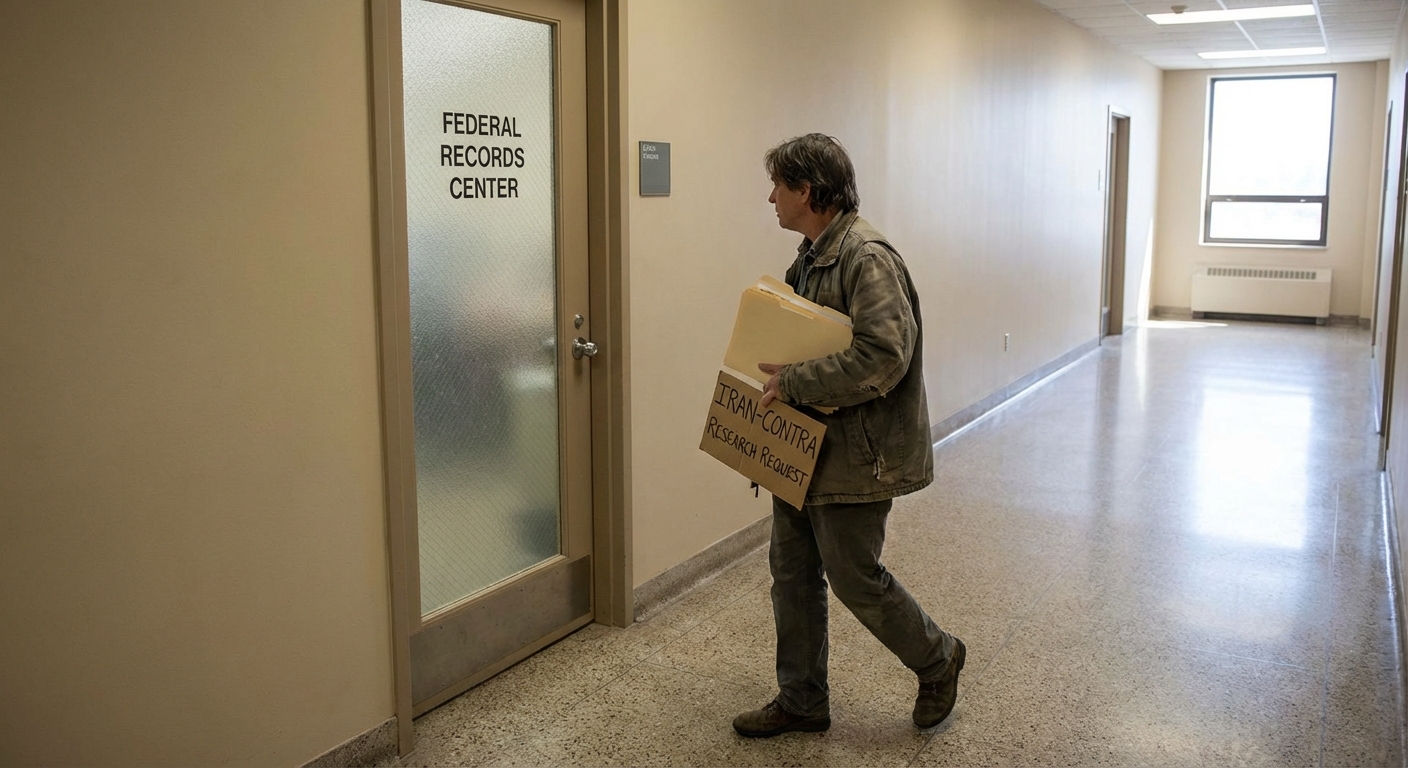
This article lists and analyzes the Iran–Contra Affair claims most often cited by supporters and critics alike. It treats the subject as a set of contested CLAIMS rather than accepted facts, and highlights what primary documents, official reports, and sworn testimony actually show about each argument. The strongest arguments people cite are anchored in government reports, congressional hearings, and the Independent Counsel’s investigations; those sources are referenced below so readers can test the claims against the documentary record.
This article is for informational and analytical purposes and does not constitute legal, medical, investment, or purchasing advice.
The strongest arguments people cite
-
Claim: The U.S. secretly sold arms to Iran, including TOW missiles and Hawk spares, and some shipments occurred before a formal presidential finding was made. Source type: government investigations and contemporaneous export records (Tower Commission, Congressional report). Verification test: check the Tower Commission report, the joint Congressional committee report, and declassified shipment/contract records. The Tower Commission and later Congressional reporting list specific shipments and dates.
-
Claim: Proceeds from certain arms sales were diverted to finance the Nicaraguan Contras. Source type: Independent Counsel (Lawrence Walsh) findings and prosecutorial filings. Verification test: review the Walsh final report and related indictments and trial records for documentation of fund flows and memoranda describing the diversion. The Independent Counsel documented diverted funds and linked them to NSC activity and intermediate actors.
-
Claim: National Security Council staffers, notably Lt. Col. Oliver North, ran operations that moved money and materials while concealing details from Congress. Source type: sworn Congressional testimony and office records. Verification test: read North’s July 1987 congressional testimony, NSC file backups recovered by investigators, and the Independent Counsel case files. North’s testimony and recovered NSC backups document operational activity by NSC staff.
-
Claim: The operations involved third-party conduits (including Israeli intermediaries and covert bank channels) rather than direct State Department or CIA public channels. Source type: investigative reports and declassified documents. Verification test: consult the Walsh report, the Tower Commission annexes, and declassified CIA/DOJ FOIA releases for names of intermediaries and payment routes. The published investigations describe use of intermediaries and third-party transfers.
-
Claim: White House officials engaged in deliberate obfuscation or created false chronologies when the matter was exposed. Source type: Tower Commission and press reporting. Verification test: compare contemporaneous White House statements and press briefings with the Commission’s chronology and the Independent Counsel’s findings. The Tower Commission highlighted inaccurate official statements and internal attempts to control the narrative.
-
Claim: President Ronald Reagan personally authorized or knowingly participated in the arms-for-hostages and Contra-funding schemes. Source type: contested—relies on testimony, contemporaneous notes, and inference. Verification test: examine Tower Commission findings, the Walsh report, Reagan’s public statements and presidential diaries, and contemporaneous memoranda. Investigators reached different conclusions about the degree to which Reagan knew operational details; this remains one of the most disputed claims.
-
Claim: Criminal prosecutions and convictions from the probe demonstrate high-level criminality and a cover-up. Source type: indictments, convictions, plea agreements, and later appeals. Verification test: review the indictments and trial outcomes compiled in the Walsh report and National Archives records. The Independent Counsel produced multiple indictments and convictions, but several convictions were later vacated or affected by the use of immunized testimony; pardons also changed outcomes for named individuals.
-
Claim: Media reporting (e.g., the Ash-Shiraa leak) first revealed the arms-for-hostages element and triggered official investigations. Source type: contemporary journalism and investigative follow-ups. Verification test: review November 1986 news coverage, the joint Congressional report narrative, and later official timelines. The Lebanese newspaper Ash-Shiraa’s early reporting precipitated public discovery and subsequent government confirmation.
How these arguments change when checked
When each of the above arguments is tested against primary documents and official reports, they fall into three broad categories: documented, plausible but not conclusively proven, and disputed/contradicted. Below are the main adjustments that occur during verification.
-
Documented with strong primary evidence: That arms were sold to Iran in 1985–86 and that some proceeds were redirected toward Contra activities is well documented in the Tower Commission, the congressional report, and the Independent Counsel’s final report. These sources list specific shipments, payment flows, and the involvement of named NSC staffers. Readers can verify specific shipment dates and amounts in the Tower Commission and the joint Congressional report.
-
Plausible but inferential: The claim that sophisticated third-party financial routes were used is documented (names and channels appear in investigative files), but reconstructing exact banking paths and motivations often relies on piecing together partial records—some records remain classified or were never produced publicly. The Independent Counsel reported on intermediaries and routes but also notes gaps in the record.
-
Disputed or unclear: Whether President Reagan explicitly authorized or knew the full operational details remains contested. The Tower Commission and the congressional committees found inadequate direct evidence that Reagan knew of all operational aspects, while other observers and some internal memoranda raise doubts or suggest he approved certain policy goals. Official investigators reached different conclusions on the president’s knowledge and intent. Because these are contested interpretations of overlapping documents and testimony, they should be treated as disputed CLAIMS rather than settled fact.
-
Legal outcomes are complex: Multiple indictments, convictions, appeals, vacatur decisions, and presidential pardons mean that criminal convictions alone cannot be taken as a simple indicator of full accountability. The Independent Counsel documented prosecutions but also discussed how immunized congressional testimony and later pardons affected final legal resolutions.
Evidence score (and what it means)
- Evidence score: 76 / 100
- Drivers: multiple high-quality primary sources (Tower Commission report, congressional committee report, and the Independent Counsel’s final report) documenting arms shipments and fund diversions.
- Drivers: extensive sworn testimony (Oliver North and other NSC staff) and recovered NSC files that corroborate operational details.
- Limiters: gaps remain about precise financial routing and about direct documentary proof of the president’s personal, contemporaneous authorization of every contested act; some records remain sealed or were affected by legal privileges.
- Limiters: legal outcomes were altered by procedural issues (use of immunized testimony) and later presidential pardons, which complicates inferences from convictions about the full extent of wrongdoing.
Evidence score is not probability:
The score reflects how strong the documentation is, not how likely the claim is to be true.
FAQ
What are the core Iran–Contra Affair claims people point to?
Supporters of the broader claim typically point to (1) documented arms shipments to Iran, (2) documented diversion of funds to the Contras, (3) testimony showing NSC staff involvement in covert operations, and (4) contemporaneous attempts to manage public messaging. These elements are documented in the Tower Commission, the joint Congressional report, and the Independent Counsel’s final report.
How well documented are the claims that money flowed from arms sales to Contra operations?
The Independent Counsel’s report provides the most detailed public accounting linking certain sales and proceeds to Contra-related activities. Investigators identified transfers, intermediaries, and memoranda describing the intended diversion. However, not all financial paths are completely reconstructed in the public record, and some material remains subject to classification or was not produced publicly.
Do the official reports prove that the President knowingly authorized the actions?
Investigators reached different conclusions about presidential knowledge. The Tower Commission and the Congressional report found insufficient direct evidence that President Reagan knew the full operational details, while the Independent Counsel’s work and some press analyses point to leadership lapses and misleading public statements. Because primary sources and interpretations conflict on this question, it remains disputed and should be treated cautiously.
How can a reader verify the claims themselves?
Start with primary documents: the Tower Commission report (February 1987), the November 1987 joint Congressional committee report, and the Independent Counsel (Lawrence Walsh) final report (August 4, 1993). Follow those with declassified CIA FOIA releases, contemporaneous congressional hearing transcripts (including Oliver North’s testimony), and archived press reporting from November–December 1986 that first disclosed elements of the scheme. These sources are cited throughout this article and are available through the National Archives, official government archives, and public FOIA repositories.
Are there important conflicts between major sources?
Yes. The Tower Commission, congressional committees, and the Independent Counsel sometimes emphasize different facts and draw different inferences—especially about who at the highest levels knew what and when. Investigators agreed on the existence of arms shipments and diversions, but they disagreed about the extent of presidential knowledge and intent. When such conflicts exist, they are reported here and readers should consult the primary reports to compare the evidence side-by-side.
How to read future claims about the Iran–Contra Affair
When encountering new or revived claims about the Iran–Contra Affair, ask: (1) What primary source (memo, testimony, bank record) is the claim based on? (2) Is the source contemporaneous or retrospective? (3) Have other independent documents corroborated the detail? (4) Did a reputable investigative body (Tower Commission, congressional committee, or an independent prosecutor) evaluate this evidence? Answers to these questions help separate documented facts from inference and speculation.

History-focused writer: declassified documents, real scandals, and what counts as evidence.