
Intro: Below are the arguments people cite in support of the claim summarized as “Bohemian Grove: ‘Secret Ritual Control’”. These are reasons cited by supporters of the claim, not proof that the claim is true. Each item notes where the argument comes from and suggests how it could be tested or verified.
The strongest arguments people cite
-
Argument: The “Cremation of Care” is a secret occult ritual that includes a staged sacrifice or cult worship. Source type: hidden-camera footage and documentaries (notably footage released by Alex Jones/Infowars) and long-running conspiracy retellings. Verification test: authenticated primary footage or eyewitness testimony corroborated by multiple independent, reputable journalists or official documentation that shows actions beyond theatrical symbolism.
-
Argument: The 40-foot owl statue at Bohemian Grove is an idol (sometimes identified as “Moloch”) used for occult worship. Source type: photographic images of the owl and interpretations in conspiracy-media accounts. Verification test: documentary evidence (club materials, program notes, or statements from organizers) explicitly describing the statue’s intended role as a deity or cult altar, or authenticated audio/video showing worship directed at the owl as a god. Current mainstream documentation describes the statue as a stage prop used in the Cremation of Care production.
-
Argument: Major political and business figures attend the Grove and therefore use it to make secret policy decisions (“world control” implications). Source type: lists of known attendees in journalistic reporting and historical accounts (e.g., periodic reporting that presidents and senior officials have attended). Verification test: contemporaneous records, meeting minutes, or credible whistleblower accounts showing decisions or coordinated policy agreements made at Grove gatherings. Current public documentation shows attendance by some prominent figures but not direct, public evidence of formal, binding policy decisions made at the Grove.
-
Argument: “Lakeside Talks” and private conversations at the Grove are a vehicle for coordinating elite policy or projects. Source type: club descriptions of Lakeside Talks and secondary reportage inferring influence. Verification test: leaked slides, transcripts, or multiple independent attendee statements showing policy coordination and subsequent documented policy outcomes directly traceable to those conversations. Existing sources document that Lakeside Talks occur but do not show direct, verifiable policy coordination as an outcome.
-
Argument: Historic anecdotes (e.g., wartime planning or the Manhattan Project) were discussed at the Grove, implying it has been the site of major decisions. Source type: retrospective claims in popular journalism and oral histories. Verification test: primary historical records (dated meeting notes, confirmed attendee memoirs naming specific policy decisions made at camp). Contemporary high-quality histories do not provide primary documentary proof that the Manhattan Project or equivalent programs were planned at the Grove.
-
Argument: Eyewitness infiltration accounts (Philip Weiss in Spy Magazine; Jon Ronson’s reporting) show theatrical, secretive behaviors that supporters interpret as proof of sinister intent. Source type: investigative journalism and documentary film. Verification test: cross-checked contemporaneous reporting from multiple independent outlets and full archival materials showing wrongdoing rather than theatrical entertainment. The primary reporting documents revelry and secretive practices but interpreters disagree about meaning.
-
Argument: Subsequent activists and trespass incidents (e.g., Richard McCaslin’s 2002 incursion) are cited as evidence people take the threat seriously. Source type: law-enforcement reports and local journalism. Verification test: court records or official police investigations proving the Grove was a site of criminal conspiracies beyond trespass and arson claims unrelated to a ritualized pattern of criminality. Public records show trespass attempts and arrests, not a criminal conspiracy confirmed by investigation.
-
Argument: The club’s long-standing secrecy and male-only history are used to infer a cover for elite coordination. Source type: club bylaws, historical descriptions, and reportage on exclusivity. Verification test: internal governance documents showing explicit policies to hide policy-making or coordination; otherwise the pattern remains circumstantial and interpretive. Existing sources confirm exclusivity and secretive practices but not explicit illegal cover-ups.
How these arguments change when checked
When investigators and mainstream journalists examine the strongest arguments listed above, the pattern is mixed: core descriptive elements are well-documented, while inferences about occult worship or coordinated “secret control” are far weaker and often unsupported by primary evidence.
What is documented: independent reporting and archival material confirm that Bohemian Club members stage a theatrical ceremony called the “Cremation of Care” at Bohemian Grove, performed in front of a large artificial owl and using costuming, music and pyrotechnics; prominent public figures have in some eras attended the Grove; and the club maintains private, members-only gatherings. These descriptive facts are supported in published reference work and reporting.
What is disputed or inferential: that the cremation ceremony is anything other than symbolic theater; that the owl is an object of religious worship comparable to an ancient sacrifice to Moloch; and that the Grove is a formal decision-making chamber where binding global policies are secretly agreed upon. These claims are primarily advanced by commentators who rely on selective interpretation of theatrical elements, clandestine footage, or inference from attendees’ prominence. Mainstream reporting (including documentary coverage by Jon Ronson and historical journalism like Philip Weiss’s reporting) presents the ceremony as theatrical pageantry and social bonding rather than evidence of a formal occult cult or a documented governance mechanism.
Conflicting sources: some sources that push the most alarming interpretations are from partisan or conspiratorial outlets (for example, Alex Jones/Infowars), while other accounts come from established journalistic investigations and scholarly overviews that describe the same rituals as theatrical and symbolic. These sources directly conflict in interpretation; the underlying factual elements are largely the same, but the meaning ascribed to them differs. Readers should note that conflict of interpretation is explicit and documented.
Verification gaps: Most public-facing sources about the Grove are descriptive and do not include meeting minutes, formal attendee rolls for every year, or internal policy documents that would be needed to prove a claim that the Grove functions as a secret center of political control. Where people claim such evidence exists, published, verifiable primary documents have not appeared in reputable outlets. Researchers who have tried to test the claim emphasize the absence of documentary proof for grander assertions.
This article is for informational and analytical purposes and does not constitute legal, medical, investment, or purchasing advice.
Evidence score (and what it means)
- Evidence score: 30/100.
- Drivers: Strong documentation exists for the existence of the Cremation of Care ceremony, the Owl Shrine as a theatrical prop, and the Grove’s exclusivity and notable attendees.
- Drivers: Weak or absent primary evidence for claims that the ritual involves actual human sacrifice, established occult worship of ancient deities, or formal, documented decisions to control policy outcomes. Allegations of “secret control” are inferential and rely on interpretation rather than verifiable internal records.
- Drivers: Conflicting reporting—some sources presenting sensational interpretations come from outlets with documented reliability concerns; established journalists typically describe theatricality and secrecy but stop short of proving criminal or occult activity.
- Drivers: The claim is testable in principle (internal records, credible whistleblowers, or independent contemporaneous documentation could change the score), but such documentation has not been produced in reputable, verifiable form.
Evidence score is not probability:
The score reflects how strong the documentation is, not how likely the claim is to be true.
FAQ
What is the “Bohemian Grove secret ritual control” claim, and why does it circulate?
The shorthand “Bohemian Grove secret ritual control” refers to the claim that rituals at Bohemian Grove (notably the Cremation of Care) are connected to occult worship and that those gatherings are used to coordinate secret policy decisions among elite attendees. It circulates because the Grove is highly exclusive, the ritual is theatrical and visually striking, and some high-profile figures have been reported to attend—conditions that encourage speculation and inference. Journalistic and historical sources document the ceremony and the club’s exclusivity, but stop short of establishing the stronger control claims.
Does the available footage prove occult worship or human sacrifice?
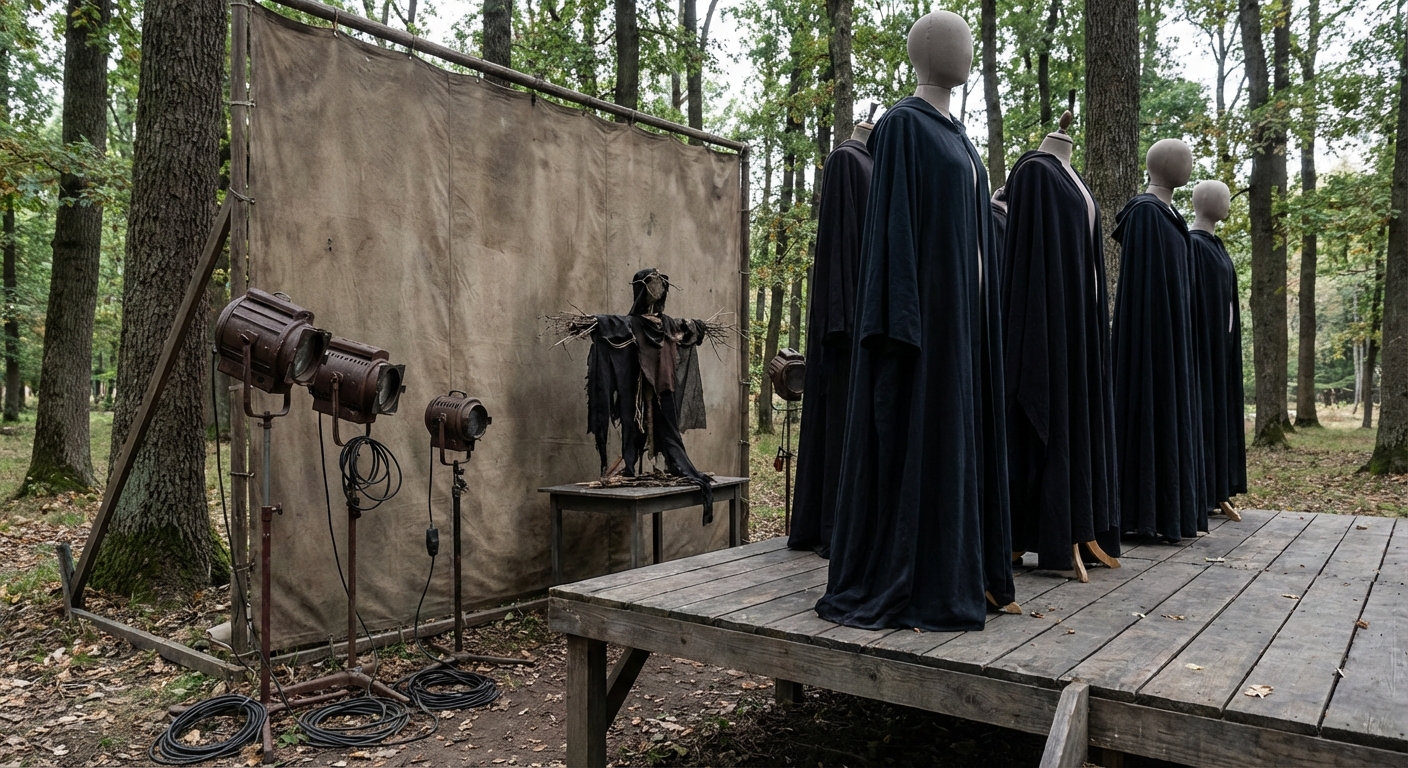
Footage and photographs show a pageant-like ceremony in which an effigy is cast and burned and participants wear robes; these elements are consistent with a theatrical ritual that symbolically “banishes care.” Promoters of the occult/sacrifice reading interpret symbolic actions as literal, but mainstream reporting and historical descriptions treat the activity as theatrical, not evidence of human sacrifice. No reputable, independently verified evidence of human sacrifice at the Grove has been produced.
Have U.S. presidents or officials attended, and does that prove secret policymaking?
Yes—historical reporting shows that senior public figures have attended the Bohemian Grove at various times. Attendance alone does not prove that the Grove is a venue for binding, secret policymaking; to demonstrate that would require contemporaneous records or corroborated testimony showing decisions agreed there and implemented as policy. Existing public sources document attendance but not documented decision-making minutes.
What kinds of evidence would change this assessment?
Direct, contemporaneous internal documents (dated agendas, minutes, or emails) showing explicit policy agreements made at Grove gatherings; consistent, detailed, independently corroborated whistleblower testimony tying specific policy moves to Grove meetings; or legal findings based on verified documentary evidence would substantially raise the evidence score. Absent that kind of material, the strongest available evidence supports descriptive claims (ritual exists, Owl Shrine, notable attendees), not the grander control thesis.
Where can I read reputable reporting about the Grove?
Reputable overviews and reporting include encyclopedia entries and major news outlets that have covered the Grove’s history and the controversy (for example Britannica and long-form journalism in outlets such as Vanity Fair and the Los Angeles Times); investigative or documentary coverage (e.g., Jon Ronson’s documentary reporting) provides descriptive detail but interpreters differ about meaning; and local reporting documents incidents like trespass and arrests. If you want primary-source leads, historical pieces such as Philip Weiss’s Spy Magazine reporting and archived Grove program material are frequently cited, but they require cautious interpretation and cross-checking.

Geopolitics & security writer who keeps things neutral and emphasizes verified records over speculation.