
This article examines the claim commonly described as “secret treaties and hidden clauses” — the idea that governments or international bodies routinely enter agreements with undisclosed terms or covert appendices. We treat this subject as a claim (not a confirmed fact), review documented historical examples and legal rules, and assess what is documented, what is inferred, and what remains unproven. The phrase “secret treaties and hidden clauses” appears in public debate about both historical agreements and modern trade or security negotiations, and this article analyzes the evidence for those assertions.
What the claim says
The central claim is that states or international actors routinely create treaties, protocols, or clauses that are intentionally concealed from the public — sometimes permanently — and that these undisclosed terms have significant political, legal, or economic effects. Variants of the claim allege everything from formally signed secret protocols that divide territory, to “hidden clauses” buried inside large trade or security agreements, to modern conspiratorial accounts that assert ongoing, coordinated secrecy across multiple governments. Historical episodes are often cited as proof that similar secrecy continues today.
Where it came from and why it spread
Historical precedent: secrecy in diplomacy has a long record. In the 19th and early 20th centuries, secret treaties and clauses were relatively common in great-power diplomacy; for example, the Sykes–Picot correspondence of 1915–16 was a set of secret agreements allocating spheres of influence in the post‑Ottoman Middle East that were disclosed after the Russian Revolution.
Another well-known historical example is the secret protocol to the 1939 Molotov–Ribbentrop Pact, which allocated spheres of influence in Eastern Europe; the protocol was denied for decades and only officially acknowledged much later. These episodes are often invoked as precedents showing that secret protocols can and have had major consequences.
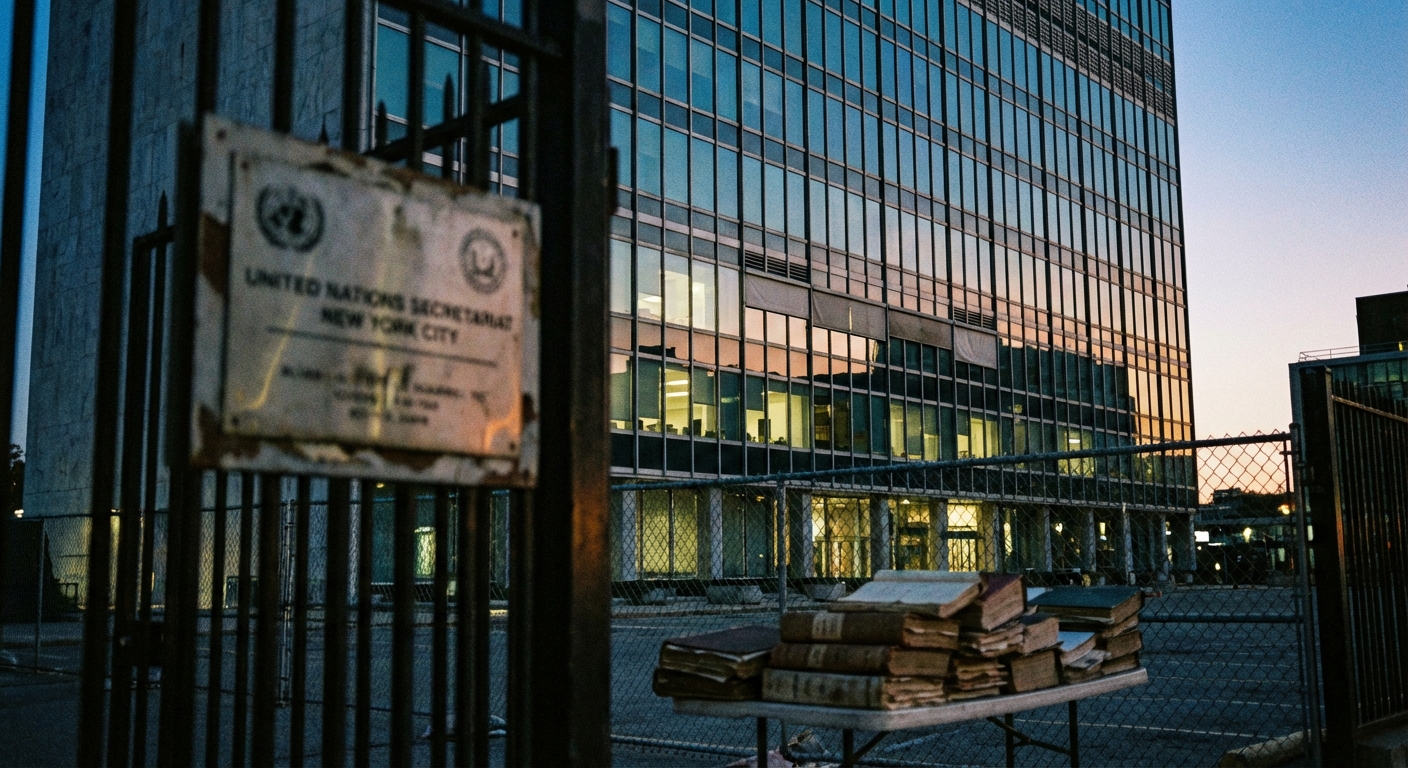
Institutional reaction: public reaction to such revelations shaped post‑war practice. The United Nations system and later treaty‑registration rules (notably Article 102 of the UN Charter and implementing regulations) were adopted to reduce undisclosed interstate commitments and improve transparency in treaty-making. Those rules require registration and publication of treaties with the UN Secretariat, in principle limiting the enforceability of unregistered agreements before UN organs.
Modern drivers of spread: in recent decades, frustration about negotiation secrecy in areas like trade and intellectual property (for example controversies around ACTA and TPP-era leaks) has fueled the belief that modern agreements can hide important clauses from the public. Activist campaigns, media leaks, and selective disclosures have amplified this perception, while academic and policy debates on confidentiality versus transparency have kept the topic in public view.
Online dynamics: the internet and social media accelerate circulation of simplified or sensational accounts. Historical examples provide credibility to broad claims, and opaque negotiating practices (sometimes legitimately used to protect bargaining positions) create information gaps that rumors and conspiratorial explanations can fill. Scholarly work on secret diplomacy shows how secrecy, when present, invites suspicion — and that suspicion is easily repurposed online.
What is documented vs what is inferred
Documented (strong support): there are well-documented historical instances of genuinely secret protocols or undisclosed treaty elements that had real consequences — Sykes–Picot (World War I era) and the secret protocol to the Molotov–Ribbentrop Pact are both supported by archival documents and contemporary reporting.
Documented (legal framework): international law now provides mechanisms requiring registration and publication of treaties, notably Article 102 of the UN Charter and subsequent General Assembly regulations that operationalize registration and the UN Treaty Series; these measures were adopted precisely to curb the practice of undisclosed interstate commitments. That legal framework is documented in UN practice and reports.
Plausible but unproven: it is plausible that modern states sometimes use confidential annexes, classified attachments, or reserved declarations in agreements (for example for intelligence cooperation or national security exceptions), and that some negotiating texts are not publicly released until later. However, the mere existence of confidentiality or delayed publication is not the same as evidence that enduring, widely binding secret clauses exist that fundamentally alter public law or global governance. Documentation for ongoing, sweeping secret treaties across multiple democracies is lacking.
Contradicted or unsupported: broad conspiratorial claims that numerous contemporary treaties contain unknown, enforceable “hidden clauses” dictating major global policy with no public record are not supported by the public record. The UN registration system, national ratification processes, parliamentary oversight in many countries, journalistic leaks, and declassification practices provide multiple independent pathways by which major treaty provisions typically become visible; while imperfect, these make wholesale, permanent secrecy across many states unlikely without substantial documentary traces. Where different sources conflict, scholars and archival records are explicit about those conflicts and we avoid speculation.
Common misunderstandings
- Confidential negotiation ≠ permanent secret clause: Many people conflate confidential or sensitive negotiations with the existence of forever‑hidden treaty clauses. In practice, confidentiality during negotiation is routine, but democratic oversight, ratification, or eventual publication often reveal key terms later.
- Unregistered agreements and legality: Article 102 of the UN Charter discourages secret treaties and restricts invoking unregistered agreements before UN organs, but failure to register does not automatically make a treaty void in all legal contexts. The enforcement implications are limited and specific.
- “Hidden clause” as rhetorical device: Activists and commentators sometimes use “hidden clause” as shorthand for politically unpopular but explicit provisions (for example investor‑state dispute settlement language in trade agreements). Those provisions are often present in draft or final texts; they are not necessarily hidden forever.
- Archival confirmation matters: historical revelations about secret protocols commonly rely on archival discovery or leaks; absence of archival evidence for a modern claim does not prove the negative, but credible historians require documentary proof before accepting claims of secret signed provisions.
Evidence score (and what it means)
- Evidence score: 45/100
- Drivers: strong archival documentation exists for several historical secret protocols (raises baseline credibility for the general phenomenon).
- Drivers: clear contemporary legal norms (UN registration) and routine parliamentary/oversight mechanisms lower the chance that very large, enduring secret treaties exist undetected.
- Drivers: modern examples of secrecy are often limited to negotiation confidentiality, classified annexes for security reasons, or disputed draft text leaks — these are documented but not proof of a systematic worldwide hidden‑clause regime.
- Drivers: online amplification and selective historical analogy cause many claims to be overstated; credible primary evidence for sweeping contemporary secret treaties is generally absent.
Evidence score is not probability:
The score reflects how strong the documentation is, not how likely the claim is to be true.
This article is for informational and analytical purposes and does not constitute legal, medical, investment, or purchasing advice.
What we still don’t know
We do not know of any contemporary, multilaterally binding treaty that remains permanently and fully secret across all parties with major public consequences and no documentary trace; absence of evidence in public archives is not absolute proof against limited, classified arrangements in specific areas (e.g., intelligence cooperation, security assistance), which by design are not always public. Determining the existence of specific secret clauses requires primary documentary access, whistleblower evidence, or official declassification; where those are absent, claims remain speculative.
We also lack a comprehensive, publicly accessible catalog of all confidential annexes and reservations used in modern treaties because some records are classified at national level; comparative transparency varies by country and by subject matter. Scholars continue to study how often states use classified attachments and how those are managed in domestic oversight processes.
FAQ
Q: Do “secret treaties and hidden clauses” still happen today?
A: Secrecy in negotiation and classified annexes still occur in limited contexts (national security, intelligence sharing, commercial confidentiality), but large-scale, permanently secret multilateral treaties are much less common today because of UN registration rules, parliamentary ratification processes, and media scrutiny. Documentation for widely binding, global secret treaties without any record is lacking.
Q: What is Article 102 of the UN Charter and why does it matter to this claim?
A: Article 102 requires UN member states to register and publish treaties with the UN Secretariat, and it provides that unregistered treaties cannot be invoked before UN organs. That rule was adopted after World War I and World War II reactions against secret diplomacy; it reduces the institutional space for permanently secret interstate commitments. However, non-registration does not automatically invalidate a treaty in all contexts.
Q: Are there confirmed historical examples of secret protocols?
A: Yes. Well-documented examples include the Sykes–Picot arrangements of 1915–16 and the secret protocol to the Molotov–Ribbentrop Pact of 1939; both were secret at the time and were later revealed in archival material and contemporary publications. These historical cases are often cited when people argue that secret treaties are possible.
Q: How should I judge a modern claim that a treaty hides a “secret clause”?
A: Look for primary evidence: official treaty texts, registration or publication in the UN Treaty Series, parliamentary records, credible reporting that cites documents or reliable leaks, or archival materials. If a claim relies on inference, anonymous social posts, or analogy to historical cases without documentary support, treat it as unproven. Where sources conflict, prefer primary documents and reputable outlets.
Q: Does uncovering a historical secret protocol prove modern conspiracies?
A: No. Historical revelations show the phenomenon occurred in some contexts, but they do not by themselves prove that similar practices are widespread today. Evaluation requires checking current documentary and institutional evidence rather than assuming continuity from the past.

Beginner-guide writer who builds the site’s toolkit: how to fact-check, spot scams, and read sources.