
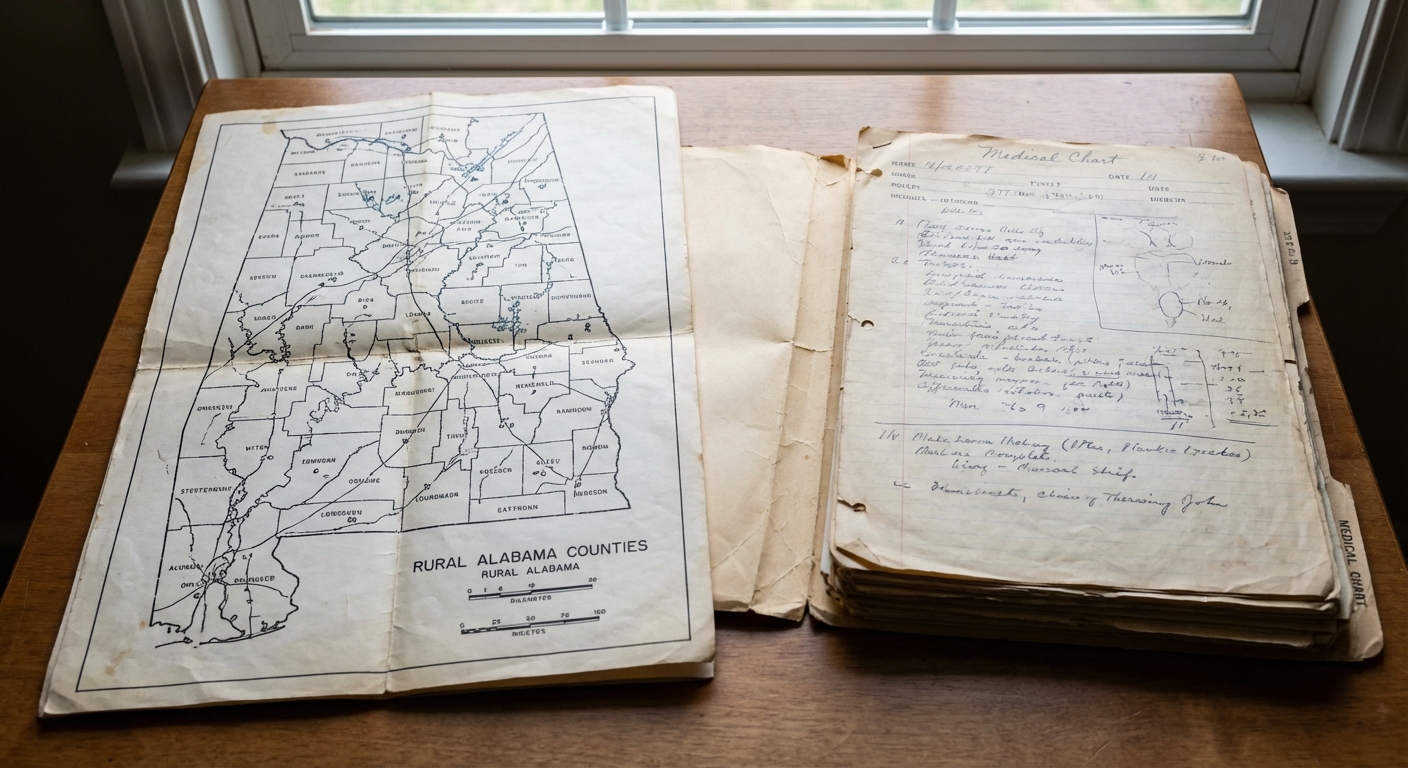
This article examines claims about the “Tuskegee Syphilis Study”—commonly summarized as a 40‑year U.S. Public Health Service research program in Macon County, Alabama, that enrolled Black men and monitored untreated syphilis. We treat this subject as a set of claims and analyze what is documented in primary and high‑trust secondary sources, what is inferred, and where disagreements or gaps remain. The phrase “Tuskegee Syphilis Study claims” is used here as the analytic focus.
What the claim says
At a high level, the claim says that between 1932 and 1972 a federally run study in and around Tuskegee, Alabama, recruited hundreds of Black men (often summarized as 600 men: 399 diagnosed with syphilis and 201 controls), misled them about their condition (using local language such as “bad blood”), did not obtain informed consent, and—despite the availability of penicillin from the mid‑1940s—failed to treat infected participants. The claim further holds that the study continued until it was exposed by press reports and a whistleblower in 1972, that many participants and family members suffered harm, and that the episode produced lasting mistrust of medical institutions. These core elements are repeatedly described in government and archival sources.
Where it came from and why it spread
Origins in official research: The study began under the U.S. Public Health Service in 1932 to observe the natural history of untreated syphilis; early documentation and later archival collections (including files preserved by the National Library of Medicine) record planning and participant procedures.
Recruitment and local framing: Contemporary accounts and later oral histories show that local recruitment presentations offered free medical examinations, meals, and burial insurance and used the term “bad blood” (a regional umbrella term) rather than explicitly naming syphilis; survivors’ testimonies and contemporary reporting support this description.
Whistleblower and press exposure: Concerns raised internally by a Public Health Service investigator, Peter Buxtun, and subsequent Associated Press reporting in July 1972 are documented as the proximate causes of public exposure; those disclosures triggered congressional hearings, an ad hoc federal panel, and termination of the study. Major journalism and obituaries for Buxtun summarize that timeline.
Why the claim spread and persists: Multiple factors amplified the story internationally: (1) clear moral and ethical violations alleged in primary records and committee reports; (2) a high‑profile presidential apology in 1997 that confirmed governmental responsibility in moral terms; and (3) the use of the episode as a widely cited exemplar of medical injustice in public health, education, and media—factors that contributed to sustained public attention and to its invocation when communities discuss medical distrust.
What is documented vs what is inferred
Documented (supported by primary or strong secondary sources):
- The USPHS conducted a long‑term study beginning in 1932 in Macon County, Alabama; the objective stated in contemporaneous documents was to observe untreated syphilis.
- Participant counts recorded in government and reference summaries are commonly given as 600 men total: 399 who had serologic evidence of syphilis and 201 comparison subjects without syphilis.
- There is documentary and testimonial evidence that participants were not informed in modern terms, that the term “bad blood” was used locally, and that researchers did not obtain informed consent as defined today.
- The study continued after penicillin became the accepted treatment for syphilis in the mid‑1940s, and participants were not given penicillin as a standard treatment even when it became widely available. That withholding is recorded in investigatory reports and later summaries.
- The study was terminated following press exposure in 1972, and subsequent legal and policy actions followed (including a class‑action settlement and federal reviews that contributed to later research protections).
Inferred or disputed (documentary support weaker or contested):
- Motivation and intent of every individual researcher: while archival records and committee findings criticize the study’s ethics and decisions, attributing personal malice or explicit conspiratorial intent to named individuals is an inference beyond what the documents uniformly prove. Primary records show decisions were made and defended in institutional contexts, but differing interpretations exist in secondary literature.
- Exact counts of deaths, secondary infections of spouses and children, and precise long‑term epidemiological effects vary between sources and estimates; multiple publications offer different tallies, and some numbers reported in secondary accounts derive from later analyses rather than contemporaneous records. Where numbers are cited below we point to their source.
- Claims that every local health official or collaborating physician knowingly and uniformly supported ongoing non‑treatment are simplified: the Ad Hoc Advisory Panel and contemporary correspondence show some local cooperation but also complex administrative interactions; the record documents institutional responsibility even when individual motivations are ambiguous.
Common misunderstandings
- “The men were purposefully infected.” — This is a frequent claim, but primary records and published histories indicate the men recruited for the study were identified as already having late‑latent syphilis; there is no documented evidence that researchers deliberately infected participants as part of the USPHS study.
- “All researchers or local staff were singularly malicious.” — Documentation supports that ethical violations occurred and that life‑saving treatment was withheld; however, motivations and beliefs among staff varied. The archival record shows administrative decisions and rationales as well as later ethical condemnations, which means simple moral caricatures miss complexity in the institutional record.
- “The story is only a modern myth.” — The existence of multiple contemporaneous documents, the Ad Hoc Advisory Panel’s final report, digitized collections at the National Library of Medicine, reported legal settlements, and a formal presidential apology make the core events well documented in official records. Treating the entire account as a fabrication is contradicted by those primary and governmental sources.
- “It explains every instance of medical mistrust among Black Americans.” — The Tuskegee episode is an important and widely cited cause of mistrust, but mistrust arises from multiple historical and present‑day factors (segregation, unequal access, contemporary disparities). Attribution should be cautious and supported by social science evidence.
This article is for informational and analytical purposes and does not constitute legal, medical, investment, or purchasing advice.
Evidence score (and what it means)
Evidence score: 92
- Primary documentary records (USPHS files) and a contemporaneous Ad Hoc Advisory Panel report are publicly archived and accessible.
- Multiple high‑trust secondary summaries (CDC, Britannica, major newspapers) independently corroborate the core timeline and key procedural details.
- First‑hand survivor interviews and contemporaneous press reporting document recruitment language (“bad blood”) and experiences, supporting claims about misleading explanations to participants.
- Some numerical summaries (exact death tolls, counts of secondary infections) vary by source and methodology, reducing precision on a few quantitative claims.
- Motivational inferences about individual researchers or a single uniform conspiratorial plan are not fully supported by the available documents; institutional decisions are documented, but personal intent is less directly recorded.
Evidence score is not probability: The score reflects how strong the documentation is, not how likely the claim is to be true.
What we still don’t know
Despite strong archival documentation of the study’s existence, duration, and major procedural choices, several areas remain uncertain or debated in the literature:
- Full motives and internal rationales of individual researchers beyond what correspondence and administrative records state—some explanations are explicit in memos, others are inferred from institutional behavior. Archival documents help but do not fully resolve questions about intent.
- The precise epidemiological impact on the broader community (total number of secondary infections among spouses and congenital cases) is estimated differently in different analyses; the record documents many cases but exact totals depend on later reconstructions.
- How different local actors (county health department, Tuskegee Institute staff) weighed participation versus protection at each stage—some documents indicate cooperation while others emphasize constrained choices under segregation-era public health systems. More archival research can clarify these institutional dynamics.
FAQ
Q: What are the Tuskegee Syphilis Study claims, in brief?
A: The claims assert that a USPHS study from 1932–1972 enrolled hundreds of Black men, told them they had “bad blood” rather than syphilis, did not obtain informed consent in modern terms, and withheld effective treatment after it became available. These central claims are documented in government and archival records.
Q: Were the men deliberately infected with syphilis by researchers?
A: Primary sources and the Ad Hoc Advisory Panel indicate the study recruited men who already had late‑latent syphilis; there is no documented evidence in the official files that the USPHS deliberately infected participants for the study. Claims that participants were deliberately infected are not supported by the main archival collections.
Q: Why was penicillin not given to subjects after it became available?
A: Contemporaneous records and later federal reviews report that treatment with penicillin was not provided to infected participants even after it became the standard therapy in the mid‑1940s. Investigatory reports criticized that decision; archival material explains that protocol continuation, data‑collection priorities, and administrative choices were factors in withholding treatment. Those decisions are documented, though interpretations of motives vary.
Q: Did the government ever apologize or take responsibility?
A: Yes. A formal presidential apology was delivered by President Bill Clinton on May 16, 1997, addressing survivors and families and calling the study “shameful.” That public apology and subsequent memorial funds and policy discussions are part of the official record.
Q: How does the Tuskegee episode affect public health trust today?
A: Social science research and reporting link the Tuskegee episode to persistent distrust among some Black Americans toward medical institutions and to lower participation in certain health programs; however, medical mistrust is multi‑causal and includes contemporary experiences of unequal treatment and access. Use of the Tuskegee case in public discourse often serves as shorthand for broader patterns of racialized medical harm.
Selected key sources consulted: U.S. Centers for Disease Control and Prevention summary page on the Untreated Syphilis Study at Tuskegee; the Ad Hoc Advisory Panel final report (April 1973); digitized USPHS documents in the National Library of Medicine collection; major reference summaries and contemporary journalism (Associated Press coverage leading to congressional review). These sources were used to separate documented findings from inference.

History-focused writer: declassified documents, real scandals, and what counts as evidence.