
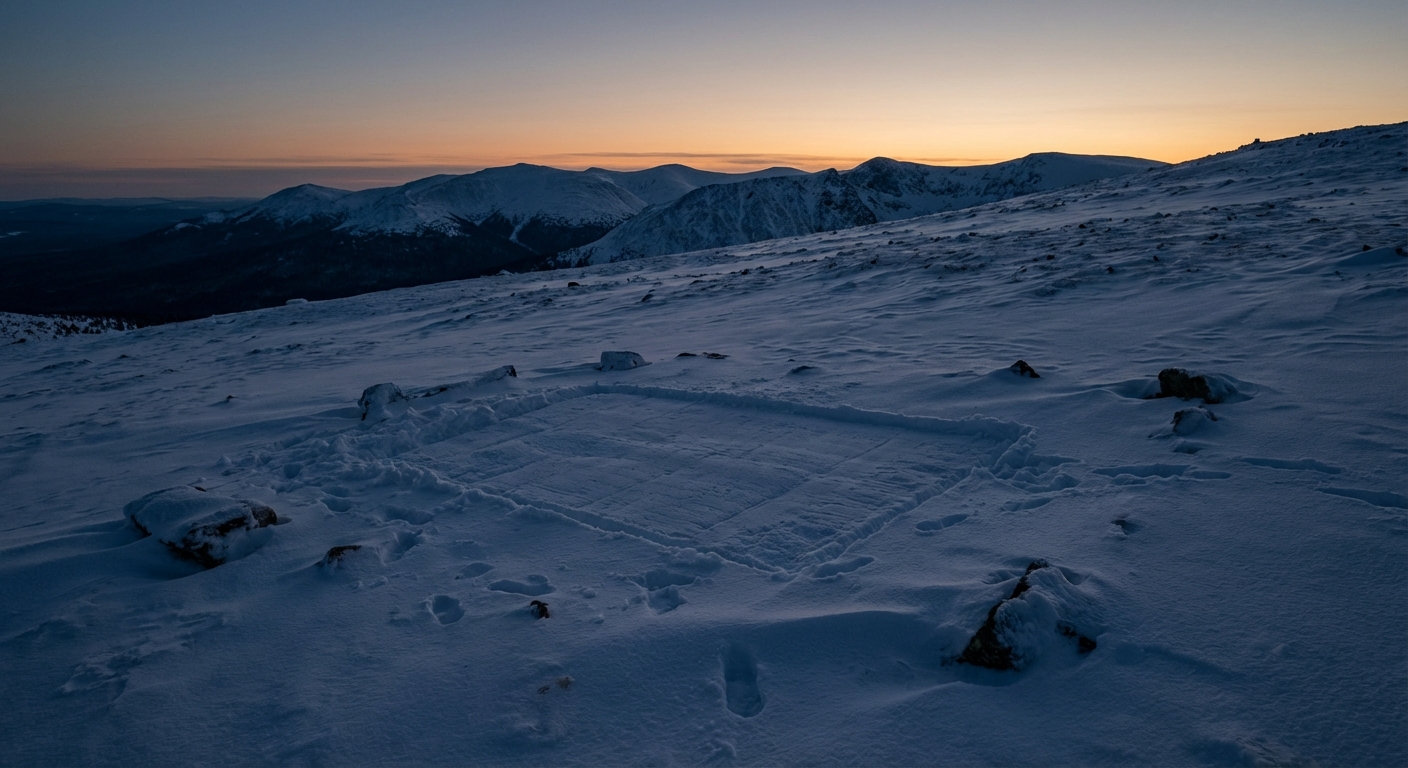
The claim that the Dyatlov Pass incident was the subject of an official or deliberate “cover-up”—often summarized as the “Dyatlov Pass cover-up claims”—alleges that Soviet or later Russian authorities concealed facts, suppressed evidence, or mischaracterized the cause of the deaths of nine hikers in February 1959. This article treats that assertion as a claim to be evaluated: it summarizes the allegation, surveys the documentary and scientific record, and explains which parts are documented, which are inferred, and which lack reliable support.
What the claim says
Broadly, the Dyatlov Pass cover-up claims assert that one or more authorities intentionally hid, altered, or withheld evidence about what happened to the hikers—examples often cited include missing film and diary pages, unshared autopsy details, the presence of radioactivity on clothing, and unexplained severe internal injuries. Variants of the claim propose motives ranging from concealment of secret military tests to suppression of intelligence operations. Sources for these claims include family testimonies, secondary investigations, contemporary press reports, later interviews, and material circulated by researchers and enthusiasts.
What the claim says (short summary)
Key elements commonly repeated in cover-up narratives are: the tent was cut from the inside; some bodies had serious internal injuries without matching external wounds; some clothing showed traces of radioactivity; investigative files were incomplete or slow to be released; and later official explanations (including a 2020 prosecutor statement favoring an avalanche scenario) are framed by some as inconsistent with original findings. These elements are factual descriptions of what is alleged—whether they amount to intentional concealment is the central disputed point.
Where it came from and why it spread — Dyatlov Pass cover-up claims
Origins: The earliest public record of investigative work dates to 1959, when Soviet authorities opened an inquest. The initial inquest and subsequent official paperwork—later made available in various forms—contained descriptions that some readers found puzzling (for example, tent cuts reportedly made from the inside, and later-discovered bodies with severe internal trauma). Over time, incomplete documentation, limited transparency during the Soviet era, and sensational early press accounts created fertile ground for alternate narratives.
Amplification: The claim spread through several mechanisms. First, archival releases since the 1990s enabled broader public access to previously unavailable documents and photographs, which were then interpreted through different frames. Second, books, documentaries, and internet communities amplified unusual details (missing film, damaged bodies, alleged radiation), sometimes without consistent sourcing. Third, scientific re-examinations and a 2020 prosecutorial summary that emphasized a natural avalanche explanation prompted pushback from people who expected a different official verdict, which further fueled cover-up narratives. Media and social platforms accelerated distribution, and competing cultural narratives about Soviet secrecy and later institutional mistrust reinforced acceptance of conspiratorial frames.
What is documented vs what is inferred
Documented (primary and secondary sources):
- Investigative records from 1959 exist and describe the tent as cut from the inside and the unusual distribution and condition of bodies; these records form the factual baseline of the case.
- Forensic reports and contemporaneous medical notes described complex injuries: several occupants were found with chest fractures and skull injuries; some soft-tissue damage and missing facial tissue were reported for bodies recovered later. These observations are documented in the case files and summarized in secondary sources.
- Some clothing items later tested showed low-level radioactivity; Russian investigators identified the East Ural radioactive trail as a plausible source because some hikers had previously visited contaminated areas—this explanation appears in prosecutorial materials.
- In July 2020 Russian prosecutors announced that an avalanche-type scenario was the most supported official explanation, and independent scientific work (notably the 2021 slab-avalanche modeling by Puzrin and Gaume) argued that a localized slab avalanche could plausibly account for many physical facts. These later studies and statements are publicly available.
Inferred or disputed:
- Intentional suppression or alteration of evidence: while gaps and redactions exist in archived documents, direct evidence that investigators deliberately falsified or suppressed key findings for political ends is not documented in primary records accessible to researchers. The existence of missing items (films, diary pages) is reported, but the reasons for those gaps are disputed and not definitively proven.
- Claims that the KGB or other agencies carried out clandestine operations that directly caused the deaths are based on circumstantial items (e.g., reports of possible intelligence links, lost materials) and speculative reconstruction; authoritative documentary proof tying agency action to the deaths has not been produced in the public record. TASS and some researchers have renewed KGB-related claims, but these are contested.
- Interpretations of injuries as uniquely requiring violent external force: forensic summaries describe severe internal injuries, but whether those require human violence, large machinery, or can be produced by natural compressive forces (as in some avalanche models) is the subject of scientific debate. Different experts have reached different technical conclusions.
Common misunderstandings
- “All documents were sealed forever”: Not accurate. Many case materials were released or summarized decades after 1959; however, some items are incomplete, and the Soviet-era handling of files and later archival processes produced gaps that complicate reconstruction.
- “Official avalanche verdict equals cover-up admission”: The 2020 prosecutorial statement concluding an avalanche-type mechanism does not, by itself, prove a prior cover-up. It represents a later interpretation based on re-analysis and available records; critics argue it fails to address outstanding anomalies. Both positions cite documented items and reach different inferences.
- “Missing film or diaries prove conspiracy”: Missing or damaged materials are suspicious to some observers, but their absence has multiple plausible explanations (loss, deterioration, selective archiving, or handling errors) that do not require intentional concealment. Publicly available prosecutors’ materials discuss missing items without concluding malicious removal.
Evidence score (and what it means)
- Evidence score: 42 / 100
- Drivers of the score:
- Availability of primary investigative records from 1959 and later prosecutorial materials (raises score because there are original documents).
- Independent scientific analyses (2021 slab-avalanche modeling and follow-up expeditions) that provide a plausible natural mechanism for many observations (raises score).
- Persistent anomalies (severe internal injuries, incomplete materials, and some contested forensic interpretations) that are not fully reconciled by available documentation (lowers score).
- Conflicting narratives and partisan amplification in media and online communities reduce clarity; some claims rely on inference rather than primary documentation (lowers score).
Evidence score is not probability: The score reflects how strong the documentation is, not how likely the claim is to be true.
What we still don’t know
Several factual and interpretive gaps remain. The reasons certain materials are missing (select lost film, partial diaries) are not fully explained in the public record. Some forensic details—particularly the cause of the severe internal chest and skull injuries reported for several bodies—are still debated: primary treatment of autopsy notes is available in part, but modern re-analysis has limits due to decomposition and archival completeness. The motive or mechanism (if any) for intentional concealment has not been demonstrated with direct documentary proof. Multiple plausible explanations remain open, and experts disagree on which best fits the totality of documented evidence.
FAQ
What evidence supports the Dyatlov Pass cover-up claims?
Proponents cite several documented anomalies—missing film and diary material, incomplete or redacted archival files, reports of radioactivity on clothing, and apparently unusual injuries in autopsy summaries. These are real points in the record, but the existence of anomalies is not the same as demonstrated intentional concealment. Publicly available prosecutor summaries and scientific studies address some anomalies while leaving others unresolved.
Did modern investigations rule out a cover-up?
No definitive public record rules the question out. The 2020 prosecutorial conclusion in favor of an avalanche-type scenario and subsequent peer-reviewed modeling provide a plausible natural explanation for many observations, but critics argue those findings do not resolve every anomaly. The public record contains both re-analyses that support natural causes and continuing questions about missing or ambiguous materials. Where sources conflict, the conflict is real and should be acknowledged rather than smoothed over.
Are claims about KGB involvement documented?
Some researchers and media pieces have pointed to circumstantial indicators—possible intelligence ties, lost materials, and oddities in the case file—but there is no publicly released documentary proof that definitively ties a specific intelligence action to the deaths. State and independent researchers have presented competing interpretations; assertions that intelligence agencies caused or covered up the deaths remain unproven in the publicly available record.
What sources are most useful for someone who wants to check the evidence themselves?
Primary documents from the 1959 inquest and later prosecutorial summaries (released over time) are the best starting point; they are complemented by peer-reviewed analyses such as the 2021 slab-avalanche modeling (Puzrin & Gaume) and reputable investigative journalism that synthesizes records and expert views. Researchers should prioritize original case files, forensic reports where available, scientific studies, and careful reporting that cites those sources.
This article is for informational and analytical purposes and does not constitute legal, medical, investment, or purchasing advice.

Science explainer who tackles space, engineering, and ‘physics says no’ claims calmly.