
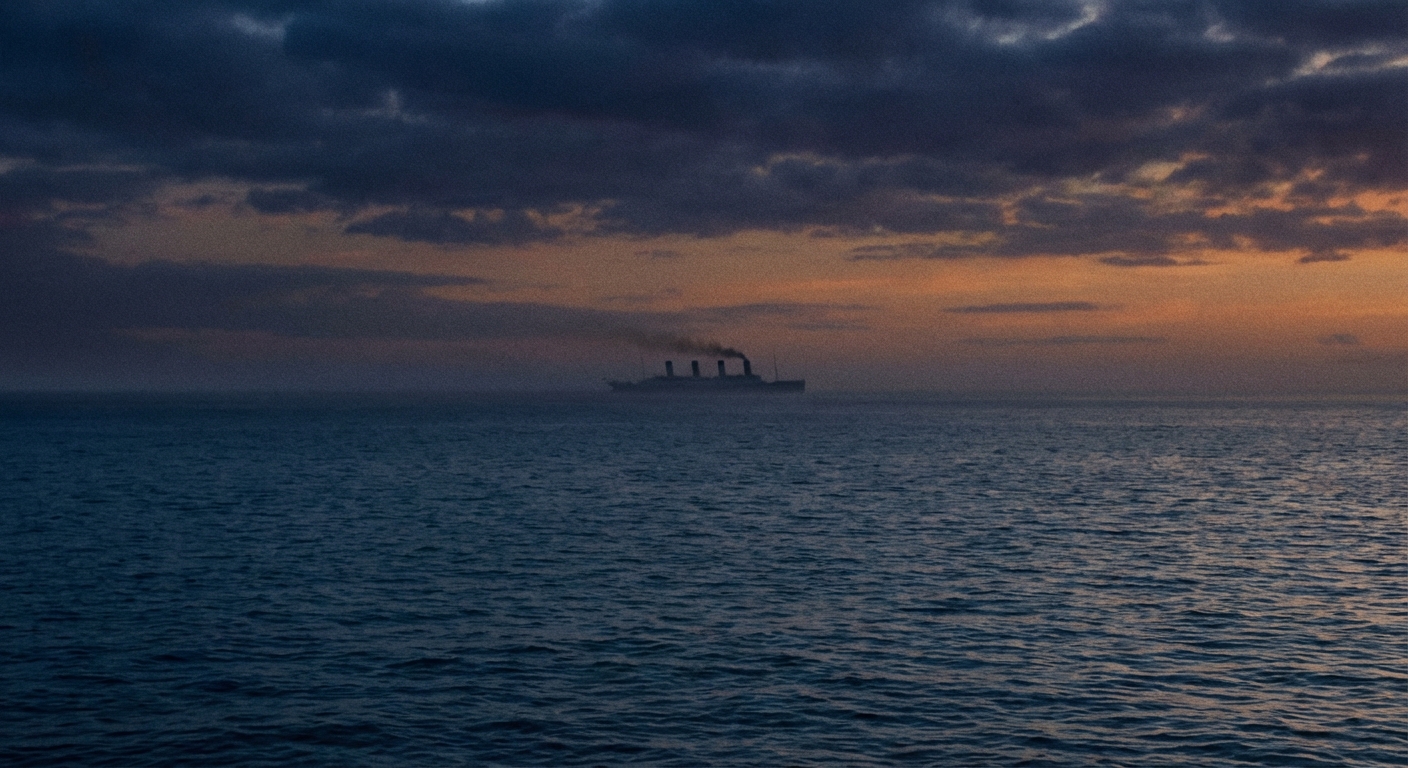
The “Titanic ship swap” claim asserts that the vessel that sank on 15 April 1912 was not the new RMS Titanic but her near-identical sister ship, RMS Olympic, disguised to allow an insurance fraud or other cover-up. This article treats that account strictly as a CLAIM, surveys where it originated, what documentary and physical evidence exists, what reputable historians and official inquiries say, and why the story has persisted. The phrase “Titanic ship swap claims” is used in this article as the central topic under review.
What the claim says
The central claim—often called the Olympic–Titanic “switch” theory—argues that White Star Line (or its corporate owners) deliberately swapped the identities of Titanic and her sister ship Olympic and then arranged for the (allegedly disguised) ship to be lost at sea so the company could collect insurance or otherwise conceal damage. Proponents point to similarities between the two ships, repairs to Olympic after collisions and incidents in 1911–1912, alleged anomalies in visual evidence and survivor testimony, and circumstantial financial motives as support for the idea. Major versions have been popularized in books and websites since the late 20th century.
Where it came from and why it spread
Modern public attention to the switch idea largely dates to the late 20th century. English writer Robin Gardiner proposed an elaborate version of the switch in his book Titanic: The Ship That Never Sank?, arguing that repairs to Olympic after her 1911 collision and other events created an opportunity and motive for a swap. Gardiner’s work received attention because it assembled many circumstantial points into a single narrative. Subsequent authors and websites have amplified his account and added new (and sometimes contradictory) details.
The claim spread for a few reasons. First, Olympic and Titanic were sister ships with very similar exterior forms, so casual observers can find visual similarities. Second, Olympic did suffer notable incidents (for example a 1911 collision with HMS Hawke) that required repair, which conspiracy theorists treat as suspicious. Third, the dramatic nature of the Titanic disaster made any alternate explanation emotionally and narratively attractive, and later pop-cultural treatments and internet forums amplified speculative accounts. Historians and maritime researchers have repeatedly examined and disputed the theory.
What is documented vs what is inferred
Documented facts (primary/official sources):
- Official inquiries and contemporary reports: The British Wreck Commissioner’s Inquiry and the U.S. Senate hearings of 1912 collected testimony from survivors, crew, White Star Line officials and experts; their records document the ship’s construction, voyage, collision with an iceberg, evacuation, and other contemporaneous evidence. These inquiry records are archived and publicly available.
- Physical identification of the wreck: Oceanographic expeditions led by Robert Ballard and teams from institutions such as WHOI located and photographed the wreck in 1985; imagery and recovered data (for example boilers and hull features) were used to identify the wreck as the Titanic rather than Olympic. Ballard’s expeditions documented the wreck’s two large sections and specific features consistent with Titanic’s plans.
- Shipyard records and repair logs: Harland & Wolff and White Star Line documents, as well as contemporary press and trial records, show Olympic suffered damage in 1911 and underwent repairs; they also show construction differences and yard numbers that distinguish Titanic and Olympic in official records. Researchers who have examined these primary records report no clear proof of a covert identity swap in shipyard logs.
Inferred or disputed points (where proponents rely on interpretation rather than direct proof):
- That Olympic was so badly damaged in 1911 that her owners had motive and opportunity to disguise her and pass her off as Titanic. While Olympic was damaged and repaired, maritime historians who have inspected the repair records and dockyard photographs conclude the damage did not require—nor is there evidence of—the wholesale structural substitutions claimed by switch proponents.
- That insurance or corporate motives (for example a payout) provided a clear financial incentive to commit a large-scale deception. Contemporary insurance and inquiry records indicate Titanic’s value and insurance situation were publicly discussed at the time and that the vessel was not secretly reinsured to a dramatically higher sum shortly before sailing—a frequent claim in switch narratives lacks primary-document support.
- That photographs or wreck features show mismatches consistent with Olympic rather than Titanic. Claims about paint color, porthole counts, or a small number of visible features have been examined and explained by experts as misunderstandings of photographic conditions, minor refits or differences between plans and field observations. The seabed remains and detailed surveys align with Titanic’s documented design in multiple respects.
Common misunderstandings
Several recurring errors and misunderstandings help propagate the switch claim:
- Equating similarity with identity: Olympic and Titanic were sister ships built to the same class, so they looked similar by design; similarity alone is not evidence of substitution.
- Overreading repair work: Proponents sometimes claim that repair photographs show wholesale replacement of forward hull sections implying a later physical mismatch. Detailed archival work and technical assessments find the documented repairs were consistent with the collision reports and not evidence of a covert identity swap.
- Selective use of testimony and press reports: Contemporary newspapers, inquiry transcripts, and second-hand reports are often quoted selectively in switch narratives; full inquiry records provide context that usually weakens the inference of a planned swap.
- Misstating insurance facts: The claim that Titanic’s insurance was suddenly and massively increased immediately before sailing is not supported by primary records; inquiry testimony and insurance notices from the period indicate differing figures and do not confirm a late, large increase.
This article is for informational and analytical purposes and does not constitute legal, medical, investment, or purchasing advice.
Evidence score (and what it means)
- Evidence score: 18 / 100
- Drivers of the score:
- • Strong primary documentation exists for the Titanic disaster (official inquiries, shipyard records, and the 1985 wreck identification), which conflicts with core parts of the switch narrative.
- • The switch theory relies mainly on circumstantial interpretation of repair photos, press accounts, and inferred motives rather than on a single primary record proving a deliberate identity swap; key archival and technical analyses have not corroborated the central assertion.
- • Credible, detailed rebuttals by maritime historians and archivists exist and point to logical and logistical problems with a covert swap of two 45,000-ton ocean liners.
- • The positive identification of the wreck by oceanographic teams (matching hull features and artifacts) provides direct physical evidence that contradicts the claim that the wreck is Olympic.
Evidence score is not probability:
The score reflects how strong the documentation is, not how likely the claim is to be true.
What we still don’t know
There are unresolved or uncertain elements that keep the topic alive in public discussion:
- Because the switch claim is largely inferential, its proponents may point to small anomalies or gaps in the public record; distinguishing genuine archival gaps from misinterpretations requires continued access to primary records and technical study.
- Some photographic, repair or modification details of early 20th-century ships are complex to interpret without direct access to original plates and shipyard logs; while many historians have examined these, further archival research could continue to refine understanding.
- Public fascination and repeating online retellings can perpetuate minor contradictions out of proportion to their evidentiary weight; separating signal from noise requires continued critical archival and technical review.
FAQ
Q: What evidence shows the wreck is the Titanic and not Olympic?
A: The wreck discovered in 1985 was identified by multiple physical indicators (boilers, hull features, internal layout and fittings) consistent with Titanic’s plans and photographs; scientific expeditions and institutions (including WHOI and Robert Ballard’s team) documented these features during dives and imaging. That physical identification is a central point cited by professional maritime researchers.
Q: When and where did the “Titanic ship swap” claims originate?
A: The detailed modern form of the switch claim was popularized by Robin Gardiner in the late 20th century; earlier speculation about insurance motives and odd coincidences existed, but Gardiner’s book assembled many elements into an explicit swap narrative that later websites and commentators amplified. Researchers and historians have critiqued Gardiner’s methods and conclusions.
Q: Did Olympic undergo repairs that could explain the theory?
A: Olympic did sustain damage (notably a 1911 collision with HMS Hawke) and required repairs, which are documented in naval and shipyard records. Historians who examined those repair records conclude they do not provide direct evidence of a covert substitution of identities.
Q: Why do reputable sources reject the switch claim?
A: Reputable maritime historians and technical analysts point to the lack of primary-document support for an identity swap, the logistical improbability of secretly altering two nearly completed ocean liners in ways that would deceive crew and inspectors, and the physical identification of the wreck. These experts also show that many supposed anomalies have ordinary explanations in repair records, photographic conditions, or selective reading of sources.
Q: Where can I see the original inquiry records or the wreck documentation?
A: Official inquiry transcripts and reports are archived (for example in the UK National Archives and in published inquiry volumes), and the 1985 wreck expedition reports and images were published by institutions such as Woods Hole Oceanographic Institution and by expeditions led by Robert Ballard. Primary records are accessible to researchers and the public through those institutions.

Science explainer who tackles space, engineering, and ‘physics says no’ claims calmly.