
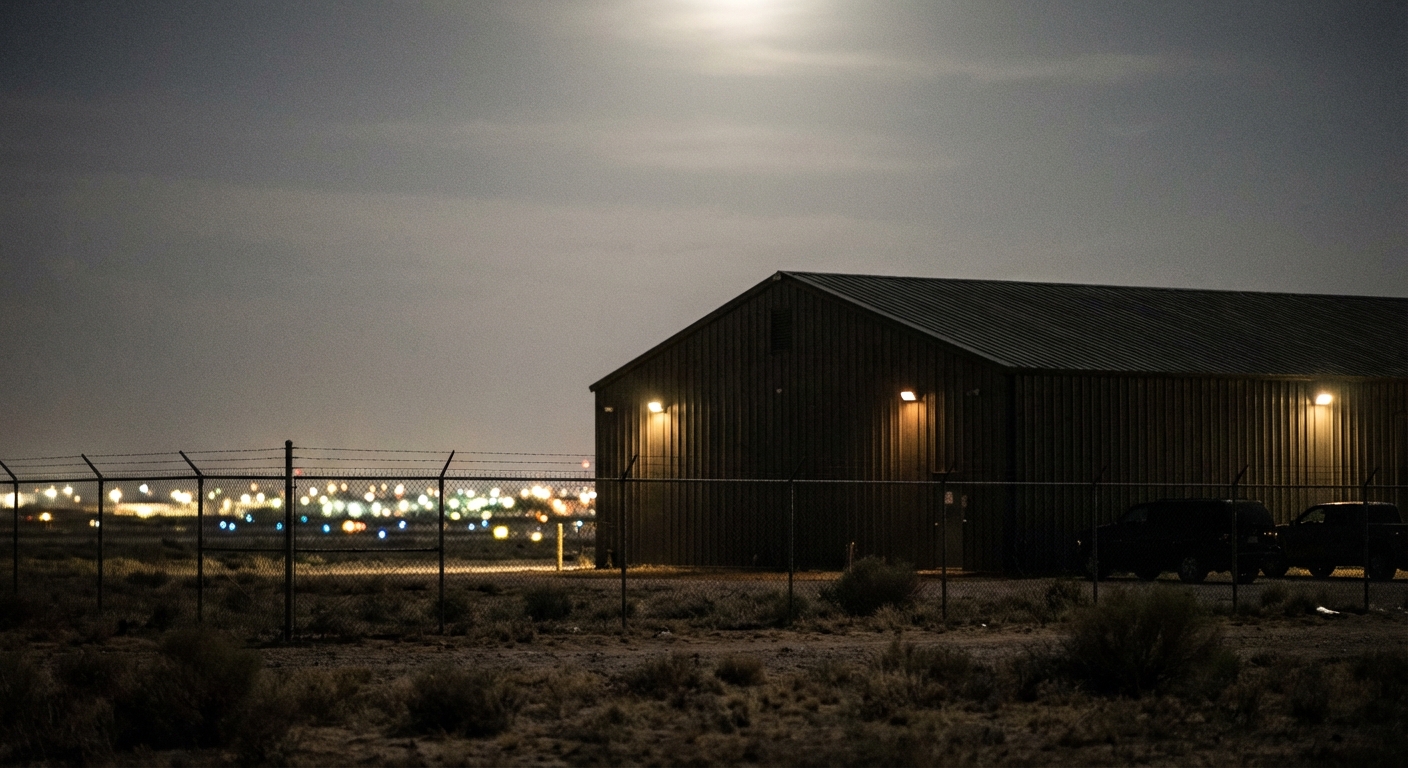
Intro: This article offers a responsible, evidence-focused verdict on the claim commonly described as an “Area 51: alien cover-up.” We treat the subject as a claim, not an established fact, and evaluate what is documented about the Groom Lake facility, what credible sources say about alleged extraterrestrial materials or bodies, and where important gaps remain.
Verdict: what we know, what we can’t prove
What is strongly documented
1) Area 51 (the Groom Lake test facility) exists and was a U.S. government testing ground for high‑altitude and classified aircraft programs. The CIA’s history of U‑2 and Oxcart activities and other declassified documents explicitly identify Groom Lake/Area 51 as a development and testing location for the U‑2 and related reconnaissance programs. These official releases formally acknowledged the facility for the first time in widely available declassified records.
2) Many UFO sightings reported near Groom Lake in the 1950s and later are plausibly linked to secret test flights of high‑altitude or novel aircraft (for example U‑2 flights at altitudes far above commercial airliners), and the CIA’s declassified materials discuss how test flights produced unexplained sightings by commercial pilots and the public. That historical context helps explain why UFO reports clustered around the area.
3) The U.S. government (Defense Department / intelligence community) has acknowledged investigating unidentified aerial phenomena in recent years, and public reports such as the 2021 ODNI/DOD assessments show that official investigators treat some sightings as unexplained but have not presented evidence of extraterrestrial vehicles. These reports emphasize gaps in data and the need for further study rather than confirming non‑terrestrial origins.
What is plausible but unproven
1) It is plausible that highly classified U.S. aircraft projects were hidden with intentional secrecy and occasional misinformation to protect programs; historians and journalists note that secrecy—rather than extraterrestrial activity—can produce myths that persist for decades. Several credible histories describe how secrecy around black projects created fertile ground for speculation. However, plausible historical secrecy is not the same as evidence that non‑terrestrial hardware was recovered.
2) Anecdotal testimony and long‑running allegations—most prominently the accounts of Robert (“Bob”) Lazar and similar witnesses—remain part of the historical record and have influenced public belief. Lazar’s public claims about a site called “S‑4” and reverse engineering of alien craft are widely reported and have had measurable cultural impact. But Lazar’s assertions about employment, academic credentials, and verifiable documentary proof have been challenged by journalists and investigators; some of his verifiable claims (such as attendance at MIT/Caltech) lack corroborating records, and independent checks of alleged supporting documents produced by Lazar have raised doubts. The existence of repeated, detailed testimony is a relevant data point, but testimony without independent documentation remains unproven.
What is contradicted or unsupported
1) There is no publicly available primary‑source, verifiable physical evidence—declassified government report, authenticated recovered material, or peer‑reviewed scientific analysis—showing that Area 51 or any other U.S. facility houses recovered non‑terrestrial craft or biological remains. Major declassified collections and official statements make clear Area 51’s role in aircraft testing but do not document alien hardware or bodies. In short: the strongest, most direct public documents do not support the central extraterrestrial claim.
2) Many investigative accounts that tested specific claims (for example, Lazar’s education and employment history or the supposed physical traces at Papoose Lake) found inconsistencies, lack of records, or negative results when cross‑checked with institutional records and satellite imagery. These checks weaken the reliability of those testimonial claims. That does not strictly falsify every possible testimony, but it reduces confidence in the parts that are verifiable and calls into question unverified extensions of the stories.
Evidence score (and what it means)
- Numeric score: 22/100
- The documentation that Area 51 existed and was used for classified aircraft testing is robust and well‑sourced (positive driver).
- There is a long trail of testimonial claims (Bob Lazar and others) but those claims contain verifiable inconsistencies and lack independent physical evidence (negative driver).
- Official UAP/UFO reviews acknowledge unexplained sightings, but those reports do not provide evidence linking Area 51 to recovered extraterrestrial artifacts (neutral/limiting driver).
- Primary sources declassified under FOIA describe testing and cover arrangements, which explains many UFO sightings without invoking non‑terrestrial explanations (reduces need to posit aliens).
- Independent investigatory checks (journalistic and academic) that have scrutinized the most prominent claims find important gaps and contradictions (reduces confidence).
Evidence score is not probability:
The score reflects how strong the documentation is, not how likely the claim is to be true.
Practical takeaway: how to read future claims
1) Distinguish claim types: first‑hand testimony, leaked documents, official declassified records, and physical scientific evidence are very different kinds of support. Testimony can be informative but needs independent corroboration; declassified documents about aircraft programs are high‑value sources for the historical uses of Groom Lake.
2) Prefer primary, original sources when possible. When a claim cites a document, check whether the document is publicly available, authenticated, and placed in context (who wrote it, when, and why). Declassified CIA histories and FOIA releases are primary sources that explain much of Area 51’s documented history.
3) Treat extraordinary claims proportionally: claims that a government site holds non‑terrestrial artifacts require stronger corroboration than claims that highly classified aircraft were tested there. Good corroboration would include authenticated chain‑of‑custody documentation, verifiable physical analyses published or vetted by independent experts, or multiple, independently verifiable sources. Those are currently absent in the public record.
This article is for informational and analytical purposes and does not constitute legal, medical, investment, or purchasing advice.
FAQ
Q: What is the best primary evidence that Area 51 exists and was used for secret aircraft testing?
A: Declassified CIA histories and FOIA‑released documents (the agency’s U‑2/Oxcart history and related FOIA files) identify Groom Lake/Area 51 and describe its use as a secret aircraft testing and training site in the 1950s–1970s; these are primary documentary sources for the base’s historical role.
Q: Do official U.S. government reports confirm that Area 51 houses alien craft?
A: No publicly available official government reports have provided authenticated physical evidence that Area 51 contains extraterrestrial craft or remains. Official declassified histories describe aircraft testing; recent UAP reports acknowledge unexplained aerial incidents but do not produce evidence of recovered extraterrestrial materials tied to Area 51.
Q: Are the Bob Lazar accounts reliable evidence of an alien cover‑up at Area 51?
A: Lazar’s testimony is a high‑profile component of the Area 51 mythos, but multiple journalistic and investigative checks have found inconsistencies and lack of corroborating records for some of his verifiable claims (for example, academic credentials). That lowers—but does not by itself categorically falsify—confidence in his broader assertions, which remain unverified by independent primary documentation. Treat such testimony as unproven unless corroborated by independent evidence.
Q: What would materially change this verdict?
A: Presentation of authenticated, primary physical evidence (for example, scientifically analyzed material with an unbroken chain of custody made available to independent experts, or credible official documentation explicitly describing recovered non‑terrestrial artifacts) would change the assessment. Until such evidence is publicly available and vetted, the documentation remains insufficient.
Q: How should I evaluate new Area 51 alien cover‑up claims I encounter online?
A: Ask three questions: (1) Is the claimed source a primary, authenticated document or scientific analysis? (2) Has the claim been corroborated by independent, reputable investigators or institutions? (3) Could secrecy, misidentified classified aircraft, or witness error plausibly explain the observation? If the answers fail the first two tests, treat the claim as unproven.

Geopolitics & security writer who keeps things neutral and emphasizes verified records over speculation.