
This article tests the claim known as the “JFK Assassination Conspiracy” against the strongest documented counterevidence and expert explanations. It treats the subject as a claim, summarizes official findings and later re‑analyses, and highlights where documentation is solid, disputed, or missing. The primary search term for this analysis is: JFK Assassination Conspiracy.
The best counterevidence and expert explanations for JFK Assassination Conspiracy claims
-
Warren Commission conclusion and supporting documentary record: The Warren Commission concluded that Lee Harvey Oswald fired the shots that killed President Kennedy and that there was no evidence Oswald acted in concert with others. The Commission published an 888‑page report plus volumes of hearings and exhibits documenting ballistic tests, witness statements, and medical material used to reach that conclusion. This official, contemporaneous record remains a primary source for counterarguments to conspiracy claims.
Limit: The Warren Report has been criticized for investigative gaps and for relying on interpretations (for example the single‑bullet theory) that later investigators revisited; those criticisms are part of the later dispute over conspiracy claims.
-
Ballistics and the “single‑bullet” evidence (CE 399): The physical evidence catalogued by investigators includes the nearly intact bullet known as Commission Exhibit 399 (CE 399), fragments recovered from the presidential limousine and Governor Connally, and ballistic tests linking Western Cartridge Company 6.5mm ammunition to the Carcano rifle found on the sixth floor of the Texas School Book Depository. The HSCA and other technical reviews performed neutron activation analysis and other tests that, according to their published results, were consistent with CE 399 and some of the fragments originating from the same batch of ammunition—an outcome cited by analysts defending the lone‑gunman hypothesis.
Limit: The interpretation of CE 399 and fragment tests (including Neutron Activation Analysis) has been contested in technical and methodological critiques—the tests are not free of controversy, and critics argue chain‑of‑custody and sampling issues limit confidence. The disagreement over what CE 399 proves is a central technical dispute between proponents and critics.
-
Zapruder film and visual sequencing: The Abraham Zapruder home‑movie remains the most closely analyzed moving image record of the event. Frame‑by‑frame photographic and video analyses have been used to sequence victim reactions, estimate timing between observable effects, and test whether the timing is consistent with three shots from the Texas School Book Depository. The National Archives holds and curates the official Zapruder collection and related materials, which researchers use for timing and trajectory reconstructions.
Limit: Visual analysis establishes timing constraints but does not by itself uniquely identify shooter location or exclude all alternative hypotheses; conclusions depend on assumptions about vehicle motion, shooter position, and witness reaction timing.
-
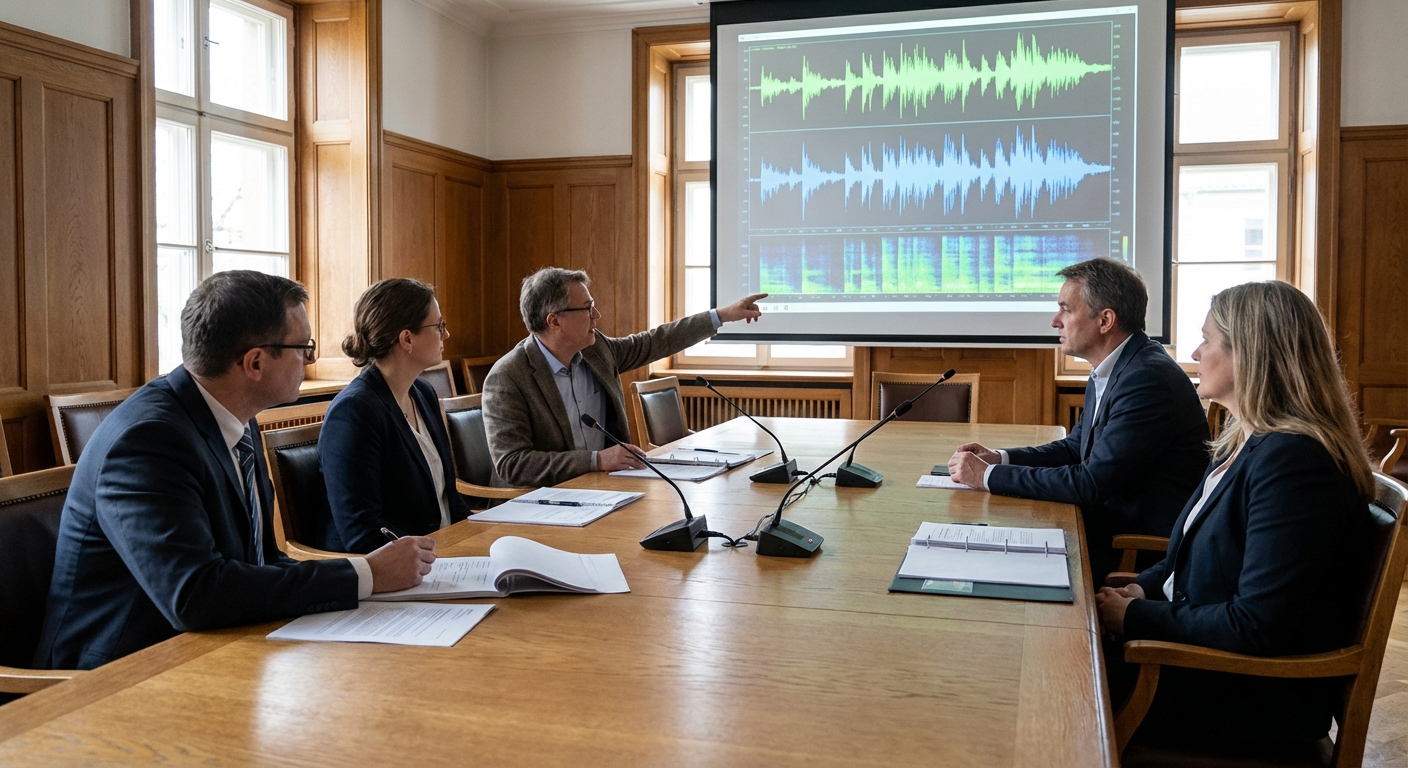
HSCA review and the contested acoustic evidence: The House Select Committee on Assassinations (HSCA, 1979) re‑examined the case and—based in part on an acoustic analysis of a Dallas police recording—reported a “high probability” that more than one gunman fired; this was a major reason the committee stated that Kennedy was “probably assassinated as a result of a conspiracy.” However, the acoustic finding was explicitly reviewed by a National Research Council (National Academy of Sciences) panel (Committee on Ballistic Acoustics), which concluded the acoustic analysis did not reliably demonstrate a second shooter and found methodological problems in the HSCA consultants’ work. These two official conclusions (HSCA vs. the NRC re‑analysis) conflict and are among the most widely discussed technical divergences in the literature.
Limit: The acoustic debate shows how two independent expert panels can reach different results from the same raw recordings after different assumptions about synchronization and signal origin are applied. Because they conflict, neither result should be treated as definitive without qualifications.
-
ARRB depositions and archival releases that clarified and corrected the record: The 1990s Assassination Records Review Board and its subsequent transfers to the National Archives led to release of millions of pages of documents, depositions, and medical testimony. The ARRB work clarified provenance for many documents, brought additional testimony into the public record, and in some cases exposed inconsistencies or uncertainties (for example in autopsy material handling). While the ARRB did not itself pronounce on conspiracy versus lone gunman, its declassification efforts produced material that researchers use both to challenge and to defend conspiracy narratives.
Limit: Declassification expanded the documentary base but also revealed unresolved questions (e.g., questions about autopsy photographs, chain of custody issues) that fuel differing interpretations rather than settling them.
-
Independent peer‑review and follow‑up studies: Several scientific re‑analyses published after the HSCA (including the NRC/CBA review and later peer‑reviewed articles) re‑examined acoustic, photographic, and ballistic claims and generally found important methodological weaknesses in some studies that had supported conspiracy interpretations, while recognizing that not all questions were closed. Where re‑analyses reached different conclusions, authors typically documented the methodological differences.
Limit: Scholarly papers and re‑analyses do not always converge; technical disagreement persists in parts of the literature and new methods have sometimes re‑opened older disputes. Where sources conflict, the conflict is documented and should be treated as unresolved rather than assumed to tip the balance. 0search3
Alternative explanations that fit the facts
When counterevidence is weighed against claims of a coordinated conspiracy, several explanations remain plausible to varying degrees, depending on which pieces of evidence are given most weight. These alternatives are offered strictly as analytic models, not as proven facts:
-
Lee Harvey Oswald acted alone; observed timing, ballistics, and the physical chain of evidence (CE 399 and fragments, Carcano rifle, Zapruder sequencing) can be arranged into a coherent single‑shooter reconstruction by many investigators. Official contemporaneous documentation (Warren Commission) and some later forensic analyses support versions of this model.
-
One or more additional shooters were present: this view rests heavily on witness reports, interpretations of the Zapruder film, and the HSCA’s acoustic interpretation. It is supported by some analyses but contradicted by other expert reviews (notably the NRC/CBA acoustic rebuttal). The evidence for multiple shooters is contested and depends heavily on how disputed data (e.g., the Dictabelt recording) are interpreted.
-
Evidence handling and documentation issues produced confusion: a less dramatic but important possibility is that errors, poor chain‑of‑custody practices, and incomplete documentation (especially in the immediate aftermath) have produced ambiguities that conspiracy narratives exploit. ARRB material and subsequent depositions exposed handling concerns that complicate definitive interpretations.
What would change the assessment
Because disagreements hinge on a few disputed data points and interpretive choices, the assessment of the conspiracy claim would shift materially if any of the following occurred:
-
Release of high‑quality, previously withheld primary records that directly document coordination or orders among identified third parties connected to the shooting, with verifiable chain of custody and corroborating material.
-
A new, independently verified acoustic synchronization that robustly places gunshot impulses at the precise moment of the shooting and establishes a separate firing location—accepted by multiple expert panels across disciplines.
-
Conclusive forensic re‑examination (with modern, transparent protocols) of CE 399 and the fragments that shows contamination, substitution, or a demonstrable mismatch with the rifle attributed to Oswald.
-
Validated new eyewitness or documentary evidence (communications, photographs, or authenticated recordings) that reliably place additional shooters or coordinators at specific locations and times linked to the shooting.
This list is not exhaustive; it illustrates how new primary, well‑documented, and independently verified evidence would be necessary to overturn or solidify existing interpretations.
This article is for informational and analytical purposes and does not constitute legal, medical, investment, or purchasing advice.
Evidence score (and what it means)
Evidence score is not probability:
The score reflects how strong the documentation is, not how likely the claim is to be true.
- Evidence score: 47 / 100.
- The documentation base is extensive (official Warren Report, HSCA, ARRB releases, National Archives holdings), which increases verifiability and allows independent re‑analysis.
- Key technical findings conflict (notably HSCA acoustic conclusion vs. the National Research Council rebuttal), lowering confidence in any single interpretive outcome.
- Physical evidence (CE 399, fragments, rifle, Zapruder film) is real and repeatedly analyzed, but interpretations depend on contested forensic methods and handling histories.
- ARRB declassification improved transparency but also exposed handling and documentation gaps that sustain competing narratives.
- Overall: documentation is abundant but internally inconsistent on critical technical points, producing moderate documentation strength but persistent uncertainty.
FAQ
Q: Does the available documentation prove the JFK Assassination Conspiracy claim?
A: No definitive proof of an organized conspiracy is present in the public documentary record. Official reports are divided: the Warren Commission concluded Oswald acted alone (Warren Report), while the HSCA later reported a probable conspiracy primarily on acoustic grounds—an acoustic conclusion that the National Research Council later found unreliable. Because these official sources conflict on key technical points, the documentary record does not prove the conspiracy claim.
Q: What is the strongest single piece of counterevidence against a conspiracy?
A: The strongest counterevidence commonly cited is the combination of ballistics, the physical exhibits (including CE 399), and timing reconstructed from the Zapruder film, which many analysts argue are consistent with a single shooter from the Texas School Book Depository. Those elements are documented in official reports and later forensic tests, though interpretations remain contested.
Q: Why did the HSCA say there was a “probable conspiracy” and why is that disputed?
A: The HSCA’s “probable conspiracy” finding was driven mainly by an acoustic analysis of a Dallas police recording that its consultants interpreted as containing four gunshot impulses, implying a second shooter. The National Research Council (Committee on Ballistic Acoustics) later reviewed the acoustic work and concluded the analysis did not demonstrate a grassy‑knoll shot, finding methodological faults. This direct conflict between official panels explains why the HSCA conclusion is disputed.
Q: Could newly released records still change the assessment of JFK Assassination Conspiracy claims?
A: Yes. The ARRB‑era releases notably changed researchers’ access to documents; further credible primary documents (authenticated communications, previously withheld hard evidence, or transparent modern re‑analyses of physical evidence) could materially change the assessment, provided they are independently corroborated.
Q: Where can I see the original records used in these analyses?
A: The National Archives holds the JFK Assassination Records Collection including the Zapruder film and many related exhibits; ARRB records and HSCA reports are publicly available through archival repositories and libraries cited in this article. Access procedures and availability are described by the National Archives.

Geopolitics & security writer who keeps things neutral and emphasizes verified records over speculation.