
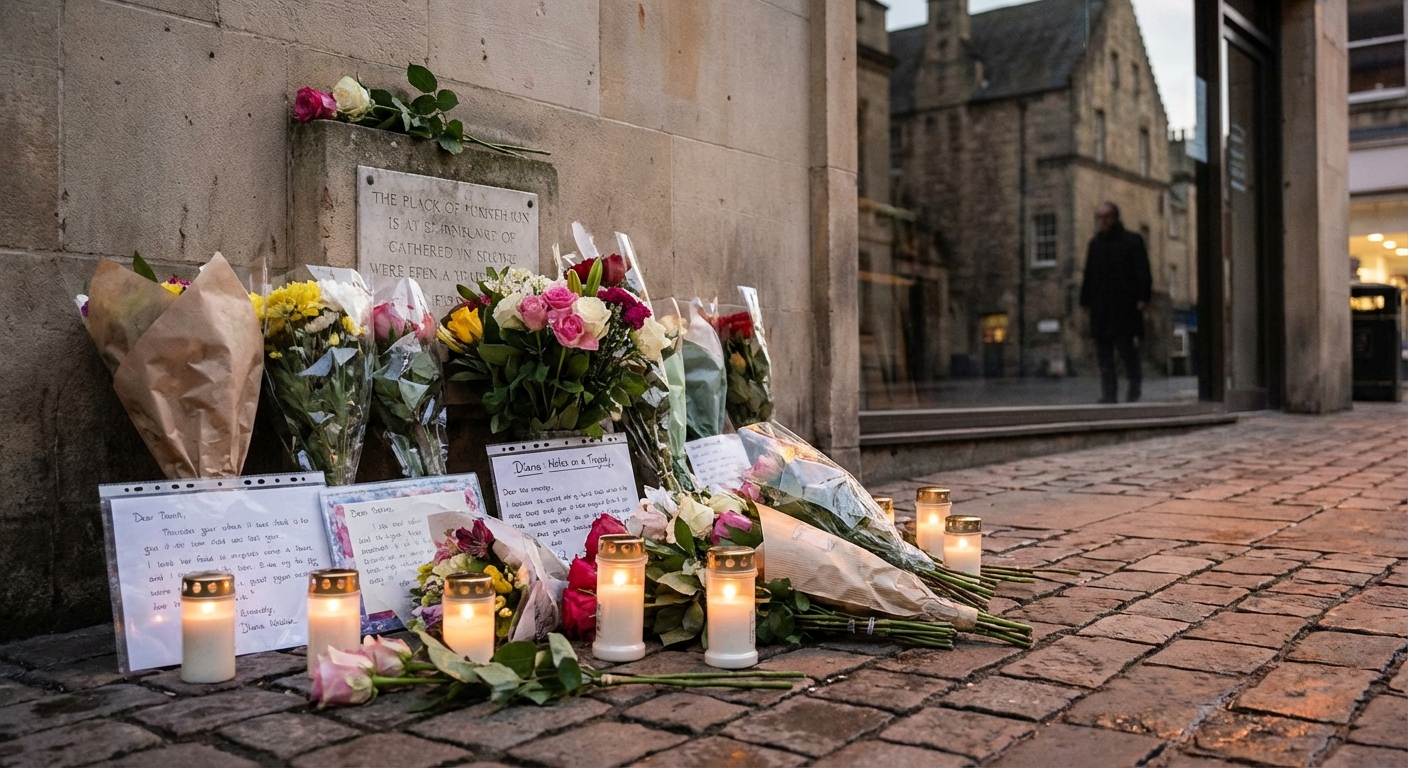
The claim known in public discussion as the “Princess Diana death conspiracy” alleges that the August 31, 1997 car crash in the Pont de l’Alma tunnel in Paris was not a tragic accident but the result of a deliberate plot or cover-up. In this article we treat that idea strictly as a claim: we summarize what proponents say, identify where the allegations originated, compare them with official investigations and independent evidence, and explain why this particular claim has endured.
This article is for informational and analytical purposes and does not constitute legal, medical, investment, or purchasing advice.
What the claim says
The broad claim—often phrased as a “Princess Diana death conspiracy”—has several overlapping versions. Typical assertions include that the crash was staged or arranged (sometimes naming intelligence services, the royal household, or other actors), that evidence was tampered with (for example blood samples, autopsy notes, or witness statements), and that important facts (Diana’s alleged pregnancy, communications monitoring, or the identity and behaviour of the driver) were concealed. Prominent public iterations of the claim have been driven most visibly by Mohamed Al-Fayed, father of Dodi Fayed, who long maintained the crash was deliberate rather than accidental. These allegations have been tested repeatedly in French and British official inquiries and in court-ordered inquests.
Where it came from and why it spread
The claim’s origins are multi-factorial. Public attention rose immediately after the crash because Princess Diana was a globally famous public figure and the circumstances—late-night departure from the Ritz, reports of photographers in pursuit, and the deaths of two high-profile occupants—were unusual and emotionally charged. Mohamed Al-Fayed advanced specific conspiracy allegations (including that MI6 or other actors had a role), and he pursued legal and public channels to press those theories over many years. High-profile assertions from a grieving, wealthy father amplified media coverage and public curiosity.
Several institutional and procedural factors also contributed to spread and persistence: conflicting early reports from French investigators, sensational tabloid coverage, delays and complexity in cross-border legal processes, the presence of incomplete or technical forensic details (to non-specialists), and later disclosures about unrelated journalistic misconduct (for example the Martin Bashir/Panorama revelations about how Diana was interviewed in 1995) that fed public distrust of institutions. Together these elements created fertile ground for claims to circulate and be re‑amplified by books, documentaries and internet forums. Academic research on conspiracy beliefs shows that emotionally salient events, institutional mistrust, and repeated media attention increase the likelihood that conspiracy narratives will form and persist.
What is documented vs what is inferred
Documented, independently verified findings:
- The French investigating magistrates who examined the crash in the years after 1997 concluded that driver Henri Paul had high levels of alcohol and that excessive speed were contributing factors; in 1999 the French inquiry cleared photographers of causing the crash while attributing primary responsibility to Paul and vehicle dynamics.
- The Metropolitan Police’s Operation Paget (a formal inquiry set up to examine allegations of conspiracy) published a detailed report in December 2006 that examined many specific allegations and concluded there was no evidence to support a conspiracy to murder the car’s occupants. The Operation Paget report and its supporting materials are publicly available.
- A British coroner’s jury at the 2007–2008 inquest found on April 7, 2008 that Diana and Dodi were “unlawfully killed” as the result of the “grossly negligent driving” of driver Henri Paul and the pursuing vehicles (the jury did not attribute the deaths to an intentional plot). The inquest heard around 250 witnesses and reviewed large volumes of evidence.
Plausible but unproven inferences (widely circulated but not independently established):
- That the crash was deliberately caused by an intelligence agency or by agents acting on behalf of the royal household. This has been a central allegation from some proponents (notably Mohamed Al‑Fayed) but it was not substantiated in Operation Paget or the coroner’s inquest. While some former intelligence officers offered testimony about general capabilities or past plans unrelated to Diana, no reliable, corroborated evidence surfaced tying a covert operation to the Paris collision.
- Allegations that key physical evidence was deliberately tampered with (for example, claims about substituted blood samples or altered post‑mortem notes) have been raised repeatedly in public discussion. Investigations examined those claims and identified procedural weaknesses in some early handling of samples; however, official reviews did not find proof of a deliberate, unlawful suppression or substitution that would indicate a staged killing. The Operation Paget report addressed many of these forensic claims in detail.
Contradicted or unsupported claims:
- Assertions that Diana was pregnant at the time and that a pregnancy was concealed have been directly tested; forensic analysis of stomach contents and related evidence reviewed by Operation Paget and by expert witnesses in the inquest found no reliable confirmation of pregnancy when she died.
- Claims that the French or British official findings were a cover‑up that concealed an assassination lack corroborating documentary or forensic evidence accepted by courts or the major criminal inquiries. Multiple official reviews reached conclusions inconsistent with a deliberate plot. That does not, by itself, end public debate, but it does mean these claims remain unsupported by the best-available official documentation.
Common misunderstandings
- Misunderstanding: “The inquest proved there was a conspiracy.” Reality: The 2008 inquest returned a verdict of unlawful killing by gross negligence (driver and following vehicles). The jury did not endorse a finding of deliberate assassination.
- Misunderstanding: “Because some procedures were imperfect, the entire official account must be false.” Reality: Procedural errors or evidence-handling weaknesses can raise legitimate questions; they do not automatically prove an alternative narrative. Investigations acknowledged some investigative limitations while still concluding there was no credible evidence of a planned killing.
- Misunderstanding: “Eyewitness disagreement means the official story is unreliable.” Reality: High-profile crashes frequently produce conflicting recollections; courts and inquiries weigh multiple evidence types (forensic tests, CCTV, phone records, expert reconstruction) rather than relying on single memory reports. Key forensic and reconstruction evidence was central to the official findings.
Evidence score (and what it means)
- Evidence score: 28 / 100.
- Drivers of this score: existence of extensive official investigations (Operation Paget; French magistrates; the 2008 inquest) that produced detailed reports and forensic findings (raises the baseline documentation quality).
- Drivers of this score: those official reports overwhelmingly found no credible evidence of a planned assassination (this lowers evidentiary support for the conspiracy claim).
- Drivers of this score: persistent unresolved questions and procedural criticisms (for example early evidence handling, leaks, and inconsistent press reporting) mean some claims cannot be absolutely disproven, and they keep uncertainty alive.
- Drivers of this score: strong public and media attention, repeated high-profile assertions by influential figures, and the availability of alternative narratives online amplify the claim despite weak documentary backing. Academic research shows such social and cognitive dynamics help conspiratorial explanations spread.
Evidence score is not probability:
The score reflects how strong the documentation is, not how likely the claim is to be true.
What we still don’t know
Even after multiple inquiries, some narrower factual details remain contested or imperfectly documented in public records: whether any small procedural errors in French evidence handling materially affected particular forensic measurements, the precise sequence of some eyewitness movements near the tunnel, and confidential intelligence‑related records that either do or do not exist in archives (some requests for intelligence documents were pursued in litigation but many files remain classified or unavailable). Importantly, lack of public access to every internal document does not, by itself, validate a conspiracy claim; it only leaves specific factual gaps. Researchers and journalists continue to examine archives and testimony, and new disclosures (if any) would be evaluated against the existing body of evidence.
FAQ
Q: What exactly did official investigations conclude about the Princess Diana death conspiracy claim?
A: The major official investigations—French judicial inquiries, the Metropolitan Police’s Operation Paget, and the 2007–2008 coroner’s inquest—examined allegations of a plot and concluded there was no credible evidence of a deliberate assassination. The inquest jury found unlawful killing by gross negligence (driver and pursuing vehicles), not a premeditated plot.
Q: Who has been the most prominent proponent of the Princess Diana death conspiracy claims?
A: Mohamed Al‑Fayed, father of Dodi Fayed (who died in the same crash), was the most visible and persistent public proponent of a conspiracy theory. He repeatedly alleged involvement by intelligence services and the royal household; those allegations were examined and rejected by the formal inquiries.
Q: Why did the Princess Diana death conspiracy claim spread so widely?
A: High public emotion around Diana’s death, sensational press coverage, high-profile claimants, procedural complexity across jurisdictions, and institutional mistrust all contributed. Psychological and communication research shows emotionally charged events, repetition, and institutional distrust help conspiracy narratives spread and persist.
Q: Does the unresolved nature of some documentary details mean the conspiracy claim could still be true?
A: Not necessarily. Gaps or imperfections in public records leave open specific factual questions, but multiple independent official inquiries examined the central allegations and found no evidence of orchestration. For a claim of this scale to change assessment, new, verifiable, and corroborated evidence would need to be published and validated. Until then, the claim remains unsupported by the strongest available official documentation.
Q: Where can I read the primary investigative reports myself?
A: The Operation Paget report and the coroner’s inquest transcripts are publicly available through official archives and major news organizations; the 1999 French magistrates’ findings were reported contemporaneously in reputable news outlets and legal records. See the cited sources in this article for direct starting points.

Geopolitics & security writer who keeps things neutral and emphasizes verified records over speculation.