
Scope and purpose: this timeline reviews the public record and major turning points behind the claim commonly summarized as “Elvis Is Alive.” It focuses on dated events, official statements, and widely circulated documents or media that have driven the claim’s persistence. The article treats the subject as a claim and evaluates documentation rather than asserting the claim’s truth.
Timeline: Elvis Is Alive — key dates and turning points
- January 8, 1935 — Elvis Aaron Presley born in Tupelo, Mississippi. This establishes the subject’s biographical baseline.
- August 16, 1977 — Elvis found unresponsive at his Graceland home; pronounced dead at Baptist Memorial Hospital (often reported as about 3:30 p.m.). Shelby County officials and major press reported the death and the medical examiner later summarized findings. These press and obituary reports are the primary contemporaneous public record of the death.
- August 18, 1977 — Funeral and public viewing at Graceland; thousands of mourners passed by the casket. The open-casket viewing and funeral procession were widely reported and witnessed by many attendees.
- September 1977 — The National Enquirer published a widely circulated photograph of Presley in his coffin; that issue sold in very large numbers and shaped public conversation about his death. The burial, the casket photo and the tabloid coverage became one of the most visible early drivers of both mourning and later scepticism.
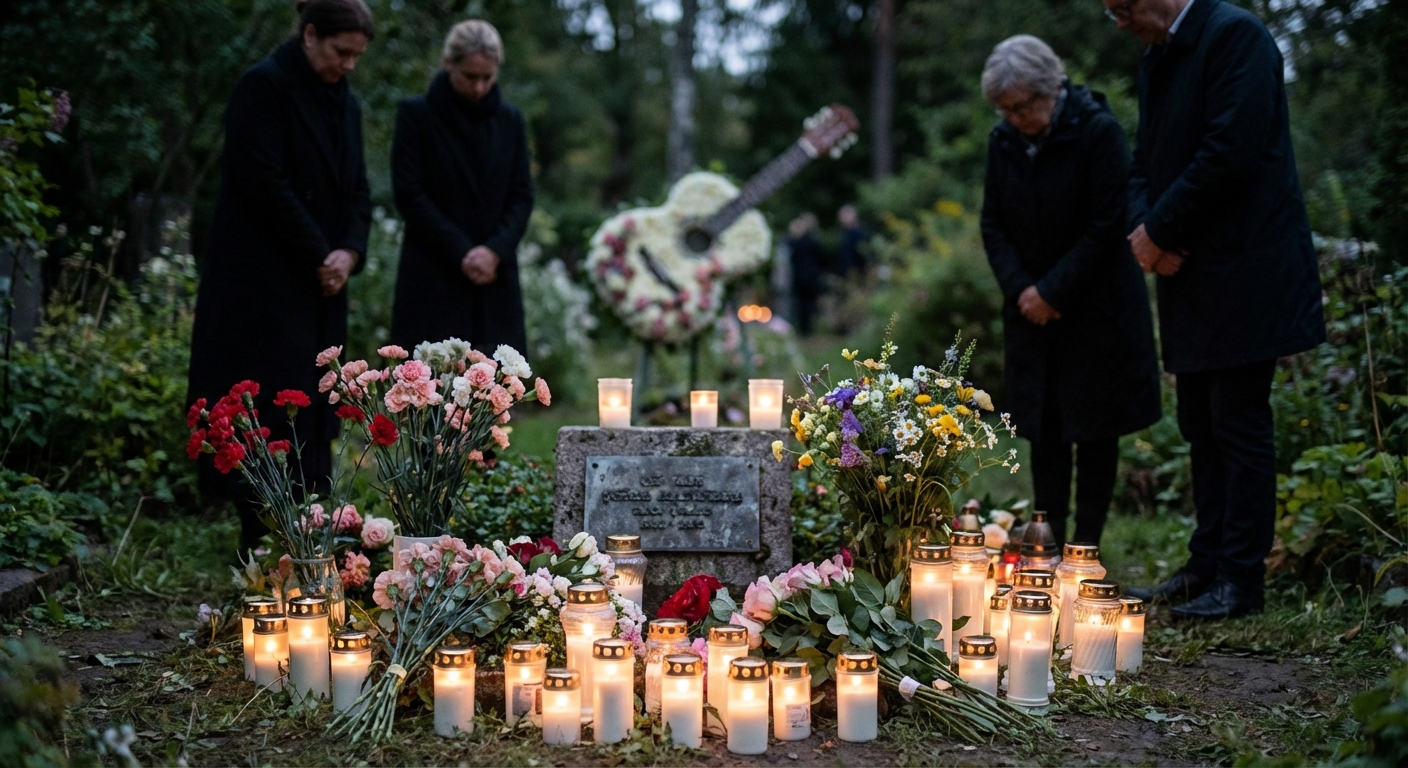
- Late August–October 1977 — An attempted theft of Presley’s body at Forest Hill Cemetery prompted officials to exhume and re‑bury Elvis and his mother in Graceland’s Meditation Garden on October 2, 1977. The attempted theft and reburial are documented events that contributed to persistent rumors.
- October 1977 (public statements thereafter) — Shelby County Medical Examiner Dr. Jerry Francisco publicly attributed Presley’s death to cardiac arrhythmia / hypertensive heart disease while acknowledging prescription drugs were present; however, the family-authorized autopsy and toxicology reports remained private, and officials provided summaries rather than full public toxicology documents. Media and medical commentary at the time described multiple drugs detected and varying interpretations about their role.
- December 13, 1982 — Tennessee Supreme Court (State ex rel. Cole v. Francisco) held that the autopsy performed with the family’s consent was not an official autopsy in the county medical examiner’s custody and therefore the full autopsy/toxicology reports were not public records to be released on demand. This legal ruling is a key documentary turning point because it explains why some underlying reports remain restricted and why disputes about the contents persisted.
- 1988 — The song “Spelling on the Stone” and other media items tapped a revived wave of “Elvis is alive” speculation; the late-1980s decade saw many tabloid items, claimed sightings and impersonator-related misidentifications that kept the claim in circulation.
- August 17, 1988 — Medical examiners and pathologists who had handled Presley’s death publicly stated that the remains they examined were Presley’s and reaffirmed that Presley was dead, responding explicitly to resurgent rumors. These professional statements countered the “alive” claim in the public record.
- 2010s–2020s — Periodic alleged sightings and social-media photos taken at Graceland, public events or elsewhere have periodically reignited the claim; these examples are typically based on look‑alikes, low-resolution photos, or tabloid reporting rather than new forensic documentation. Contemporary family members and estate spokespeople have publicly rejected the claim.
Where the timeline gets disputed
Several specific nodes in the timeline are points of dispute or misunderstanding; they are the places where the “Elvis Is Alive” claim is most often anchored and where documentation gaps or media practices have allowed speculation to persist.
- Private autopsy vs. public record: multiple sources and a Tennessee Supreme Court decision make clear that although pathologists examined Presley and toxicology testing was performed, the full autopsy/toxicology files were treated as private family documents rather than county public records. That legal status has produced a long-running information gap that fuels speculation.
- Media amplification and tabloid imagery: the National Enquirer coffin photo and extensive tabloid coverage in 1977–1988 created reproducible images and narratives that some readers later interpreted or misinterpreted as evidence of a staged death or error. Tabloid circulation numbers and on‑the‑ground reports show why that coverage mattered; these publications are not the same as contemporaneous forensic documentation.
- Conflicting summaries about drugs: official public summaries identified cardiac arrhythmia / heart disease as the cause of death while acknowledging prescription drugs were present. Media accounts and some later commentators emphasized the drug angle; experts who reviewed toxicology have differed in interpretation, and the unreleased family autopsy reports have left room for competing narratives. Where sources conflict, the documented conflict is the fact — not any single speculative conclusion.
- Eyewitness and photo-based sightings: most recent alleged sightings documented in tabloids or on social platforms have been shown, in coverage and expert commentary, to be look‑alikes, impersonators, or misidentified attendees. These items rarely include corroborating forensic evidence.
Evidence score (and what it means)
Evidence score is not probability:
The score reflects how strong the documentation is, not how likely the claim is to be true.
- Evidence score: 10 / 100.
- Why this score: the historical record strongly documents Elvis Presley’s death, funeral and later reburial; official public statements by medical examiners and contemporaneous press reporting provide a continuous documentary trail.
- The principal documentation gap is that family-authorized autopsy/toxicology reports were withheld from public release and a Tennessee Supreme Court decision affirmed that they were not public records — that legal status produces ambiguity about granular toxicology details.
- Much of the material cited by proponents of “Elvis Is Alive” consists of eyewitness anecdotes, look‑alike photos, or tabloid content; these source types are low on reliability for proving that an individual faked a death.
- Several medical examiners and contemporaneous staff have publicly stated they examined the remains and found no evidence that Presley was alive after August 16, 1977; those professional statements increase the weight of the documented death record.
This article is for informational and analytical purposes and does not constitute legal, medical, investment, or purchasing advice.
FAQ
Is there credible evidence that “Elvis Is Alive”?
No verified forensic evidence has been published to support the claim that Elvis Presley remained alive after his widely reported death on August 16, 1977. Contemporaneous press coverage, official statements by medical examiners who handled the case, and documented eyewitnesses to the funeral form the backbone of the public record; claims that he faked his death rely primarily on anecdote, low‑quality photos or tabloid reporting rather than newly produced official documentation.
When and why are the autopsy or toxicology reports not public?
The Tennessee Supreme Court held in State ex rel. Cole v. Francisco (Dec. 13, 1982) that the autopsy authorized by Presley’s family was a private, hospital-conducted autopsy and thus the full reports were not public records in the custody of the county medical examiner. That ruling explains why some underlying documents remain inaccessible and why debates about their contents have continued.
Why do sightings and “Elvis Is Alive” stories keep appearing decades later?
Multiple mechanisms sustain the claim: look‑alikes and impersonators; low-resolution or miscaptioned photos; periodic tabloid stories and entertainment products that reference the idea; and the gap created by non‑public autopsy/toxicology files. These factors together create recurrent opportunities for the claim to resurface, even though new corroborating forensic evidence has not been produced publicly.
Can family statements be taken as evidence against the claim?
Family members and official spokespeople have repeatedly rejected “alive” claims in public statements; while such denials are not forensic proof on their own, they are relevant documentary material and weigh against the need to credit sensational alternatives that lack verifiable documentation.
Where can I find the most authoritative public records about the death?
Authoritative publicly available items include contemporaneous major press obituaries and reporting, statements by Shelby County medical examiners published at the time, and the Tennessee Supreme Court opinion that explains the public‑record status of the autopsy. Those materials form the highest‑quality public documentary trail.

Culture writer: pop-culture conspiracies, internet lore, and how communities form around claims.