
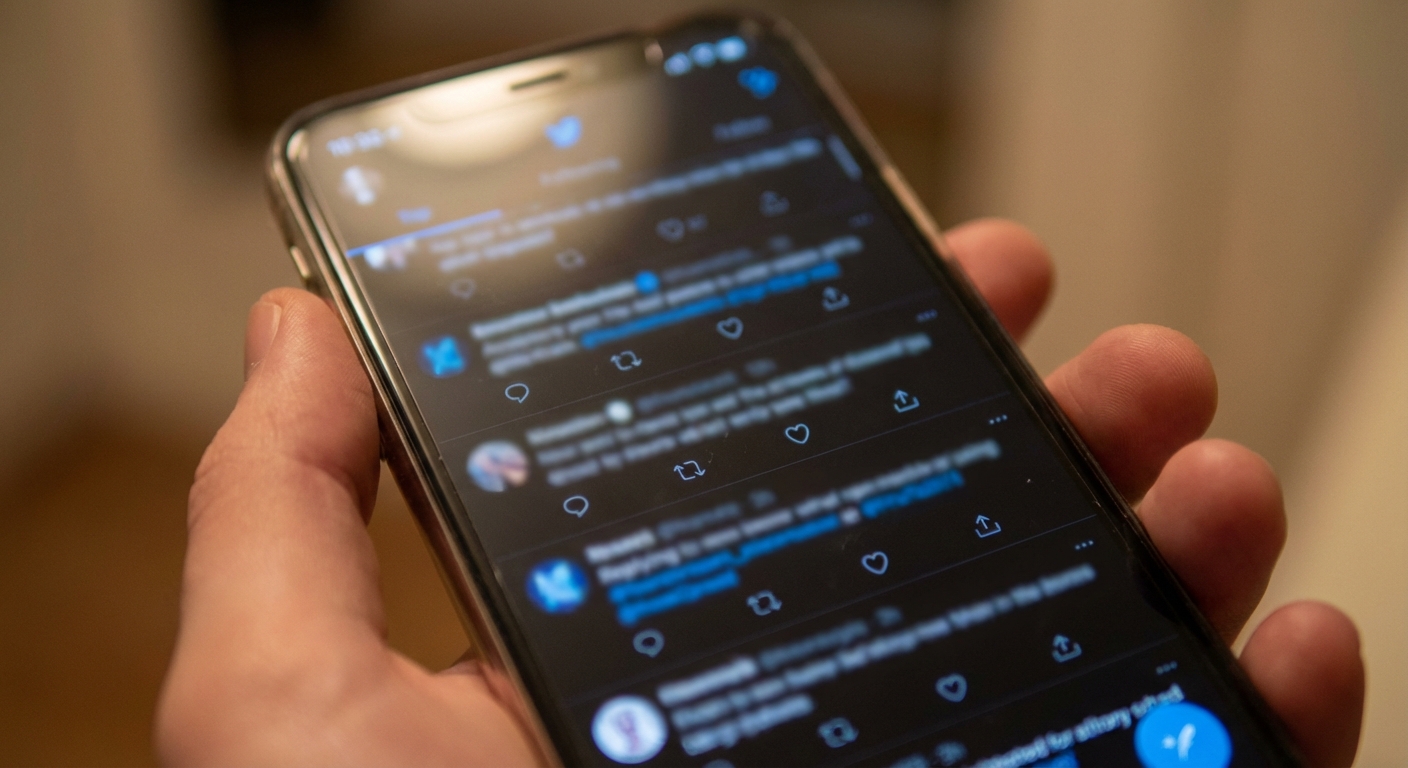
The phrase “Social Media Controls Minds” refers to a claim that social media platforms—or actors using them—exert direct, uniform control over what people think and decide. This article treats that phrase explicitly as a claim and examines the available documentation, research, and reporting about how social media platforms influence attention, beliefs, and behavior.
What the claim says
Broadly stated, the Social Media Controls Minds claim alleges that social media platforms (or coordinated actors on them) can reliably and predictably manipulate large numbers of people’s beliefs, decisions, or behaviors—effectively “controlling minds.” Variants of the claim range from assertions that algorithms secretly force political views on users to stronger conspiracy versions that allege coordinated government or corporate mind-control programs using bots or AI. The claim is often framed as an either/or: either users retain autonomy or platforms have near-total control; this article treats both the strong and moderate formulations as part of the single claim family under review.
Where it came from and why it spread
Ideas that media can strongly shape public opinion have a long history in scholarship and popular discourse. Early 20th-century models — such as the “hypodermic needle” or “magic bullet” metaphors — suggested direct effects of mass media on passive audiences; those models provide historical context for modern claims about digital platforms.
Two developments accelerated modern variants of the claim. First, algorithmic recommendation systems changed how large audiences discover content; independent researchers and polling organizations have documented that algorithms and engagement design shape the mix of information users see. Studies and reporting note that platforms often promote highly engaging content, which can amplify polarizing or emotional material.
Second, high-profile misinformation episodes and organized disinformation campaigns showed how false narratives can travel quickly on social networks. Examples often cited in literature and reporting include large viral misinfo events during the COVID-19 pandemic (e.g., “Plandemic”) and conspiracy movements such as QAnon; researchers and journalists have documented how such narratives used platform affordances to reach millions.
These technical and social changes, paired with cultural anxieties about technology, created fertile ground for the Social Media Controls Minds claim to spread across forums, social posts, and commentary networks. The claim is sometimes amplified by accounts that emphasize bot activity or automated content generation—a set of ideas related to the so-called “Dead Internet” theory—but major analyses conclude that measurable phenomena (bots, algorithmic amplification) do not by themselves prove a unified, intentional mind-control program.
What is documented vs what is inferred
Documented (supported by reporting or peer-reviewed research):
- Social media platforms use algorithms to select and order content for users; this selection affects what users see. Multiple studies and public polling demonstrate that algorithms and engagement metrics shape attention and exposure patterns.
- Platforms have been channels for rapid spread of misinformation and for organized influence campaigns (domestic and foreign). Reporting on events such as the spread of QAnon and viral pandemic misinformation documents the speed and reach of these narratives.
- Platform design choices—notifications, ranking, and social feedback—are engineered toward engagement, which can increase exposure to emotionally salient content. Scholarly commentary and platform disclosures support this design objective.
Plausible but unproven (reasonable inferences or partial evidence):
- Algorithms can indirectly change attitudes by increasing exposure to certain narratives and creating echo chambers or reinforcement loops; experimental and observational work documents plausible causal pathways, but the size and persistence of these effects vary by context and individual.
- Coordinated amplification (bots, brigading, cross-platform promotion) can increase visibility for specific messages; while bot activity is measurable in some cases, quantifying its downstream effect on long-term belief change is more difficult.
Contradicted or unsupported (claims lacking reliable documentation):
- That a single actor or platform can uniformly “control minds” in a deterministic way: available evidence does not show a mechanism for absolute, uniform control of beliefs across diverse populations. Historic media-effect models that implied near-complete control have long been critiqued and replaced by more nuanced theories.
- That widespread, covert governmental or corporate programs are currently using social media to perform total mind control: investigative reporting and platform transparency reports have revealed influence operations and misuse, but they do not support the existence of a centralized, omnipotent mind-control program. When specific allegations are made, they require concrete sourcing (documents, whistleblower testimony, verifiable leaks) which, to date, do not show a universal mind-control system.
Common misunderstandings
- Misunderstanding: Algorithms deliberately “brainwash” everyone. Reality: Algorithms prioritize content based on engagement signals and personalization; outcomes depend on user networks, choices, and platform settings, not on a single deterministic injection of belief.
- Misunderstanding: Viral misinformation proves mind control. Reality: Viral spread shows reach and speed, not deterministic persuasion; content can be shared for many reasons (outrage, humor, identity signaling). Evidence of reach is better documented than evidence of lasting belief change caused directly by a single piece of content.
- Misunderstanding: Any automated or bot activity equals coordinated state control. Reality: Bot activity exists and can be exploited by state and non-state actors, but measurable bot volume does not automatically equal successful mass persuasion. Researchers caution against conflating automation with omnipotent influence.
Evidence score (and what it means)
- Evidence score: 45 / 100.
- Drivers: strong documentation that platforms shape attention and that misinformation spreads rapidly (high confidence).
- Drivers: documented cases of organized influence campaigns and bot amplification increase plausibility of targeted impact in some contexts (moderate confidence).
- Drivers: limited or absent direct evidence for deterministic, uniform “mind control” or for a centralized, covert program (low confidence).
- Drivers: studies show heterogeneous effects across individuals and settings, making universal claims unsupported (moderate confidence).
Evidence score is not probability:
The score reflects how strong the documentation is, not how likely the claim is to be true.
This article is for informational and analytical purposes and does not constitute legal, medical, investment, or purchasing advice.
What we still don’t know
Key open questions include: how large and durable algorithm-mediated attitude changes are across diverse populations; the precise contribution of coordinated amplification (bots, sockpuppets, influencer networks) to long-term belief change; and the extent to which platform interventions (content removal, de-amplification, labeling) alter downstream real-world behavior. Empirical work often uses short-term outcomes (shares, clicks, short surveys), and longer-term causal chains from exposure to durable belief or behavior change are harder to document. Some researchers argue that human social networks and offline factors often moderate or outweigh online influence; others point to experimental evidence showing measurable persuasion under certain conditions. These perspectives have not been fully reconciled and represent ongoing research frontiers.
FAQ
Q: What exactly is the “Social Media Controls Minds” claim?
A: It is a claim that social media platforms or actors using them exert direct, reliable control over what people think and decide. The claim ranges from the plausible (platforms shape attention and visibility) to the extreme (platforms or hidden actors can deterministically control minds). This article treats the formulation as a claim and evaluates evidence accordingly.
Q: Do social media algorithms intentionally push people to adopt specific political views?
A: Platform algorithms prioritize engagement signals and personalization, not explicit political persuasion as a general rule; however, by promoting content that drives engagement (often emotional or polarizing content), algorithms can indirectly increase exposure to political messages. Independent research and public polling document algorithmic effects on exposure but do not show an intentional, uniform political indoctrination program.
Q: Are bots or automated accounts responsible for the claim’s apparent validity?
A: Bots and automation can amplify narratives and create impressions of popularity; they are a documented factor in some influence campaigns. But measured bot activity does not alone prove success in changing large-scale public beliefs, and many bot-related claims (including extreme “Dead Internet” formulations) lack strong empirical support.
Q: If I’m worried about these influences, what should I do?
A: The question is practical rather than evidentiary; generally recommended steps from researchers and journalists include diversifying information sources, checking primary sources cited in viral posts, using platform tools to manage recommendations, and supporting transparency and independent audits of platform systems. (This paragraph does not constitute advice.)
Q: Do experts agree about how powerful social media influence is?
A: Experts agree that social media influences attention and can accelerate the spread of narratives; they disagree on effect sizes for long-term belief change and on how much responsibility lies with platform design versus individual behavior. These differences are reflected in academic debate and in competing journalistic accounts. When sources conflict, the appropriate conclusion is that the evidence is mixed and context-dependent.

Tech & privacy writer: surveillance facts, data brokers, and what’s documented vs assumed.