
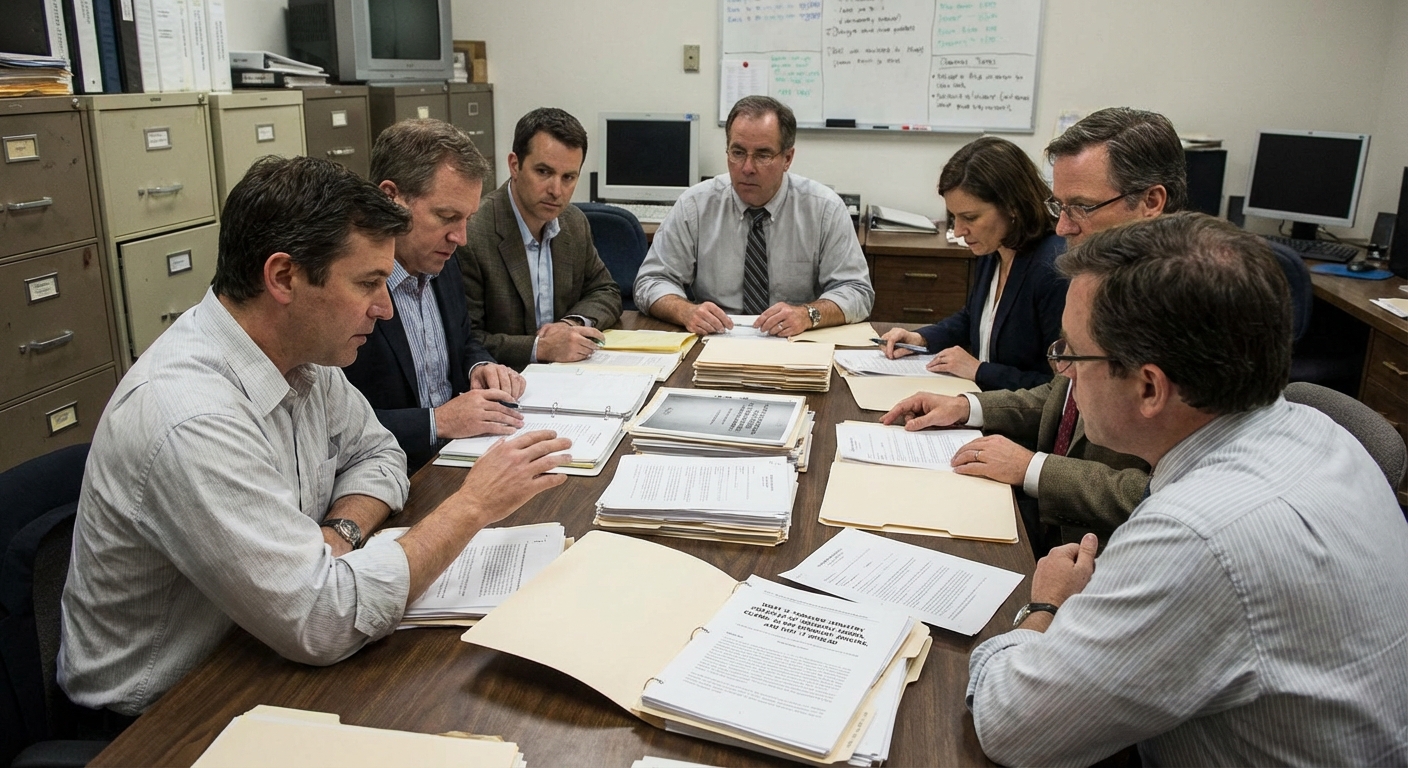
This article examines the claim known as “Tobacco Industry Cover-Up of Smoking Harms” without assuming it is true. The phrase “tobacco industry cover-up of smoking harms” refers to allegations that tobacco companies knowingly concealed, misrepresented, or suppressed evidence about the health risks and addictive properties of smoking and engaged in coordinated public-relations and research strategies to create doubt. The overview below separates documented records, court findings, peer-reviewed analysis, and gaps where inference or dispute remains.
This article is for informational and analytical purposes and does not constitute legal, medical, investment, or purchasing advice.
What the claim says
At its core, the claim alleges that major tobacco companies engaged in an organized effort to hide or downplay the health harms of smoking (including disease and addiction), to manufacture scientific doubt, and to market products in ways that increased uptake—especially among young people. Variants of the claim add that companies manipulated cigarette design (to increase nicotine delivery), misrepresented the safety of so-called “light” or “low-tar” cigarettes, and used targeted advertising while suppressing inconvenient research. Proponents cite internal industry memoranda, litigation-produced documents, and government litigation findings as primary evidence.
Where it came from and why it spread — What Is Tobacco Industry Cover-Up of Smoking Harms, Claims: Claim Summary, Origins, and Why It Spread
The modern form of this claim crystallized after several developments: the U.S. Surgeon General’s 1964 report linking smoking with lung cancer and other health problems; decades of academic and public-health research that strengthened the causal link between smoking and disease; and, crucially, the discovery and public release of internal tobacco-industry documents during litigation in the 1990s. The 1998 Master Settlement Agreement and subsequent litigation produced millions of pages of internal memoranda, marketing plans, and scientific correspondence that scholars, journalists, and lawyers have used to analyze industry behavior. These released documents and the archival collections they populate (for example the UCSF Industry Documents Library) are a central reason the claim spread and entered public discourse.
Academic analyses and books—such as David Michaels’ Doubt Is Their Product—describe a deliberate strategy by some corporate actors to magnify uncertainty about scientific findings as a defensive tactic, a framing that public-health researchers applied to tobacco and later to other industries. Media coverage of litigation developments (including federal prosecutions and civil trials) amplified the claim further.
What is documented vs what is inferred
Documented (verified in primary sources):
- Large numbers of internal company documents, memoranda, and internal research were produced in litigation and are publicly available via repositories (UCSF Industry Documents Library, Minnesota Depository and related archives). These documents provide direct contemporaneous records of strategy, research, marketing and communications.
- A federal RICO case culminated in a 2006 district-court opinion (Judge Gladys Kessler) that found major U.S. cigarette manufacturers had engaged in a decades-long conspiracy to deceive the public about the health effects and addictiveness of smoking; the opinion ordered corrective statements and summarized factual findings about marketing and research practices.
- The 1998 Master Settlement Agreement and related legal actions required disclosure of many internal documents and imposed restrictions on advertising—events that made internal industry planning and strategy more visible to researchers and the public.
Documented but legally or factually narrow (verified in record but sometimes overstated in popular summaries):
- Specific memos and statements from industry figures recommending efforts to “create doubt” in the public mind about smoking risks are documented; scholars cite these as evidence of a strategy to use uncertainty to delay regulation. However, the presence of strategic language in memos does not automatically prove every asserted broader conspiracy claim.
Inferred or disputed (plausible but not fully proven by available documents):
- The extent to which a single, centrally coordinated “cover-up” controlled all company actions worldwide is harder to prove. Different companies, regional subsidiaries, and trade associations sometimes acted independently; international document availability (for example British American Tobacco’s separate depository arrangements) complicates broad generalizations. Researchers note gaps and uneven disclosure outside the U.S. litigation archives.
- Attribution of decisions to specific individuals—i.e., proving that a named executive ordered a particular concealment—may be possible in isolated cases but is not uniformly documented across decades and jurisdictions. Where direct email or memo evidence exists, it is strong; where it does not, inference is necessary.
Common misunderstandings
1) “Cover-up” does not always mean every possible document was hidden. Litigation revealed extensive internal records, but disclosure was shaped by the terms of settlement and court orders; some materials remained protected by privilege claims or were housed in repositories with limited access. The public record is large and damaging for the companies, but it is not necessarily complete.
2) Legal findings and academic critiques differ in scope. A U.S. district court found the companies violated RICO in specific ways and ordered remedies; appellate decisions and subsequent litigation adjusted remedies (for example on corrective-statement wording and implementation). Legal rulings are based on statutory elements and remedies available under U.S. law; they are not the same as scientific proof of intent in every instance.
3) Not every internal memo equals a proved criminal act. Documents can demonstrate strategy, awareness of risk, or messaging guidance; courts and scholars interpret these in light of other evidence. Where courts found deliberate deception, the published opinions provide the legal reasoning and factual citations. Where courts or agencies did not make findings, claims rely more on documentary inference and scholarly interpretation.
Evidence score (and what it means)
- Evidence score: 85/100
- Drivers of this score:
- • Extensive primary documentation: millions of pages of internal company documents were produced in litigation and are available to researchers.
- • Judicial findings: a federal district court found coordinated deceptive conduct in a high-profile RICO case and ordered corrective statements.
- • Scholarly corroboration: public-health scholars and investigative journalists have repeatedly analyzed documents and traced patterns of doubt-manufacturing and targeted marketing.
- • Limits: some geographic and temporal gaps exist in public archives; appellate decisions modified remedies and some assertions remain contested in courts or by industry.
Evidence score is not probability:
The score reflects how strong the documentation is, not how likely the claim is to be true.
What we still don’t know
- Precise chain-of-command: for some allegations, the documentary trail is clear; for others, who made specific decisions—and when—is not definitively recorded in public files. Researchers sometimes must infer intent from patterns rather than direct orders.
- Global completeness: disclosure obligations were strongest in U.S. litigation; access to some foreign-depository materials (or company-held records abroad) has been more limited, leaving geographic gaps. This affects assessments of worldwide coordination versus regional strategies.
- Unreleased or privileged materials: litigation and settlements left open questions about documents withheld under privilege or not produced; where relevant material is not public, conclusions rely on the available sample.
- Long-term impacts: while courts and public-health authorities have documented many consequences, quantifying the precise delay in regulation or the exact attribution of disease burden to particular marketing decisions remains a complex research task.
FAQ
Q: What evidence supports the claim ‘tobacco industry cover-up of smoking harms’?
A: The principal evidence consists of internal documents disclosed during litigation, academic analyses of those records, and judicial findings in major U.S. cases. Repositories such as the UCSF Industry Documents Library host millions of pages of litigation-produced material; a federal district court opinion (2006, Judge Kessler) summarized factual findings about deceptive practices and ordered corrective statements. Those combined documentary and legal records form the backbone of the claim’s evidence.
Q: Did a court actually find tobacco companies “deceived the public”?
A: Yes—U.S. District Judge Gladys Kessler’s 2006 opinion found that the major U.S. cigarette manufacturers had engaged in a scheme to deceive the American public regarding health effects and addictiveness; the opinion provided extensive factual findings and ordered corrective statements. Some appellate rulings and later litigation addressed the form of remedies, but the district-court factual findings remain a central public record.
Q: Are all parts of the “cover-up” claim equally documented?
A: No. Certain elements—existence of internal strategic memos, marketing to youth, knowledge of health risks, and efforts to create doubt—are well documented. Other elements—such as centralized global coordination across every subsidiary or specific unproduced documents—are less well documented and sometimes disputed. Researchers must distinguish what is supported by disclosed primary records from what is inferred.
Q: Where can I read primary documents myself?
A: The UCSF Industry Documents Library (also known as the Legacy/Truth Tobacco Industry Documents) and related depositories created under the Master Settlement Agreement provide searchable access to millions of documents. Government filings and court opinions (for example the Kessler opinion and related DOJ materials) are available through court dockets and official DOJ releases.
Q: Why did the claim spread beyond tobacco (e.g., to other industries)?
A: Scholars and public-health analysts have argued that tactics observed in tobacco documents—manufacturing uncertainty, hiring industry-friendly scientists, and using PR to delay regulation—were studied and adapted by other industries confronting health or environmental regulation. This comparative argument is made in academic books and reviews; it relies on both tobacco archives and analyses of later industry behavior. The pattern is documented in scholarly literature but its scope and uniformity across sectors remain topics of research and debate.

History-focused writer: declassified documents, real scandals, and what counts as evidence.