
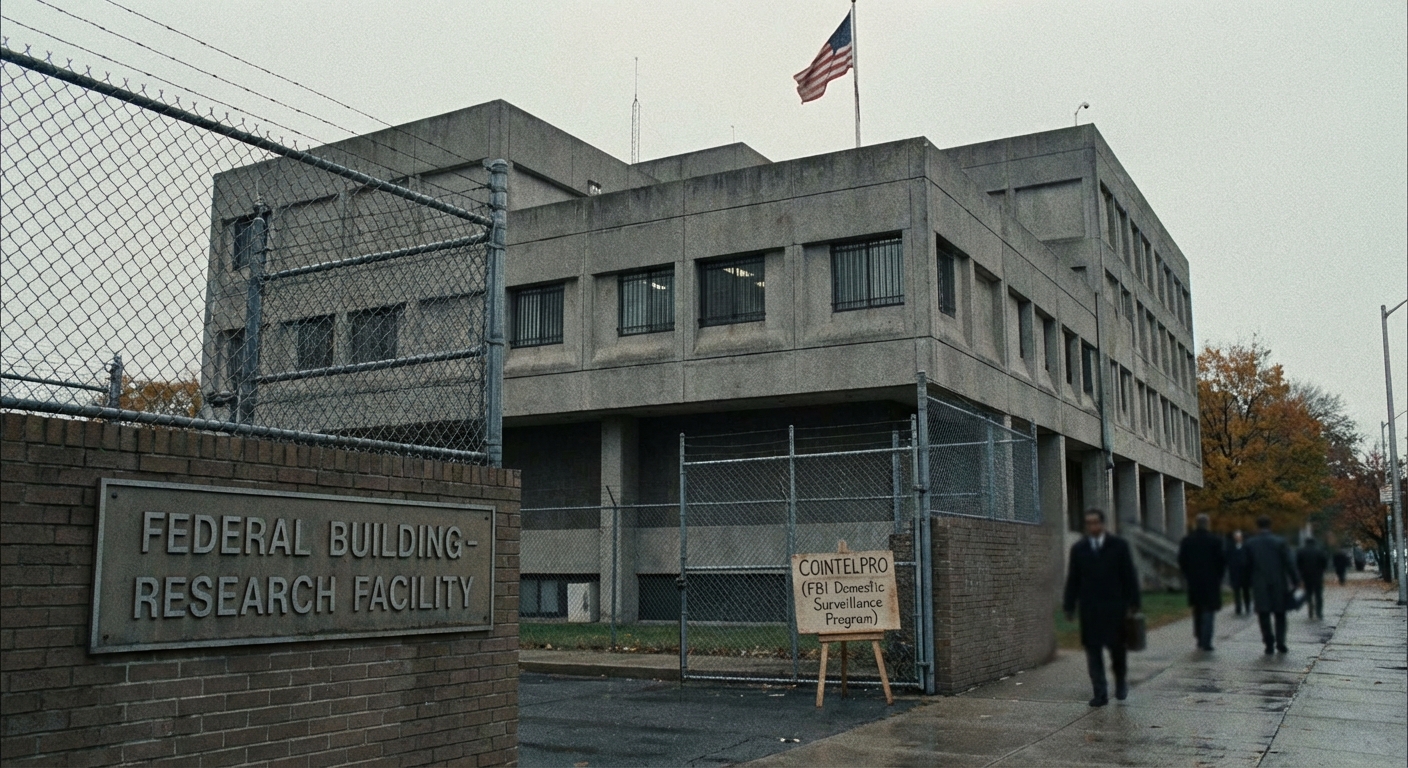
Below are the strongest arguments people cite about the claim that COINTELPRO (FBI Domestic Surveillance Program) targeted, infiltrated, discredited, and attempted to disrupt a wide range of domestic political organizations. These items are presented as arguments people make, with source types and ways to verify them — not as final proof of any broader causal or criminal claims.
This article does not assert the claim is true or false; it examines the evidence people use when advancing COINTELPRO-related claims and notes where documentation is strong, limited, or contested.
The strongest arguments people cite
- Claim: The FBI ran an official Counterintelligence Program called COINTELPRO from roughly 1956 to 1971 that targeted domestic groups and individuals. Source type: declassified agency records and the FBI’s own public Vault. Verification test: consult the FBI Vault COINTELPRO page and the declassified memos it links to, and cross-check dates and program descriptions with congressional reports from the 1970s.
- Claim: COINTELPRO used infiltration, informants, wiretaps, mail opening, and forged documents to disrupt organizations. Source type: Church Committee final report and leaked FBI files obtained in 1971. Verification test: read the Church Committee’s published findings and archived FBI memos describing specific techniques; compare items in the leaked file sets to the committee’s summary.
- Claim: The Black Panther Party was a principal target and experienced disinformation campaigns designed to foster splits and provoke violence. Source type: FBI field memoranda and later archival collections (unredacted FBI reports released via FOIA and academic libraries). Verification test: inspect BPP-related FOIA releases in the FBI Vault and related archival collections (university special collections that hold indexed FBI files).
- Claim: The FBI manufactured or planted forged letters and false reports to make activists appear as informants or criminals. Source type: internal FBI memos and after-action staff reports (documented in court cases and the Church Committee materials). Verification test: locate specific memos describing such operations and corroborate with third-party archival descriptions or litigated exhibits.
- Claim: COINTELPRO’s activities were exposed after activists stole FBI files from a small office in 1971, triggering press reports, congressional investigations, and reform. Source type: contemporary journalism and later histories recounting the 1971 burglary and resulting media coverage. Verification test: read contemporary reporting and the committee transcripts to trace how the stolen files led to public hearings.
- Claim: High-profile individuals such as Martin Luther King Jr. were surveilled and subject to discrediting campaigns (including attempts to expose private matters) under COINTELPRO. Source type: FBI files, court documents, and sealed materials; some records remain redacted or were released under court orders. Verification test: consult the FBI Vault and court-filed materials; follow current litigation and archival releases for sealed items. Note that some King-related materials remain under special seals or litigation.
- Claim: Some actions linked to COINTELPRO (e.g., fostering discord that preceded violent incidents) may have contributed to deaths or arrests in activist communities. Source type: contested secondary analyses, archival records showing tensions, and investigative journalism. Verification test: seek contemporaneous FBI and police records, eyewitness testimony, and court rulings; evaluate carefully because documents may show connections of influence without proving direct causation.
- Claim: Affected groups later won legal remedies or settlements (for example, the Socialist Workers Party litigation). Source type: federal court records and official settlements. Verification test: check PACER/court dockets, settlement documents, and consolidated historical summaries.
How these arguments change when checked
When researchers check the most-cited claims about COINTELPRO, several patterns appear:
- Well-documented: The existence of COINTELPRO as a formal FBI counterintelligence program, its timeframe (broadly 1956–1971), and the bureau’s use of surveillance, informants, and efforts to discredit domestic political groups are backed by declassified FBI materials and the Senate Church Committee’s 1975–1976 investigation. These sources are publicly accessible and repeatedly cited in academic and journalistic work.
- Documented but context-dependent: Specific tactics such as letters fabricated to foment splits, use of informants, and mail-opening are attested in FBI memos. However, the context (who approved which action, how widespread a tactic was in particular field offices, or whether actions were officially sanctioned vs. rogue) sometimes requires careful reading of the primary documents and cross-referencing with committee transcripts and court filings.
- Disputed or weakly documented causal claims: Assertions that COINTELPRO directly ordered or planned violent acts, or that it concretely ’caused’ specific deaths (for example, the killing of Fred Hampton), are more contested in the documentary record. Contemporary evidence shows the FBI actively sought to destabilize groups and placed informants inside organizations; some archival materials suggest operatives shared information that affected local policing actions. But proving centralized, direct responsibility for particular violent outcomes requires more than the memos alone and remains debated among historians and legal experts. Sources conflict on the degree of direct responsibility.
- Secrecy and redaction limit clarity: Several items — notably some materials related to Martin Luther King Jr. and other targeted individuals — have been subject to sealing, redaction, or late release. Ongoing litigation and archival releases (and news reports about those releases) show new documents can appear years after the events, changing what can be verified. Readers must account for remaining sealed records when assessing completeness.
This mixture — strong documentary proof that a program existed and employed disruptive tactics, plus contested inferences about specific criminal responsibility for later violence — explains why COINTELPRO remains a heavily debated subject.
Evidence score (and what it means)
Evidence score: 75/100
- Primary-government documentation exists showing COINTELPRO was an organized FBI program (declassified memos and the FBI Vault).
- Independent congressional investigation (the Church Committee) corroborates systemic domestic intelligence abuses and specific tactics.
- Archival releases and FOIA collections provide case-level detail (e.g., Black Panther files in university collections), strengthening documentation of targeted tactics.
- Where the score is reduced: key causal claims (e.g., direct FBI orders leading to particular killings or the precise chain of responsibility for violent acts) are supported unevenly and remain legally and historically contested.
- Sealed or partially redacted materials (and evolving releases) mean some questions cannot yet be fully answered; ongoing litigation may change available evidence.
Evidence score is not probability:
The score reflects how strong the documentation is, not how likely the claim is to be true.
This article is for informational and analytical purposes and does not constitute legal, medical, investment, or purchasing advice.
FAQ
What is COINTELPRO (FBI domestic surveillance) — and why is it important?
Answer: COINTELPRO (FBI domestic surveillance) refers to the FBI’s counterintelligence program identified in declassified materials and congressional reports. It matters because those records show government-directed efforts to monitor and undermine certain domestic political organizations; understanding what is documented helps separate confirmed activity from contested interpretations.
How can I verify a specific COINTELPRO-related claim (for example, about a forged letter or an informant)?
Answer: Start with primary sources: the FBI Vault; published Church Committee transcripts and reports; FOIA-released documents hosted by libraries or archival projects; and court records from lawsuits by targeted groups. Cross-check independent journalism and academic studies that cite the same primary documents. Where possible, obtain original memos or scanned FOIA releases rather than relying solely on secondary summaries.
Are all COINTELPRO allegations proven?
Answer: No. While the existence of COINTELPRO and many intrusive tactics is well-documented, some allegations (notably specific claims that the FBI directly caused particular deaths or orchestrated certain crimes) are disputed or lack clear documentary proof tying central leadership to those outcomes. When sources conflict, historical and legal standards require corroborating evidence beyond suggestive documents.
Will more COINTELPRO records be released in the future?
Answer: Possibly. Some materials remain sealed or were released only recently under court orders; ongoing litigation and new FOIA requests occasionally produce additional documents. News coverage in recent years shows that previously sealed records (e.g., certain MLK-related files) have been subject to litigation and partial release, demonstrating the documentary record can change over time.
How should readers treat emotional or dramatic claims about COINTELPRO they see online?
Answer: Treat such claims as hypotheses until primary documentation is provided. Check whether the claim cites an original government memo, a committee report, court records, or only secondary commentary. If the claim alleges direct causation (for instance, that the FBI ordered a killing), ask whether there is a clear chain of documentary evidence or only suggestive circumstantial material. Reliable claims point to primary documents that can be independently examined.

History-focused writer: declassified documents, real scandals, and what counts as evidence.