
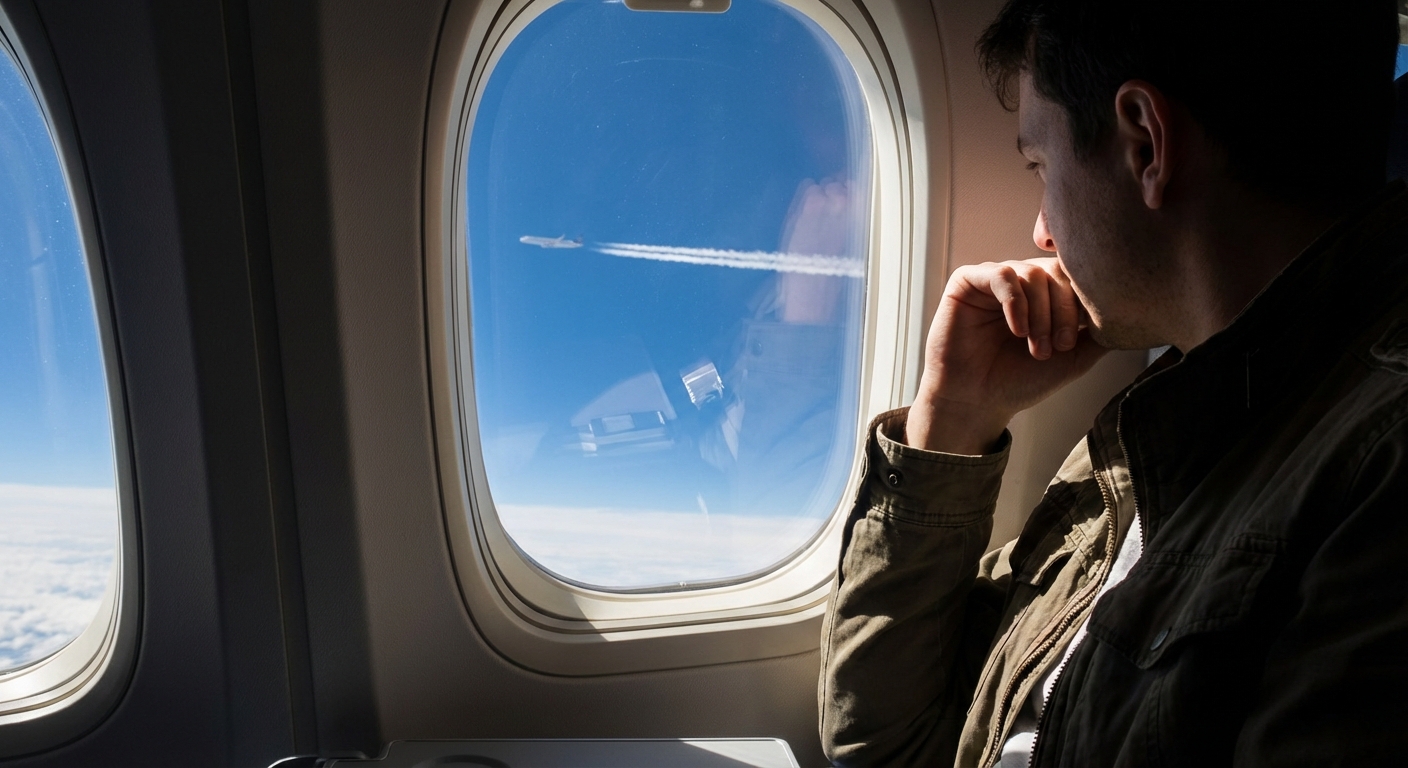
Chemtrails claims say the white trails behind aircraft are not ordinary condensation trails, but an intentional, covert chemical or biological spraying program. This article reviews what is strongly documented about contrails and aviation emissions, what is plausible but unproven in the broader “chemtrails” narrative, and what is contradicted by available evidence.
This article is for informational and analytical purposes and does not constitute legal, medical, investment, or purchasing advice.
Verdict: what we know, what we can’t prove
What is strongly documented
1) Contrails are real, well-understood, and can persist and spread. Government and scientific sources describe contrails as line-shaped clouds that form when hot, moist aircraft exhaust mixes with very cold air at cruising altitudes, causing water vapor to condense and freeze into ice crystals. Depending on upper-atmosphere humidity and temperature, contrails may dissipate quickly or persist and spread into cirrus-like clouds.
2) The conditions overhead can differ from ground-level conditions. A key point in chemtrails claims is that “it can’t be humid because it’s dry on the ground.” EPA and FAA both emphasize that humidity and temperature at aircraft altitude can be very different from what people feel at the surface, so contrails can form even when the day seems dry at ground level.
3) Contrails can appear in grids, curves, spirals, and broken segments without implying spraying. Patterns are often cited as “evidence,” but NASA and EPA describe how contrail appearance changes with wind shear, humidity layers, and flight paths (including holding patterns and intersecting air routes). These effects can produce crosshatching, curving trails, and uneven persistence.
4) Agencies explicitly treat “chemtrails” as an inaccurate label for contrails. EPA’s contrails page directly addresses “chemtrails” as a term used to inaccurately claim routine air traffic is an intentional release of dangerous chemicals or biological agents at high altitude for nefarious purposes. FAA likewise states it and EPA are not aware of deliberate actions to release harmful chemical or biological agents from airplanes, while also noting they would act on substantiated claims.
5) There is peer-reviewed work addressing “secret spraying” claims and finding no supporting evidence in expert assessment. A peer-reviewed paper in Environmental Research Letters (“Quantifying expert consensus against the existence of a secret, large-scale atmospheric spraying program”) is widely cited as an attempt to formally evaluate the evidence commonly presented online and to gauge expert consensus; it reports overwhelmingly negative expert assessments of the “secret spraying” interpretation.
What is plausible but unproven
1) Some forms of purposeful aerosol release from aircraft exist, but they are not the same claim. It is documented that aircraft can release substances in certain contexts (for example, agricultural applications at low altitude, firefighting, or research projects). This is sometimes used to argue that high-altitude, global “chemtrails” must exist. However, acknowledging that some aerial dispersal happens does not, by itself, document a covert high-altitude program. EPA’s own framing distinguishes contrails and “chemtrails” narratives from legitimate, disclosed low-altitude uses.
2) Geoengineering is discussed in real policy and research spaces, but that does not document a covert deployment. Some chemtrails claims merge into assertions of secret solar geoengineering (e.g., stratospheric aerosol injection). The U.S. National Academies has published a major report arguing for a research program and research governance around solar geoengineering, emphasizing uncertainty, risks, and the need for transparency. Research interest and debate are real; covert routine deployment is a separate claim that would require hard documentation (contracts, operational records, independent verification).
3) Persistent contrails may have climate impacts, but this is not proof of a “chemtrails” program. NASA and EPA discuss research suggesting persistent contrail clouds can have a net warming effect and that contrail cirrus is an active research area. The presence of a climate effect from contrail-induced cloudiness is compatible with normal aviation operations and does not imply intentional spraying.
What is contradicted or unsupported
1) The core chemtrails claim (a secret, large-scale spraying operation disguised as contrails) lacks publicly verifiable operational evidence. Large-scale, routine high-altitude spraying would typically leave a trail of auditable artifacts: procurement records, maintenance retrofits, payload logistics, corroborated whistleblower testimony, consistent independent sampling, and multi-source documentation. Major agencies’ public-facing explanations point the other way (contrails as a normal phenomenon) and do not provide evidence of a covert program.
2) Popular “proof” items frequently fail basic verification standards. Common chemtrails evidence often includes photos of unusual contrail patterns and informal environmental samples. The peer-reviewed expert-consensus work specifically evaluated the types of evidence widely presented online and reports experts overwhelmingly did not consider it indicative of a secret spraying program. This does not prove all future allegations are impossible, but it contradicts the claim that existing, commonly cited materials already demonstrate a covert program.
3) Claims that agencies have “admitted chemtrails” are typically based on misreadings of contrail/geoengineering discussions. EPA’s 2025 communications around contrails and geoengineering were framed as transparency and myth-addressing, not as confirmation of a covert spraying operation. Some coverage notes the pages explain contrails and separate speculative geoengineering research from claims of current practice.
Evidence score (and what it means)
Evidence score: 15/100
- High documentation exists for the physical explanation of contrails (formation, persistence, patterns) from NASA, EPA, and FAA.
- Low documentation exists for the central “chemtrails” allegation (a covert, large-scale spraying program) in the form of verifiable operational records.
- Peer-reviewed assessment addressing “secret spraying” interpretations reports strong expert rejection of the evidence typically offered online.
- Topic confusion is common: real discussions of geoengineering research are often conflated with claims of ongoing covert deployment.
- Some uncertainty remains around quantifying contrail climate impacts, but that uncertainty does not function as evidence for covert spraying.
Evidence score is not probability:
The score reflects how strong the documentation is, not how likely the claim is to be true.
Practical takeaway: how to read future claims
If you want to evaluate future chemtrails claims responsibly, separate (a) “Are contrails real and variable?” from (b) “Is there proof of intentional covert spraying?” The first question is well documented by atmospheric physics. The second requires specific, checkable documentation that goes beyond images of trails.
As a checklist, stronger evidence would look like: consistent, independently replicated sampling with proper chain-of-custody; verifiable operational documents (contracts, flight logs tied to payload operations, maintenance modifications); and corroboration from multiple independent sources. Absent those, the best-supported explanation for most “chemtrails” imagery remains contrails under varying atmospheric conditions.
FAQ
Are chemtrails claims the same thing as contrails?
No. Contrails are a documented atmospheric phenomenon. “Chemtrails” is commonly used to describe the claim that routine contrails are actually intentional releases of dangerous agents for covert purposes; EPA explicitly addresses “chemtrails” in this way while explaining contrails.
Why do some contrails last for hours while others vanish quickly?
Persistence depends on conditions at flight altitude, especially temperature and humidity. In sufficiently cold, humid air, contrails can persist and spread into cirrus-like cloudiness; in drier air they dissipate quickly. NASA and EPA both describe this persistence mechanism.
Do grid patterns in the sky prove chemtrails claims?
No. Agencies and scientific sources describe how heavy air traffic, intersecting routes, and changing winds can create crosshatching and other patterns. Pattern alone does not identify the trail’s composition or intent.
What does the FAA say about chemtrails claims?
FAA explains how contrails form and notes that it and EPA are not aware of any deliberate actions to release harmful chemical or biological agents from airplanes into the atmosphere, and that it would act on substantiated claims.
Does research into solar geoengineering prove chemtrails claims?
No. The existence of policy and research discussions about solar geoengineering does not document a covert, ongoing deployment. The National Academies report focuses on recommended research and governance, emphasizing uncertainty and the need for transparency.

Science explainer who tackles space, engineering, and ‘physics says no’ claims calmly.