
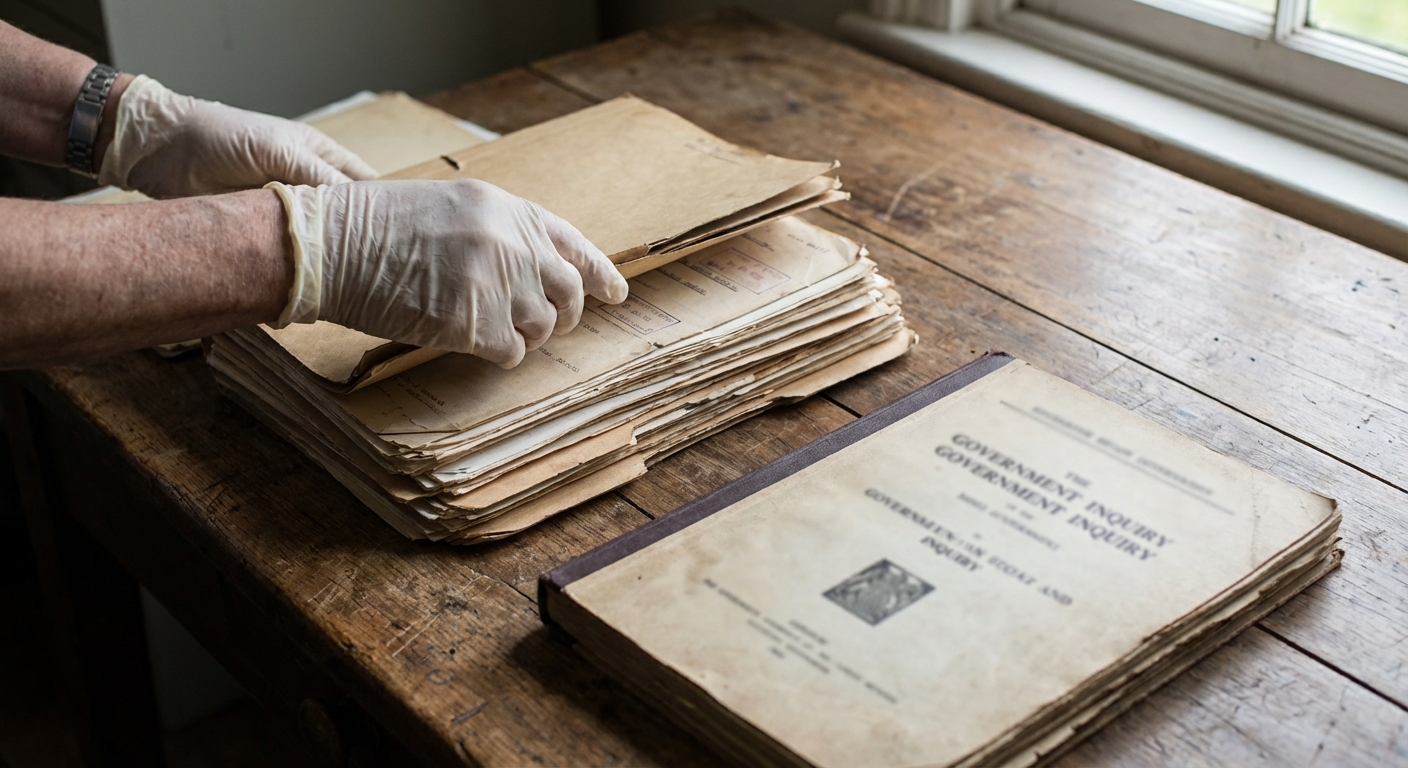
This verdict examines claims about the Iran–Contra Affair with a strict evidentiary focus. The write-up treats the topic as a set of claims — what is asserted about covert arms sales to Iran, and the alleged diversion of proceeds to the Nicaraguan Contras — and evaluates which parts are well documented, which are plausible but lack proof, and which are contradicted or unsupported by the primary record. This article uses official reports, congressional investigations, declassified documents, and court records as its bases.
Verdict: what we know, what we can’t prove — Iran–Contra Affair claims
What is strongly documented
Multiple independent and government inquiries established the following core factual elements of the claims: the Reagan administration authorized or permitted covert arms transfers to Iran in 1985–1986; proceeds from at least some of those transactions were routed into accounts and arrangements that supported efforts to assist the Nicaraguan Contras; and senior National Security Council staff and other officials (including figures such as Lt. Col. Oliver North and, at varying points, others in the NSC and intelligence community) played central roles in organizing these operations. These conclusions appear throughout the Tower Commission and the Office of the Independent Counsel final report, as well as in the congressional committee reports and declassified agency records.
Public, televised testimony by key participants — most notably Oliver North in 1987 — and contemporaneous agency and NSC records corroborate that covert channels and foreign intermediaries were used to arrange arms shipments and financial transfers tied to the Iran initiative. The hearings and preserved transcripts are part of the documented record.
What is plausible but unproven
Several versions of the broader claim assert that President Ronald Reagan or other senior cabinet officials knowingly directed illegal activity or intended the diversion of funds. The primary investigative reports and documents do not uniformly support a single, definitive finding of criminal intent at the highest levels. The Independent Counsel’s report documented evidence and irregularities and described patterns of deception and obstruction; but both the Tower Commission and Walsh report treated questions of precise knowledge, intent, and authorization at the presidential level with caution and, in some instances, conflicting characterization. Because available documents and testimony are incomplete or legally constrained (for example, by immunities or withheld materials), direct proof tying a particular senior official to deliberate criminal intent remains contested.
What is contradicted or unsupported
Extraordinary versions of the claim — for example, that Iran–Contra was a fully centralized, tightly documented “presidential conspiracy” in which the president explicitly ordered criminal acts and personally handled operational details — are not conclusively supported by the public record. Investigations uncovered failures of oversight, deception by some officials, and evidence of diverted funds; they did not produce uniformly conclusive, unambiguous documentation proving that the president personally directed every unlawful step. Where sources conflict, investigators noted the limits of available evidence rather than affirming the most expansive accounts.
Evidence score (and what it means)
- Evidence score: 72/100.
- Score drivers: multiple primary sources (Tower Commission, the Office of the Independent Counsel final report, congressional committee reports) document core events (arms transfers, use of intermediaries, diversion to Contras).
- Score drivers: declassified agency documents and contemporaneous records corroborate operational details but remain partially redacted or incomplete in places.
- Score drivers: some legal outcomes (convictions, later vacaturs, and presidential pardons) complicated later evidentiary clarity for courtroom findings.
- Score drivers: conflicting interpretations remain about the extent of senior-level knowledge and criminal intent, preventing a higher score on documentation of that particular claim element.
Evidence score is not probability:
The score reflects how strong the documentation is, not how likely the claim is to be true.
Practical takeaway: how to read future claims
When encountering new or recycled Iran–Contra Affair claims, prioritize primary documents (the Tower Commission report, the Independent Counsel Walsh final report, congressional committee reports, and declassified agency records) and contemporaneous transcripts of testimony. Distinguish three levels of claim support: (1) matters established by documentation and testimony, (2) plausible inferences supported indirectly, and (3) assertions that lack corroborating documentation or are contradicted by official records. Where sources disagree, report the disagreement and cite both sides rather than inferring motives or intent beyond the evidence.
This article is for informational and analytical purposes and does not constitute legal, medical, investment, or purchasing advice.
FAQ
What evidence supports Iran–Contra Affair claims that proceeds were diverted to the Contras?
Investigations by the House and Senate committees, the Tower Commission, and Independent Counsel Walsh documented the movement of funds and the use of foreign intermediaries and Swiss accounts that were linked to Contra-supporting networks. Those reports include contemporaneous memos, NSC staff interviews, and financial traces that the investigators described in detail. The documentation supports the claim that some funds from Iran-related transactions were routed in ways that aided Contra activities, though the precise chain and authorization for each transfer is not fully documented in every instance.
Who in the government was convicted or prosecuted over Iran–Contra, and what happened to those convictions?
Several administration officials were indicted, convicted, or pleaded guilty to crimes related to Iran–Contra, and the Independent Counsel won multiple convictions. However, some convictions (including those of Oliver North and John Poindexter) were later vacated or reversed on appeal because of concerns that witnesses’ immunized congressional testimony may have affected prosecutions. In December 1992, President George H.W. Bush issued pardons to several Iran–Contra defendants (including Caspar Weinberger), which ended some pending prosecutions before trials could resolve all questions. The legal history complicated the ability of courts to render final factual findings on every disputed point.
Does the record prove President Reagan personally ordered illegal acts?
No single, unambiguous piece of public documentation establishes that President Reagan explicitly ordered criminal acts. The Tower Commission and the Independent Counsel described failures of oversight, deception by staff, and misleading public statements, and they explored evidence relating to what the president knew. Investigators reached different emphases: the Tower Commission criticized White House management and oversight; the Independent Counsel cataloged obstructive conduct and irregularities. Because the public record includes conflicting accounts and gaps — and because some testimony was given under immunity or withheld — definitive, court-adjudicated proof of a specific presidential criminal order is not in the public domain. Reporters and scholars continue to debate the scope of presidential knowledge based on the same documents.
Where can I read the primary documents mentioned in this verdict?
Primary documents are publicly available: the Tower Commission report and congressional committee reports were published in 1987; the Independent Counsel final report is publicly archived; and numerous declassified agency documents (CIA FOIA releases, NSC records) are available through government reading rooms or archives. Major news organizations preserved hearing transcripts and contemporaneous reporting as well. Consult the official reports first, then the declassified documents for operational details.
How should researchers treat conflicting accounts in these records?
Document the conflict: cite each primary source and quote or summarize the exact point of disagreement. Avoid assuming motive where the documents are silent. When possible, seek corroboration from contemporaneous paperwork (dated memos, financial records, or agency cables) rather than relying on retrospective recollections. If legal rulings (appeals, vacaturs, or pardons) affect the evidentiary value of testimony, note those rulings and how they limit criminal findings.

History-focused writer: declassified documents, real scandals, and what counts as evidence.